Memphis Mayor Paul Young, a Democrat, has said he does not support National Guard troops being deployed to the city despite President Donald Trump telling Fox News on Friday that the mayor did.
Newsweek contacted the White House press office and Tennessee Governor Bill Lee for comment on Saturday via email and telephone respectively outside of regular office hours.
Why It Matters
During his current presidency, Trump has highlighted the importance of security and has used federal authorities to crack down on crime in various cities across the nation.
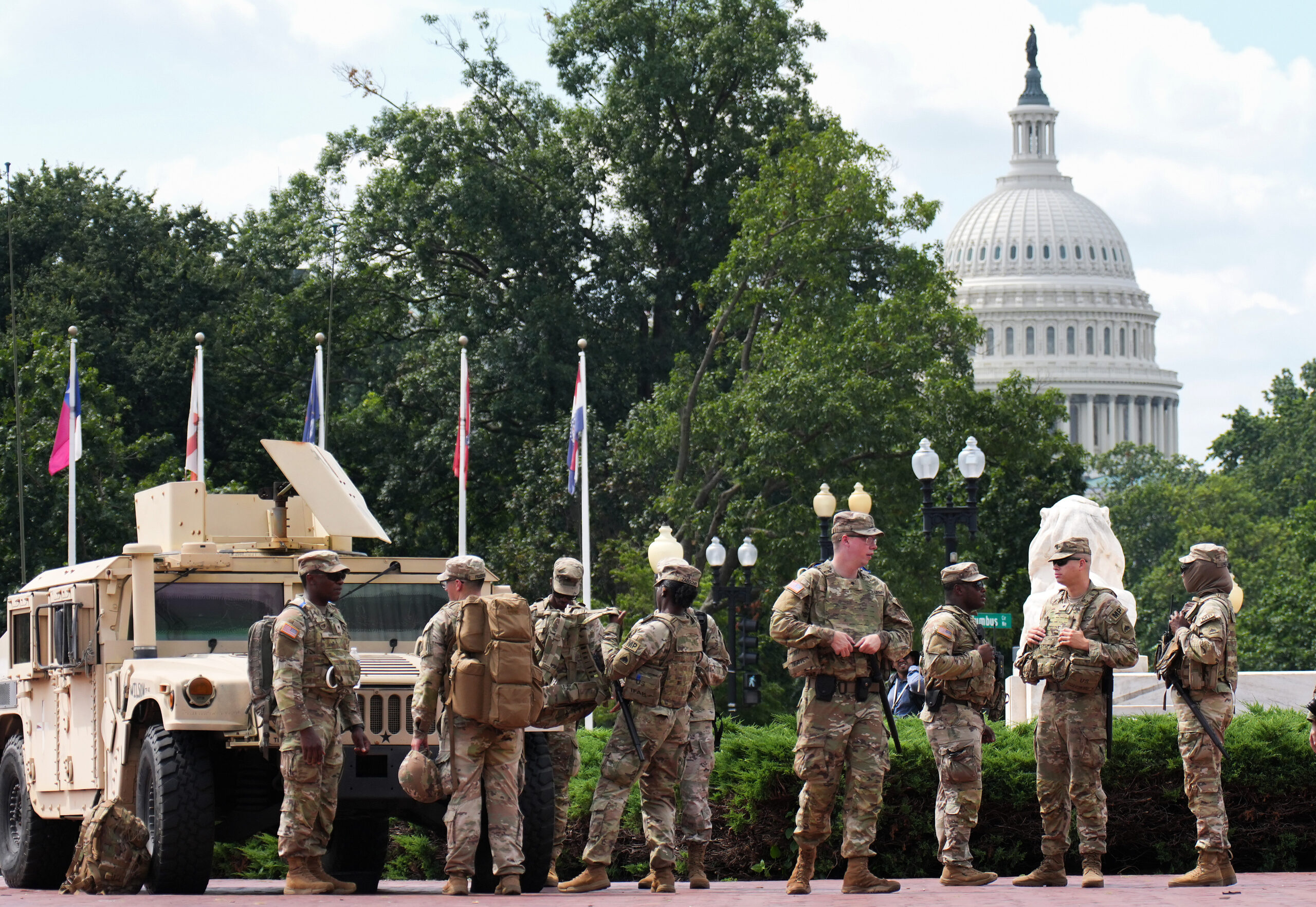
In June, Trump deployed National Guard troops to Los Angeles following violent protests, then to Washington, D.C., in August after alleging the city had fallen into “lawlessness.” The moves were controversial, with D.C. Attorney General Brian Schwalb filing a lawsuit that said the deployment was illegal without the support of local leaders.
Trump has since expressed an interest in deployment National Guard troops to other major cities including Baltimore, New Orleans and Chicago despite concerns over the legality of such a move.
Meanwhile, advocates say support from the National Guard frees federal agents to focus on core enforcement tasks. But critics and some legal experts warn about using military forces in domestic policing roles and the risk of politicizing state military forces. Governors have been split along partisan lines over similar deployments.
What To Know
When it comes to crime rates, Memphis remains an outlier nationally. In 2024, the city recorded about 2,500 violent crimes per 100,000 residents—the highest rate in Tennessee and among the worst in the country, according to FBI data.
That level of violence was more than three times the national average and higher than other high-crime cities, including St. Louis, Detroit, and Baltimore.
Memphis’ 2024 crime rate was still below what it was in 2023 and 2022, according to data from the Tennessee Bureau of Investigation. Crime is still higher than it was between 2010 and 2021, but 2024’s rate marked an 11 percent decrease.
On Friday, Young addressed reporters and was flanked by over 35 city officials and leaders, according to The Commercial Appeal.
When asked whether or not he supported Trump’s proposed National Guard deployment, Young said this was an “overstatement.”
“I do not think it’s the way to drive down crime. However, that decision has been made,” the mayor said. “As the mayor of the city of Memphis, my career is to make sure that we work strategically to ensure that this happens in a way that truly benefits and strengthens our community.”
Young added that he was focused on bringing the FBI and Bureau of Alcohol, Tobacco and Firearms (ATF) officers, to Memphis.
“Those are the things that I believe will truly help us be able to support law enforcement and reduce violent crime,” he said.
Trump announced his plan to deploy National Guard troops to Memphis on Fox News on Friday describing the city as “deeply troubled,” and claiming Young and Lee, a Republican, supported his plan.
“We’re going to Memphis. Memphis is deeply troubled, the mayor is happy, a democratic mayor. We’re going to fix it like we did Washington,” Trump said.
National Guard troops are usually controlled by their respective state governors but can be brought under federal control under certain circumstances.
Last month, Lee told reporters his state had made “significant investments” to reduce crime in Memphis and had no plans to have the National Guard sent there.
But earlier this week in a statement, the governor said he had been working for months with the administration to develop a strategic plan to combat crime in the city, adding that “nothing is off the table.”
Kevin Dietsch/Getty
What People Are Saying
Memphis Mayor Paul Young said Friday, per The Commercial Appeal: “I do not support the National Guard. However, they are [the governor’s to deploy]—it’s not the mayor’s call. The mayor doesn’t have…an authority to stop them. My goal is to make sure that as they come that I have an opportunity to work with them, to strategize on how they engage in this community.”
In a statement released on Friday, Tennessee Governor Bill Lee said: “I’ve been in close contact with the Administration throughout the week, and will be speaking with President Trump this afternoon to work out details of the mission. I’m grateful for the President’s unwavering support and commitment to providing every resource necessary to serve Memphians, and I look forward to working with local officials and law enforcement to continue delivering results.”
Senator Marsha Blackburn, a Tennessee Republican, in a Friday statement to Newsweek: “We are grateful for everything President Trump has already done to Make Memphis Safe Again with the help of FBI Director Patel and Attorney General Pam Bondi.
“Today, President Trump answered my call to do whatever it takes to Make Memphis Safe Again, and I applaud his decision to send the National Guard to Memphis following his tremendous success in reducing violent crime in Washington, D.C. Time and time again, President Trump has stepped in to restore law and order in blue cities that refuse to protect their own citizens, and I will continue working alongside the Trump administration to hold left-wing officials accountable for the consequences of soft-on-crime agendas.”
Mark Shanahan who teaches American politics at the University of Surrey in the United Kingdom previously told Newsweek: “Wherever Trump announces he’s deploying the National Guard is very unlikely to be greeted with joy—especially if it’s a Blue city in a Blue State. So much of this action is performative from a president intent on militarizing policing and creating crises where they don’t really exist. America’s agenda would be better served if Trump focused his military strategists on Putin and Netanyahu’s growing recklessness rather than on creating media images for his base.”
What Happens Next?
Trump has not said when the National Guard will be deployed to Memphis.
Young added Friday that there are still unknowns about the deployment.
“When will they come? How many people are going to come? How long will they be here? What are they going to wear? Where are they going to be, geographically in the city, what assignments will they have?” Young asked. “Those are all questions that we have and that we are going to work through together as a community.”