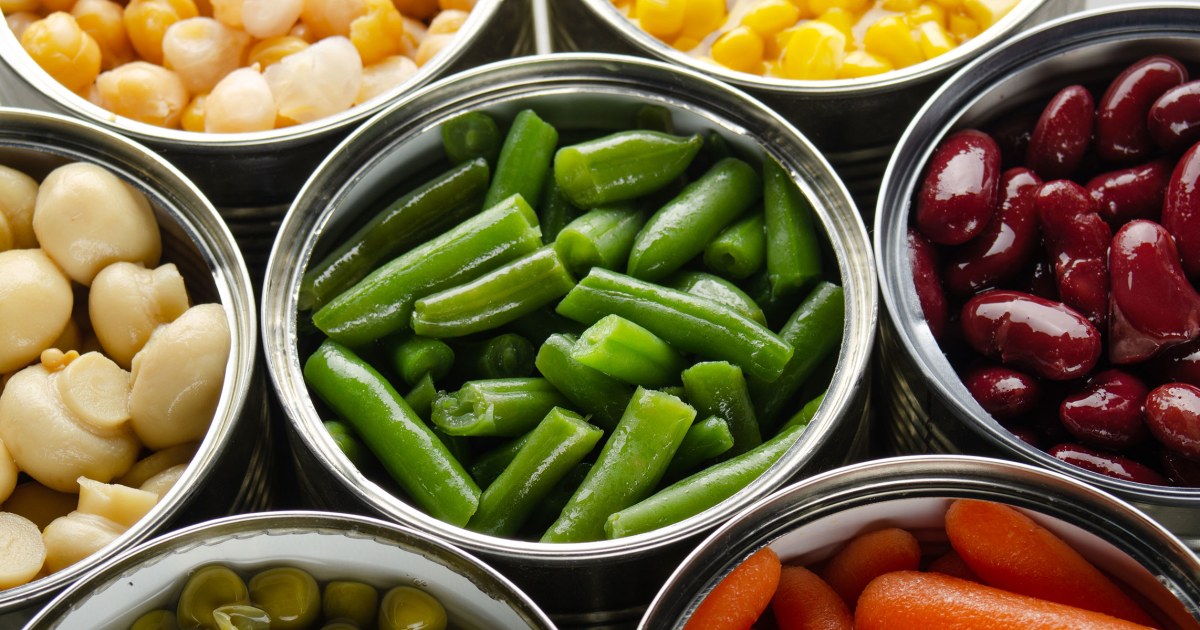
Canned foods are convenient, cheap and shelf-stable. It’s always a good idea to stock a variety of canned goods in your pantry, but they aren’t just a last resort or doomsday staple. Canned foods can be a healthy addition to your diet and help you meet your nutritional needs.
Compared to fresh foods, canned foods offer similar amounts of nutrients, including protein, fiber, vitamins and minerals.
The canning process can actually preserve many nutrients in foods, Amy Reed, a dietitian and spokesperson for the Academy of Nutrition and Dietetics, tells TODAY.com. After being prepared and sealed in an airtight can, the food is heated for a certain amount of time, which kills harmful bacteria and organisms that cause food to spoil.
Canned food can last for months to years, and it’s ready-to-eat. When you’re short on time, canned foods can help you put together a balanced and nutritious meal, registered dietitian-nutritionist Frances Largeman-Roth tells TODAY.com.
Research shows that people who frequently eat canned foods have a higher intake of key nutrients and healthier eating habits compared to those who infrequently eat canned foods.
Plus, canned foods are more accessible and affordable. Given the cost of groceries, who doesn’t want to eat healthy for less?
However, some canned foods are healthier than others.
What To Look For In Healthier Canned Foods
The way canned foods are processed and the added ingredients will affect the nutritional value, the experts note. When choosing between different varieties of canned food, look for the following:
- Reduced or no sodium
- Low or no added sugar
- Packed in water or 100% juice
- BPA-free can
Canned foods can be high in sodium, so try to pick lower salt versions and add your own salt if necessary, says Reed.
Many canned fruits and some vegetables contain added sugars, too. “A good guideline is you want to have less than 5 to 7 grams of sugar (per serving),” says Reed.
Typically, these are canned in water or 100% fruit juice instead of syrup, Largeman-Roth adds. Draining and rinsing canned veggies and fruits can also lower the sodium or sugar content.
Finally, opt for BPA-free cans, says Largeman-Roth, which don’t contain the industrial chemical bisphenol A. Always avoid cans that are dented or bulging.
The Healthiest Canned Foods
“Many canned foods are healthy,” says Reed. However, certain canned foods tend to offer more essential nutrients.
Here are 11 dietitian-approved top picks to keep in your pantry:
Canned Beans
Canned beans are healthy, budget-friendly and delicious. “I’m a big fan of canned beans: black beans, kidney beans, garbanzo beans, white beans,” says Reed.
Beans are an excellent source of plant-based protein. Most varieties contain 8 grams per half-cup, says Largeman-Roth. They’re also packed with gut-healthy fiber. “Beans are excellent for helping you feel full for fewer calories,” says Largeman-Roth.
Beans contain complex carbohydrates, which provide energy and help with blood sugar control, Reed adds. Many beans are rich in micronutrients like iron, potassium, magnesium and B vitamins.
Add canned beans to salads, soups or blend them into dips.
Canned Tomatoes
“Tomatoes are very versatile and healthy in a canned form,” says Reed. Whether whole, diced or crushed, canned tomatoes are packed with flavor and nutrients. These include vitamins A and C, potassium and folate.
“Canned tomatoes provide high levels of the antioxidant lycopene, which helps protect against various types of cancer, including skin and prostate, and also helps prevent high blood pressure,” says Largeman-Roth.
Lycopene is more bioavailable when exposed to heat, so canned tomatoes offer even more than fresh, according to dietitian and TODAY.com nutrition editor Natalie Rizzo.
Canned tomatoes are excellent for making homemade sauces, soups and stews.
Canned Artichoke Hearts
Artichoke hearts are delicious and good for you. Fortunately, canned artichoke hearts contain similar amounts of nutrients as fresh, whole artichokes — including fiber, protein and vitamins.
Artichoke hearts are particularly rich in a type of fiber called inulin, which acts as a prebiotic to support our gut microbiome and helps prevent constipation, TODAY.com previously reported. They also provide plant-based protein, folate, potassium, vitamin C and antioxidants.
Toss artichoke hearts into a salad or pasta for a quick fiber boost.
Canned Corn
This sweet, starchy vegetable is a popular canned food, and for good reason.
Corn is naturally low in calories and fat, but provides slow-digesting complex carbohydrates and fiber, says Reed. Corn contains both soluble and insoluble fiber, which can add bulk to stool, promote regular bowel movements and feed the good bacteria in our gut, TODAY.com reported previously.
You’ll also get a hefty dose of vitamin C, B vitamins, potassium, magnesium, and antioxidants, per Rizzo. Enjoy canned corn heated with butter or add it to chili and chowders.
Canned Sardines
Sardines are some of the healthiest tinned fish you can eat.
Canned sardines are an excellent source of protein, providing about 22 grams per 3-ounce serving, says Largeman-Roth. Plus, they’re full of omega-3 fatty acids, a type of polyunsaturated fat that supports heart and brain health.
Sardines also provide vitamin D, vitamin B12, calcium, phosphorus and selenium, says Largeman-Roth, and they’re naturally low in mercury.
Sardines can be enjoyed from the can on crackers, rice or salads.
Canned Light Tuna
Canned tuna is a no-brainer.
Packing up to 30 grams of protein per can, tuna is naturally lean and low in calories, says Largeman-Roth. Canned tuna is also rich in valuable nutrients, including as selenium, vitamin B3 (niacin) and vitamin B6, which supports a healthy immune system and nerve function.
“Look for varieties of smaller tuna, which have lower mercury levels. These include skipjack and yellowfin tuna, and may be packaged as ‘chunk light’ or ‘light'”, says Largeman-Roth.
Canned Salmon
Canned salmon is another nutrient-packed tinned fish to keep in the pantry. “Just like fresh salmon is an excellent source of omega-3 fatty acids, canned salmon is also a great source, and very affordable,” says Largeman-Roth.
Canned salmon provides about 18 grams of protein per serving, says Largeman-Roth. Plus, it’s one of the few foods naturally rich in vitamin D, which helps build and maintain strong, healthy bones, TODAY.com reported previously.
Salmon also contains calcium, iron, vitamin B12 and potassium, Largman-Roth notes.
If you like salmon burgers, try using canned salmon to make your own.
Canned Chicken Breast
If you aren’t into fish, canned chicken breast is a great shelf-stable protein.
Chicken breast is a high-protein meat that helps support muscle growth and repair, which makes it a good food to eat while strength-training. Plus, it’s low in fat and calories. Canned chicken breast also provides vitamin B12 and B6, iron, phosphorus, zinc, and brain-boosting choline, per Largeman-Roth.
Canned chicken breast blends wonderfully into chicken salad, or you can add it to soups and casseroles.
Canned Beets
Canned beets are delicious, earthy and full of nutrients.
These hearty fall vegetables are packed with fiber, vitamin C, and minerals including iron, potassium and manganese. The antioxidants and plant compounds in beets can help protect heart health, lower blood pressure and fight inflammation, according to Rizzo.
Add canned beets to salads or simmer them with cabbage and other veggies in a hearty borscht.
Canned Green Beans
Green beans, which are technically a legume and a vegetable, are a convenient and healthy canned food, says Reed. The canned version contains the same delicious green beans full of nutrients, but pre-cut and ready-to-eat.
Naturally low in calories and fat, green beans provide fiber and nutrients that support heart and bone health. Green beans are a good source of vitamins A, C and K, says Reed. They also contain some calcium and magnesium.
You can enjoy canned green beans on their own or added to soups and casseroles.
Canned 100% Pumpkin
“Pumpkin is one of my all-time favorite ingredients,” says Largeman-Roth.
Canned pumpkin is packed with nutrients, including fiber and beta-carotenes, a precursor to vitamin A which helps support healthy vision and reduces inflammation.
This fall staple is also rich in immune-boosting vitamin C and heart-healthy potassium.
“I love using canned pumpkin to make breads, pancakes, muffins, overnight oats and more,” says Largeman-Roth. Opt for 100% pumpkin and not pumpkin pie filling, which has added sugar.
Unhealthy Canned Food to Limit or Avoid
These include highly processed canned meats, fruit cocktail in heavy syrup and sugary pie fillings.
Additionally, be careful when choosing canned soups or pastas, which can contain high amounts of sodium, sugar and other added ingredients.

