Last week delivered no shortage of market-moving headlines, yet remarkably few decisive market moves. Investors had to navigate renewed US-Iran tensions, hawkish FOMC minutes, a surprise rate hike from the Reserve Bank of New Zealand, stronger-than-expected Canadian employment, and signs of structural policy shifts in Japan. Despite the unusually dense news flow, most major asset classes ultimately remained confined to familiar ranges, suggesting markets were collecting evidence rather than reaching firm conclusions.
That pattern was especially evident across currencies, commodities and equities. Oil briefly surged above USD 80 as the fragile US-Iran ceasefire appeared to unravel before retreating back toward USD 75 as both sides resumed technical talks. Gold and Silver initially extended their declines on renewed geopolitical uncertainty and firmer Fed expectations, only to recover part of those losses as fears of broader escalation eased. Equities displayed similar resilience. DOW briefly reached another record high, it still finished the week lower, while S&P 500 and NASDAQ advanced but remained below recent peaks. Across markets, price action reflected frequent shifts in sentiment without producing sustained directional conviction.
One market, however, stood apart. US Treasury yields quietly delivered what may prove to be the week’s most important signal. Following hawkish June FOMC minutes, the 10-year Treasury yield broke above a key near-term resistance and closed at its highest level in weeks, indicating investors are becoming increasingly convinced that the Federal Reserve may need to tighten policy further if inflation proves persistent. That breakout now places next week’s US CPI report firmly at the center of the macro calendar. Rather than determining whether inflation remains elevated, the data are more likely to determine whether the Treasury market’s latest move represents the beginning of another leg higher in yields—or merely another false breakout in an otherwise headline-driven market.
Oil Finds Balance as Iran Tensions Flare but War Premium Fails to Return
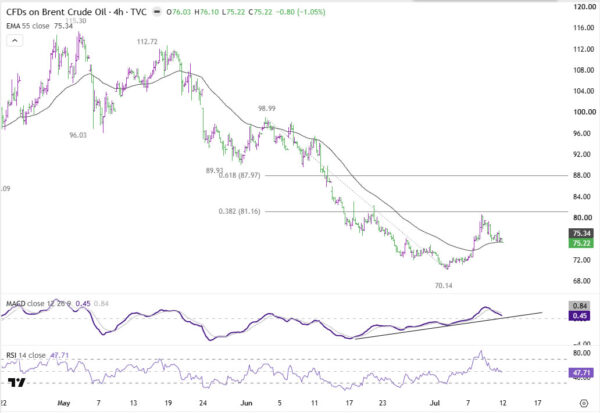
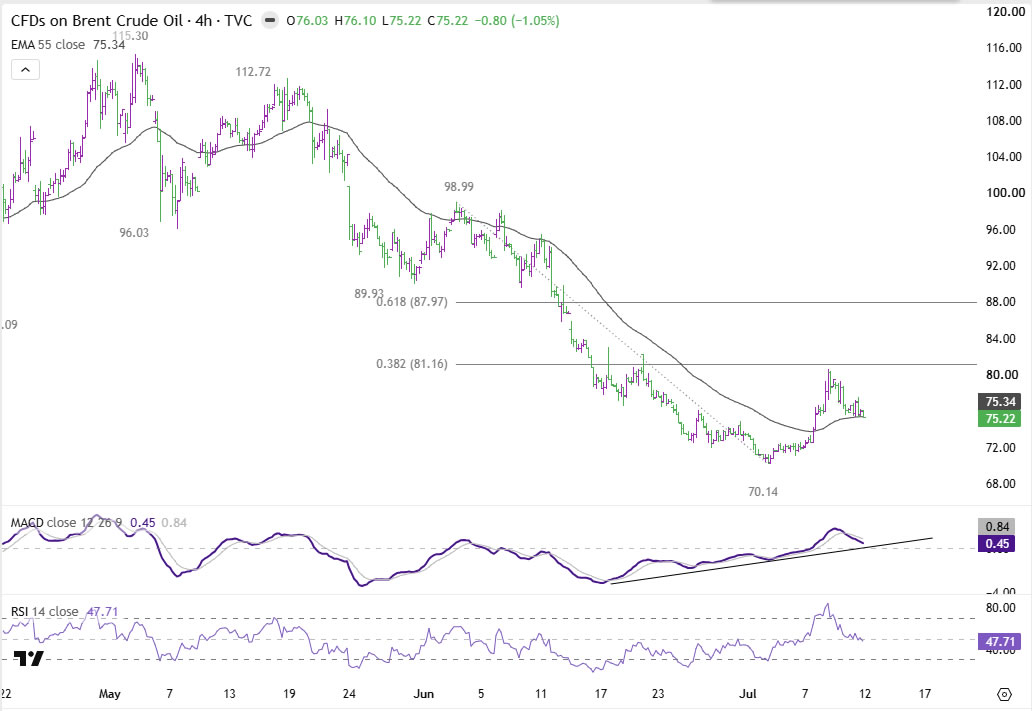
The Middle East once again dominated headlines last week, but the market’s ultimate verdict was notably restrained. What initially appeared to be a serious deterioration in US-Iran relations—including attacks on commercial shipping near the Strait of Hormuz, retaliatory US airstrikes, Washington’s decision to revoke Iran’s oil-export waiver, and President Donald Trump’s declaration that the ceasefire was “over”—briefly reignited fears that the conflict was sliding back toward open confrontation. Brent crude responded by surging above the psychologically important USD 80 level, reviving concerns that a geopolitical risk premium was returning to energy markets.
Yet the rally quickly lost momentum as events failed to evolve into a broader military escalation. Despite the exchange of hostilities, both Washington and Tehran gradually shifted back toward technical discussions by the end of the week, suggesting that neither side was prepared to abandon negotiations altogether. Trump’s own remarks reflected that ambiguity. While declaring the ceasefire effectively dead, he simultaneously left the door open for continued talks. The conflicting messages reinforced the market’s growing view that flare-ups have become part of the negotiating process rather than definitive evidence that diplomacy has collapsed. As a result, Brent surrendered much of its earlier gains to finish the week near USD 75, leaving a weekly increase of 4.6%—noticeable, but modest compared with the sharp swings seen since hostilities first escalated in late March.
The price action highlights an important shift in how investors are interpreting geopolitical developments. Earlier this year, each military incident was sufficient to trigger an aggressive repricing of supply risks. That leaves Brent’s brief move above USD 80 looking more like a temporary squeeze driven by short covering than the beginning of a new bull run. Looking ahead, the USD 80-81 area remains the key technical and psychological threshold. A sustained break above that zone would signal markets are once again pricing a genuine deterioration in supply conditions. Until then, energy markets appear content to treat renewed hostilities as another episode within an unresolved—but still manageable—geopolitical standoff.
Hawkish Fed Minutes Lift Yields, But Dollar Still Awaits Confirmation
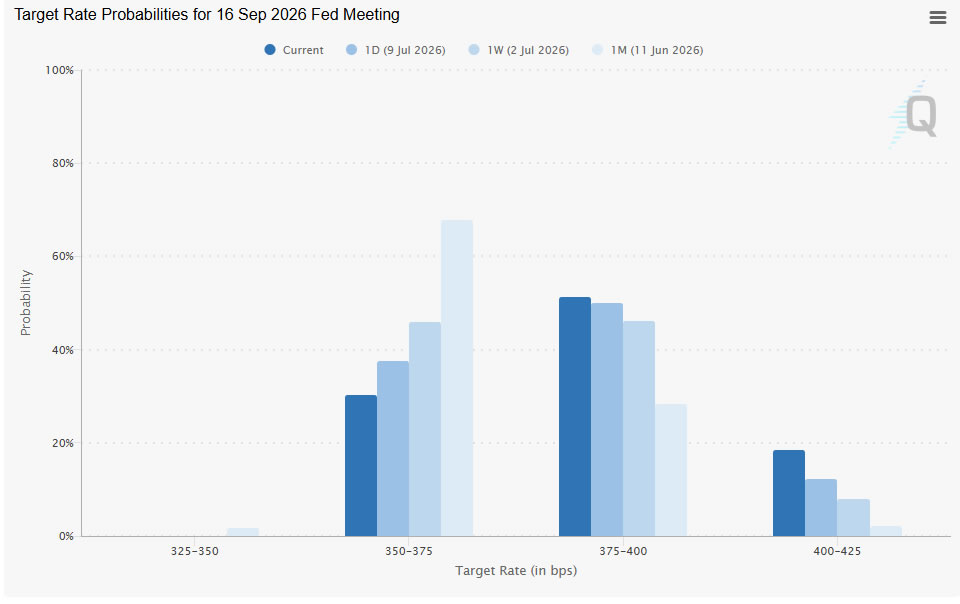
June’s FOMC minutes provided one of the week’s clearest hawkish surprises, reinforcing the view that the Federal Reserve remains firmly focused on inflation risks despite holding rates unchanged. The minutes revealed a Committee split almost evenly between those favoring another rate hike this year and those preferring to remain on hold, while inflation risks were explicitly assessed as tilted to the upside. Officials pointed not only to tariffs and higher energy prices stemming from the renewed Middle East conflict, but also to persistent demand generated by AI-related investment, with rising electricity consumption and technology-sector costs increasingly viewed as additional sources of inflationary pressure.
The most striking revelation, however, was that “a few participants” believed there was already “a case for raising the target range” at the June meeting itself before ultimately agreeing to wait for additional evidence. That language suggested the debate within the Committee had already moved beyond whether another hike would be necessary to whether the evidence had become sufficient to justify immediate action. While the decision to hold was unanimous, the minutes made clear that unanimity on the vote masked a much more divided discussion beneath the surface. Markets responded by increasing the probability of a September rate hike to around 70%, up from roughly 63% before the release, reflecting growing confidence that the Fed’s tightening cycle may not yet be over.
10-Year Treasury Yield Breakout Could Be the Week’s Most Important Signal
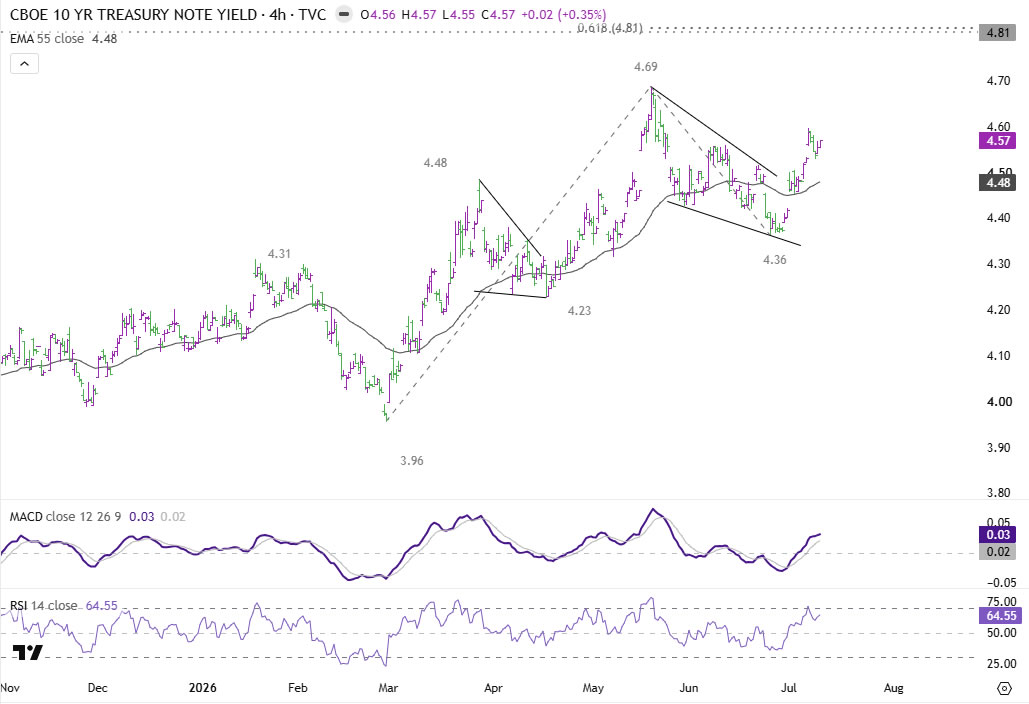
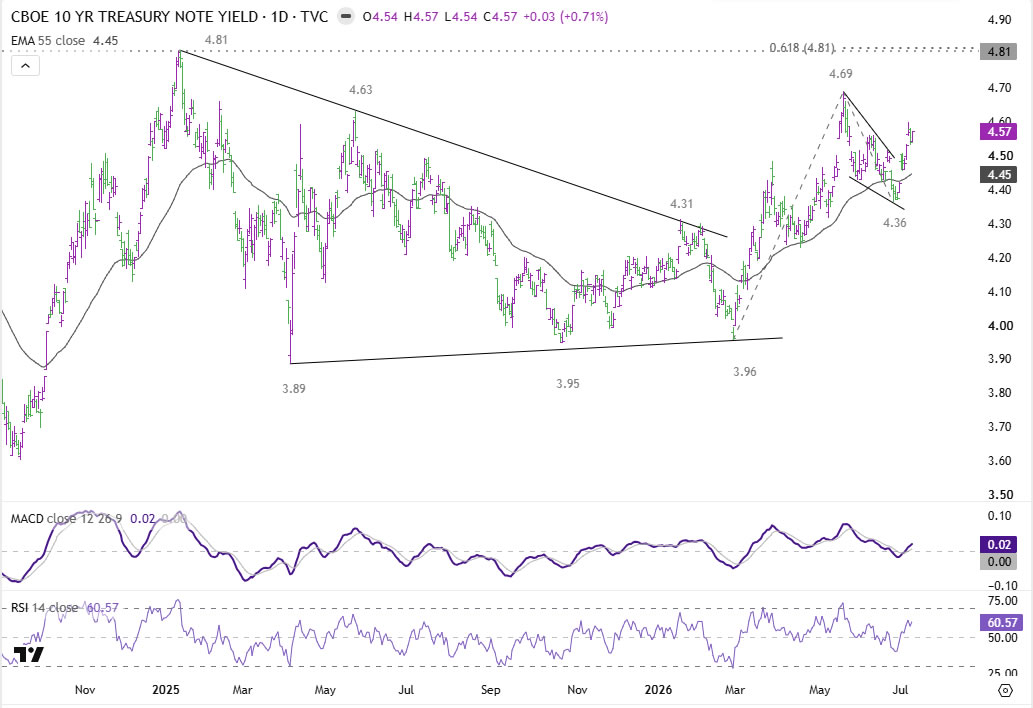
While most major asset classes spent last week oscillating between competing narratives, the US Treasury market delivered a much cleaner message. The benchmark 10-year yield climbed from 4.49% to 4.57%, breaking above the important near-term resistance at 4.56% before closing the week keep much of the gains. Unlike moves in equities, commodities or foreign exchange—which were repeatedly influenced by changing headlines surrounding Iran and shifting risk sentiment—the rise in yields can be explained largely by one factor: markets increasingly repricing the prospect that the Federal Reserve may not yet be finished tightening.
Technically, the picture has improved noticeably for Treasury yields. The decisive break above 4.56 strongly suggests that the pullback from May’s 4.69 high was merely a correction within the broader advance from March’s 3.96% low. As long as the 55 4H EMA, now near 4.48, continues to provide support, further gains remain favored. The first objective is a retest of the 4.69 peak. Decisive break there will resume whole rally from 3.96 to 61.8% projection of 3.96 to 4.69 from 4.36 at 4.81. That is close to 2025 high at 4.81.
Dollar Index Awaits Yield Confirmation to Break Higher
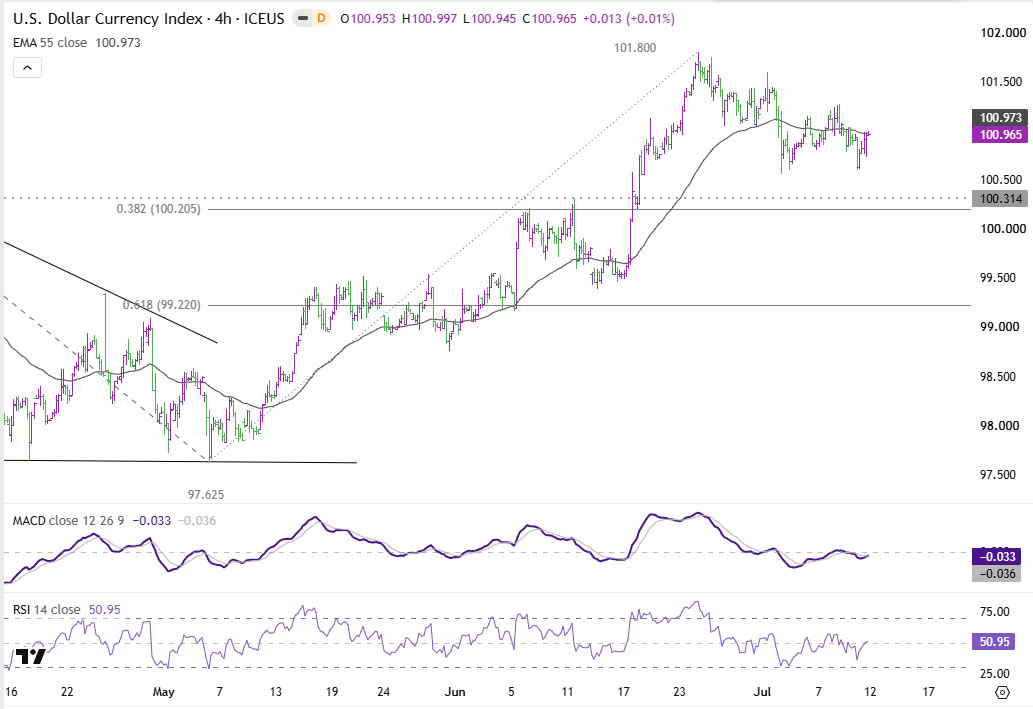
Unlike Treasury yields, Dollar Index ended the week without delivering a decisive technical breakout. Despite increasingly hawkish Fed expectations and a meaningful rise in US yields, the greenback spent another week consolidating below the 101.80 resistance level. That restrained performance suggests currency markets remain reluctant to fully embrace another leg of Dollar strength until incoming inflation data provide clearer evidence that the Federal Reserve will indeed need to tighten policy further.
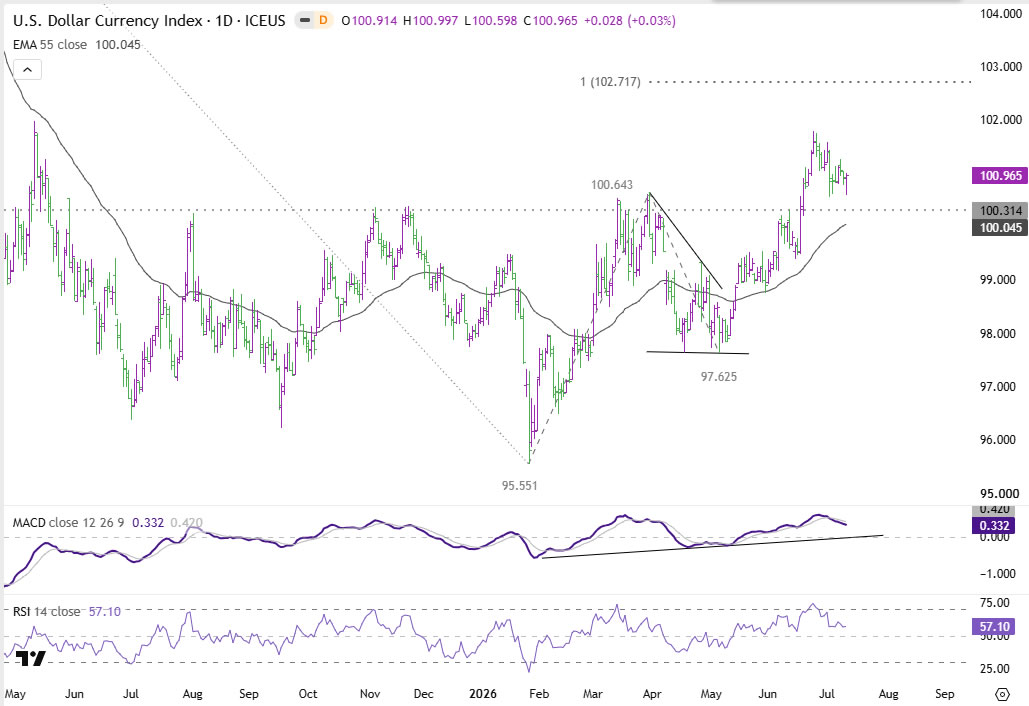
Technically, the broader outlook remains bullish despite the recent consolidation. Price action from 101.80 continues to be viewed as a pause within the larger advance from this year’s 95.55 low rather than the beginning of a reversal. As long as the important 100.20-100.31 support zone—comprising the 38.2% retracement of the 97.62-101.80 rally and nearby structural support—holds, the bullish bias remains intact.
Decisive break above 101.80 would confirm the resumption of the broader uptrend and target 100% projection of 95.55 to 100.64 from 97.62 at 102.71. On the downside, however, sustained break below the 100.20/31 support area would significantly weaken the bullish case, opening the door for a deeper correction toward 55 D EMA, now near 100.04, and potentially beyond.
Kiwi Leads as Domestic Fundamentals Outshine Global Uncertainty
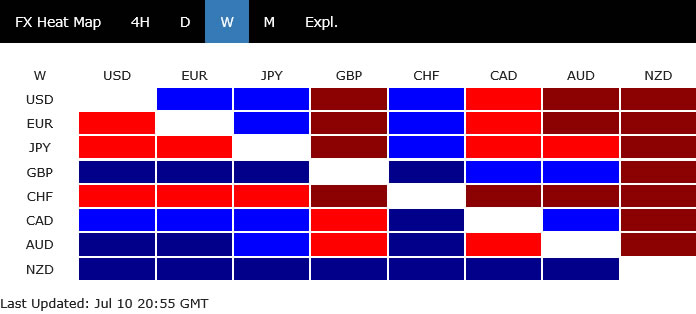
Currency performance last week was driven less by broad shifts in risk sentiment than by diverging domestic fundamentals. New Zealand Dollar emerged as the week’s strongest major currency after the Reserve Bank of New Zealand delivered a 25 basis point rate hike that caught part of the market off guard. While opinions had been divided ahead of the meeting, the decision was quickly reinforced by a surprisingly strong June manufacturing PMI, which surged to its highest level since mid-2021.
Sterling ranked as the second-best performer, with gains continuing to be driven primarily by domestic developments rather than changes in global risk appetite. The fading of political uncertainty following the resolution of the Labour leadership transition continued to fuel the unwinding of sizeable speculative short positions accumulated before Prime Minister Keir Starmer’s resignation.
Canadian Dollar finished third despite persistent uncertainty surrounding the future of the USMCA following Washington’s decision not to extend the trade agreement automatically. Support instead came from stronger-than-expected employment data, which largely removed residual speculation that the Bank of Canada might eventually need to consider easing policy later this year.
At the opposite end of the rankings, Swiss Franc underperformed as rising US and European bond yields reduced demand for low-yielding defensive currencies. Yen also finished among the weakest performers. While Finance Minister Katayama’s proposal to encourage greater domestic pension-fund investment briefly lifted the currency, the absence of concrete policy measures and the still-wide US-Japan interest-rate differential limited follow-through buying.
Dollar, Euro and Australian Dollar ended the week in the middle of the performance table, reflecting the broader market’s reluctance to establish strong directional positions ahead of next week’s US CPI report.
EUR/USD Weekly Outlook
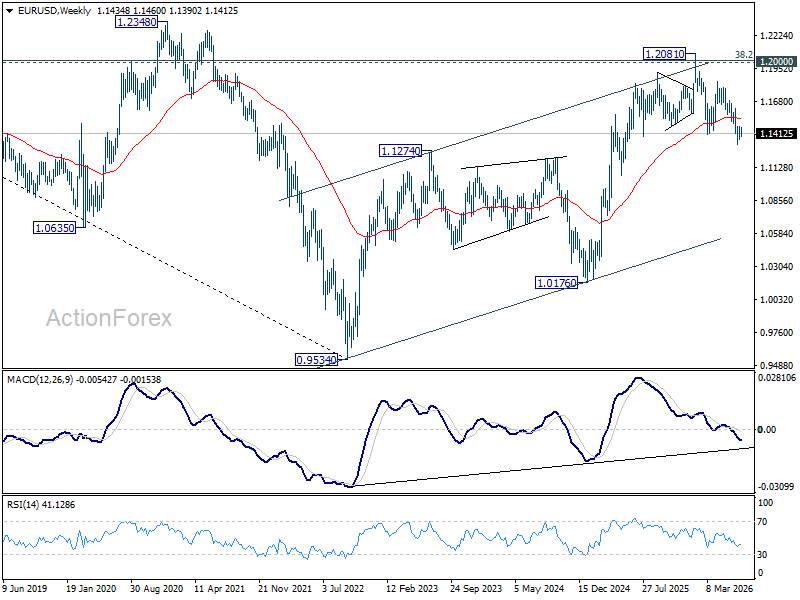
EUR/USD’s consolidation from 1.1323 continued last week and outlook is unchanged. Initial bias remains neutral this week. With 1.1499 support turned resistance intact, further decline is expected. On the downside, break of 1.1323 will resume the fall from 1.2081 to 100% projection of 1.2081 to 1.1408 from 1.1848 at 1.1175. However, decisive break of 1.1499 will turn bias back to the upside for 1.1621 resistance.
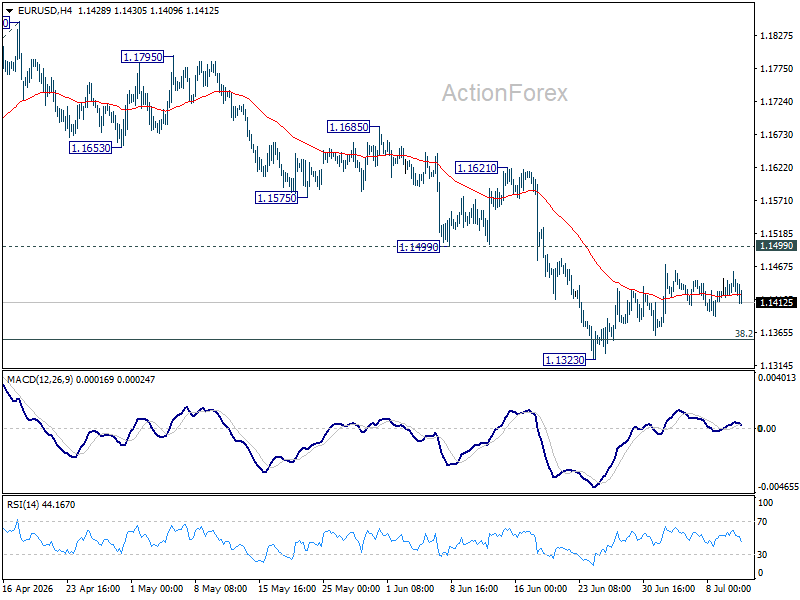
In the bigger picture, focus is back on 38.2% retracement of 1.0176 to 1.2081 at 1.1353. Decisive break there will revive the case of medium term bearish trend reversal after rejection by 1.2 key cluster resistance level. Further fall should be seen to 61.8% retracement at 1.0904. Nevertheless, strong rebound from 1.1353, followed by break of 1.1621 resistance, will retain medium term bullishness.
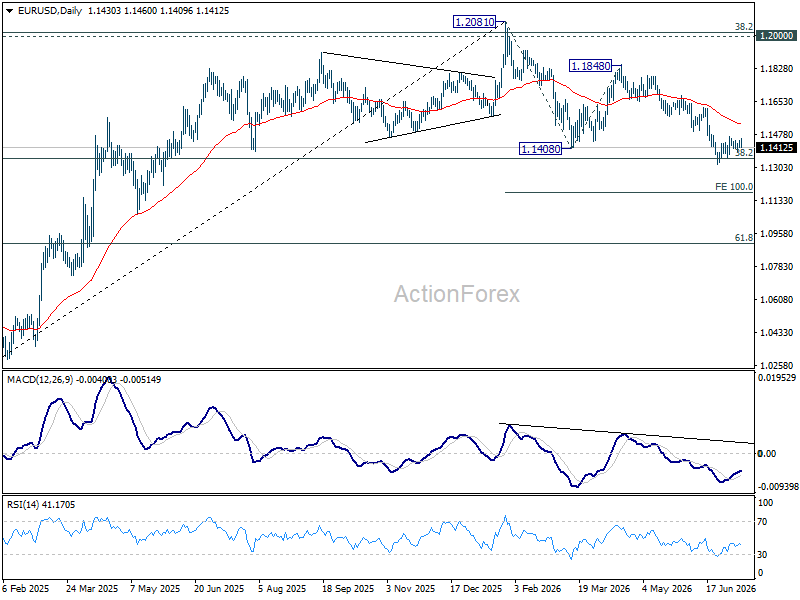
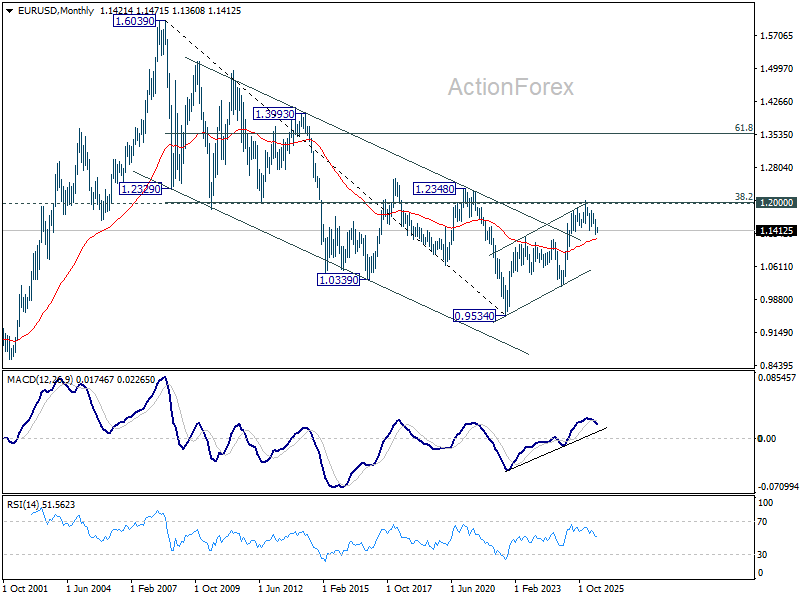
In the long term picture, 38.2% retracement of 1.6039 to 0.9534 at 1.2019, which is close to 1.2000 psychological level is the key for the outlook. Rejection by this level will keep the multi decade down trend from 1.6039 (2008 high) intact, and keep outlook neutral at best. However, decisive break of 1.2000/19, will suggest long term bullish trend reversal, and target 61.8% retracement at 1.3554.