Chinese President Xi Jinping and Russian President Vladimir Putin’s criticism of international sanctions and pressure on North Korea is effectively a message that Beijing and Moscow are prepared to provide greater political backing to Pyongyang, an expert here recently said.
The assessment, by Korea Institute for National Unification research fellow Lee Jae-young, also suggested that a potential summit between Xi and North Korean leader Kim Jong-un in the near future could reinforce the emerging trilateral alignment among North Korea, China and Russia.
“Rather than focusing on North Korea’s advancing nuclear and missile capabilities, China and Russia devoted greater attention in their joint statement to US and allied military exercises, sanctions against North Korea and the country’s diplomatic isolation,” Lee wrote, in a report titled “Assessment of the China-Russia Summit: Declaration of Multipolarity, Institutionalization of Strategic Coordination, and Implications for the Korean Peninsula.”
“This could strengthen North Korea’s perception that it enjoys de facto political support from China and Russia,” he added.
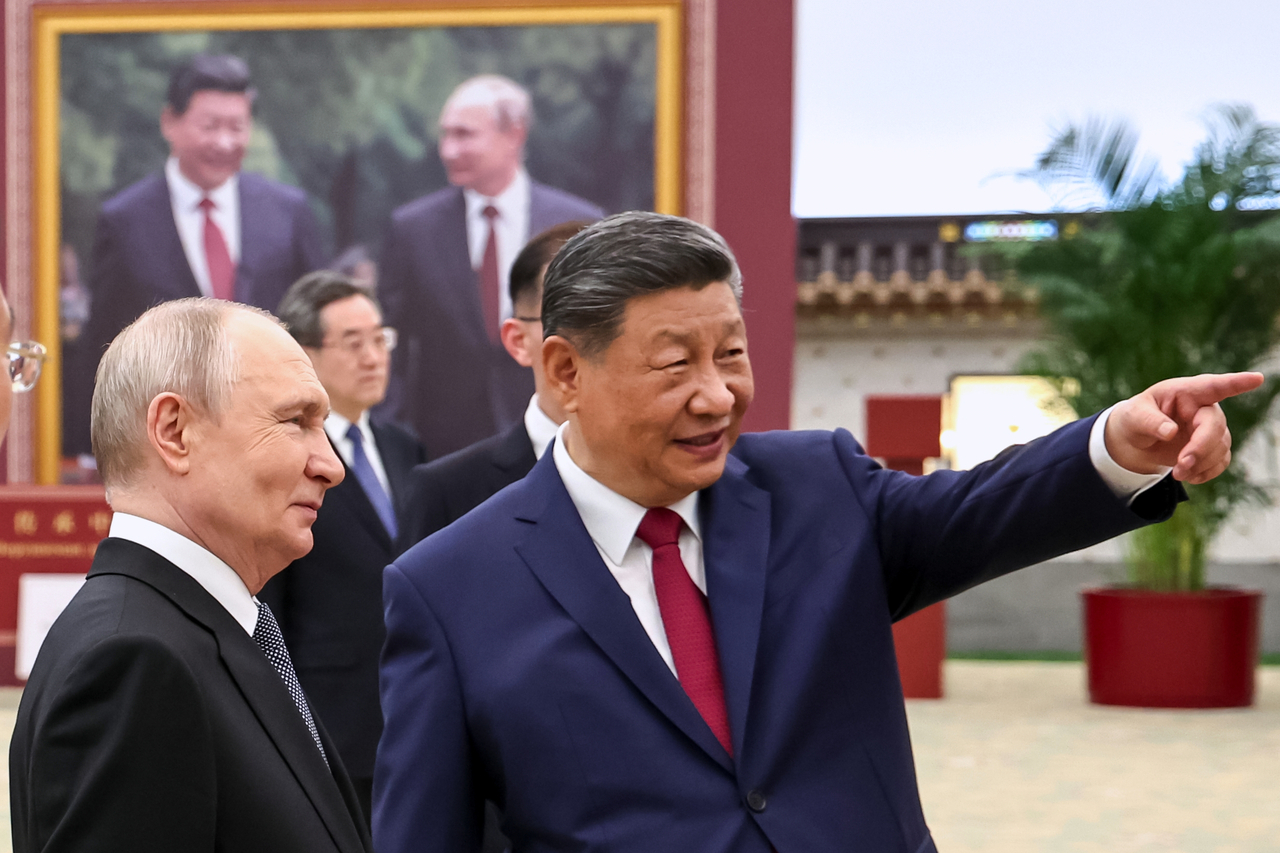
Following their summit in Beijing last week, Xi and Putin issued two joint statements, including one on further strengthening their comprehensive strategic coordination and deepening good-neighborly friendship and cooperation.
In the statement, the two sides said that maintaining peace and stability on the Korean Peninsula and promoting a political settlement of relevant issues serve the common interests of Northeast Asia and the international community. They also expressed opposition to actions that, in their view, threaten North Korea’s security through diplomatic isolation, economic sanctions and military pressure, while calling on relevant countries to refrain from steps that could heighten regional tensions or fuel an arms race.
The statement said China and Russia support efforts to address concerns on the Korean Peninsula through political and diplomatic means based on mutual respect for sovereignty and pledged to continue close coordination on regional issues.
Notably, neither of the joint statements referred to the denuclearization of North Korea, a point that some analysts view as reflecting Beijing and Moscow’s increasingly cautious approach toward pressuring Pyongyang over its nuclear program.
Against this backdrop, Lee argued that if a North Korea-China summit takes place, Beijing is likely to “seek renewed engagement with Pyongyang in order to prevent North Korea from leaning too heavily toward Russia,” with which it now openly promotes a military alliance, while also reaffirming China’s influence over Korean Peninsula affairs.
North Korea, in turn, could attempt to leverage such competition by seeking concessions including greater acceptance of its status as a nuclear-armed state, sanctions relief and expanded economic assistance, he said.
Lee added that, from a long-term perspective, South Korea should pay particular attention to emerging trilateral cooperation involving North Korea, China and Russia surrounding access to the East Sea via the Tumen River.
During their summit, Xi and Putin also highlighted continued cooperation related to maritime access through the lower Tumen River, an issue that would require North Korea’s involvement given the geography.
According to China’s state-run Xinhua News Agency on May 22, Chinese President Xi Jinping and Russian President Vladimir Putin signed a joint statement after their summit at Beijing’s Great Hall of the People on May 20, outlining plans to deepen cooperation in areas including the economy, culture, defense and transportation infrastructure.
The statement said that “in accordance with the 1991 agreement on the eastern section of the border, trilateral consultations with the DPRK regarding access to the sea through the Tumen River will continue.” The reference underscored the importance of Russia’s participation in any such initiative, as the lower reaches of the Tumen River pass through territory bordering Russia, making Chinese maritime access through the route dependent on Moscow’s cooperation.
China has long shown interest in securing maritime access through the lower reaches of the Tumen River in order to improve logistics connectivity for its northeastern region, particularly Jilin Province.
Diplomatic observers have also raised the possibility that Xi could make a state visit to North Korea in the near future, during which cooperation surrounding the Tumen River could serve as an important avenue for strengthening bilateral ties.
“If the Tumen River, the Russian Far East, the Manzhouli-Zabaykalsk railway corridor and Arctic shipping routes become interconnected, this would evolve beyond a simple logistics network into a strategic borderland and maritime space shared by North Korea, China and Russia,” Lee said.
“The South Korean government should not view this solely through the lens of economic cooperation.”
He further recommended that Seoul prepare for a possible North Korea-China summit by urging Beijing to uphold its responsibilities for stability on the Korean Peninsula while maintaining at least minimal diplomatic channels with Moscow.
At the working level, he said, the government should continue monitoring developments related to Tumen River-East Sea maritime access, potential indirect exports to Russia, and changes in logistics networks linking North Korea, China and Russia.
mkjung@heraldcorp.com