Zaur Nurmamedov is a journalist and a graduate of the Faculty of Political Science at the Academy of Public Administration under the President of the Republic of Azerbaijan (1993–1999). He served as First Deputy Editor-in-Chief of the Vesti.Az news portal from 2009 to 2023.
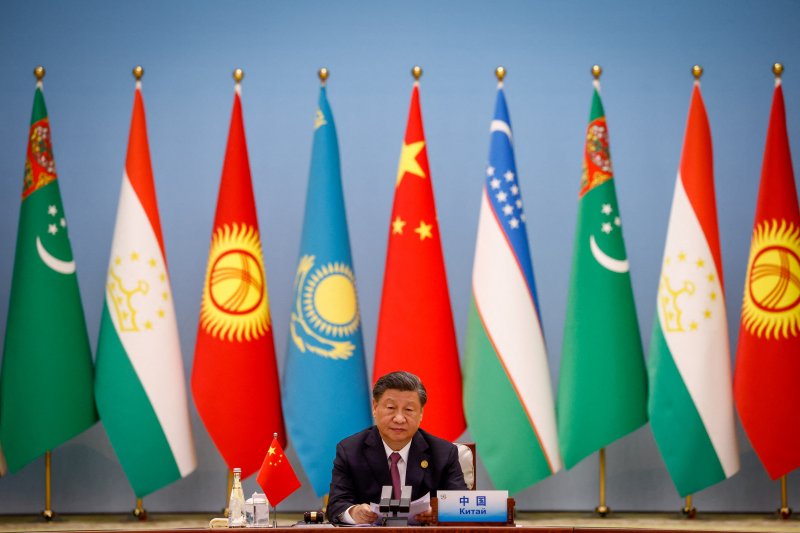
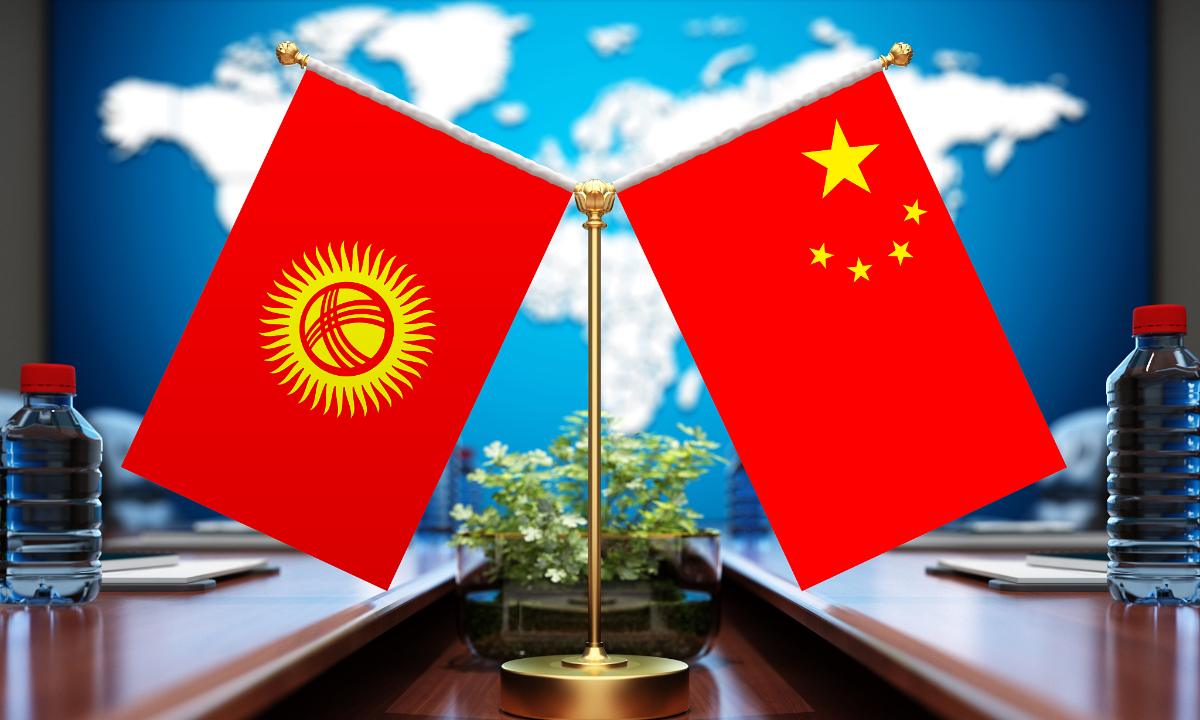
Chinese President Xi Jinping’s forthcoming state visit to Kyrgyzstan on 31 August–1 September will go far beyond a ceremonial diplomatic event. The Chinese leader is expected to arrive in Bishkek for bilateral talks and to attend the Shanghai Cooperation Organisation summit. The visit is set to become one of Kyrgyzstan’s most important foreign policy events in recent years and will also demonstrate how rapidly the balance of power in Central Asia is changing.
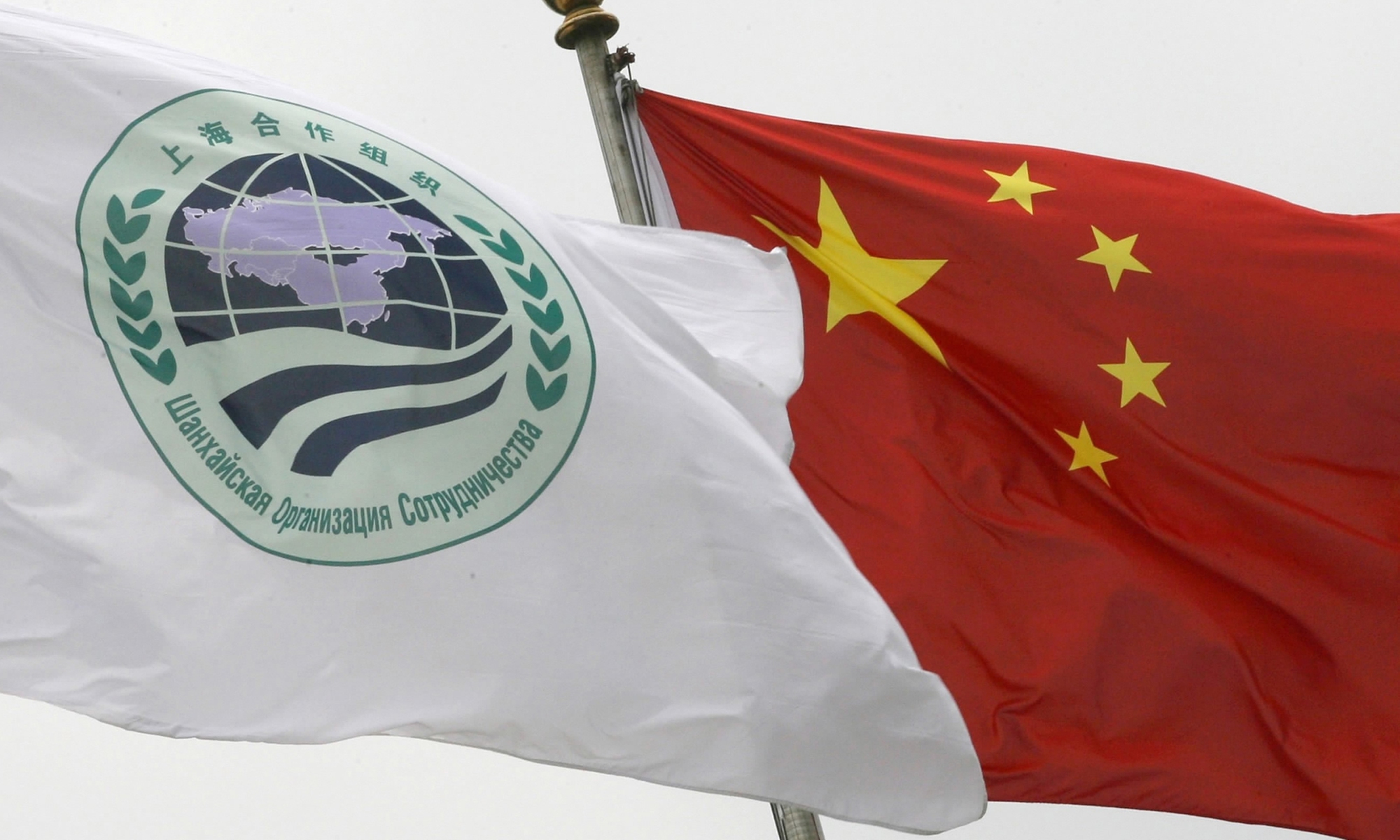
The Kyrgyz side has announced that the summit of SCO heads of state will take place in Bishkek on August 31 and September 1. Kyrgyzstan is chairing the organisation in 2025–2026 under the slogan “25 Years of the SCO: Together Towards Sustainable Peace, Development and Prosperity.” The chairmanship was transferred to Bishkek following the summit in China’s Tianjin in September 2025.
For Xi Jinping, participation in the summit will provide an opportunity to reaffirm China’s leading role within the SCO. For Kyrgyz President Sadyr Japarov, however, the visit carries even greater practical significance. Bishkek hopes to convert the high level of political relations with Beijing into infrastructure projects, investment, industrial enterprises and stable transport links.
Source: Global Times
The China–Kyrgyzstan–Uzbekistan railway will almost certainly be one of the central issues on the agenda. The project was discussed for more than a quarter of a century, but actual construction began only after the signing of a trilateral agreement and an official groundbreaking ceremony in December 2024.
By March 2026, work was already under way on several sections, including four major tunnels. In total, 29 tunnels and 50 bridges are planned on Kyrgyz territory, while the railway’s total length within the country will amount to approximately 305 kilometres.
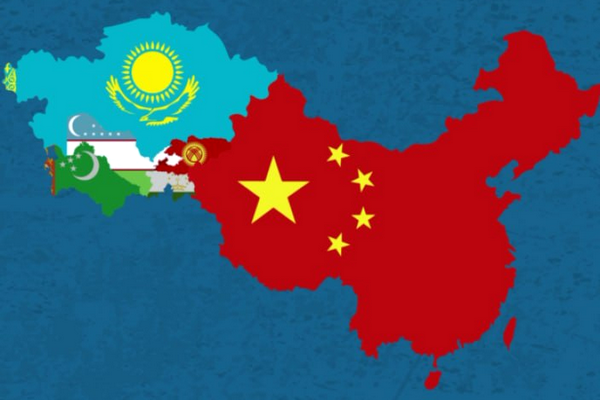
This railway has the potential to fundamentally transform Kyrgyzstan’s position on the economic map of Eurasia. Today, the country remains a landlocked state with difficult mountainous terrain and a limited railway network. The new route is expected to directly connect China’s railway system with Kyrgyzstan for the first time and then extend through Uzbekistan towards Turkmenistan, the Caspian Sea, Azerbaijan, Türkiye and European markets.
For China, the railway represents another westward route that will help diversify overland trade and reduce dependence on corridors passing through Russia and Kazakhstan. For Kyrgyzstan, it offers an opportunity to move from the position of a transport dead end to that of a transit country. Bishkek could generate revenue from freight transportation, infrastructure services, logistics centres and related trade.
The project’s importance, however, is not limited to transit fees. The railway could create a new economic axis within Kyrgyzstan itself, particularly in the southern regions. Warehouses, processing facilities, industrial sites and cross-border trade centres may emerge along the route.
Beijing has already officially identified the construction of the railway, the modernisation of border crossings and the expansion of passenger and cargo air links as priorities in bilateral cooperation.
Source: daryo.uz
The project also carries strategic importance for Azerbaijan. The more cargo that moves from China through Kyrgyzstan and Uzbekistan towards the Caspian Sea, the greater the demand will be for the Trans-Caspian International Transport Route. Baku could gain additional freight volumes for its ports, railways and the Baku–Tbilisi–Kars railway. In this sense, the China–Kyrgyzstan–Uzbekistan railway could become another source of cargo for the Middle Corridor.
At the same time, Xi Jinping’s visit will highlight the growing economic asymmetry between China and Kyrgyzstan. Beijing is already Kyrgyzstan’s largest trading partner and its main source of imported goods. According to Kyrgyzstan’s National Statistical Committee, China accounted for almost 60 per cent of the country’s imports from non-CIS states in the first quarter of 2026.
The structure of trade, however, remains highly unbalanced. Kyrgyzstan imports far more Chinese goods than it exports to China.
One of Bishkek’s main objectives will therefore be not only to attract new Chinese loans and contractors but also to secure broader access for Kyrgyz products to the Chinese market. Kyrgyzstan is interested in exporting agricultural goods, food products, textiles, mineral resources and processed products.
Without an expansion of exports, further growth in bilateral trade would primarily mean an increase in Chinese imports and a deeper dependence of the Kyrgyz market on supplies from China.
From this perspective, Xi Jinping’s visit could be accompanied by agreements opening the Chinese market to new categories of Kyrgyz products, creating joint ventures and building processing plants. For Bishkek, it is crucial that Chinese investment is not limited to roads, mines and imported equipment but also creates jobs and production chains inside the country.
The debt issue deserves particular attention as well. Large-scale infrastructure projects require considerable financing, while China is already Kyrgyzstan’s largest bilateral creditor. The railway could provide the country with long-term benefits, but its commercial success will depend on freight volumes, tariff policy and Bishkek’s ability to service its financial obligations.
The terms of lending, the distribution of revenues and control over the joint railway company will therefore be no less important than the project’s official construction cost.
The political dimension of the visit is equally clear. China is gradually transforming from a predominantly economic partner of Central Asia into one of the principal architects of the regional order. Beijing offers the countries of the region infrastructure, market access, loans, technology and political support while generally avoiding public demands related to their internal political systems.
In June 2025, China and the five Central Asian states signed a treaty on eternal good-neighbourliness, friendship and cooperation. Beijing also announced new grants and called for accelerated construction of the railway through Kyrgyzstan and Uzbekistan. These steps showed that China’s regional policy is becoming more institutionalised and long-term.
This does not mean that Russia is being automatically displaced. Moscow retains considerable influence through shared history, the Russian language, labour migration, the Eurasian Economic Union, military cooperation and close links between societies.
Source: Global Times
Nevertheless, the economic balance is increasingly shifting towards China. Russia remains one of Kyrgyzstan’s most important political and humanitarian partners, while China is becoming indispensable for infrastructure modernisation and foreign trade.
Bishkek, for its part, has no interest in choosing between Moscow and Beijing. Its strategy is to simultaneously benefit from the Russian market, Chinese investment, relations with Turkic states, cooperation with the European Union and transport access through the South Caucasus.
Xi Jinping’s visit will therefore be presented not as a change in Kyrgyzstan’s geopolitical orientation but as another element of its multi-vector foreign policy.
The SCO summit will also give Kyrgyzstan an opportunity to demonstrate its diplomatic agency. The organisation brings together China, Russia, India, Pakistan, Iran, Kazakhstan, Uzbekistan, Tajikistan, Kyrgyzstan and Belarus. Yet the interests of its members do not always coincide.
Bishkek is likely to focus discussions on areas where practical cooperation is possible, including transport corridors, trade, counterterrorism, Afghanistan, energy, digitalisation and regional security. Preparatory work in these areas is already being carried out as part of Kyrgyzstan’s chairmanship.
Xi Jinping’s forthcoming visit should therefore be viewed as part of a much broader process. China is consolidating its presence in Central Asia not only through trade and lending but also through transport infrastructure, political institutions and long-term agreements.
Kyrgyzstan, in turn, has a historic opportunity to transform its geography from a constraint into an advantage.
The visit of the Chinese leader alone, however, will not guarantee an economic breakthrough. The outcome will depend on Bishkek’s ability to ensure transparency in major projects, secure a fair distribution of revenues, expand national exports and avoid turning transit infrastructure into a source of excessive debt dependence.
The central question is no longer whether China will strengthen its position in Kyrgyzstan. That process is already under way.
The real question is whether Kyrgyzstan can use Beijing’s growing interest to support its own industrialisation and become a fully fledged participant in emerging Eurasian transport routes rather than merely a territory through which Chinese goods pass.
(If you possess specialized knowledge and wish to contribute, please reach out to us at [email protected]).