
(Dreamstime)
The U.S. pioneered CAR-T cancer therapy, but China is rapidly emerging as a global leader — offering treatment at a fraction of U.S. costs and recently becoming the first country to approve CAR-T therapy for a solid tumor.
The shift is being driven by lower costs, a large and growing research pipeline, rapid manufacturing and a vast patient population that allows researchers and hospitals to move promising treatments from the laboratory into clinical studies and patient care.
For patients, one of the most visible differences is price. CAR-T treatment in the U.S. can cost $550,000 to $850,000, including medical care associated with the therapy. In China, treatment can range from about $150,000 to $230,000, making Shanghai and other major medical centers increasingly attractive to international patients who might otherwise be priced out of care.
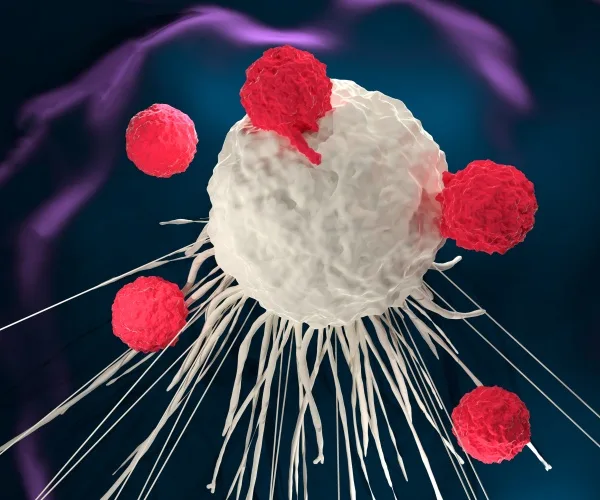
According to the American Cancer Society, CAR-T cell therapy — short for chimeric antigen receptor T-cell therapy — is a type of cell-based gene therapy. A patient’s T cells, a type of white blood cell, are collected and genetically modified in a laboratory so they can better recognize and attack cancer cells. The altered cells are then infused back into the patient.
“China has basically done to CAR-T cell therapy the same thing that it’s done to other industries, which is, they’ve industrialized it,” said Dr. Sairah Ahmed, director of the CAR-T program in the department of lymphoma and myeloma at the University of Texas MD Anderson Cancer Center in Houston.
Ahmed has recommended seeking CAR-T therapy in China to some of her overseas patients, where treatment can range from $150,000 to $230,000 compared with $550,000 to $850,000 in the U.S.
Regulators in dozens of countries have approved CAR-T therapies for blood cancers, including leukemia, lymphoma and multiple myeloma. But China broke new ground in June when regulators approved satricabtagene autoleucel, or satri-cel, for certain patients with advanced stomach or gastroesophageal junction cancer — the world’s first CAR-T therapy approved for a solid tumor.
The treatment, developed by Shanghai-based CARsgen Therapeutics, is specifically approved for patients with advanced gastric or gastroesophageal junction adenocarcinoma whose tumors are CLDN18.2-positive and HER2-negative and whose cancer has progressed after at least two previous lines of treatment.
China still faces challenges. Long-term safety and effectiveness data remain important, quality control must be consistent across hospitals and manufacturers, and international patients need careful guidance to distinguish approved treatments from experimental therapies.
According to The Wall Street Journal, China’s private international hospitals tend to be more cautious, generally steering international patients toward approved treatments rather than experimental clinical trials.
China’s advantage isn’t only affordability. International hospitals treating CAR-T patients can offer multidisciplinary care because the therapy sometimes causes serious complications that require rapid intervention by oncologists and other specialists. Some centers also have sophisticated laboratories and manufacturing systems that can shorten the time needed to produce a patient’s personalized CAR-T cells.
For cancer patients who have exhausted other therapies, faster access can be especially appealing.
China also has one of the world’s largest CAR-T research pipelines, with extensive research underway in both blood cancers and solid tumors. This is important because CAR-T remains a rapidly evolving technology, particularly for solid tumors, which have proved far more difficult to treat with CAR-T than blood cancers.
The countries conducting the most research may learn faster which tumor targets are most promising, how to manage side effects and why some patients respond while others relapse.
The result is a changing map for advanced cancer care. Patients are no longer looking only to the United States for cutting-edge cellular therapy. Increasingly, some international patients are looking to China, where CAR-T can be less expensive and where researchers are pushing the technology into new types of cancer.
If the current momentum continues, China may not simply offer a less expensive version of CAR-T therapy. It could help shape what the next generation of the treatment looks like.
© 2026 NewsmaxHealth. All rights reserved.