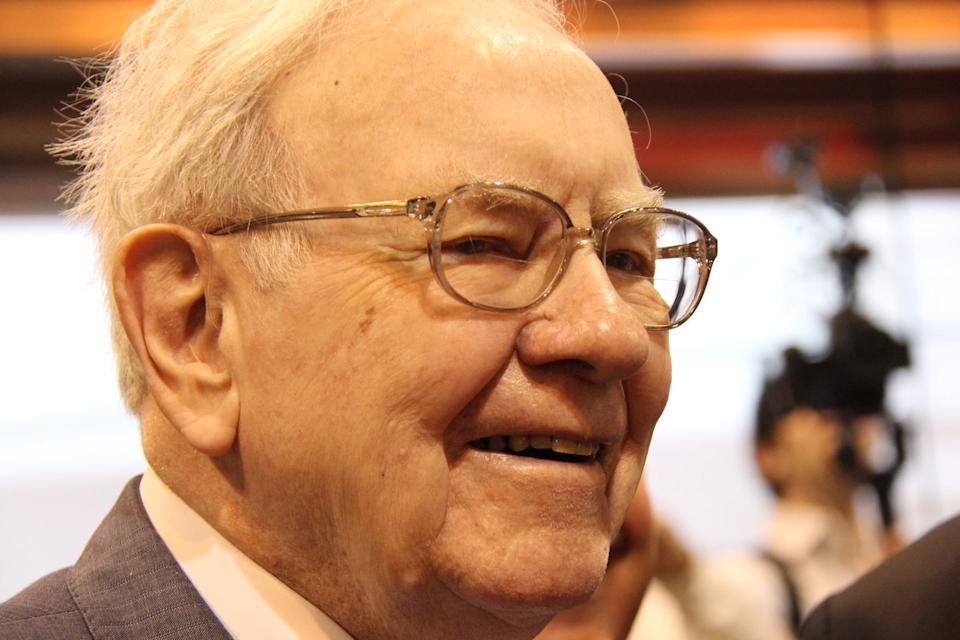
When the S&P 500 fell by 9% earlier this year, Warren Buffett didn’t flinch. Many people assumed that, since stock prices had fallen, Buffett would take advantage of a few value opportunities.
He did not. In fact, the former chairman of Berkshire Hathaway (NYSE: BRKA)(NYSE: BRKB) didn’t even seem particularly moved by the pullback.
Missed Nvidia in 2009? This Rare Signal Is Flashing Again. In 2009, a “Double Down” signal flashed for a little-known chipmaker called Nvidia. For the first time in years, that same “Total Conviction” signal is flashing for a company 1/100th the size of Nvidia. Continue »
In an interview earlier this year, Buffett said of the U.S. stock market: “Three times since I’ve taken over Berkshire, it’s gone down more than 50%. This is nothing.”
Buffett sees no value in U.S. stocks
The implication is clear. Stocks might have been lower than they were compared to their highs a couple of months earlier. But they were still very expensive on a long-term basis, and Buffett wasn’t going to budge until stocks got much cheaper.
Berkshire ended first-quarter 2026 with nearly $400 billion in cash and Treasury bills on the books. To the average investor, this might be viewed as an unnecessary cash drag on a portfolio. But Buffett has consistently favored patience over emotion. When the time is right, he’ll have the dry powder. Now, he says, is not the time to use it.
The S&P 500 is currently trading at a forward price-to-earnings (P/E) ratio of 21. That’s down quite a bit from its peak, thanks to the big earnings boom the S&P 500 has enjoyed from artificial intelligence development. But that’s not the metric that Buffett pays close attention to.
The Buffett indicator hits a new record
The Buffett indicator isn’t called the Buffett indicator for nothing. This measure, which compares the value of corporate equities to U.S. gross domestic product, is the one he looks at. At around 230% currently, it’s in unprecedented territory and clearly not the kind of level Buffett would be looking to buy at.
In the past, Buffett has said: “If the percentage relationship falls to the 70% or 80% area, buying stocks is likely to work very well for you.” Unfortunately, it hasn’t been there since the fallout from the financial crisis. He also said: “If the ratio approaches 200% as it did in 1999 and a part of 2000, you are playing with fire.”
Understanding that, it’s pretty easy to see why Buffett wasn’t compelled to do anything with Berkshire Hathaway’s cash. His successor, Greg Abel, has a different view. He’s made significant purchases on Berkshire’s behalf in Alphabet recently that put Berkshire much further into the AI ecosystem.