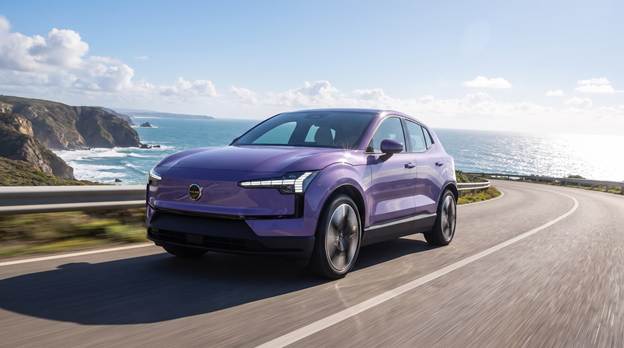
Automakers have developed a bad habit of over-promising and under-delivering when it comes to electric vehicle specifications, particularly range. So, when a manufacturer actually exceeds its initial estimates, it sends a powerful ripple through the industry. We just saw this happen with Volvo. As Electrek recently reported, the new 2027 EX60 midsize SUV has received its official EPA certification, boasting an estimated driving range of up to 330 miles for the P10 AWD model. This comfortably beats the initial 322-mile estimate, instantly cementing it as the longest-range EV in Volvo’s current lineup and repositioning it within a highly competitive segment.
As someone who relies on a 2021 Volvo XC60 for daily driving here in Bend, Oregon, and who has been meticulously tracking the evolution of the brand’s electrified platforms, this development is more than just a passing headline. It represents a maturation of Volvo’s battery management and aerodynamic engineering. Let’s break down what this 330-mile certification means for early buyers, how the P10 stacks up against the delayed P12 variant in the US market, and whether this vehicle has the necessary credentials to dominate the premium midsize EV space.
Evaluating Early Reactions and the Path to Market Success
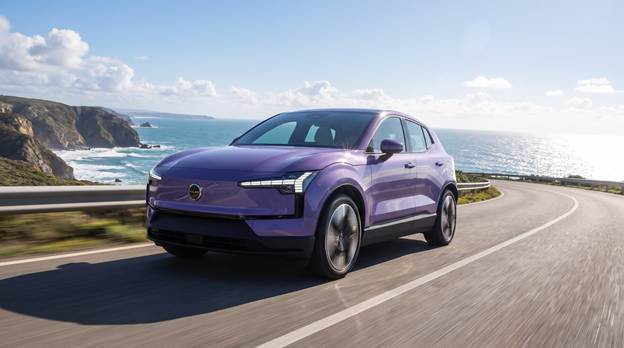
When a vehicle’s specifications are upgraded right before it hits the dealership floor, the market reaction is almost universally positive. Early reactions to the EX60 P10 hitting 330 miles have been overwhelmingly enthusiastic across automotive forums, analyst circles, and social media. In an era where consumers are increasingly educated about the disparities between European WLTP testing cycles and the more stringent EPA testing procedures, achieving a 330-mile EPA rating provides a massive psychological boost for prospective buyers.
But are these positive reactions enough to assure the car’s success? In the automotive industry, specifications only get you in the door; execution keeps you in the room. The EX60’s success will ultimately hinge on software stability and charging infrastructure integration. We have seen other legacy automakers struggle with glitchy infotainment systems and complex battery preconditioning software. However, Volvo’s reliance on the robust Android Automotive OS offers a relatively stable, familiar interface that users appreciate.
Furthermore, by exceeding range expectations, Volvo effectively neutralizes one of the primary weapons its competitors might have used against it. A 330-mile range provides a buffer against the natural degradation of battery performance in cold weather – a factor I am acutely aware of during Oregon winters. This buffer builds trust, which is the cornerstone of brand loyalty. Therefore, while range alone doesn’t guarantee a hit, overdelivering on it creates a halo of competence that makes market success highly probable for the EX60.
Is the P10 a Better US Alternative Than the Delayed P12?
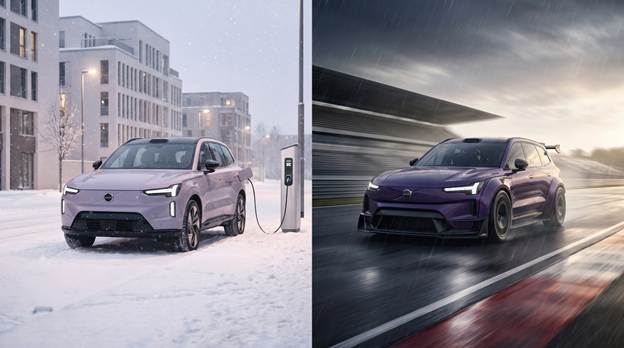
This is a question I have been wrestling with personally. I am currently in the process of waiting to preorder the high-performance EX60 P12 version once it becomes available. However, Volvo has made it clear that the P12 will not be delivered to the US market until after the new year. This creates a classic buyer’s dilemma for American consumers: do you buy the highly capable P10 today, or wait months for the pinnacle P12?
For the vast majority of the US market, the P10 is objectively the better alternative. The P10 AWD model offers a 330-mile range, which is outstanding, and it still delivers the kind of instantaneous torque and smooth acceleration that makes EVs a joy to drive. It hits the sweet spot of range, price, and immediate availability.
The P10 allows buyers to step into a modern, long-range Volvo EV right now without compromise. That being said, for automotive enthusiasts and those who prioritize dynamic driving characteristics – myself included – the wait for the P12 remains justified. I appreciate the engineering and range headroom that comes with a performance flagship. But if we are looking at this from a macroeconomic perspective and advising the average premium SUV buyer, the P10’s immediate availability, coupled with its newly certified 330-mile range, makes it the undeniably smarter purchase for 2026. However, since we are going all EV with this change, I want that extra range just in case we need it to evacuate from the frequent fires we will get this, and every, summer going forward.
The Psychology of Range: Is 330 Miles Truly Enough?
When discussing EV range, we have to separate the psychological barrier from the practical reality. The initial estimate of 322 miles was already very good, but crossing into the 330-mile territory places the EX60 in a distinct upper echelon of electric SUVs. But is 330 miles enough for most people?
The short answer is an absolute yes. The average American drives fewer than 40 miles a day. From a practical standpoint, a 330-mile battery means most users will only need to charge their vehicle once a week if they rely solely on public infrastructure, or they will simply plug it in at home and wake up to a full “tank” every morning.
However, road trips and extreme weather are where the rubber meets the road. I frequently drive my vehicles through the Cascade Mountains. In freezing temperatures, EVs can lose anywhere from 20% to 30% of their optimal range due to cabin heating demands and cold battery chemistry. A 330-mile EPA rating means that even on a freezing winter day climbing a mountain pass, you still have a highly usable, reliable 230 to 250 miles of range. That is the critical threshold. It provides enough runway to travel between major DC fast charging hubs without inducing range anxiety. By providing 330 miles, Volvo ensures that the EX60 P10 transitions from being just a “city car” to a genuine primary household vehicle capable of interstate travel.
How the Competitors Stack Up Against the EX60 P10
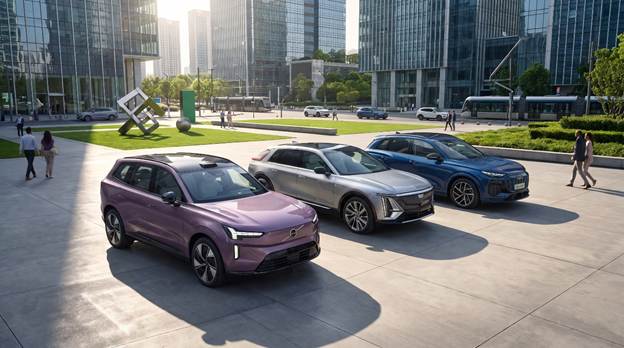
To truly understand the impact of the EX60 P10, we must look at the competitive landscape. When recommending alternative vehicles, it is vital to strictly align with the SUV configuration, the 300-plus mile range requirement, and the premium performance parameters that a Volvo buyer expects.
The most obvious competitor is the Tesla Model Y Long Range AWD, which currently offers an EPA-estimated 310 miles. The Model Y has the distinct advantage of the pervasive Supercharger network, though Volvo’s transition to the NACS standard mitigates that advantage significantly. Where the Volvo EX60 P10 pulls ahead is in pure range (330 vs 310 miles), interior material quality, and arguably, ride comfort. Volvo’s Scandinavian minimalism feels more premium and less sterile than Tesla’s austere cabins.
Next, we look at the Cadillac Lyriq AWD. The Lyriq is a stunning vehicle that offers roughly 307 miles of range. It matches the Volvo in terms of luxury and comfort, but the EX60 P10 beats it in efficiency and total range. Furthermore, Volvo’s infotainment integration generally feels a generation ahead of General Motors’ current offerings.
Then there is the Audi Q6 e-tron quattro, built on the advanced PPE platform, offering around 307 miles of range. Having owned and driven a 2022 Audi E-Tron GT, I have immense respect for Audi’s build quality, driving dynamics, and thermal management. The Q6 e-tron is a formidable rival to the EX60. However, Volvo squeezing 330 miles out of the P10 gives it a distinct marketing edge over the Audi for buyers prioritizing pure distance over the Q6’s slightly sharper driving dynamics.
Finally, we have the upcoming Rivian R2, which promises over 300 miles of range. While the Rivian appeals to the rugged, off-road demographic, the EX60 P10 is tailored for the premium urban and suburban driver who wants sophistication alongside capability. In this crowded field, the EX60 P10 stands out not just as a competent entry, but as a class leader in efficiency.
Wrapping Up
The automotive industry is in a state of rapid transition, and success belongs to those who under-promise and over-deliver. By officially certifying the 2027 EX60 P10 AWD at 330 miles of range, Volvo has done exactly that. They have beaten their own 322-mile estimates and delivered a vehicle that effectively nullifies range anxiety for the vast majority of American consumers, even those facing harsh winter climates.
While enthusiasts like myself may hold out for the high-performance P12 variant coming after the new year, the P10 is undeniably the smarter, more accessible choice for the US market today. It perfectly balances immediate availability with class-leading specifications. When stacked against formidable competitors like the Tesla Model Y, Cadillac Lyriq, and Audi Q6 e-tron, the EX60 P10 doesn’t just compete; it sets a new benchmark for what a premium midsize electric SUV should be. Volvo has engineered a winner, and the early positive reactions are completely justified.
Disclosure: Images rendered by Artlist.io
Rob Enderle is a technology analyst at Torque News who covers automotive technology and battery developments. You can learn more about Rob on Wikipedia and follow his articles on TechNewsWord, TGDaily, and TechSpective.
Follow us today…