At a glance
Expert’s Rating
Pros
- Amazing cameras
- Awesome accessories
- Fast charger included
- Great performance
Cons
- Very expensive
- Not available in the UK
- Big and heavy
Our Verdict
Looking for the best camera phone ever made? This could well be it. Vivo’s astonishing camera hardware and excellent image processing produce stunning results. Photographers and videographers will fall in love with this phone, but spotty global availability and a high price will mean it’s not accessible to everyone.
Price When Reviewed
This value will show the geolocated pricing text for product undefined
Best Pricing Today
Best Prices Today: Vivo X300 Ultra

The Vivo X200 Ultra was one of my favourite phones of 2025, but there was a big problem. The phone was only officially released in China, and using it elsewhere was a bit of a pain. Regardless, I loved the cameras so much that I made it work, and it became my primary phone for several months.
Now, its successor has arrived, and for the first time, the Ultra model has launched globally. Unfortunately, the list still excludes the UK and the US, but it’s officially available in some European countries, which makes getting your hands on one much, much easier.
The Vivo X300 Ultra aims to be the best camera phone on the market, complete with dual 200MP sensors, the biggest ultrawide sensor in any phone, and a seriously impressive selection of accessories and external lens attachments.
This mighty camera phone doesn’t come cheap, though, and it faces stiff competition from the recently launched Oppo Find X9 Ultra. Its key rival (along with the Xiaomi 17 Ultra) got a global launch, including the UK. Sorry, Americans, again.
Can it possibly be worth the lofty asking price of nearly €2,000 in Europe? I’ve been using it for the past week to find out.
Design & Build
- Gigantic camera bump
- Glass Back, Aluminium frame
- 232g, IP69 rated
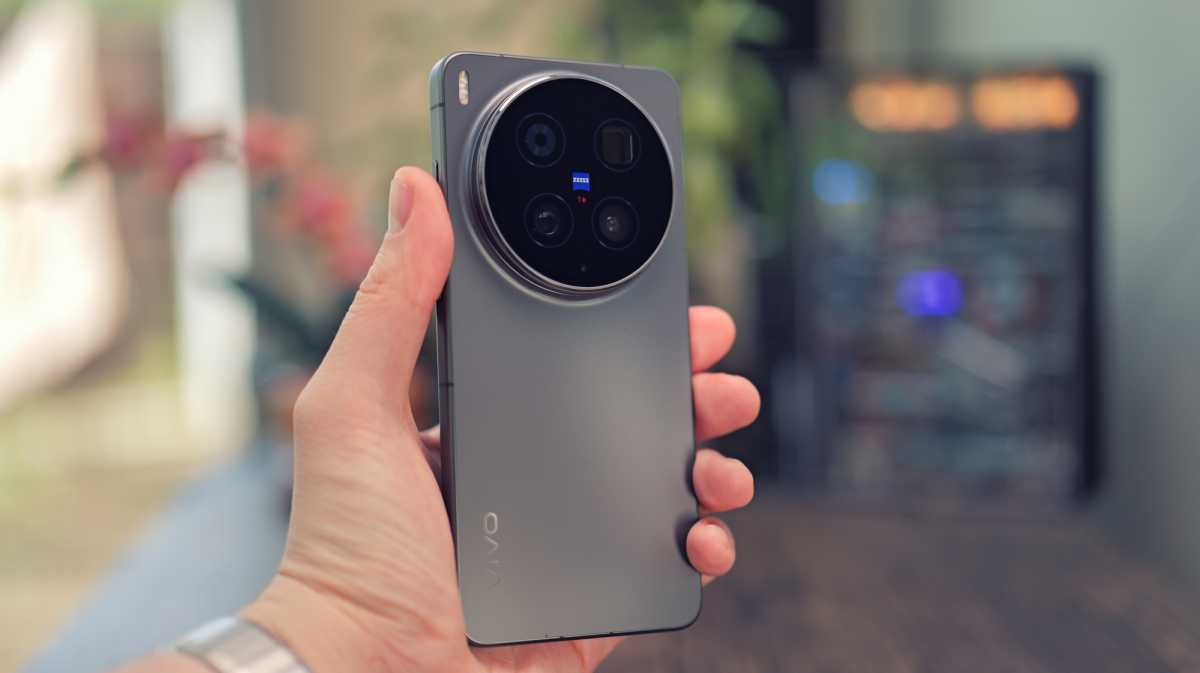
The Vivo X300 Ultra could easily be mistaken for its predecessor at a glance. It has an almost comically large camera island that dominates the rear of the phone, truly blurring the lines between compact camera and smartphone.
It has an almost comically large camera island that dominates the rear of the phone
The biggest difference in how the two phones feel is that the older model had micro curves on all sides, while the X300 Ultra opts for a completely flat front and rear. Otherwise, the construction feels very similar, with a glass rear panel and matte aluminium side rails.
The colour options are different this time around, too. You can now choose from Black, Silver, or Green options, and as you can tell from the photos, I have the Black model.
Luke Baker
Black is the most sensible of the bunch, with a subtle matte finish on its rear panel. If you choose the Silver version, there’s an etched mountain range on the back, while the Green model has a two-tone finish with different shades of green.
It’s very plain compared to rivals, so look to Oppo and Xiaomi if you want something more exciting on the design side.
When it comes to buttons, Vivo keeps things simple. The phone has a volume rocker and power button on the right side, and that’s your lot. I was a little disappointed that Vivo removed the touch-sensitive Camera Control button that was present on last year’s model, but I’d be lying if I said I used it all that often.

Luke Baker
The X300 Ultra has an IP69 rating for dust and water resistance, which is about as good as it gets, and it also comes with a factory-applied screen protector and a basic silicon case included in the box.
These should all help to keep the phone safe, and in my experience, you might want to keep them installed, as Vivo’s glass tends to scratch quite easily. That said, my review unit is still looking pristine thus far.
The Photography Kit
- Ergonomic grip with tactile buttons
- More compact 200mm teleconverter
- New 400mm teleconverter
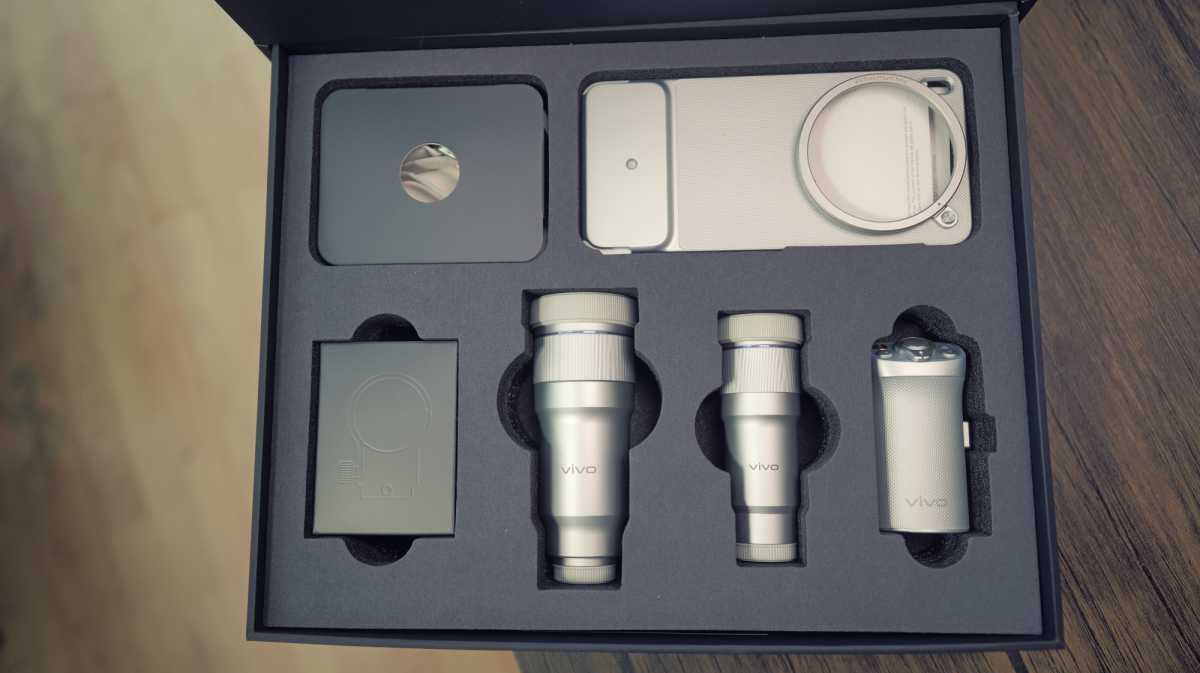
The X200 Ultra was the first phone to come with an external teleconverter lens in its photography kit. It was a bit of a trend setter, as we’ve now seen similar kits emerging from multiple Chinese phone brands.
Luke Baker
I was sceptical at first, but these external lenses are no gimmick. They provide incredible detail and compression that make photos and videos look like they came from a professional camera, rather than a smartphone.
With the launch of the X300 Ultra, Vivo has doubled down on this concept. Not only have they refreshed the original 200mm lens, making it more compact and portable, but they’ve also added a second 400mm adapter, for times when you need some extra reach.
The kit also has a new look, with a lighter silver paint job throughout, and a more premium finish on the phone case and grip. Functionally, it’s the same concept; there’s a phone case with swappable bezels and an ergonomic grip with an integrated battery to keep your phone topped up.
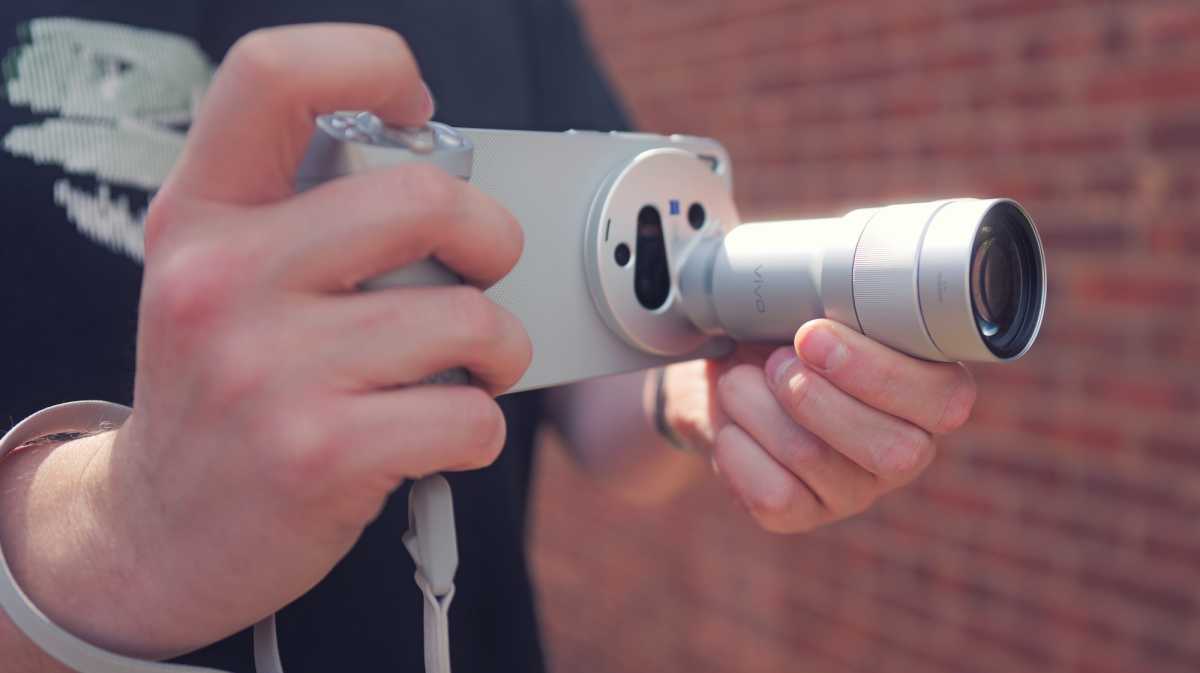
The lenses are affixed in front of the built-in telephoto lens, giving you either a 200mm or 400mm field of view. Great for concerts, wildlife, and sporting events.
the software lets you use the teleconverters in almost every shooting mode
My favourite thing about Vivo’s implementation is that the software lets you use the teleconverters in almost every shooting mode. You can shoot Log in Pro Video mode, snap RAW photos, and use all the filters.
Unfortunately, the stabilisation isn’t quite on the same level as Oppo’s latest attempt, and the shakiness can make it quite difficult to frame your shots at 400mm. Vivo’s processing does a great job of cleaning this up in both videos and photos, but the preview is a little rough at present. Hopefully, that improves with future updates.
Luke Baker
Otherwise, it’s easily the most flexible and complete accessory system we’ve seen so far. I absolutely love that Vivo has been consistent with its lens mounts, so you can mount the original teleconverter on the new kit, and vice versa. Long may it continue.
Screen & Speakers
- 6.82-inch, 1440 x 3168, OLED, 120Hz
- 2160Hz PWM, 4500 nits
- Stereo speakers
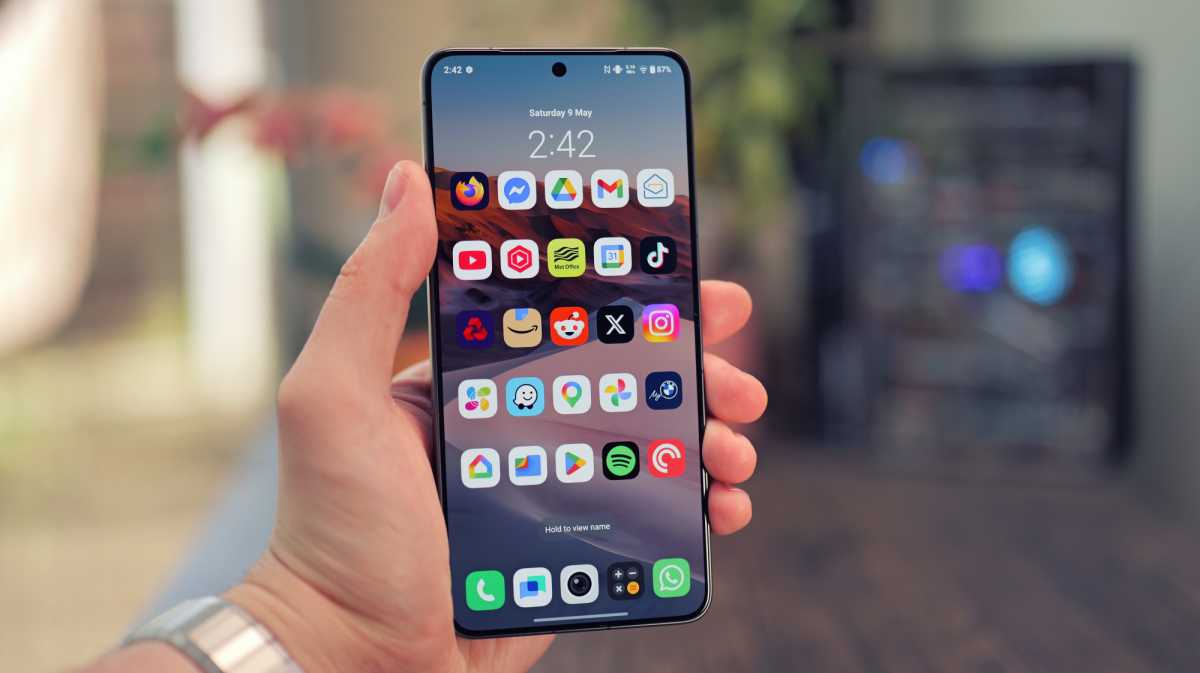
As mentioned, the most noticeable change to the display is that it’s now completely flat, rather than having micro curves on all sides. I welcome this move; it makes it much easier to keep the screen safe, as cases can have raised lips to protect it from dings, and screen protectors will be more readily available.
Luke Baker
Otherwise, it has all the benefits you’d expect from a top-tier smartphone display. It’s a buttery smooth 120Hz OLED with a bright output that’s easy to read in bright sunlight. Colours appear accurate and vivid right out of the box, plus, there are plenty of options to change the colour reproduction if it’s not to your liking.
Like typical Ultra phones, the screen is large at 6.82-inch so it’s not for the faint-hearted, especially when you factor in the huge camera module on the back. Using it one-handed may be difficult for many people.
The speakers have improved greatly on the X300 Ultra, too. They sound much clearer than the previous model, and the bass response is slightly better, which makes a big difference when watching videos or playing games around the house. They’re not best-in-class, but they’re very decent.

Luke Baker
What made a bigger difference, for my needs, is that the Bluetooth transmission seems to have improved dramatically. Not only did I experience fewer drop-outs using this phone, but music sounded clearer when paired to my car stereo.
Specs & Performance
- Qualcomm Snapdragon 8 Elite Gen 5
- 12GB / 16GB RAM
- 256GB / 512GB /1TB storage
The Vivo X300 Ultra benefits from Qualcomm’s top SoC, the Snapdragon 8 Elite Gen 5, and my model comes with 1TB of storage and 16GB of RAM. It also has a 22% larger vapour chamber than last year, which should keep temperatures under control when you’re pushing this chip to its limits.
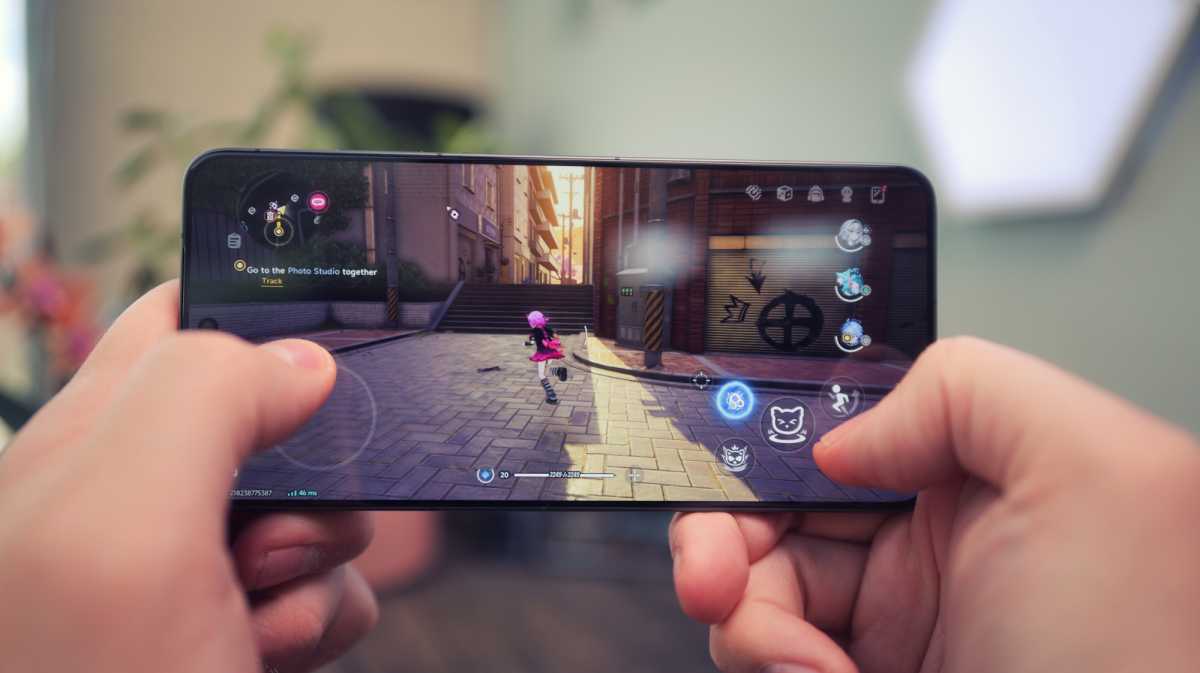
As you’d expect, this phone feels lightning quick, no matter the task at hand. Gaming performance is also excellent. I put a few hours into NTE, the latest graphically dazzling gatcha game, and the X300 Ultra handled it with finesse.
this phone feels lightning quick, no matter the task at hand
I was able to max out all the graphics settings, and the phone managed to stay in the 50-60fps range throughout. The frame began to heat up a fair bit after a while, but I suppose that’s just the vapour chamber doing its job. The important thing is that it didn’t become uncomfortable to hold.
Luke Baker
These results were mirrored by our usual suite of benchmark tests. The phone managed competitive scores throughout and achieved a respectable stability rate exceeding 65% in the 20-minute Wild Life Extreme Stress Test.
It’s also worth pointing out that haptics have been improved on the X300 Ultra. Vibrations feel more precise and refined, which makes a big difference when typing and also enhances the gaming experience.
Vivo X300 Ultra benchmarks
Cameras
- 200 Mp f/1.9 35mm main camera (1/1.12-inch)
- 200 Mp f/2.7 85mm telephoto (1/1.4-inch)
- 50 Mp, f/2.0 14mm ultrawide (1/1.28-inch)
- 50 Mp, f/2.5 selfie camera (1/2.76-inch)
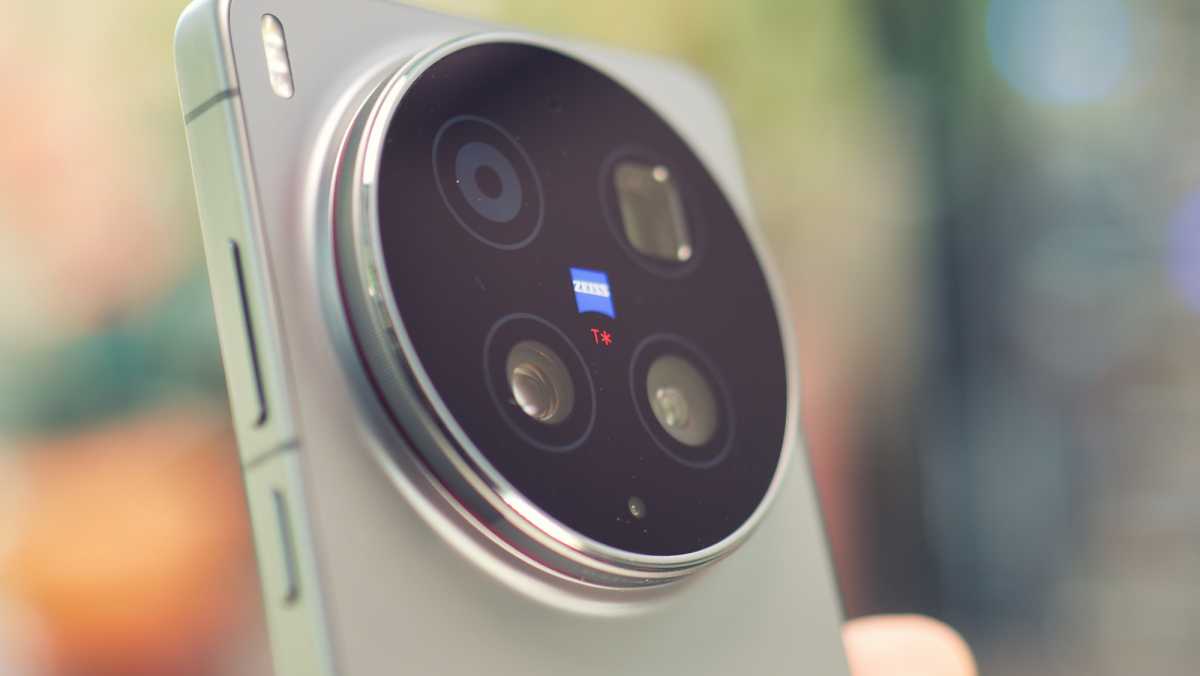
At first glance, you can tell the X300 Ultra all about the cameras, and that’s not without reason. On the rear, you’ll find three of the most impressive cameras ever to grace a smartphone.
Luke Baker
The biggest hardware upgrade is with the primary camera. It has a larger 1/1.12-inch 200Mp sensor, up from a 50Mp 1/1.28-inch unit. It’s still one of the only phones to come with a 35mm-equivalent main camera, too. This means photos from the main camera have a more naturalistic look, similar to what the human eye sees, rather than the typical wide smartphone angle of around 23mm.
photos feel more like they were taken with a proper camera
It immediately makes photos feel more like they were taken with a proper camera, and it’s a great focal length for street photography, candid snaps, and portraits. It also has more compression than a typical main camera, so you get some softening to the background without needing to activate portrait mode.
The downside to this is that the main camera becomes much less useful for POV video shooting and rear-camera selfies – but Vivo has thought about that. While ultrawide cameras usually have pretty terrible specifications, the X300 Ultra’s ultrawide is a beast.
It has a massive 1/1.28-inch sensor (matching the iPhone 17 Pro’s main camera) and a 50Mp resolution. This means it performs well in all lighting conditions and can be cropped to around 23mm without much of a drop in quality.
Rounding out the trio is the formidable 200Mp 1/1.4-inch 85mm telephoto, with very similar specs to the last few Vivo flagships. This camera needs no introduction; it’s one of the best telephotos around, so much so that phones like the Honor Magic 8 Pro have adopted very similar hardware in an attempt to keep up.
Around the front, the 50Mp selfie camera is unchanged, and it’s quite clearly the weakest of the bunch. That’s not to say it’s a bad selfie camera; it’s very decent, but compared to the insanely good cameras on the back, it’s pretty lacklustre.
Now, if you’re familiar with the X200 Ultra, you might be a little underwhelmed by these camera specs. The core concept is the same, and only the main camera has received a significant upgrade. The telephoto could even be viewed as a downgrade, as it has a narrower aperture to ensure better compatibility with teleconverter lenses.
But, I’d argue that the hardware isn’t the most exciting thing on offer here. The software features that Vivo has brought to the camera app are top-tier, especially if you’re into shooting videos.
The feature I’m most excited about is the ability to apply different filters to your videos while recording at up to 4K/60fps. These filters are all customisable, just like in photo mode, and you can adjust the way they look with an Apple-style tone/colour pad, or individual sliders. Most competitors only allow you to apply video filters at 1080p or below, and I’ve never seen any with this much customisation.
There’s also a new cinematic mode that emulates the look of feature films. These options aren’t as customisable, but they look absolutely stunning, especially the “Film Style” preset. It works at 4K, and applies a widescreen crop with cinematic motion blur, film grain, and highlight blooming.
Vivo is catering to professional workflows as well. It has a brilliant Log profile with a selection of gorgeous LUTs to choose from, and now supports APV, just like the Samsung Galaxy S26 Ultra.
No matter the lighting conditions or subject choice, the Vivo X300 Ultra is easily one of the best smartphones for photo and video capture. The Oppo Find X9 Ultra is a hot contender in the photo department, and beats it at super-long-range zoom, but it doesn’t come close to matching Vivo’s flexibility for video shooting.
Battery Life & Charging
- 6400mAh battery (in Europe)
- 100W wired charging
- 40W wireless charging
The Vivo X300 Ultra is one of those awkward phones that has a different capacity depending on where you buy it.
If you’re in Europe (like me), then you get the short end of the stick, with a 6400mAh capacity. Meanwhile, the rest of the world gets a 6600mAh battery. Still, it’s a fairly sizable cell, especially when compared with mainstream rivals like Samsung and Apple.
the Vivo never failed to get me to the end of the day, and often lasted through a second morning
In short, the battery life is very, very good. The problem is, I moved into this phone immediately after using the Oppo Find X9 Ultra (which has a huge 7050mAh battery), and that lasts noticeably longer. Crucially, though, the Vivo never failed to get me to the end of the day, and often lasted through a second morning before I needed to stick it on charge.
Luke Baker
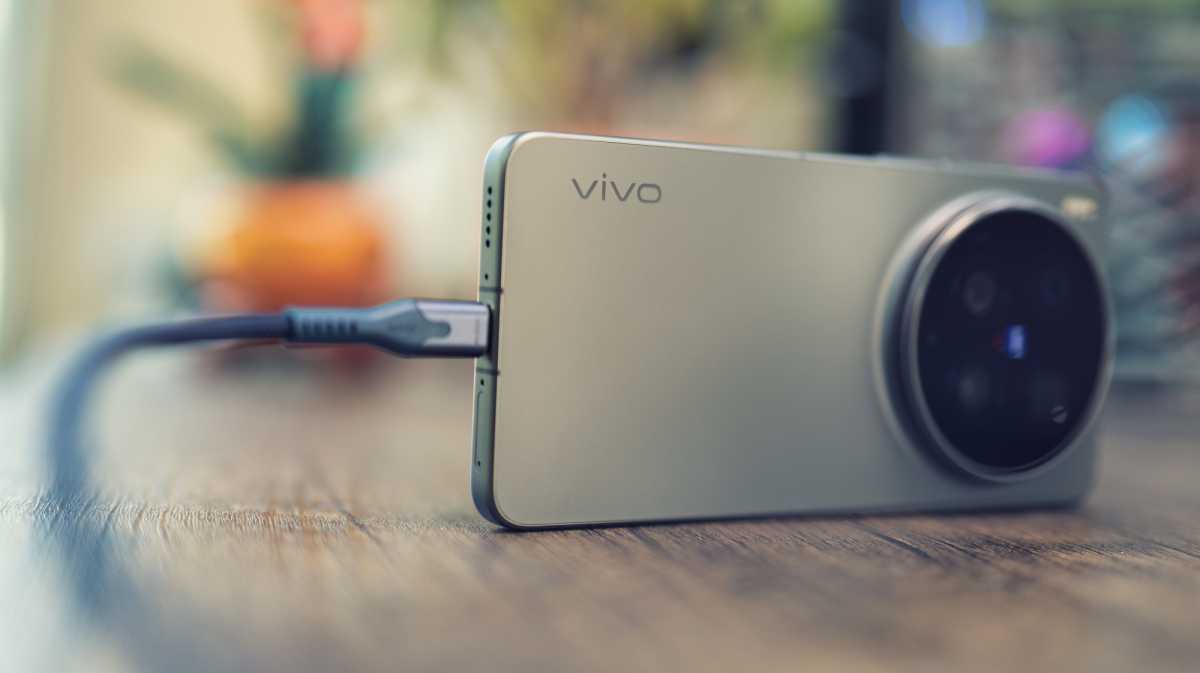
It also charges very quickly. It supports up to 100W speeds with a wire, and 40W wirelessly. A speedy wall adapter comes included in the box (unusually) so you can start enjoying the top speeds right away – so long as you remember to turn on fast charging in the settings menu.
30 minutes on the charger took me from dead to over 50% charged, and the remaining capacity was filled up within the hour.
Software & Apps
- OriginOS 6, based on Android 16
- Cross-compatible with Apple devices
- New Private Space function
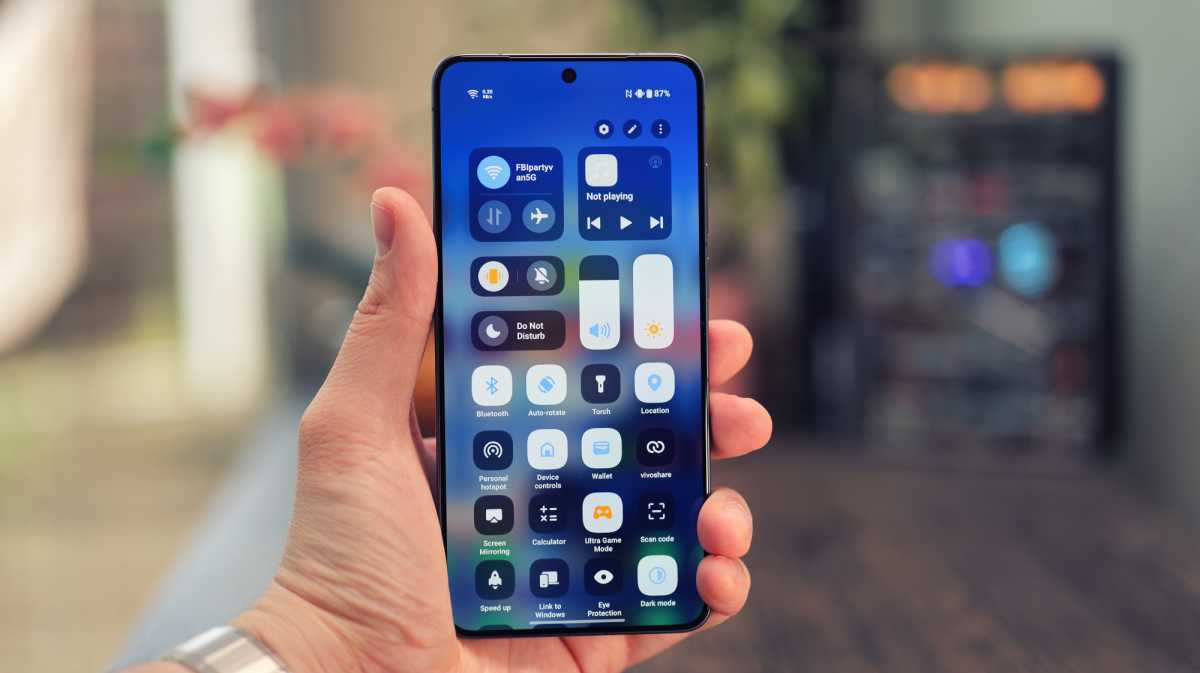
The X300 Ultra, like all new Vivo releases, runs the global version of OriginOS 6. I’m very glad to see the back of FunTouch OS (Vivo’s previous global software) as the newer system is much more aesthetically pleasing, and its smooth, snappy animations make this powerful phone feel even quicker.
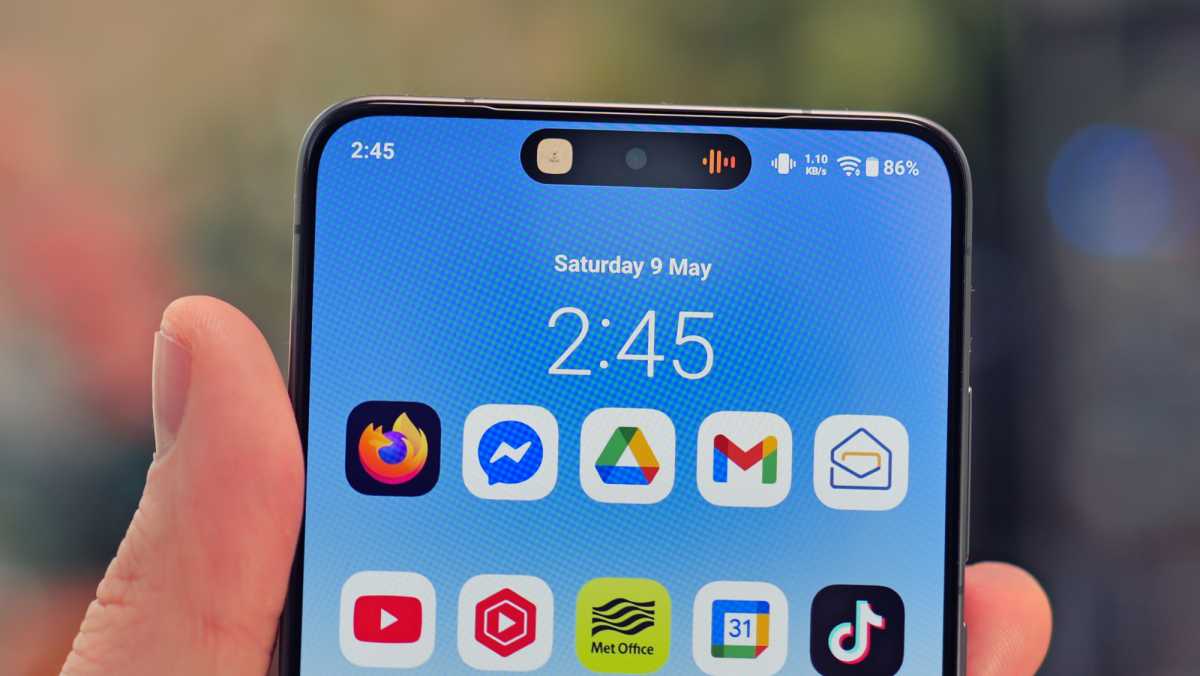
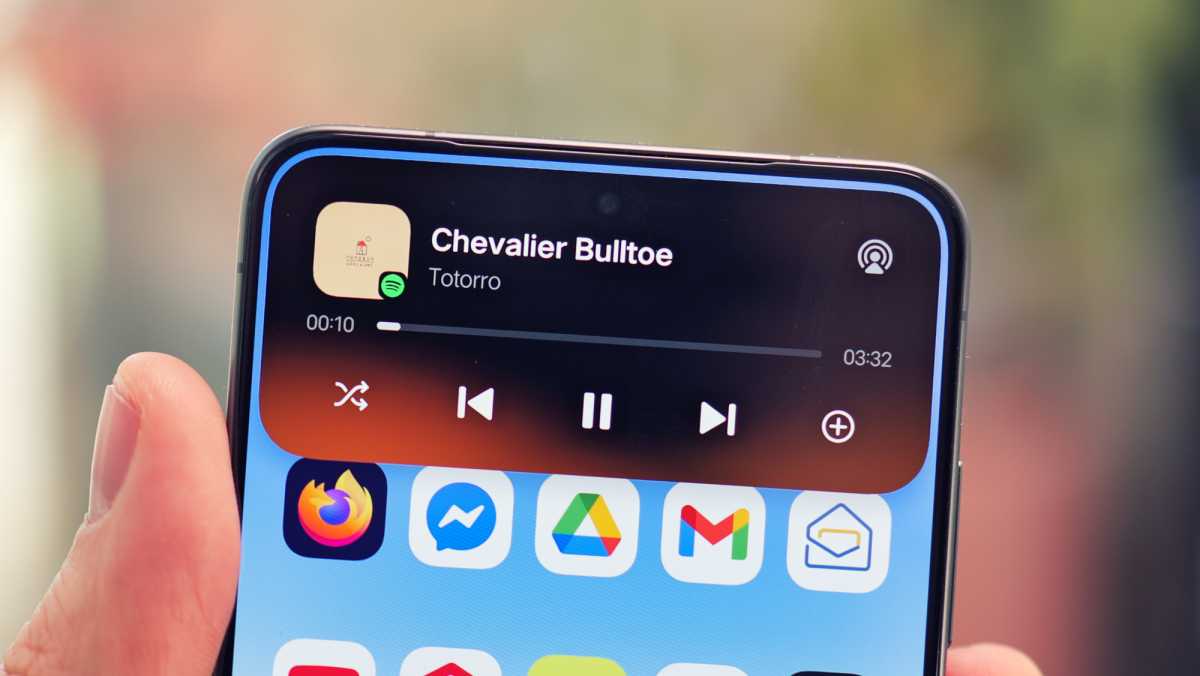
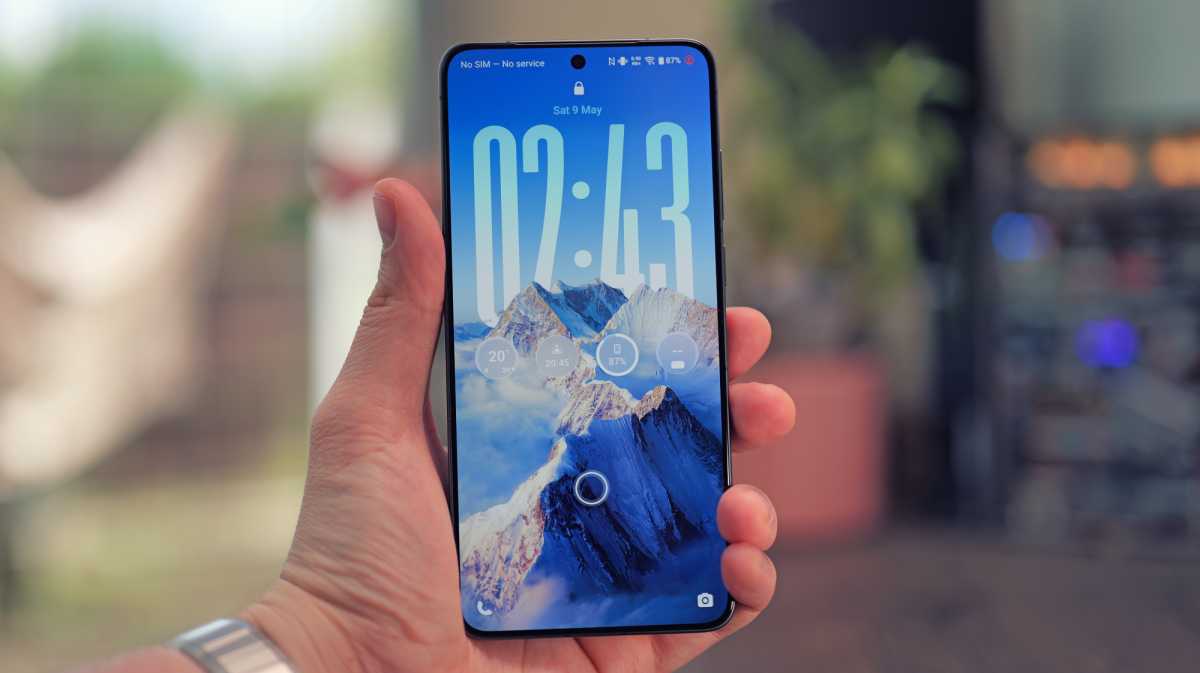
As we’ve seen from most Chinese manufacturers in the past year, there are some Apple-influenced decisions with the styling. Vivo has its own version of the Dynamic Island (Origin Island), some UI elements have a Liquid Glass-like effect, and lock screens support depth effects as well as stretched-out clocks.
They may not be the most original choices, but they look good and perform well. Plus, with Vivo’s intensive customisation options, if there’s something you don’t like, you can probably change it in a few taps.
if there’s something you don’t like, you can probably change it in a few taps
Vivo seems to have spent a lot more time on the camera app than the rest of the OS, as most changes with this update are minor. However, there are a few things that stand out as particularly useful.
Luke Baker
First is the enhanced cross-compatibility with Apple devices. Using Vivo’s Office Kit software, you can seamlessly transfer to and from Macs and iPads, plus, Vivo is supporting Google’s latest Quick Share and AirDrop cross-compatibility – so sharing with iPhones is a breeze, too.
If you want to use AirPods, the X300 Ultra offers a better experience than most Android devices. It can display connection status and real-time battery level in the Origin Island, and it even supports Spatial Audio playback.
There’s also a new Private Space feature, which allows you to have a separate password-protected home screen, complete with isolated apps and files that are inaccessible from your normal OS. If you’ve got overbearing family members, or you’re some kind of secret agent, it could be just what you need.
Luke Baker
For the global release, Vivo promises 5 years of OS upgrades and 7 years of security patches. It’s a decent offering, but it’s a step behind the likes of Google, Samsung, and Apple. For what it’s worth, though, Vivo is better than most at delivering timely and impactful updates – so expect to be treated well for those 5 years.
Price & Availability
While the X300 Ultra has been released globally for the first time, Vivo doesn’t operate in as many European countries as its competitors. Unfortunately, the UK is excluded from the list at present, but you can nab the X300 Ultra in Spain, Germany, Switzerland, Austria, Hungary, and the Czech Republic.
Most European stores only seem to be stocking the top model, with 16GB of RAM and 1TB of storage. As such, it has a lofty price tag, and will set you back €1,999 (about £1,730). Photography Kit pricing varies from region to region, but in Germany, it can be purchased along with the 1TB phone for €2,667.
These prices may sound ludicrous, but when you factor in the storage capacity, it’s not as crazy as you think. It’s almost the exact same price as the 1TB Galaxy S26 Ultra, for example, and the cameras are in a completely different league. For the right person, it’ll be absolutely worth it.
Check out our current list of the best phones and best camera phones.
Should you buy the Vivo X300 Ultra?
It’s sometimes hard to figure out the target market of a flagship smartphone, but the Vivo X300 Ultra makes it obvious. If you care about cameras above all else, and your ideal smartphone is a pocket-sized DSLR, then this is the device for you.
The cameras are easily among the best I have ever tested, and that’s especially true for video capture, where Vivo gives you an unrivalled suite of options. Plus, the rest of the phone is great, too. It’s a powerful performer that’s great for gaming, the screen and speakers are solid, the battery life is good, and the charging is speedy.
Of course, it’s not the only camera-focused hyper flagship on the market, and the closest competitor is the Oppo Find X9 Ultra. It has an extra camera, a bigger battery, and better global availability. I often preferred images from the Oppo (in Master Mode), but Vivo has a clear advantage with its video shooting options, and that lovely 35mm main camera. There are arguments to be made for either device depending on your preferences and needs.
The downsides to the X300 Ultra are pretty plain to see. There’s the gigantic camera bump as part of a plain design, which I find quite charming, but it’ll definitely be off-putting to some. And there are also availability issues, which are a bigger hurdle, especially in the UK. If you’re looking for the best camera phone on the market, though, the Vivo X300 Ultra cannot be ignored; it’s truly exceptional.
Specs
- OriginOS 6, based on Android 16
- 6.82-inch, 1440 x 3168, OLED, 120Hz
- Ultrasonic fingerprint sensor
- Qualcomm Snapdragon 8 Elite Gen 5
- 12GB RAM
- 256GB / 512GB /1TB storage
- Cameras:
- 200Mp main sensor
- 50Mp ultrawide
- 200Mp 3.7x telephoto
- 50Mp selfie camera
- Up to 8K30 / 4K120 rear video
- Stereo speakers
- Dual-SIM
- Wi-Fi 802.11 a/b/g/n/ac/6/7
- Bluetooth 5.2
- 6400mAh battery
- 100W wired charging
- 40W wireless charging
- 163 x 76.8 x 8.2 mm
- IP69 certified
- 232g
- Colours: Black, Silver, Green