Published on
July 15, 2026

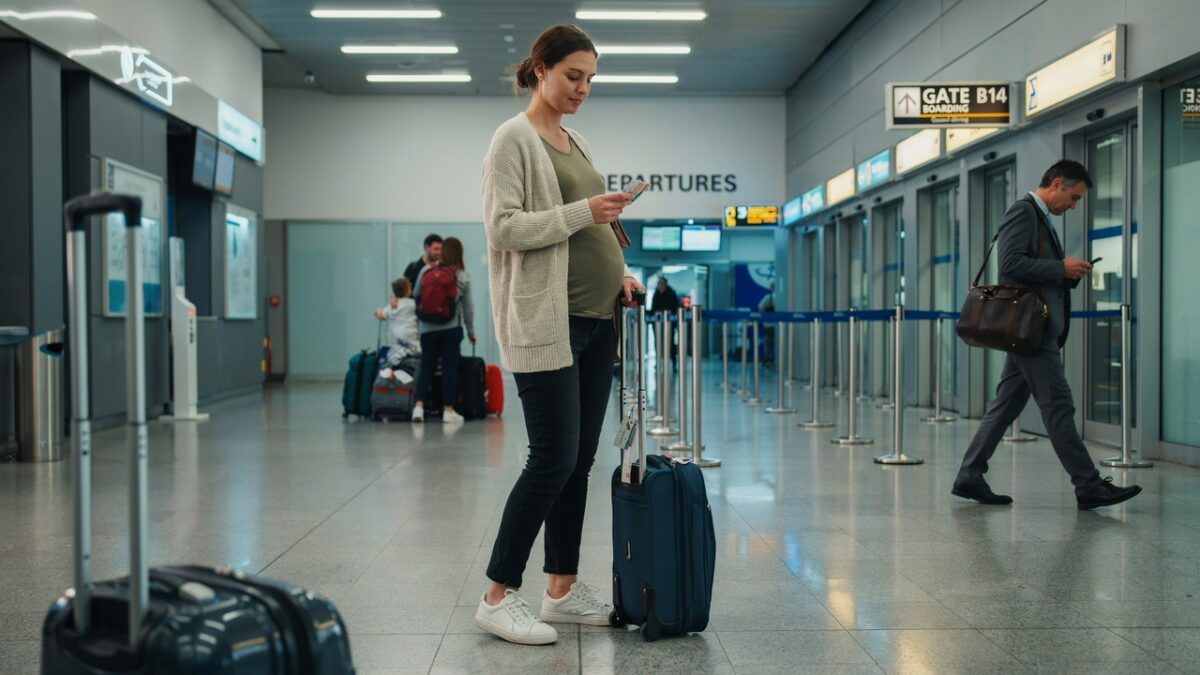
Image generated with Ai
UNITED STATES airport terminals and consular offices around the world are entering a period of deep anxiety and uncertainty for international families hoping to visit the country. For many expectant mothers, a simple vacation or a visit to see loved ones in America is becoming an emotional hurdle filled with rigorous questioning and fear of rejection at the border. Following a monumental decision by the nation’s highest judicial body to protect the legal right to citizenship by birth, federal authorities are immediately pivoting toward highly aggressive administrative strategies. The primary goal is to close what officials label a significant legal loophole, potentially resulting in unprecedented directives that could bar heavily pregnant foreign travelers from entering the country entirely. This evolving environment reminds us that behind every legal battle and policy shift are real people—families, students, and professionals—navigating an increasingly complex world where the simple joy of travel is heavily weighed against intense geopolitical agendas.
Background and Context
The current political storm erupted immediately after the U.S. Supreme Court issued its landmark ruling in the high-profile case of Trump v. Barbara. The executive branch had previously attempted to bypass traditional interpretations of the Fourteenth Amendment by decreeing that children born on domestic soil to non-permanent residents would no longer automatically receive American passports. However, the nation’s highest court ultimately rejected this approach in a definitive six-to-three vote, leaving the administration scrambling for alternative methods to enforce its strict borders.
Faced with this legal setback, high-level officials within the Department of Justice and the Department of Homeland Security have shifted their focus to the immigration and visa application stages. Acting Attorney General Todd Blanche made it clear to reporters that federal investigators and law enforcement units will place an intense focus on stamping out birth tourism networks. According to internal federal memos, prosecutors have been formally instructed to pursue aggressive fraud charges against any temporary visitors or undocumented travelers suspected of misrepresenting the true intent of their journey. While public datasets from institutions like the Center for Immigration Studies suggest these births account for less than one percent of the country’s annual totals, the administration views the practice as a profound exploitation of the public welfare system.
Impact on Travellers
The immediate fallout for global travelers is expected to be swift and highly noticeable. If the Department of Homeland Security moves forward with the proposed blanket restrictions, any woman who is visibly pregnant or in her third trimester could face intense scrutiny when applying for a B-1 or B-2 tourist visa. Border patrol agents at major entry hubs are being granted wider latitude to assess whether a traveler’s physical state aligns with the stated duration and purpose of their visit.
Top administration figures, including senior policy architect Stephen Miller, explained during national media broadcasts that authorities must look very closely at who is permitted to enter the country to deliver children. He argued that the current framework permits individuals to arrive late in pregnancy, utilize local medical and economic infrastructure, and return home with a newly secured citizenship status. Furthermore, Homeland Security Secretary Markwayne Mullin characterized the phenomenon as a pressing national security problem. He described scenarios where foreign nationals from competitive states could raise American citizens under foreign ideologies, only for those children to return later in life to access domestic universities and compromise intellectual property. Consequently, honest travelers who genuinely intend to visit for recreational or familial reasons may find themselves caught in a net of suspicion, facing lengthy delays or outright entry denials.
Industry Insights
Legal specialists and immigration policy analysts point out that while entering the country specifically to give birth is technically an impermissible use of a tourist visa, pregnancy itself is entirely legal and not a crime. The U.S. State Department has already expanded its enforcement scope by successfully targeting and taking down major organized networks that coach foreign mothers on how to bypass consular interviews. Official government updates reveal that a sophisticated network operating across West Africa was recently dismantled after utilizing fraudulent documents to secure citizenship advantages. Similar sweeps in Europe and North Africa resulted in the revocation of hundreds of active visas linked to companies providing illicit housing and delivery packages.
Advertisement
Advertisement
However, immigration advocates warn that a universal ban targeting pregnant travelers will inevitably trigger immediate and severe constitutional challenges. Experts from the Migration Policy Institute note that a lack of comprehensive, centralized data makes it incredibly difficult to measure the true scale of birth tourism. They argue that implementing a sweeping restriction based on a traveler’s medical condition could lead to systemic discrimination and violate fundamental human rights standards.
Practical Information
For international visitors scheduling journeys to America over the coming months, strict compliance with immigration guidelines is absolutely vital to ensure a seamless trip.
Advertisement
Advertisement
- Honesty in Documentation: When completing visa forms or interacting with consular officials, travelers must be completely transparent about their medical status and travel goals. Providing contradictory information can lead to permanent travel bans.
- Proof of Intent: Expectant mothers should carry clear documentation, such as round-trip flight tickets, medical travel clearances from their primary doctors, and proof of sufficient financial resources to cover any emergency medical care while abroad.
- Official Resources: Travelers are strongly encouraged to monitor the official U.S. Department of State visa portal and the Department of Homeland Security website for real-time adjustments to entry requirements.
Navigating these shifting borders requires a balanced perspective and a calm approach. While the political debates rage in legislative halls and courtrooms, the human heart of travel remains anchored in the desire to connect, explore, and share life’s milestones with loved ones. By staying fully informed, acting with total transparency, and preparing for stricter security protocols, global travelers can confidently protect their journeys. Ultimately, the hope remains that amidst the hardening of border policies, the international community can find a path that preserves national security without stripping away the essential dignity and respect that every wandering family deserves.
Advertisement
Advertisement