Published on
July 20, 2026
By: Susmita Das

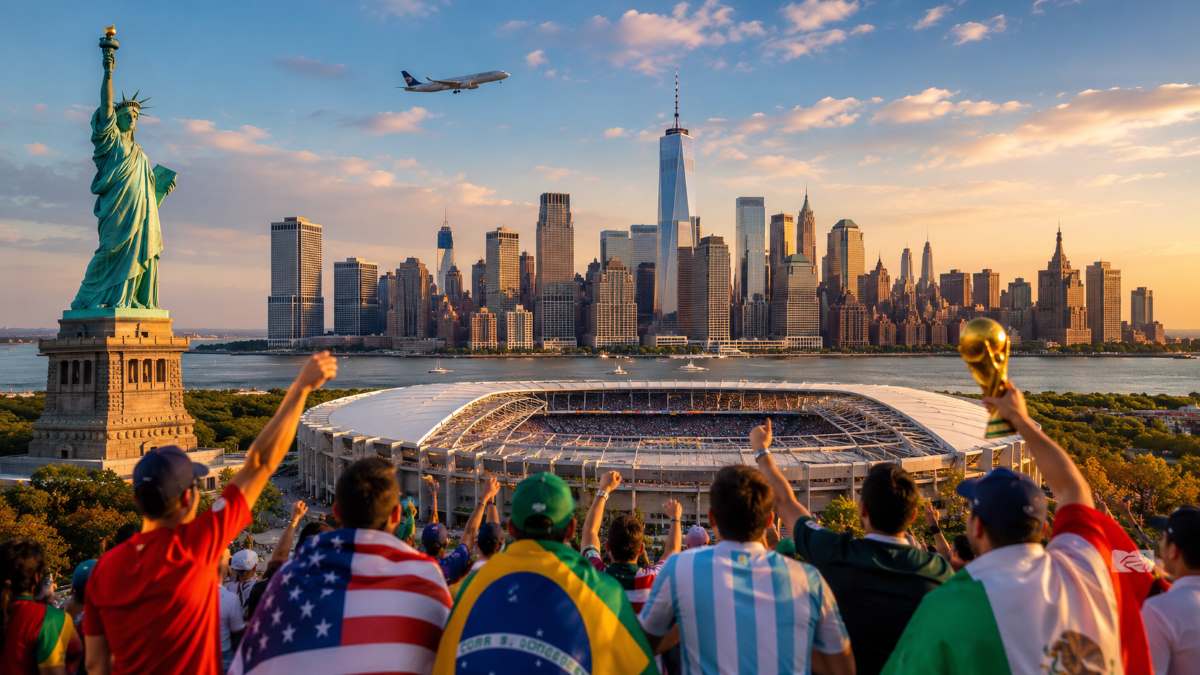
Image generated with Ai
The United States has turned what was once expected to be a disappointing hospitality story into one of the greatest commercial success stories of the FIFA World Cup 2026. Host destinations including New York, Philadelphia, Kansas City, Atlanta, Boston, Los Angeles, Miami, Dallas and Seattle experienced remarkable tourism gains as premium hotel pricing, strong international visitor spending and record-breaking hospitality demand transformed the country’s accommodation sector. Initial concerns over weak bookings and lower-than-expected occupancy were replaced by exceptional hotel revenues, proving that the tournament became a high-value travel event driven by visitor spending rather than simply the number of occupied rooms. Beyond the financial windfall, the World Cup also delivered unprecedented global exposure for American destinations, creating long-term opportunities for tourism marketing and international visitor growth.
Early Hotel Concerns Created Doubts Ahead of the Tournament
Only weeks before the opening match, confidence within the American hospitality industry was noticeably weaker than many had expected. Hotels across the eleven United States host cities had spent years preparing for one of the world’s biggest sporting events. Expectations were built around large volumes of international visitors, strong occupancy and extended stays throughout the tournament.
However, during spring Twenty Twenty Six, the outlook changed considerably. An industry survey released by the American Hotel & Lodging Association (AHLA) in May found that eighty per cent of hoteliers across the eleven host cities believed bookings were tracking below their original expectations.
The primary reason was an unexpected adjustment to FIFA’s accommodation programme. A larger-than-anticipated proportion of previously contracted room blocks was released back into the open market. Hotels that had relied on guaranteed allocations suddenly found themselves competing for bookings, creating widespread concern that international demand would fail to meet earlier forecasts.
The development fuelled speculation that the United States might struggle to fill thousands of hotel rooms despite hosting football’s biggest global tournament.
For many tourism businesses, the weeks leading into the event became a period of uncertainty rather than celebration.
Advertisement
Advertisement
Tournament Results Completely Reversed the Industry Narrative
Once supporters began arriving across the country, the picture changed dramatically. According to hospitality performance data compiled by CoStar, the tournament substantially exceeded commercial expectations. Earlier forecasts had suggested host city hotels would achieve approximately thirteen per cent growth in Revenue Per Available Room (RevPAR) during the competition.
Instead, between 11 June and 27 June, average RevPAR across United States host markets increased by more than twenty per cent, comfortably outperforming pre-tournament projections. Rather than becoming an underperforming mega-event, the FIFA World Cup emerged as one of the strongest hotel revenue generators seen in recent years. The figures demonstrated that the market had underestimated both the spending power and travel behaviour of football supporters.
Forecast Versus Actual Hotel Performance
| Indicator | Early Forecast | Actual Tournament Performance |
|---|---|---|
| Hotel sentiment (AHLA survey) | 80% of hotels reported weaker-than-expected bookings | Commercial performance exceeded expectations |
| Expected RevPAR growth | Around 13% | More than 20% during 11–27 June |
| Knockout stage RevPAR | Moderate growth expected | Approximately 23% increase between 28 June and 4 July |
| Primary revenue driver | Occupancy | Premium Average Daily Rate (ADR) |
Premium Room Rates Became the Real Success Story
One of the tournament’s most important commercial lessons was that success did not depend entirely on hotels reaching one hundred per cent occupancy.
Instead, profitability came from significantly higher room prices. Hospitality analysts described the FIFA World Cup as evolving from an occupancy event into a room-rate event. Supporters travelling to the United States had already invested substantial sums on international flights, match tickets, hospitality experiences and holiday itineraries.
For these visitors, hotel accommodation represented only one element of a much larger travel budget. Consequently, many travellers accepted premium room prices without hesitation. Hotels capitalised on this willingness to spend by increasing their Average Daily Rate (ADR) throughout the tournament. Even where occupancy fell slightly below maximum capacity, elevated room rates generated stronger revenues than originally anticipated. This pricing strategy ultimately transformed the commercial outcome for many host city hotels.
High-Spending Football Fans Drove Tourism Spending Across Entire Cities
The tournament demonstrated that sports tourism generates benefits extending far beyond stadiums. International visitors combined football matches with sightseeing, shopping, cultural attractions, museums, restaurants, nightlife and domestic travel throughout the United States. Many supporters visited several host cities during the tournament, extending their stays and increasing visitor expenditure.
Advertisement
Advertisement
The economic impact therefore spread across numerous sectors. Hotels experienced higher revenues. Restaurants welcomed increased customer numbers. Retail businesses benefited from greater spending. Transport operators handled increased passenger demand. Entertainment venues attracted larger audiences. Tourist attractions recorded stronger visitor numbers. The FIFA World Cup became a nationwide tourism event rather than simply a sporting competition.
Knockout Matches Produced Even Greater Commercial Momentum
Many industry observers expected demand to soften after the group stage concluded. Instead, financial performance strengthened. Between 28 June and 4 July, host cities recorded approximately twenty-three per cent growth in RevPAR, despite fewer matches taking place. The knockout rounds attracted supporters willing to spend even more for decisive fixtures, while premium hospitality demand remained exceptionally strong. Hotels therefore continued achieving elevated room rates throughout the later stages of the tournament.
Philadelphia Showed How Smart Tourism Planning Delivered Exceptional Returns
Philadelphia became one of the tournament’s strongest commercial performers. Rather than cancelling two major citywide conventions to accommodate football supporters, destination planners chose to host both events alongside the World Cup.
This strategy created multiple sources of visitor demand simultaneously. The outcome exceeded expectations. For the 4 July World Cup match, Centre City Philadelphia hotels recorded a remarkable 112 per cent increase in RevPAR.
Across the city’s six hosted matches, both Average Daily Rate and RevPAR remained roughly fifty per cent above normal levels. Philadelphia demonstrated that convention tourism and sports tourism can successfully complement one another, producing stronger hotel revenues than either market could achieve independently.
Kansas City Recorded the Biggest Revenue Spike
Among all United States host cities, Kansas City produced the most dramatic short-term hotel performance. Because the city has a smaller hotel inventory than larger metropolitan markets, the arrival of international football supporters created an exceptionally strong pricing environment.
Advertisement
Advertisement
On 3 July, Kansas City achieved an extraordinary one hundred and eighty per cent increase in RevPAR. Hotel room prices climbed by approximately ninety per cent, illustrating the remarkable willingness of visitors to pay premium rates during major sporting events. The city’s experience showed that even mid-sized destinations can generate exceptional tourism returns when hosting globally recognised competitions.
New York and New Jersey Led Premium Hospitality Demand
The New York–New Jersey metropolitan region became the centre of luxury sports tourism throughout the tournament. The area welcomed affluent international visitors purchasing premium hospitality experiences centred on the New York–New Jersey Stadium (MetLife Stadium).
One of the standout examples occurred during the Brazil versus Morocco group-stage fixture. The match attracted approximately 15,300 official hospitality guests, highlighting the enormous appetite for luxury event experiences. The concentration of high-spending visitors generated substantial business for premium hotels, restaurants and luxury retail throughout the metropolitan region.
Atlanta Sustained Strong Hotel Performance Throughout the Tournament
Atlanta demonstrated impressive consistency rather than short-lived demand spikes. Downtown hotels maintained elevated pricing over several weeks.
Properties including The American Hotel Atlanta Downtown, part of the Tapestry Collection by Hilton, reported RevPAR growth exceeding fifty per cent year-on-year during the final six weeks of the tournament. The sustained improvement reflected steady demand from football supporters, business travellers and official event participants.
Official Hospitality Programme Reached Historic Levels
The FIFA World Cup also became one of the largest hospitality events ever organised in international sport.
Advertisement
Advertisement
According to tournament hospitality figures:
- More than 600,000 official hospitality packages were sold.
- Premium hospitality demand remained strongest during the group stage.
- The Brazil versus Morocco fixture alone attracted 15,300 hospitality guests.
- Luxury travel packages combining match access, premium seating and accommodation proved exceptionally popular.
The scale of hospitality sales underlined the increasing importance of high-value travel experiences within global sports tourism.
Host Cities Benefited From a Lasting Tourism Halo Effect
The tournament created benefits extending well beyond hotel revenues. Visitors from the United Kingdom, Germany, France and Brazil shared thousands of photographs, videos and travel experiences across social media platforms. This positive global exposure generated what tourism executives described as a powerful halo effect.
Instead of relying solely on traditional destination advertising, host cities suddenly benefited from authentic visitor-generated content reaching millions of potential travellers worldwide. The positive perception of American cities is expected to support future leisure travel, business events and international tourism campaigns.
Destinations Preparing to Capitalise on Global Attention
Tourism organisations are already examining how the World Cup’s worldwide exposure can support future marketing initiatives. Destination leaders from Boston, Los Angeles, Miami, Dallas, New York and Seattle are exploring ways to incorporate authentic visitor content into future international campaigns.
These cities believe the tournament has significantly strengthened their international tourism profile, particularly among travellers from Europe and South America.
Advertisement
Advertisement
How Different Cities Benefited
| Category | Destinations | Key Outcome |
|---|---|---|
| Highest percentage hotel growth | Kansas City, Philadelphia | Exceptional RevPAR and ADR increases |
| Largest hospitality markets | New York–New Jersey, Atlanta | Strong luxury travel and premium visitor spending |
| Long-term tourism branding | Boston, Los Angeles, Miami, Dallas, Seattle | Increased global visibility and future destination marketing opportunities |
United States travel boomed as New York, Philadelphia, Kansas City, Atlanta, Boston and more beat FIFA World Cup 2026 hotel fears through high rates, luxury demand and record revenue.
FIFA World Cup Reinforced the Power of Sports Tourism
The FIFA World Cup 2026 demonstrated that successful tourism outcomes are not measured solely by visitor numbers. Premium spending, longer stays, luxury hospitality, strategic destination management and international brand exposure collectively transformed the United States into one of the tournament’s biggest commercial winners.
What began with concerns over weaker bookings evolved into a remarkable hospitality success story driven by premium room rates, affluent international travellers and record hospitality demand. Hotels adapted quickly to changing market conditions, while destination organisations leveraged the tournament to strengthen their global tourism appeal.
From the remarkable 180 per cent RevPAR surge in Kansas City and 112 per cent increase in Philadelphia, to sustained hotel growth in Atlanta, luxury hospitality demand in New York–New Jersey, and the lasting promotional opportunities emerging for Boston, Los Angeles, Miami, Dallas and Seattle, the FIFA World Cup delivered benefits extending far beyond the final whistle.
For the United States tourism industry, the tournament became more than a month-long sporting spectacle. It evolved into a powerful demonstration of how international sports events can reshape destination economies, redefine hotel revenue strategies and create lasting global travel appeal that continues well after fans have returned home.
Advertisement
Advertisement