Published on
July 18, 2026

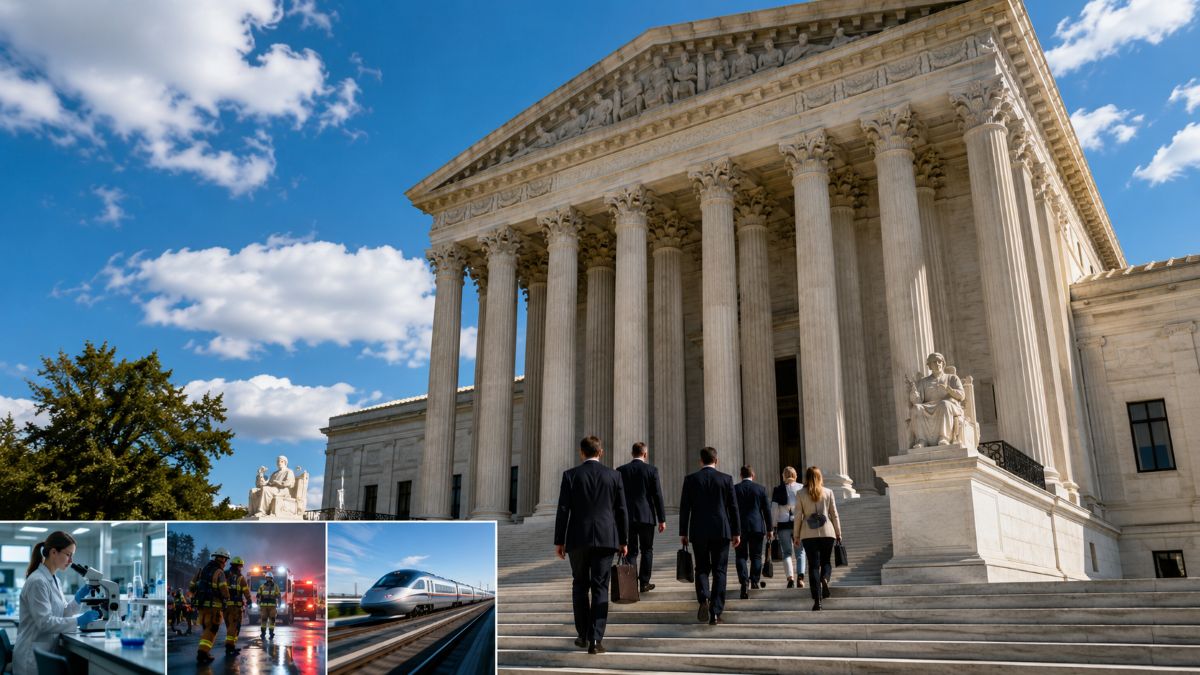
Image generated with Ai
The United States has entered a significant chapter in federal governance after a landmark court ruling limited the executive branch’s ability to broadly terminate federal grants using a disputed administrative clause. While the legal decision primarily concerns public funding and constitutional interpretation, its wider implications extend well beyond government agencies. Stable federal investment remains a cornerstone of transportation systems, scientific research, disaster preparedness, environmental protection, public safety, and infrastructure development—all of which directly influence tourism, business travel, and destination resilience across North America and beyond.
For travelers, tourism authorities, airport operators, hospitality businesses, and regional development agencies, predictable public investment provides confidence that long-term infrastructure projects and community services can continue without unexpected disruptions. The ruling arrives at a time when governments across the United States, Canada, Mexico, the United Kingdom, and Australia are investing heavily in resilient infrastructure, climate adaptation, emergency management, and research partnerships that ultimately support safer and more reliable travel experiences. Although the court case is rooted in domestic constitutional law, its outcome resonates internationally because strong public institutions and dependable funding contribute to destinations that remain attractive, accessible, and prepared for future challenges.
Federal funding has long supported projects that indirectly benefit travelers, including airport modernization, transportation planning, clean water systems, national parks, environmental conservation, emergency response capabilities, and scientific innovation. Industry observers note that legal certainty surrounding grant administration helps state and local governments continue planning multi-year projects without facing abrupt financial uncertainty.
Federal Court Clarifies Limits on Executive Authority Over Grants
The legal dispute centered on a grant termination provision that allowed federal agencies to discontinue awards if they no longer aligned with agency priorities or program goals. A coalition of twenty-three states argued that the clause had been interpreted too broadly, allowing agencies to cancel grants that had already been awarded.
The federal court agreed that such an expansive interpretation conflicted with the broader regulatory framework and constitutional requirements governing federal spending.
| Key Judicial Outcome | Significance for Public Investment |
|---|---|
| Broad interpretation rejected | Greater certainty for grant recipients |
| Constitutional protections reinforced | Clearer funding expectations |
| States receive legal support | Improved long-term planning |
| Federal agencies face clearer limits | Greater transparency in grant administration |
Although the ruling primarily concerns constitutional law, it also reinforces confidence among organizations that depend on federal funding for infrastructure, research, environmental programs, and public services.
Advertisement
Advertisement
Why Stable Public Funding Matters to the Travel Industry
Tourism depends on much more than hotels and airlines. Visitors expect safe roads, reliable airports, functioning emergency services, clean drinking water, protected natural attractions, and resilient communities.
Federal grants often help finance projects that support these essential services.
| Sector | Travel Industry Benefit |
|---|---|
| Transportation | Improved highways, transit, and airport connectivity |
| Emergency Management | Faster disaster response and visitor safety |
| Scientific Research | Better climate forecasting and environmental monitoring |
| Clean Water | Enhanced destination sustainability |
| Public Safety | Increased visitor confidence |
Stable investment creates an environment where destinations can continue upgrading infrastructure while maintaining high service standards for both residents and international visitors.
North American Cooperation Highlights Shared Infrastructure Goals
The United States continues working closely with Canada and Mexico on transportation, border efficiency, trade, and tourism development.
Reliable public investment supports cross-border mobility through improvements in customs facilities, highway corridors, airport operations, and regional transportation planning.
Similarly, the United Kingdom and Australia maintain strong partnerships with the United States across research, environmental resilience, higher education, emergency preparedness, and infrastructure innovation.
Advertisement
Advertisement
These international relationships contribute to shared knowledge that strengthens destination management and sustainable tourism practices.
| Partner Country | Shared Priority |
|---|---|
| Canada | Border infrastructure and tourism connectivity |
| Mexico | Transportation and regional economic development |
| United Kingdom | Scientific collaboration and resilience planning |
| Australia | Emergency management and environmental research |
Such cooperation reinforces confidence among international travelers seeking reliable and well-managed destinations.
Scientific Research Remains Essential for Future Tourism
One of the important issues raised during the legal challenge involved continued support for scientific research.
Research funded through federal grants contributes to numerous travel-related fields, including climate science, biodiversity conservation, public health, weather forecasting, coastal protection, and environmental sustainability.
Universities, research institutions, and federal agencies use these resources to improve understanding of natural hazards while supporting informed tourism planning.
Reliable research funding also helps destinations adapt to changing environmental conditions that increasingly influence visitor experiences worldwide.
Advertisement
Advertisement
Public Safety and Disaster Preparedness Support Visitor Confidence
Modern tourism depends heavily on effective emergency planning.
Federal grants frequently assist state and local governments in strengthening disaster preparedness programs, emergency communications, wildfire mitigation, flood management, and community resilience initiatives.
For visitors, these investments create safer destinations capable of responding quickly during hurricanes, severe storms, earthquakes, wildfires, or other emergencies.
Communities with well-funded emergency systems generally recover more rapidly from disruptions, allowing tourism businesses to resume operations sooner while minimizing impacts on travelers.
Infrastructure Investment Encourages Sustainable Destination Development
Long-term infrastructure planning requires predictable financial resources.
Unexpected funding uncertainty can delay transportation projects, environmental restoration, public facility improvements, and regional tourism initiatives.
Advertisement
Advertisement
The recent court ruling provides greater certainty for organizations responsible for delivering infrastructure that supports economic development and visitor experiences.
| Infrastructure Area | Long-Term Tourism Value |
|---|---|
| Airports | Better passenger experience |
| Roads and Bridges | Improved regional accessibility |
| National Parks | Enhanced visitor facilities |
| Environmental Projects | Sustainable destination management |
| Public Utilities | Reliable community services |
Stable grant administration enables local governments to continue implementing projects designed to strengthen destination competitiveness.
Legal Certainty Benefits State and Local Governments
Many tourism destinations rely on partnerships between federal, state, and local governments.
Federal grants often complement state investment in transportation, heritage preservation, environmental conservation, downtown revitalization, and cultural attractions.
When funding rules remain clear and consistent, governments can confidently enter long-term contracts and plan projects that may take several years to complete.
This certainty also benefits contractors, tourism businesses, nonprofit organizations, universities, and local communities involved in public infrastructure initiatives.
Advertisement
Advertisement
Broader Economic Implications for Travel and Hospitality
The hospitality industry benefits indirectly from strong public investment.
Hotels, convention centers, restaurants, museums, parks, airports, and transportation providers all depend on public infrastructure that supports visitor movement and community development.
Stable federal funding contributes to economic confidence by reducing uncertainty surrounding major public projects.
As destinations continue investing in resilience, sustainability, accessibility, and transportation modernization, travelers increasingly benefit from safer journeys, improved facilities, and enhanced visitor experiences.
The court’s decision therefore extends beyond constitutional law by reinforcing the institutional stability that supports long-term tourism growth.
Looking Ahead
Legal experts expect the federal government may continue pursuing additional judicial review, meaning future appeals remain possible.
Advertisement
Advertisement
However, the ruling currently establishes important guidance regarding how federal agencies administer grants and interpret funding regulations.
For the travel sector, the broader message is one of stability.
Predictable investment supports transportation networks, environmental conservation, scientific research, emergency preparedness, and community resilience—all essential ingredients of successful tourism destinations.
As governments continue strengthening international cooperation with partners including Canada, Mexico, the United Kingdom, and Australia, dependable public funding will remain central to building sustainable, competitive, and resilient travel economies.
The decision demonstrates that transparent governance and constitutional clarity contribute not only to effective public administration but also to stronger foundations for tourism development and long-term visitor confidence.
Frequently Asked Questions
1. What was the main outcome of the federal court ruling?
The court ruled that federal agencies cannot broadly rely on a disputed grant termination clause to cancel previously awarded funding.
Advertisement
Advertisement
2. Why is this important for the travel industry?
Stable federal funding supports transportation, emergency services, environmental protection, and infrastructure that benefit tourism.
3. Does the ruling affect international travelers?
Indirectly, yes. Reliable public investment helps maintain safe, resilient, and well-managed destinations.
4. Which countries are highlighted in the travel context?
The article highlights cooperation involving the United States, Canada, Mexico, the United Kingdom, and Australia.
5. How do federal grants support tourism?
They fund infrastructure, research, public safety, environmental conservation, and transportation improvements.
6. Will existing infrastructure projects continue?
The ruling provides greater certainty for projects relying on federal grants, although individual funding decisions remain subject to applicable laws.
7. Does the decision restore grants that were previously terminated?
No. The ruling limits future reliance on the disputed clause but does not automatically reinstate past grants.
Advertisement
Advertisement
8. Why is scientific research relevant to tourism?
Research improves climate forecasting, environmental management, conservation, and destination resilience.
9. Can the federal government appeal the ruling?
Yes. The administration may seek review in a higher court.
10. What is the broader significance of the decision?
It strengthens confidence in transparent grant administration while supporting long-term infrastructure, public services, and sustainable tourism development.
Advertisement
Advertisement