Published on
July 10, 2026

Image generated with Ai
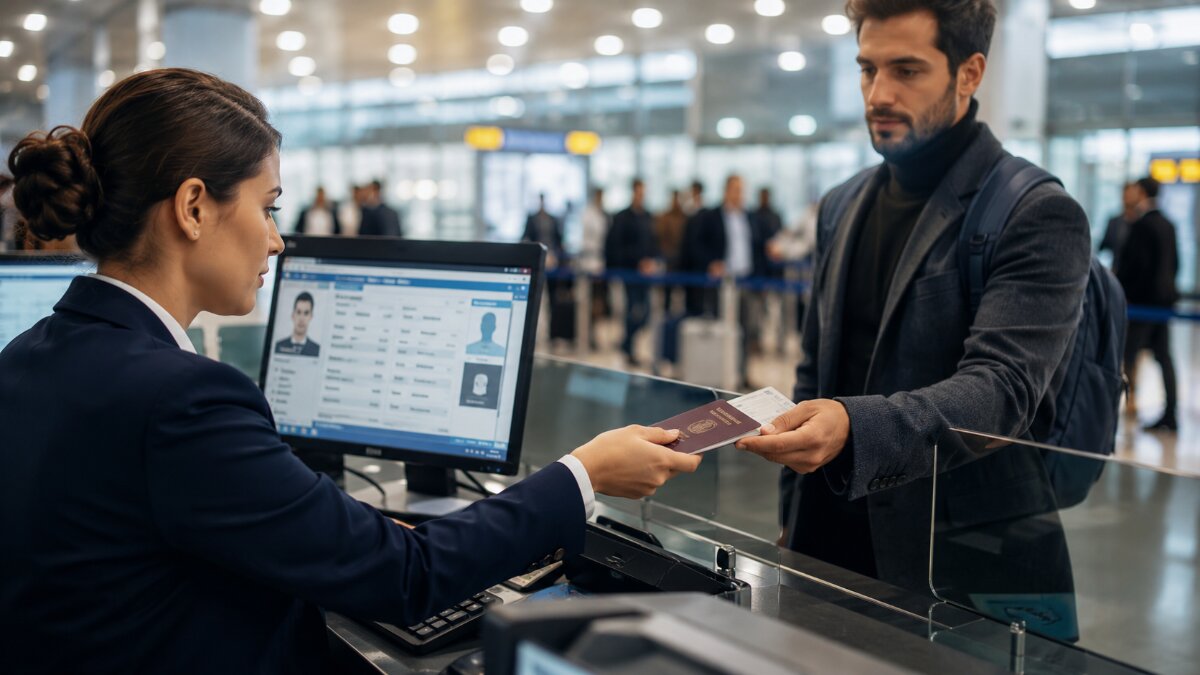
The United Kingdom has entered a new digital visa era after ending routine passport vignette issuance for successful applicants on 1 July 2026. However, updated airline guidance published on 10 July reveals a more complex operating environment than a fully paperless border. Carriers must now distinguish between two documents carrying the FAV abbreviation, rely increasingly on automated Home Office permission responses and manage continuing financial exposure when passengers arrive without acceptable documentation. The change directly affects airline check-in, travel agency advice, border technology and passenger readiness.
United Kingdom eVisa transition moves visa verification beyond the passport
UK Visas and Immigration stopped issuing all new visa vignette stickers on 1 July 2026. Successful applicants now receive digital evidence of immigration status, including an eVisa, digital Certificate of Entitlement or digital record of exemption, depending on the permission granted. Existing vignettes have not been cancelled and remain usable until their printed expiry dates.
The operational consequence is significant. A traveller may arrive at an overseas airport with no visible UK visa inside the passport. Airline personnel must instead establish whether the Home Office has located a valid digital permission linked to the travel document submitted during check-in.
The eVisa itself records the holder’s identity, immigration status and conditions. It is accessed through a UK Visas and Immigration account rather than presented as an independent downloadable travel document. Passengers must ensure that their current passport, personal information and eVisa details are accurately connected before departure.
Advertisement
Advertisement
The change represents the final stage of a broader migration from physical immigration documentation. The Home Office stopped producing biometric residence permits for newly granted permissions lasting more than six months on 31 October 2024. By February 2026, more than ten million eVisas had been issued.
Key stages in the United Kingdom digital permission rollout
| Date | Official development | Operational significance |
|---|---|---|
| 31 October 2024 | Home Office stopped producing biometric residence permits for newly granted permissions lasting more than six months | More visa holders were directed towards UKVI accounts and digital status |
| 14 January 2026 | Eligible non-visa nationals with valid pending EU Settlement Scheme applications began receiving automated permission responses when their passport was linked correctly | Carrier decisions became more dependent on real-time Home Office data |
| 25 February 2026 | Electronic Travel Authorisation enforcement expanded the digital permission model for eligible non-visa travellers | Airlines were required to establish digital permission before boarding |
| 1 July 2026 | UKVI stopped issuing all new visa vignette stickers | Successful new applicants moved to digital immigration evidence |
| 1 July 2026 | Form for Accompanying an eVisa entered the carrier-document framework | A physical exception remained inside the digital system |
| 10 July 2026 | Carrier guidance was updated regarding visas issued on a Form for Affixing a Visa | Airlines received additional clarification on handling legacy paper evidence |
The timeline is based on UKVI carrier guidance, eVisa transparency records and official digital border announcements.
Advertisement
Advertisement
Dual FAV documents create an overlooked airline training challenge
The most distinctive feature of the new regime is that two separate documents now use the same FAV abbreviation.
The older Form for Affixing a Visa can carry a physical visa vignette. The newer Form for Accompanying an eVisa supports a valid digital immigration status. The Home Office carrier charging guidance recognises both documents as potentially acceptable evidence, despite their different purposes.
Advertisement
Advertisement
The 10 July update specifically addressed visas issued on the Form for Affixing a Visa. This followed the 1 July revision introducing the Form for Accompanying an eVisa into carrier guidance. The sequence demonstrates that the end of routine visa stickers did not immediately eliminate every legacy documentation scenario.
The newer form is particularly relevant where the United Kingdom does not recognise the passenger’s passport. Official carrier guidance states that a Form for Accompanying an eVisa is issued in such cases. It must be linked to the holder’s digital status. Applicant guidance also explains that a recipient will normally need to return to the visa application centre to collect the form before travel.
This distinction matters at airports where agents process multiple destinations, visa systems and document formats during a single shift. Staff cannot assume that every FAV performs the same function. One may contain a physical visa, while the other accompanies an eVisa that must be validated through Home Office systems.
United Kingdom visa and status evidence airlines may encounter
| Evidence presented | Format | What the airline must establish | Current status |
| eVisa linked to a passport | Digital | Home Office system confirms valid permission for the travel document | Standard model for successful new applicants |
| Form for Accompanying an eVisa | Physical form linked to digital status | Form, identity document and eVisa connection are valid | Introduced into carrier guidance from 1 July 2026 |
| Form for Affixing a Visa | Physical form carrying a vignette | Vignette is genuine, valid and belongs to the traveller | Legacy evidence clarified on 10 July 2026 |
| Visa vignette inside a passport | Physical | Sticker remains valid and matches the passenger | Existing vignettes remain valid until expiry |
| UKVI travel share code | Digital verification route | Status can be confirmed using the code and date of birth | Additional evidence when required |
| Eligible physical immigration evidence | Physical | Document is genuine, current and held by the rightful passenger | Remains acceptable in defined circumstances |
Official guidance confirms that share codes generated for travel remain valid for 90 days and may be used more than once during that period.
Advertisement
Advertisement
Automated Home Office responses now influence boarding decisions
Airlines checking an eVisa do not normally inspect the digital record in the same way that they previously examined a sticker. Passenger-document information is submitted through approved Home Office connectivity.
The carrier may receive the response through interactive Advance Passenger Information messaging, Direct REST connectivity or a Home Office web interface. A 0A board response provides satisfactory evidence that valid UK permission has been found. Airlines do not then need to determine separately whether the passenger is entering or merely transiting the United Kingdom.
A 0Z or 0B check response can occur when a traveller relies on physical evidence. In those circumstances, a valid and genuine physical permission document can still satisfy the carrier’s obligations. Staff must check the validity period, named holder and any accompanying people covered by the document.
The final decision to carry the passenger remains with the transport company. Admission to the United Kingdom remains a decision for a Border Force officer after arrival. Airlines therefore act as the first operational checkpoint without replacing the legal function of border control.
How the new airline check-in workflow operates
| Check-in stage | Required action | Principal risk |
| Passport capture | Scan the same valid passport linked to the UKVI account | A new or unlinked passport may prevent digital permission from being located |
| Passenger data matching | Ensure names and biographical details match the booking and UKVI record | Spelling, nationality or date-of-birth differences may trigger additional checks |
| Digital permission query | Submit document data through an approved carrier channel | Failed or inconclusive responses can delay check-in |
| Physical evidence review | Inspect a valid vignette, FAV or other accepted document where relevant | Similar abbreviations and legacy documents may be misunderstood |
| Escalation | Contact the UK Border Force Carrier Support Hub when permission cannot be confirmed | Failure to escalate may produce denied boarding or carrier-liability exposure |
| Passenger support | Request a travel share code or corrected UKVI details where appropriate | Resolution may not be immediate close to departure |
The Home Office instructs carriers to use the UK Border Force Carrier Support Hub when advice is required about a passenger’s permission to travel.
£2,000 carrier liability turns data accuracy into a commercial issue
The digital transition does not remove carrier responsibility. Under Section 40 of the Immigration and Asylum Act 1999, an aircraft or ship owner, operator or agent may face a charge of £2,000 for every passenger arriving without satisfactory identity evidence, the necessary visa or digital permission, or a required Electronic Travel Authorisation.
Advertisement
Advertisement
The risk extends beyond the absence of a document. Carriers are expected to establish that the passport or travel document is valid, acceptable in the United Kingdom and held by its rightful owner. They must also confirm the required visa or permission where one is necessary.
A valid 0A response can become important compliance evidence because it demonstrates that the Home Office system identified permission before boarding. Where possible liability is identified after arrival, Border Force can issue formal notification and review relevant documentation before determining whether a charge should proceed.
Air, rail and sea operators can apply for approved gate check status. This accreditation can protect a carrier from certain charges when an inadequately documented passenger has been transported, provided the required operating and inspection standards are maintained.
Official eVisa correction data exposes the importance of pre-travel checks
Home Office transparency data published on 1 July recorded 64,778 eVisa corrections between September 2025 and May 2026. The corrected records represented less than one per cent of all live eVisas. UKVI aims to resolve most reported issues within five working days, although complex cases can take up to 15 working days.
| Correction month | Corrected eVisa records |
| September 2025 | 7,289 |
| October 2025 | 6,979 |
| November 2025 | 7,044 |
| December 2025 | 7,163 |
| January 2026 | 8,198 |
| February 2026 | 7,604 |
| March 2026 | 7,714 |
| April 2026 | 7,397 |
| May 2026 | 5,390 |
| Published-period total | 64,778 |
Corrected fields included names, dates of birth, nationality, immigration status, validity dates, photographs, share codes and UKVI account contact details. The Home Office notes that many corrections involved minor issues without a material effect. Others could affect travel, employment or the ability to prove a right to rent.
The figure must not be interpreted as 64,778 denied boardings or border failures. It measures records corrected through the Home Office reporting process. Its relevance for aviation lies in the range of data fields involved. A discrepancy in a passport number, nationality, name or status validity can interfere with the digital matching process on which check-in increasingly depends.
Advertisement
Advertisement
Why the United Kingdom eVisa shift matters to global aviation
The United Kingdom handled a record 302 million airport passenger journeys in 2025, up from 295 million in 2024. This scale means that even a small proportion of passengers requiring manual status checks can affect airline service desks, transfer operations and departure punctuality across a large international network.
The central industry change is the transfer of evidential weight from a visible security sticker to interconnected data. The passport remains essential, but its value at check-in increasingly depends on whether the Home Office database recognises the document and links it to an active permission.
This creates a new form of document readiness. Travellers must manage not only passport validity but also digital identity alignment. Airlines must maintain reliable interfaces, updated document libraries, trained ground handlers and escalation procedures. Travel agents must explain that a successful visa decision does not remove the need to inspect the UKVI account before departure.
The hybrid period could be the most operationally demanding stage. New eVisas, unexpired vignettes, two FAV documents, older settlement evidence, share codes and Home Office travel documents may all appear at the same airport desk. The system may ultimately reduce dependence on lost, damaged or expired physical cards, but its immediate effectiveness depends on consistent data matching across the traveller, airline and government platforms.
Operational takeaways for travel agents and tour operators
- Confirm that every visa-holding client can access their UKVI account before issuing final travel documents.
- Advise travellers to add the exact passport they will use for the journey and match booking details precisely.
- Check whether the client has received a Form for Accompanying an eVisa and whether collection from the visa application centre is required.
- Do not advise travellers to discard an unexpired vignette, as existing stickers remain valid until their stated expiry.
- Encourage clients to review names, nationality, date of birth, status type and permission validity well before departure.
- Recommend generating a travel share code in advance when additional evidence may be useful.
- Build additional check-in time into group, student, corporate and escorted-tour departures involving eVisa holders.
- Train reservations and airport-support teams to distinguish between the two FAV document types.
- Establish escalation contacts with operating airlines for cases where digital permission cannot be located.
- Avoid treating an eVisa screenshot as a substitute for live status verification through recognised government channels.
United Kingdom digital border model will influence future passenger processing
The end of routine visa stickers marks a decisive step towards a border where travel permission is established before departure through connected government and carrier systems. Over time, this model could streamline document inspection, reduce dependence on physical immigration products and support faster passenger processing.
Its strategic success will depend on resilience rather than digitisation alone. Accurate records, accessible UKVI accounts, reliable airline connectivity and clear treatment of exceptional documents will determine whether travellers experience a smoother journey or a new type of digital disruption.
The 10 July carrier update shows that legacy and digital evidence will continue to coexist during the transition. For the global travel industry, the immediate priority is therefore not simply adapting to the disappearance of the visa sticker. It is learning how to manage a border-control system in which the passport, the passenger record, the airline interface and the Home Office database must all identify the same traveller at the same moment.
Advertisement
Advertisement