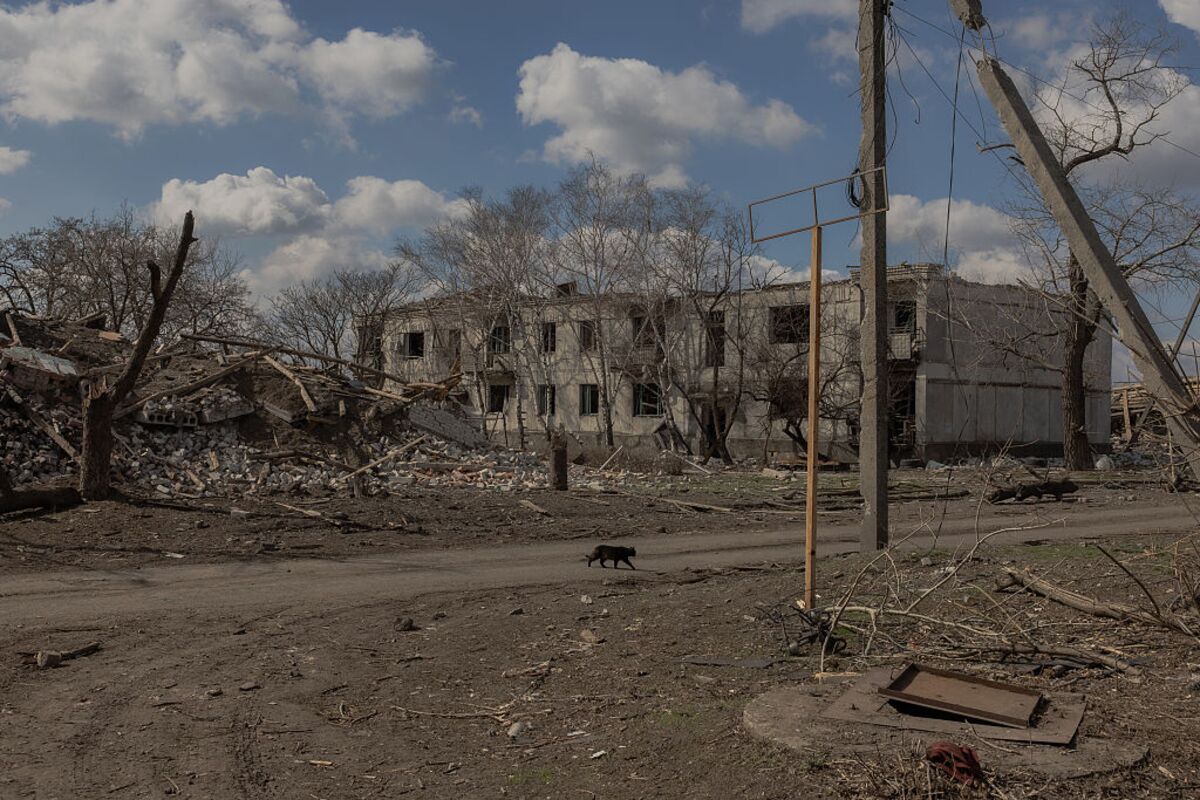
First Bakhmut, then Avdiivka, now Pokrovsk. In each of the last three years, Russia’s generals have identified a midsize Ukrainian town as their invasion’s next critical target, expending vast amounts of manpower and hardware to take it. The question is not whether Pokrovsk will fall, but what that will mean for the war.
Pokrovsk’s capture would have significant political and symbolic importance for both sides, as was the case for its predecessors in 2023 and 2024. That plus road and rail links explain why Russian commanders pulled troops away from other parts of the front to concentrate more than 100,000 personnel at a mining town with a pre-war population half that size.
Vladimir Putin needs this win as he heads into winter. Lack of foliage to hide advancing troops from drones and the fallback defenses Ukraine has built behind Pokrovsk will make advancing even more difficult and costly until the leaves grow back in the spring. And for Russia, this has already been a disappointing year, gaining less new territory despite growing battlefield advantages, and at a time when the economy is showing signs of strain at home.
So Pokrovsk’s capture would help sustain Putin’s narrative of ineluctable victory and suppress any sense among ordinary Russians that the gains he’s making in Ukraine aren’t worth the human or economic cost. It would also hit already low morale in Ukraine and could, most dangerously, persuade the US to pressure Kyiv into capitulation.
What it won’t do is, as some have said, open the road for Russian forces to sweep through the so-called fortress belt of east Ukrainian cities that have so frustrated Putin’s invasion. That’s because of the way this war is being fought, which is on foot; it’s been a long time since either side did any sweeping. Indeed, Pokrovsk’s fall could also be seen as another stage in a Ukrainian strategy to bleed Russia’s advantages in manpower and equipment to exhaustion.
To put this in perspective, it has taken Russia’s armed forces 20 months to move less than 50 kilometers (29 miles) from Avdiivka to Pokrovsk – a one-hour drive in peace time. In that period, Ukraine’s count of Russian war dead and wounded nearly tripled to 1.147 million, from 401,350. Those figures are partisan and therefore unreliable, but there is wide consensus among independent military analysts that the trend they reflect is correct; this has, for Russia, been the bloodiest year of the war to date.
Will Pokrovsk prove to have been worth the cost? And how should Ukraine’s allies respond?
These are two parts of the same question, because this war will be decided by the ability and will of each side to remain in the fight — and that’s something Pokrovsk’s fate alone can’t determine, but Ukraine’s allies can. In fact, when I visited to see the town’s coking coal mine in October 2024, the fear at the time was that resistance might not last beyond the end of the year. A defense that continues nine months beyond expectation, against an eight-to-one force concentration drawn from other areas of the front is not a sign of military collapse.