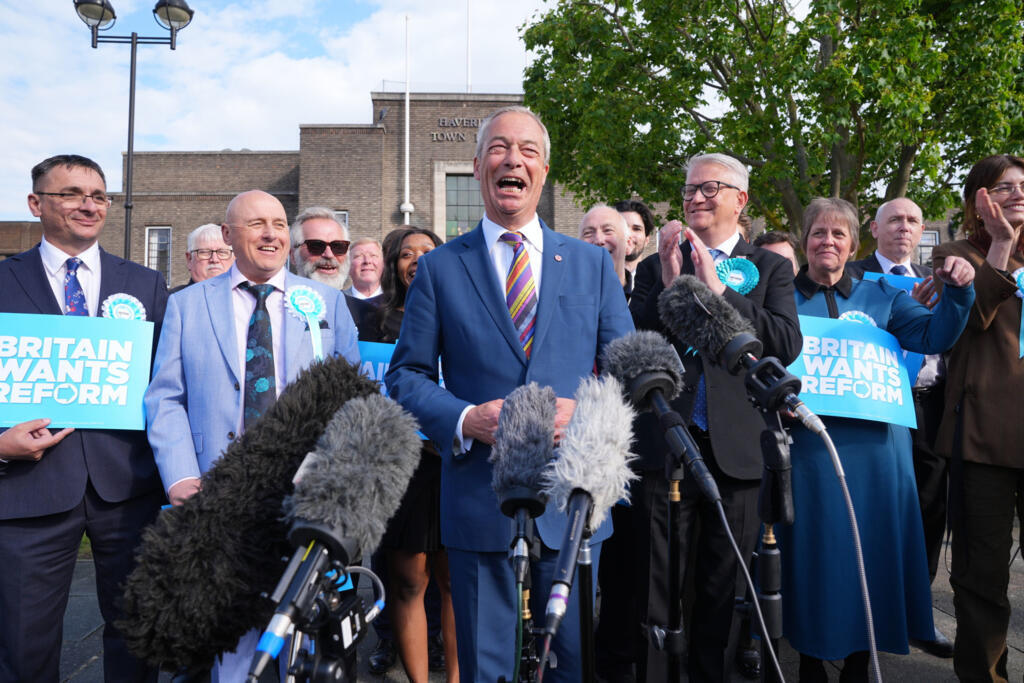
Keir Starmer vowed Friday to remain as Britain’s prime minister after disastrous local elections saw his centre-left Labour party humiliated across the UK, with disillusioned voters backing hard-right and nationalist parties.
Issued on:
2 min Reading time
Thursday’s ballots — Starmer’s biggest electoral test since Labour ousted the Conservatives in 2024 — left the British leader under intense pressure after the party suffered a historic mauling in its Welsh heartlands.
Alongside the Tories, it was also decimated by Nigel Farage’s anti-immigrant Reform UK party across England, and failed to make any inroads into Scottish National Party (SNP) dominance north of the border.
But Starmer, who has faced persistent calls to quit from rival party leaders and some Labour MPs for months, was adamant he was “not going to walk away and plunge the country into chaos”.
“The results are tough, they are very tough, and there’s no sugarcoating it,” the 63-year-old said, adding “it should hurt, and I take responsibility”.
Several cabinet members voiced support for him, and the lack of an obvious alternative leader has reduced the immediate peril of a potential challenge.
English elections see Labour Party punished and gains for populist Reform
Farage, whose upstart party has led national polls for over a year and seized a string of Labour and Conservative councils Friday, predicted Starmer would be ousted within months.
The Brexit architect claimed the elections illustrated a “truly historic shift in British politics”.
“We have not just crashed the ‘red wall’,” Farage said of Reform wins in Labour’s post-industrial traditional strongholds across northern England.

“Today in Essex we crashed the ‘blue wall’ as well,” he added, celebrating victory in the eastern English county where the Tories had long dominated.
Wales and Scotland
In Wales, Labour lost control of the devolved government for the first time since the parliament in Cardiff was established 27 years ago, with its leader there embarrassingly losing her seat.
Nationalists Plaid Cymru, which wants Welsh independence in the long-term, won 43 seats — falling short of a majority.
Reform followed on 34, leaving Labour in third with just nine seats, a humiliation for a party that has dominated Welsh politics for a century.
Just two years ago, Labour swept the Conservatives from power in a landslide general election victory.
But it has failed to deliver promised economic growth and has been plagued by policy missteps and scandals.
Insurgent parties have reaped the benefit, as Britons struggle with an enduring cost-of-living crisis.
Around 5,000 English local council seats — just under a third of the nationwide total — were up for grabs Thursday, alongside the entire devolved parliaments in Scotland and Wales.
By late Friday, with nearly all the 136 councils reporting, Labour had lost nearly 1,400 councillors and control of 33 councils, while Reform had gained nearly 1,500 local lawmakers.
Farage’s party had seized control of 13 councils — including historic Labour-controlled places.
Meanwhile, in Scotland, with nearly all the results in, the SNP failed to get a majority — winning six fewer seats than in 2021.
But the pro-independence party was confident of leading the devolved government for a fifth consecutive term.
(With newswires)