![An image showing families dressed in hanbok (traditional Korean attire) having a holiday meal together [GETTY IMAGES BANK]](https://koreajoongangdaily.joins.com/data/photo/2026/02/16/f0449ec9-70ee-4790-a6eb-dc6cfc62ea3d.jpg)
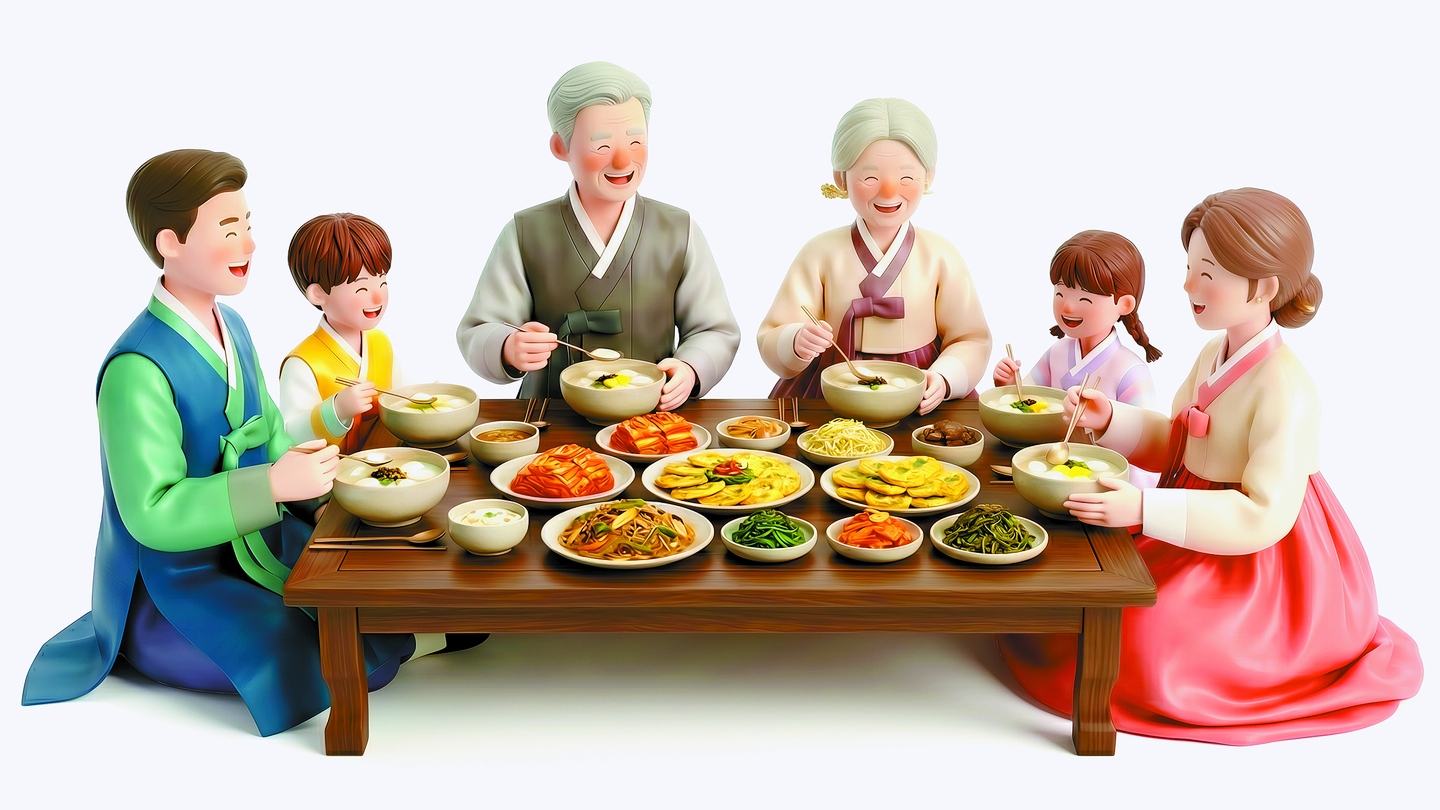
An image showing families dressed in hanbok (traditional Korean attire) having a holiday meal together [GETTY IMAGES BANK]
Seollal, or Lunar New Year, is a time for bonding with family, and also an occasion to indulge in tasty traditional dishes and delicacies.
Seollal, along with the autumn harvest festival Chuseok, is one of Korea’s biggest and longest holidays when most families travel across the country to visit their parents and relatives. Younger family members, often dressed in
hanbok (traditional Korean attire), bow to elders to get pocket money and also spend time honoring their ancestors. The ritual is followed by hours of feasting on foods, such as
tteokguk (rice cake soup) and
galbijjim (braised short ribs), sometimes prepared over days, with vibrant and warm chatter.
However, gluttony is a major threat to one’s well-being and health.
While Koreans came up with mukbang and relish in good food and treats, consuming more food than necessary might come with unpleasant consequences over the holiday, especially when one does not know how to eat healthily.
Thus, health experts give some handy tips to keep in mind before indulging in a savory, heartwarming holiday feast.
Korean holiday dishes tend to be high in calories and greasy. They are mostly either fried or stir-fried in oil, a cooking method that can distress the stomach and reduce its digestibility.
“Seollal food features
jeon (pan-fried fritters), fried and meat dishes, all of which have high calorie density,” said Prof. Shin Sang-ah from the food and nutrition department of Chung-Ang University. “It can increase intake of saturated fat altogether.”
Overeating expands one’s stomach and pushes it to handle larger amounts of food than usual. A round of overeating can lead to several days of abdominal bloating and stomachache.
![A woman prepares tteok (rice cake) which is used for tteokguk (rice cake soup), a Seollal dish, at a local market in western Seoul on Feb. 11. [NEWS1]](https://koreajoongangdaily.joins.com/data/photo/2026/02/16/3f245e50-b65e-436c-8c5f-887e61cfcf2d.jpg)
A woman prepares tteok (rice cake) which is used for tteokguk (rice cake soup), a Seollal dish, at a local market in western Seoul on Feb. 11. [NEWS1]
According to a sourcebook published by the Ministry of Food and Drug Safety, 700 grams (24.7 ounces) of tteokguk boasts 588 calories. A 300-gram serving of galbijjim has 256 calories, while a 200-gram serving of jeon contains 323 calories.
Starting a meal with fiber-rich vegetables or
namul (seasoned wild edible plants) can help prevent overeating, as fiber increases satiety. It thus reduces the likelihood of bingeing on carbohydrates, the main driver of spikes in blood glucose levels.
Protein-rich food, such as meat and fish dishes and tofu, should come next. Proteins are broken down more slowly than carbohydrates, making a sense of fullness last longer.
Carbohydrates, such as rice, tteokguk and
sikhye (a dessert beverage made of malt water and cooked rice), are recommended to be eaten last. As the stomach is already filled with vegetables and protein, there is less room for carbohydrates.
Nutritionally, tteokguk and sikhye are high in refined carbohydrates. Especially, tteokguk contains a high level of sodium, according to Prof. Kim Hye-mee, a faculty member from the department of food science and nutrition at Pusan National University.
Prof. Shin said holiday food can trigger a spike in blood sugar and blood pressure, and can cause the accumulation of neutral fat because they largely consist of simple sugars and sodium. She noted that drinking alcohol can boost intake of calories and fat altogether.
![Pan-fried beef fritters are made by people gathered at a community center in Gwangju on Feb. 13. [NEWS1]](https://koreajoongangdaily.joins.com/data/photo/2026/02/16/cd21333a-5d5e-4d23-80cd-2118322b64a4.jpg)
Pan-fried beef fritters are made by people gathered at a community center in Gwangju on Feb. 13. [NEWS1]
Mindful eating in this order can also prevent fast eating.
“Consuming plain-taste food, such as namul, first can prevent overeating,” Prof. Shin said. “Recognizing one’s satiety is the practical strategy to avoid overeating.”
Those with chronic illnesses can enjoy holiday dishes with a low-salt, low-sugar and low-fat diet, just by altering a few ingredients.
Buckwheat and chickpea powders can replace flour when making traditional Korean pan-fried fritters. For galbijjim, onion and carrots — ingredients that develop a sweeter flavor as they are boiled — can reduce the amount of sugar needed.
Those with high blood pressure should avoid salty foods. Perilla seed powder can substitute salt when seasoning namul.
Fat content can be reduced by boiling meat before cooking it in a pan. In addition, cooking with an airfryer can offer a healthier dietary option that uses less fat compared to deep-frying in oil.
“Holiday food has a profound cultural meaning,” Kim said. “Thus, instead of strictly distancing from the tradition, keeping a healthy routine — such as keeping three- to four-hour intervals between meals — within the tradition seems to be a realistic and healthy approach.”
BY KIM SUN-YOUNG, LEE SOO-JUNG [[email protected]]