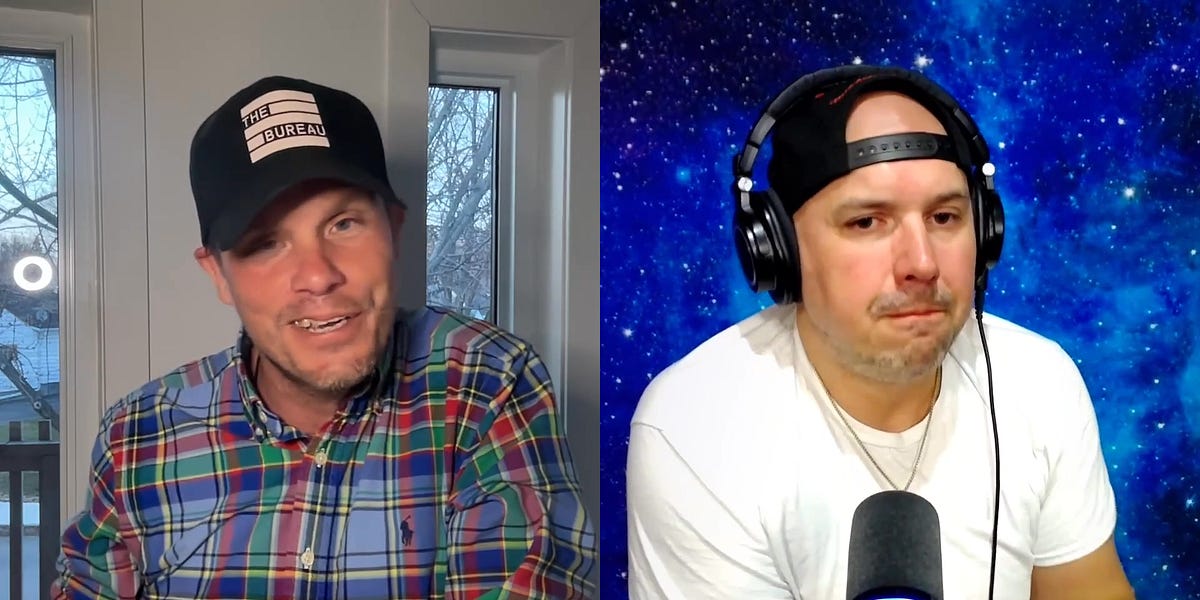
OTTAWA — This podcast discussion from late April was recovered from the cloud by Jason James, and was taped a month before my appearance this week alongside an incredible cast of national experts at the Hudson Institute in Washington, D.C.
At that event, Mike Doran — director of the Center for Peace and Security in the Middle East at Hudson and a former senior White House national security official — asked me to explain how China seeds its influence through elite financial institutions. My answer, it turned out, foreshadowed a bombshell congressional report released this week by the House Select Committee on China, which found that major Wall Street banks turned a blind eye to underwriting deals with Chinese military-linked and Uyghur slave labor-connected companies.
In my answer to Doran, I argued that China invests across Wall Street, Bay Street, and Silicon Valley to forge bonds of obligation and influence with the most powerful, politically connected business figures in the West.
Using the example of Mark Carney and Brookfield, I also explained how significant Canadian political leaders — and the business networks that back them — have been granted privileged access to China’s green infrastructure and real estate markets. I told Doran this is, in my view, United Front influence tradecraft. In Carney’s case, it could be said to have created the perception of a conflict of interest: that Carney’s private interests, and those in his orbit, may now benefit from his government’s deepening trade dealings with Beijing — including a significant electric vehicle arrangement that would likely raise the precise concerns now at the center of the committee’s investigation into JPMorgan, Bank of America, and Morgan Stanley.
There are a few minor lags in this tape due to some tech issues we were having, but I think the discussion is one of the deepest ones Jason and I have had, and it was predictive also, of the stance taken this week by the Pentagon, pausing a generational defense board partnership, due to concerns with Canada’s laxity on national security and military spending.
On the factors behind Carney’s dealings with China, I tell Jason that plausibly, it is circumstantially proven now, “that Mark Carney is making decisions that benefit himself, and the people that would boost him into the Liberal leadership, above Canada. From national security and economic sovereignty and our relationship with the United States, the moves that Carney is making for the strategic partnership with China, don’t make sense any other way.”
“Investigative pressure from the United States, and national security pressure, I think will get stronger,” I continued to tell Jason in April. “My best answer is, I see horribly negligent or corrupt leadership in Ottawa, with regards to decisions they are making between China and the United States.”