Published on
July 15, 2026

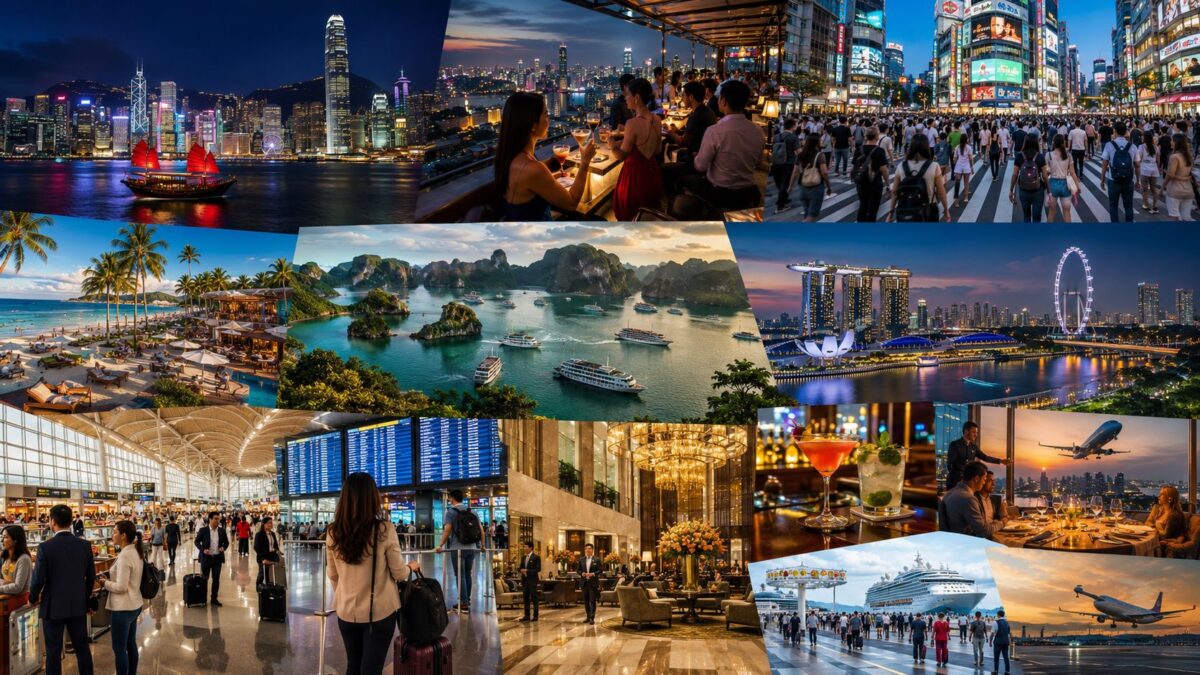
Image generated with Ai
The Asia tourism boom is emerging as one of the defining travel stories of 2026, creating new commercial opportunities far beyond airlines, hotels and attractions. As international travel patterns continue to evolve amid geopolitical uncertainty and changing flight networks, destinations across Hong Kong, Thailand, Japan, Vietnam, Singapore, Indonesia and India are witnessing stronger visitor demand, accelerating investment across hospitality, premium dining, cocktail culture and travel retail. At the same time, shifting aviation routes and recovering visitor confidence are encouraging governments and tourism authorities to strengthen destination marketing, improve connectivity and expand visitor experiences, positioning Asia as one of the world’s most dynamic tourism regions. For travellers, this transformation means greater access to luxury hospitality, enhanced airport retail, internationally recognised bars, premium culinary experiences and expanding cultural tourism ecosystems.
The latest tourism and market indicators suggest that Asia’s recovery is moving beyond simply restoring visitor numbers. Instead, the region is entering a phase where high-value tourism, premium consumer spending and experiential travel are becoming the principal growth engines. Governments are investing heavily in international events, cruise infrastructure, aviation capacity and destination branding, while global beverage companies increasingly view Asia as a strategic long-term market. Against this backdrop, premium spirits, duty-free shopping and sophisticated cocktail culture are evolving alongside tourism, illustrating how modern travel economies increasingly depend on visitor spending across multiple sectors rather than accommodation alone. For the travel industry, Asia’s tourism resurgence represents a structural shift with implications extending across aviation, hospitality, retail, gastronomy and destination competitiveness.
Asia Tourism Boom Signals a New Phase in Global Travel Recovery
For much of the past decade, discussions surrounding international tourism centred largely on visitor arrivals and airline capacity. In 2026, however, the conversation has become considerably more sophisticated. The Asia tourism boom demonstrates that tourism recovery is increasingly being measured by visitor spending, premium experiences, hospitality investment and destination resilience rather than passenger numbers alone.
Across Asia-Pacific, governments are actively repositioning tourism as an economic catalyst capable of stimulating employment, retail activity, cultural industries and international investment simultaneously. Consequently, destinations are no longer competing solely on beaches or landmarks. Instead, they are differentiating themselves through culinary tourism, nightlife, entertainment districts, luxury accommodation, sporting events, cruise tourism and immersive cultural experiences.
Advertisement
Advertisement
This transformation has become especially visible as global travel patterns continue adjusting to geopolitical developments affecting traditional aviation corridors.
Although aviation networks remain highly adaptable, travellers increasingly consider routing convenience, operational reliability and regional stability when selecting destinations. As airlines revise schedules and passengers seek alternative itineraries, numerous Asian destinations have strengthened their competitive positions through improved accessibility and diversified tourism offerings.
Advertisement
Advertisement
Equally important, domestic and intra-Asian travel continues providing a resilient foundation for regional tourism.
Unlike previous recovery cycles that depended heavily on long-haul markets, many Asian economies now benefit from stronger regional connectivity supported by expanding middle-class populations, visa facilitation measures and growing low-cost airline networks. This structural change has reduced dependence on any single origin market while encouraging year-round visitor flows.
International Visitor Recovery Continues Across Asia-Pacific
According to the latest international tourism indicators, Asia-Pacific remains one of the fastest-improving tourism regions globally, even though several destinations are still rebuilding towards pre-pandemic visitor volumes.
The recovery has nevertheless become increasingly broad-based.
Major metropolitan destinations including Hong Kong, Singapore, Bangkok, Tokyo, Seoul and Ho Chi Minh City are benefiting from renewed international demand, while resort destinations such as Phuket, Bali, Da Nang, Boracay and Langkawi continue attracting leisure travellers seeking premium holiday experiences.
Several markets are simultaneously experiencing growth across multiple tourism segments.
Advertisement
Advertisement
Business travel has strengthened alongside leisure demand. Cruise tourism is returning across numerous Asian ports. International conferences and exhibitions are once again attracting global delegates. Meanwhile, concerts, sporting tournaments and cultural festivals increasingly serve as catalysts for international visitation.
These overlapping demand drivers create a far more resilient tourism ecosystem than reliance upon seasonal leisure travel alone.
Asia-Pacific Tourism Recovery at a Glance
| Indicator | Latest Trend | Travel Significance |
|---|---|---|
| International tourism recovery | Continuing upward trajectory | Stronger airline demand and hotel occupancy |
| Regional travel | Expanding steadily | Greater resilience against global disruptions |
| Premium hospitality | Growing investment | Increased luxury accommodation and dining |
| Entertainment tourism | Significant expansion | Major concerts and events attracting international visitors |
| Cruise tourism | Recovery accelerating | Higher visitor spending across port cities |
| Duty-free retail | Passenger spending increasing | Stronger airport commercial revenues |
Governments Are Investing Beyond Traditional Tourism Promotion
One of the defining characteristics of Asia’s tourism expansion is the increasingly active role governments are playing in shaping visitor economies.
Rather than relying exclusively on private-sector investment, public authorities are directing substantial resources towards airport expansion, waterfront redevelopment, cruise terminals, urban regeneration projects, convention centres and international event hosting.
This broader investment strategy reflects a growing understanding that tourism generates economic benefits across numerous industries.
Hotels benefit directly from overnight visitors, yet airlines, restaurants, retail centres, museums, transport operators, entertainment venues and local businesses equally depend upon sustained tourism growth.
Advertisement
Advertisement
Consequently, destination competitiveness increasingly depends upon integrated planning instead of isolated tourism campaigns.
Several destinations have also intensified international marketing activities.
Large-scale promotional campaigns, airline partnerships, travel trade engagement and overseas roadshows have become central elements of destination development strategies. Many governments are simultaneously simplifying visa procedures, expanding digital immigration services and encouraging longer visitor stays through diversified travel experiences.
Hong Kong Strengthens Its Position Through Tourism Diversification
Hong Kong represents one of the clearest examples of tourism diversification supporting broader economic recovery.
Beyond its longstanding reputation as an international financial centre, the city has expanded its tourism appeal through cultural attractions, waterfront redevelopment, sporting events, entertainment venues and enhanced cruise infrastructure.
Visitor arrivals have shown encouraging momentum, reflecting renewed confidence among regional and international travellers.
Advertisement
Advertisement
The city’s hospitality industry has likewise responded by expanding premium dining, luxury hotels and internationally recognised cocktail bars that appeal to affluent leisure travellers and business visitors alike.
Rather than depending solely upon traditional shopping tourism, Hong Kong increasingly promotes itself as an integrated lifestyle destination where gastronomy, nightlife, heritage and contemporary culture combine to encourage longer visitor stays.
For travel businesses, this diversification strengthens destination resilience while creating additional revenue opportunities across hospitality sectors.
Premium Experiences Are Becoming Central to Modern Tourism
A notable feature of Asia’s evolving tourism landscape is the growing importance of premium visitor experiences.
Travellers are increasingly allocating larger proportions of holiday budgets towards memorable dining experiences, luxury accommodation, rooftop bars, culinary tours, premium beverage experiences and destination-exclusive retail purchases.
This behavioural shift reflects broader changes within international tourism.
Advertisement
Advertisement
Instead of prioritising quantity, many travellers now seek higher-quality experiences that combine authenticity with exclusivity.
Consequently, premium hospitality operators have accelerated investment throughout Asia’s leading destinations.
International hotel brands continue expanding luxury portfolios, while independent hospitality businesses increasingly focus on distinctive local experiences capable of differentiating destinations within highly competitive tourism markets.
Cocktail culture illustrates this transformation particularly well.
Cities including Bangkok, Singapore, Hong Kong, Tokyo and Seoul have established internationally recognised bar scenes attracting both domestic patrons and international visitors.
These venues increasingly function as tourism attractions in their own right, complementing fine dining districts, luxury hotels and cultural neighbourhoods.
Advertisement
Advertisement
Their growing international reputation contributes directly to destination branding while encouraging longer visitor stays and higher discretionary spending.
Cocktail Culture Is Reinventing Urban Tourism Across Asia
The expansion of sophisticated cocktail culture represents more than a hospitality trend.
Instead, it illustrates how tourism economies increasingly rely upon experiential consumption rather than conventional sightseeing alone.
International visitors frequently include award-winning restaurants, renowned bars, tasting experiences and nightlife districts within travel itineraries.
This creates substantial commercial opportunities extending across accommodation providers, transport services, event organisers and premium food and beverage businesses.
For destinations competing within the premium tourism segment, internationally recognised hospitality venues increasingly function as marketing assets comparable to museums, heritage attractions or iconic skylines.
Advertisement
Advertisement
The result is a tourism ecosystem where gastronomy, culture, entertainment and retail reinforce one another, generating greater visitor spending while strengthening destination competitiveness.
As Asian cities continue investing in world-class hospitality experiences, they are simultaneously enhancing their international appeal for both leisure travellers and high-value business visitors, creating a virtuous cycle of tourism-led economic growth that extends well beyond traditional visitor attractions.
Tourism Spending Is Becoming the Real Measure of Success
For destination managers, the emphasis is increasingly shifting from headline visitor numbers to the broader economic value generated by each traveller. This evolution reflects a global trend in which tourism authorities seek visitors who stay longer, spend more and engage with local businesses rather than simply increasing arrival volumes.
Across Asia, this strategy is evident in investments designed to attract premium leisure travellers, digital nomads, cruise passengers, international conference delegates and affluent family holidaymakers. Each segment contributes differently to local economies, yet together they generate higher tourism yields through accommodation, dining, shopping, entertainment and transport.
For premium beverage producers, this changing visitor profile presents significant commercial opportunities. Rather than relying solely on domestic demand, brands increasingly benefit from international travellers discovering products in restaurants, hotel bars, airport lounges and duty-free stores before purchasing them again in their home markets.
This “travel discovery effect” has become an increasingly influential driver of premium brand awareness across the global hospitality sector.
Advertisement
Advertisement
Thailand, Japan and Vietnam Continue Strengthening Regional Leadership
Several Asian destinations are establishing themselves as regional tourism leaders by combining strong visitor demand with substantial investment in infrastructure and visitor experiences.
Thailand remains among the region’s most diversified tourism economies. Bangkok continues attracting business travellers alongside leisure visitors, while Phuket, Chiang Mai, Krabi, Koh Samui and Pattaya offer distinct experiences ranging from luxury beach holidays to cultural tourism. The country’s internationally recognised food scene, wellness tourism, luxury resorts and vibrant nightlife further reinforce its global appeal.
Japan has entered another phase of tourism expansion supported by favourable exchange rates, extensive air connectivity and growing international interest in regional destinations beyond Tokyo, Kyoto and Osaka. Visitors are increasingly exploring Hokkaido, Kyushu and Okinawa, helping distribute tourism revenues more evenly throughout the country.
Vietnam has likewise strengthened its tourism competitiveness through sustained investment in aviation, accommodation and destination marketing. Ho Chi Minh City, Hanoi, Da Nang, Hoi An, Phu Quoc and Ha Long Bay continue attracting diverse visitor segments ranging from backpackers to luxury travellers.
Collectively, these destinations demonstrate how tourism development increasingly depends upon diversified visitor experiences rather than reliance on individual attractions.
Comparison of Emerging Tourism Strengths
| Destination | Principal Tourism Strength | High-Value Travel Opportunity |
|---|---|---|
| Hong Kong | Urban luxury, gastronomy, cruise tourism | Premium hospitality and nightlife |
| Thailand | Beaches, wellness, entertainment | Luxury resorts and cocktail culture |
| Japan | Heritage, food, shopping | Premium retail and hospitality |
| Vietnam | Culture, coastline, affordability | Fast-growing international tourism |
| Singapore | Business events and luxury travel | Fine dining and premium retail |
| Indonesia (Bali) | Leisure and wellness tourism | Luxury hospitality and premium experiences |
| India | Outbound travel growth | Duty-free retail and aviation |
Hospitality Investment Is Expanding Alongside Tourism Recovery
Hotel development throughout Asia has accelerated as international visitor confidence continues improving.
Advertisement
Advertisement
Global hospitality companies are expanding luxury and lifestyle brands across key urban and resort destinations, while independent operators increasingly focus on boutique properties offering personalised experiences.
This investment extends beyond accommodation.
Developers are integrating hotels with restaurants, entertainment districts, shopping centres and wellness facilities to encourage longer visitor stays and greater spending per trip.
Luxury hospitality is also becoming increasingly experience-driven.
Rather than competing solely through room quality, premium hotels now differentiate themselves through destination-inspired dining, rooftop bars, wellness programmes, cultural partnerships and curated excursions.
Consequently, travellers are spending more within hospitality ecosystems rather than treating hotels simply as overnight accommodation.
Advertisement
Advertisement
Premium Spirits Are Benefiting from Asia’s Evolving Visitor Economy
The recovery of international tourism has coincided with changing consumer preferences across Asia’s hospitality industry.
Visitors increasingly seek locally inspired cocktail experiences, premium tasting menus and internationally acclaimed bars as integral components of travel itineraries.
This trend has supported rising demand for premium spirits across restaurants, hotel lounges and independent cocktail venues.
Agave spirits, Irish whiskey and premium Scotch have all gained visibility within Asia’s hospitality sector as consumers become more willing to experiment beyond traditional beverage choices.
For international producers, tourism provides a highly efficient route to market.
Travellers often encounter brands for the first time while on holiday before continuing purchases through domestic retailers after returning home.
Advertisement
Advertisement
This relationship between tourism and premium consumption has become increasingly important for brand-building strategies throughout Asia-Pacific.
Travel Retail Emerges as One of Tourism’s Strongest Commercial Engines
Airport retail has become one of the clearest beneficiaries of Asia’s tourism recovery.
As international passenger numbers continue increasing, duty-free operators are reporting stronger demand for premium beverages, cosmetics, luxury goods and destination-exclusive products.
Travellers frequently allocate discretionary spending to airport shopping because international departures provide convenient access to tax-advantaged purchases unavailable in domestic markets.
This is particularly significant across Asia, where duty-free shopping forms an established part of many international travel experiences.
Airports have responded by redesigning commercial spaces to include premium lounges, luxury boutiques, gourmet dining and immersive retail concepts that encourage higher passenger spending.
Advertisement
Advertisement
Tourism’s Expanding Economic Influence
| Tourism Segment | Economic Contribution |
|---|---|
| International aviation | Increased passenger traffic and route development |
| Hotels | Higher occupancy and premium room demand |
| Restaurants | Growth in experiential dining |
| Cocktail bars | Rising international recognition |
| Duty-free retail | Higher passenger spending |
| Cruise tourism | Greater local economic impact |
| Cultural attractions | Longer visitor stays |
| Luxury shopping | Higher average expenditure |
India’s Expanding Traveller Base Is Reshaping Regional Tourism
Among Asia’s fastest-growing travel markets, India occupies a particularly influential position.
Rapid expansion of the country’s middle-income population, improving international connectivity and increasing passport ownership have transformed India into one of the world’s most important outbound tourism markets.
Indian travellers are exploring a wider range of international destinations while simultaneously increasing expenditure on shopping, luxury accommodation and premium travel experiences.
This growth benefits destinations throughout Southeast Asia, East Asia and the Middle East, many of which actively tailor tourism campaigns to attract Indian visitors.
Duty-free retail particularly benefits from this trend because international travellers frequently purchase premium products unavailable at comparable prices within domestic markets.
For airports, airlines and hospitality providers, India’s expanding outbound travel market is expected to remain one of the strongest long-term demand drivers across Asia.
Advertisement
Advertisement
Aviation Connectivity Continues Determining Tourism Competitiveness
Although destination marketing plays a vital role in tourism growth, aviation connectivity remains equally important.
Direct flights reduce travel times, improve convenience and often lower overall journey costs.
Consequently, governments continue prioritising airport expansion, airline incentives and bilateral aviation agreements that encourage additional international services.
Low-cost carriers have also transformed regional mobility by making cross-border travel more affordable for millions of travellers.
Meanwhile, full-service airlines increasingly compete through premium cabins, enhanced lounges and integrated loyalty programmes designed to attract high-spending international passengers.
This combination of affordable regional connectivity and premium long-haul travel has broadened Asia’s tourism appeal across multiple traveller demographics.
Advertisement
Advertisement
Competition Between Destinations Is Becoming Increasingly Sophisticated
Asia’s leading tourism destinations are no longer competing solely on visitor numbers.
Instead, they are competing through visitor experience quality, sustainability initiatives, digital services, aviation connectivity and international reputation.
Cities increasingly seek recognition through restaurant rankings, hospitality awards, major sporting events, music festivals and cultural programming.
Destination branding has therefore become multidimensional.
Success increasingly depends upon delivering seamless travel experiences from airport arrival through accommodation, dining, attractions and departure.
This integrated approach encourages repeat visitation while strengthening international competitiveness.
Advertisement
Advertisement
What This Means for International Travellers
For travellers planning holidays across Asia, the region’s continuing tourism expansion creates tangible benefits extending beyond increased destination choice.
Improved airline connectivity is expanding route options, while stronger competition among hotels continues generating broader accommodation choices across different budgets.
Investment in attractions, entertainment and public infrastructure is also improving overall visitor experiences.
Premium hospitality continues becoming more accessible, with internationally recognised restaurants, award-winning cocktail bars and luxury wellness experiences now available across a wider range of destinations rather than being concentrated solely in major capitals.
Travellers are likewise benefiting from enhanced airport experiences, improved digital immigration systems, expanded cruise facilities and growing multilingual tourism services.
Practical Information for Travellers
| Travel Consideration | Why It Matters in 2026 |
|---|---|
| Flight routing | Compare alternative airline networks as schedules continue evolving. |
| Travel insurance | Ensure policies cover itinerary changes and operational disruptions. |
| Airport arrival | Major hubs are experiencing higher passenger volumes during peak periods. |
| Advance reservations | Premium restaurants and attractions often require early booking. |
| Digital immigration | Many Asian destinations continue expanding electronic arrival systems. |
| Duty-free shopping | Compare airport offers before departure, particularly for premium goods. |
Asia’s Tourism Evolution Is Creating Long-Term Industry Momentum
Rather than representing a short-term rebound, the Asia tourism boom increasingly reflects a broader structural transformation within the global travel economy.
Advertisement
Advertisement
Governments continue investing in airports, hospitality, events and visitor infrastructure, while airlines expand connectivity and tourism businesses diversify their offerings to meet evolving traveller expectations.
The result is a more resilient visitor economy built around high-value tourism, premium experiences, experiential hospitality and stronger regional connectivity.
For travel businesses, airlines, hotels, cruise operators, airports and destination marketers, Asia is no longer simply recovering—it is emerging as one of the world’s most influential engines of tourism growth.
As visitor preferences continue shifting towards authentic, experience-led travel supported by world-class hospitality and seamless connectivity, the region appears well positioned to shape the next chapter of international tourism.
Comparison with Previous Tourism Trends
| Aspect | Earlier Recovery Phase | Current Phase (2026) |
|---|---|---|
| Primary focus | Restoring visitor arrivals | Increasing visitor spending and value |
| Tourism demand | Domestic travel-led | Balanced domestic, regional and international travel |
| Hospitality | Hotel occupancy recovery | Premium experiences and luxury growth |
| Aviation | Route restoration | Network expansion and diversified connectivity |
| Retail | Basic travel shopping | Premium duty-free and experiential retail |
| Destination marketing | Traditional attractions | Lifestyle, gastronomy, entertainment and culture |
Advertisement
Advertisement