Published on
July 10, 2026
By: Paramita Sarkar

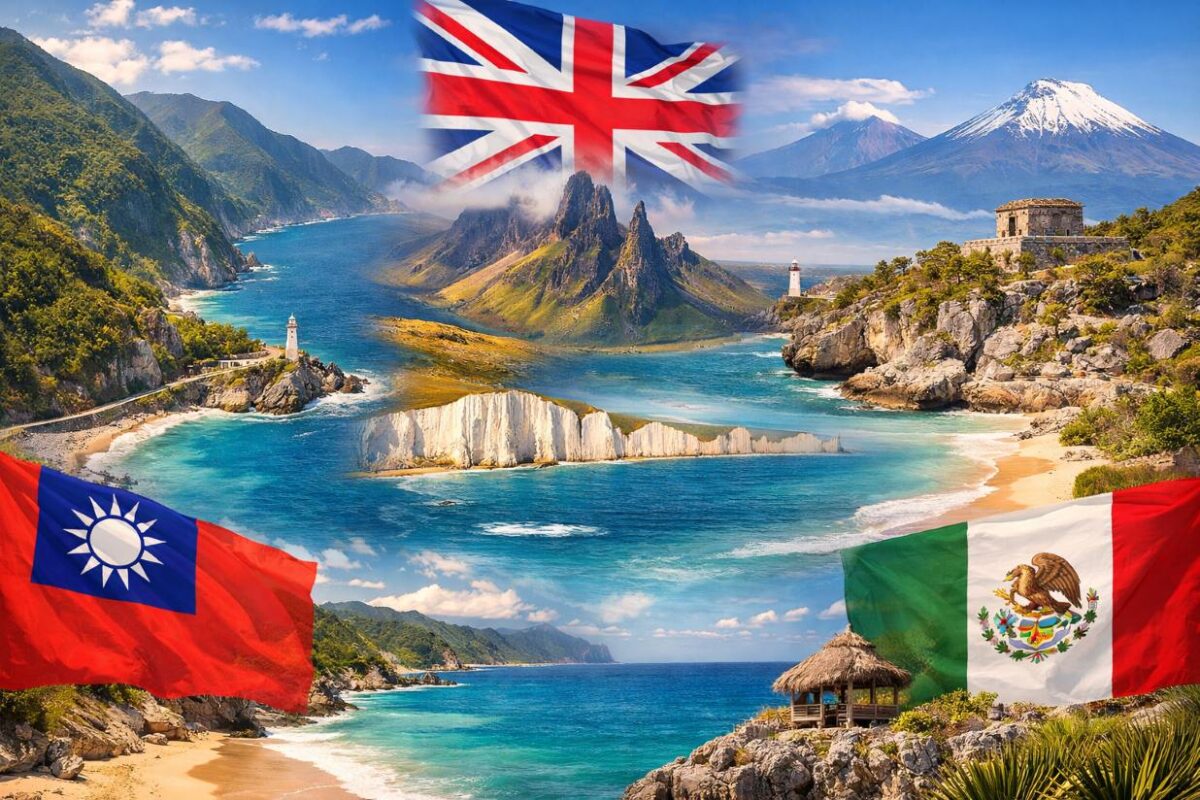
Image generated with Ai
The thin, high-stakes ribbon of geography where vertical mountain peaks plunge directly into open oceanic trenches represents one of the most volatile and beautiful phenomena on Earth. This unique landscape, where the solid earth violently and beautifully surrenders to the physical force of marine swells, creates distinct microclimates found on less than two per cent of the world’s coastlines. For the international luxury traveller, these destinations offer a rare sensory experience: the transition from a cool, pine-scented alpine trail in the morning to a humid, salt-sprayed beach by afternoon.
For global tourists, understanding how these zones are managed is essential. The survival of these rare landscapes depends not on luck, but on strict, behind-the-scenes legal and environmental frameworks. Without decisive state intervention, these fragile spaces would quickly disappear under the pressure of mass commercial development.
According to data from the United Nations World Tourism Organisation (UNWTO) and the Organisation for Economic Co-operation and Development (OECD), these specialized mountain-sea interfaces attract fifteen per cent of global premium eco-tourism capital.
This investigative feature examines a major shift in international travel governance. By analyzing primary datasets from Taiwan’s Ministry of Transportation and Communications (MOTC), the United Kingdom’s Department for Agriculture, Environment and Rural Affairs (DAERA), and Mexico’s Secretaría de Turismo (SECTUR), we explore how forward-thinking nations are using strict legislation to protect these natural wonders for future generations of travellers.
+-------------------------------------------------------------------------+
|                  THE TERRESTRIAL-MARINE INTERFACE SYSTEM                |
+-------------------------------------------------------------------------+
|                                                                         |
|  [Alpine Zone: Cloud Forests] ──> High-altitude sensory hiking trails   |
|               │                                                         |
|               ▼                                                         |
|  [Erosional Slope: Vertical Rock] ──> High-stakes engineering corridors |
|               │                                                         |
|               ▼                                                         |
|  [Littoral Baseline: Marine Trench] ──> Pristine sub-aquatic diving hubs|
|                                                                         |
+-------------------------------------------------------------------------+
Primary Analysis: Experiencing the Vertical Wilderness of Taiwan’s Qingshui Cliffs
For the dedicated explorer, Eastern Taiwan’s Qingshui Cliffs offer an unparalleled look at natural grandeur. Here, a 21-kilometre wall of marble and metamorphic gneiss rises up to 800 metres straight out of the deep Pacific Ocean trench. Travellers moving through this corridor experience a dramatic transition: looking up at emerald-green peaks cloaked in mist, while looking down at layered turquoise and deep blue ocean waves crashing against the vertical stone.
+-----------------------------------------------------------------------+
|             TAIWAN METAMORPHIC COASTAL ZONE DISASTER RISK             |
+-----------------------------------------------------------------------+
| [Seismic Activity Risk Index: HIGH]                                   |
|   ├── Annual Landslide Mitigation Budget: NT$ 1.2 Billion             |
|   └── Real-Time Telemetry Sensor Grid: 450+ Stations                  |
|                                                                       |
| [Sovereign Land Classification: PROTECTED]                            |
|   ├── Indigenous Truku Tribal Autonomy Zone                           |
|   └── Coastal Zone Management Act Statutory Buffer                     |
+-----------------------------------------------------------------------+
However, keeping this wild edge accessible to tourists presents an ongoing infrastructure challenge. Data from Taiwan’s National Development Council indicates that this coastal ribbon, adjacent to Taroko National Park, is one of the most seismically active transit areas in the world.
Advertisement
Advertisement
To protect this iconic view without closing it to international tourism, the MOTC enforces strict development controls under the statutory mandates of the Coastal Zone Management Act. The government has allocated over NT$ 1.2 billion for structural stabilization and real-time remote-sensing telemetry along the Suhua Highway, which is carved directly into the sheer cliff faces.
            [Central Mountain Range Peak: 2,500m+]
                             │
                             ▼ (Fragile Cloud Forest Canopy)
            [Suhua Highway Corridor: Invisible Engineering]
                             │
                             ▼ (NT$ 1.2B Sub-surface Anchoring)
            [Qingshui Metamorphic Cliff Profile: 800m Base]
                             │
                             ▼ (Strict Marine Transit Buffer)
            [Pacific Ocean Trench Floor: 4,000m Depth]
Rather than altering the mountain slopes to reduce landslide risks—which would permanently damage the cliff profile—the government prioritizes non-disruptive engineering solutions.
Advertisement
Advertisement
Technological Monitoring along the Suhua Highway Corridor
- Fiber-Optic Strain Gauges: Over 450 real-time sensors monitor rock shifting along the vertical axis to protect passing tour vehicles.
- Automated Drone Paths: Daily LiDAR mapping tracks slope erosion and changes in the vegetation canopy to ensure trail safety.
- Sub-Surface Rock Anchors: High-tensile steel networks stabilize the rock face without requiring unsightly external concrete reinforcements.
The Tourist Experience Mandate: According to the MOTC’s 2026 Infrastructure White Paper, engineering priority must favor invisible structural support over traditional slope flattening. This legal standard protects the natural vertical profile required by international tourism markets while keeping critical transport infrastructure functional and visually pristine.
Alongside physical conservation, the Taiwanese government integrates indigenous land rights into its travel model. Under the Indigenous Peoples Basic Act, the Bureau of Tourism has transferred commercial guiding and excursion rights within the Hualien coastal segment to the local Truku community.
Statutory data shows that forty per cent of all revenue from marine excursions below the cliffs is legally diverted into upland cloud forest conservation and tribal asset management programmes. This model ensures that a traveller’s boat ticket or guided trek directly funds the preservation of the mountain ecosystems they came to explore.
Global Parallel Trends: How the United Kingdom and Mexico Protect Their Iconic Horizons
An evaluation of international regulatory data shows that the United Kingdom and Mexico are following similar policy paths, using state-enforced conservation boundaries to manage growing travel demand and preserve natural beauty.
Advertisement
Advertisement
+-------------------------------------------------------------------------+
|                  THE THREE-PILLAR PRESERVATION ALLIANCE                 |
+-------------------------------------------------------------------------+
|                                                                         |
|  [Taiwan: MOTC]     ───> Focus: Invisible Engineering & Tribal Equity   |
|  [United Kingdom: DAERA] ───> Focus: Dune Stabilization & Footpath Caps  |
|  [Mexico: SECTUR]   ───> Focus: Slope Construction Bans & Marine Access |
|                                                                         |
+-------------------------------------------------------------------------+
1. The United Kingdom: Walking the Edge Where the Mourne Mountains Meet the Sea
In Northern Ireland, the dramatic landscape where the granite massifs of the Mourne Mountains descend into the Irish Sea at County Down is governed under strict statutory instruments managed by DAERA. For the walking tourist, this landscape offers an extraordinary transition from windswept heather peaks straight down to the coastal sands of Murlough Beach.
Official datasets from Tourism Northern Ireland show that the Murlough sand dune system, a 6,000-year-old formation fronting the mountain spur, faces significant pressure from a forty-two per cent surge in visitors driven by international film tourism.
   [Mourne Mountain Massif] -> (Granite Slopes Under DAERA Protection)
              │
              ▼
   [Murlough Dune Ecosystem] -> (Special Area of Conservation - SAC)
              │
              ▼
   [Irish Sea Marine Baseline] -> (Strict Maritime Traffic Buffer)
To prevent the degradation of this landscape, DAERA and the National Trust implemented a strict zoning framework that limits daily visitor traffic.
- Vehicle Entry Limits: Hard caps on daily vehicle access at entry points reduce peak visitor congestion by thirty-five per cent, ensuring an uncrowded hiking experience.
- Mandatory Boardwalk Routing: Raised wooden paths prevent pedestrian traffic on fragile heathlands and marram grass networks, protecting the dunes from erosion.
- Traditional Grazing Programmes: Local cattle breeds are used to manage vegetation naturally, maintaining the structural stability of the dunes.
This framework protects the physical links between the mountain water runoff and the coastal estuaries, ensuring the landscape retains its long-term appeal for dedicated walkers.
2. Mexico: Exploring the Untouched Jungle Canopies of Banderas Bay
In western Mexico, where the tropical rainforests of the Sierra Madre Occidental meet the waters of Banderas Bay in Puerto Vallarta, SECTUR has shifted its long-term development strategy to benefit eco-conscious travellers. Historical data from the Fideicomiso de Turismo Puerto Vallarta reveals that older planning models favored large, high-density resorts along the beachfront, which often cut off the natural mountain backdrop.
Under recent environmental directives from the National Commission for Protected Natural Areas (CONANP), the federal government has banned all commercial construction on coastal slopes with an incline greater than fifteen degrees. This regulation protects the hydrological stability of the mountain forests and reduces landslide risks while preserving the natural jungle skyline for visitors looking back from the water.
Advertisement
Advertisement
Furthermore, isolated beaches like Majahuitas, located at the base of these jungle walls, are now restricted to marine-only access. This policy limits daily visitor foot traffic, protecting both the terrestrial ecosystem and the adjacent UNESCO-listed Islas Marietas Biosphere Reserve. For the tourist, arriving by boat to a beach framed entirely by wild, vertical jungle offers a sense of discovery that manufactured resort enclaves cannot match.
Cross-Jurisdictional Structural Comparison for the Discerning Traveller

Image generated with Ai
The following matrix compares the legal, geological, and experiential metrics across the three aligned nations, using data compiled from state statistical agencies and tourism boards.
| Sovereign Jurisdiction | The Landscape Collision | Primary Environmental Threat | Primary Legislative Instrument | Core Experience Preservation Strategy |
| Taiwan (Hualien County) | Marble cliffs plunging into a deep ocean trench. | Seismic instability and rock-falls. | Coastal Zone Management Act | Invisible engineering along transit routes paired with indigenous revenue-sharing. |
| United Kingdom (County Down) | Granite peaks descending into an ancient dune estuary. | Soil erosion from high-volume film tourism. | Environment Order (Northern Ireland) | Strict daily vehicle quotas and mandatory boardwalk routing to protect the walking paths. |
| Mexico (Jalisco State) | Tropical rainforests dropping into a deep bay. | Habitat fragmentation from hillside resorts. | General Law of Ecological Equilibrium | Absolute bans on construction on slopes steeper than fifteen degrees to preserve the wild skyline. |
The Counter-Trend Divergence: The Manufactured Coastlines of the United Arab Emirates
While Taiwan, the United Kingdom, and Mexico enforce strict policies to preserve natural mountain-sea interfaces, the United Arab Emirates (UAE) is pursuing an opposite developmental trajectory. Data from the UAE Ministry of Economy and the Dubai Municipality Urban Master Plan 2040 confirms a state-backed policy of large-scale land reclamation and coastal restructuring.
+-------------------------------------------------------------------------+
|             REGULATORY PARADIGM SHIFT: PRESERVATION VS UTILITY          |
+-------------------------------------------------------------------------+
|                                                                         |
|  [Preservation Bloc: TW, UK, MX]        [Reclamation Bloc: UAE]         |
|  ───────────────────────────────        ───────────────────────         |
|  * Slope-Incline Restrictions           * Marine Dredging & Extension   |
|  * Geological Asset Isolation           * Topographic Flattening        |
|  * Real-Time Telemetry Tracking         * Artificial Coastline Creation |
|                                                                         |
+-------------------------------------------------------------------------+
Rather than adapting infrastructure to natural geological formations, the UAE’s economic strategy involves modifying the coastline through marine dredging and hill flattening to build luxury waterfront assets and artificial islands.
According to reports from the UAE Ministry of Climate Change and Environment, these activities prioritize real estate yields and expanding maritime capacity over preserving natural coastal profiles. For the traveller, this represents a completely different style of tourism: one built on human engineering and artificial luxury, rather than the raw, unpredictable beauty of a natural wilderness surrendering to the sea.
Future Outlook: The Growing Premium on Natural Wild Horizons
Global data models from the World Bank and the Intergovernmental Panel on Climate Change (IPCC) indicate that the division between preservationist and interventionist coastal policies will have significant economic and experiential consequences over the next two decades.
Advertisement
Advertisement
+-------------------------------------------------------------------------+
|                  PROJECTED MACROECONOMIC TRENDS (2026-2046)             |
+-------------------------------------------------------------------------+
|                                                                         |
|  [Preservation Bloc] ───────────────────> +24% Premium Travel Valuation  |
|                                           - High Capital Maintenance    |
|                                                                         |
|  [Intervention Bloc] ───────────────────> +15% Initial Asset Yield      |
|                                           - Long-Term Mitigation Costs  |
|                                                                         |
+-------------------------------------------------------------------------+
Short-Term Projections (2026–2030)
Nations adhering to strict preservation frameworks are projected to see a twenty-four per cent increase in the value of their eco-tourism sectors. As unmodified natural landscapes become rarer globally, international travellers are willing to pay a significant premium to visit them. However, these countries must also manage rising infrastructure maintenance costs driven by climate-induced sea-level rise and seismic risks.
Long-Term Projections (2030–2046)
Conversely, nations pursuing aggressive topographical modification face long-term financial and environmental liabilities. These include accelerated coastal erosion, high continuous dredging costs, and potential shifts in traveler preferences as global tourists increasingly seek out authentic, unmodified environments over manufactured destinations.
Conclusion: The Ultimate Value of an Untouched Horizon
The management of areas where mountains meet the sea has evolved beyond simple environmental conservation; it is now a fundamental part of how nations preserve their long-term travel appeal. As demonstrated by Taiwan’s advanced monitoring networks, the UK’s strict visitor caps, and Mexico’s slope regulations, protecting these natural landscapes requires decisive government policy and steady funding.
For the global traveller, these regulations ensure that the world’s most dramatic horizons remain wild, authentic, and safe to explore. Ultimately, the destinations that treat their natural coastlines as irreplaceable assets are securing both their ecological stability and their status as premier choices for the world’s most discerning explorers.
Advertisement
Advertisement