SpaceX files IPO prospectus, offering a peek into its finances
Uncategorized
SpaceX files IPO prospectus, offering a peek into its finances
08 mins
SpaceX (SPAX.PVT) has finally offered investors a public view of its internal finances, as the rocket company filed its S-1 IPO prospectus with the Securities and Exchange Commission ahead of its investor road show, reportedly planned for June 5.
For the three months ended March 31, 2026, SpaceX, which will trade under the ticker “SPCX” on the Nasdaq, reported revenue on a consolidated basis of $4.694 billion, a loss from operations of $1.943 billion, and Adjusted EBITDA of $1.127 billion. In 2025, SpaceX generated revenue on a consolidated basis of $18.674 billion, and a loss from operations of $2.589 billion and adjusted EBITDA of $6.584 billion.
SpaceX said its Space and Connectivity segments contributed the “substantial majority of consolidated revenue in the three months ended March 31, 2026, and the year ended December 31, 2025.”
The Connectivity segment, which is “primarily” driven by Starlink, generated revenue of $3.257 billion for the 3 months ended March 31, 2026, on income from operations of $1.188 billion, and adjusted EBITDA of $2.087 billion. For 2025, the unit did revenue of $11.387 billion, income from operations of $4.423 billion, and adjusted EBITDA of $7.168 billion in 2025, representing year-over-year growth of 49.8%, 120.4%, and 86.2%, respectively.
SpaceX said it had deployed over 9,600 Starlink satellites and had 10.3 million subscribers at the end of March.
SpaceX’s Space segment, consisting of its rocket launch business, generated revenue of $619 million, loss from operations of $(662) million, and adjusted EBITDA of $(351) million for the three months ended March 31, 2026. In 2025, the Space segment generated revenue of $4.086 billion, a loss from operations of $657 million, and adjusted EBITDA of $653 million.
SpaceX revealed it has spent over $15 billion developing its next-generation rocket, Starship, that will both transport large amounts of cargo as well potentially act as a lunar lander. The $15 billion is more than SpaceX had originally budgeted for the project; Starship will have its twelfth test mission later this week.
SpaceX’s AI segment, which includes the xAI business and is now called “SpaceXAI,” posted revenue of $818 million, a loss from operations of $2.469 billion, and an adjusted EBITDA loss of $609 million in the March 2026 quarter alone. SpaceX said the AI segment lost a whopping $6.355 billion in 2025.
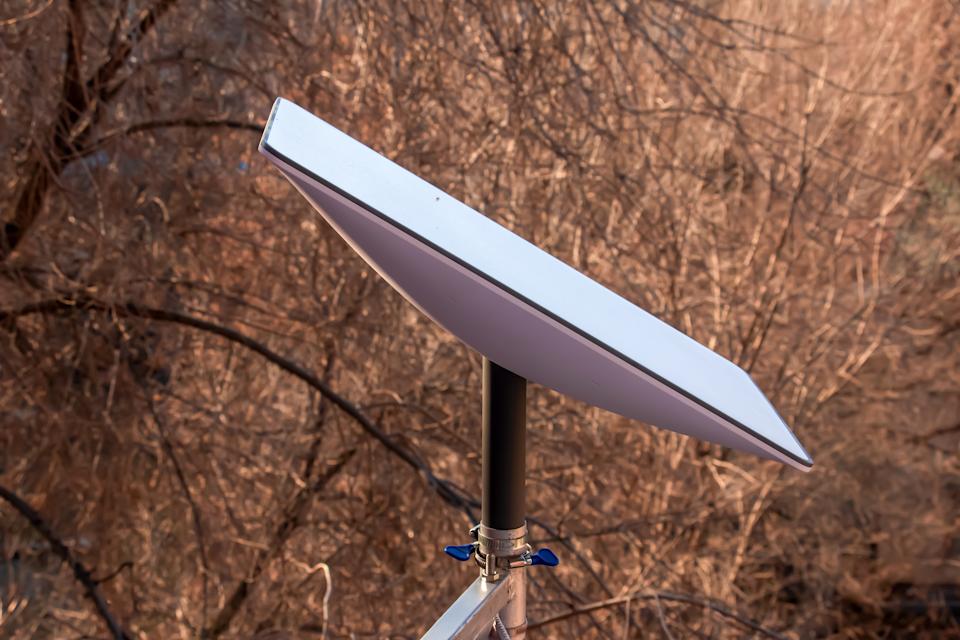
Starlink satellite dish, an internet constellation operated by SpaceX, is installed on the wall of an apartment building. View from the window of the apartment. ·AntaresNS via Getty Images
SpaceX’s operating loss is largely being driven by the AI segment; the legacy SpaceX segments (Space and Connectivity) are profitable on both an operating and EBITDA basis. Q1 2026 shows operating losses deepening on a sequential basis as the full quarter of xAI consolidation hits.
SpaceX is required to file its prospectus publicly 15 days before its IPO roadshow begins. The roadshow kicks off the process in which SpaceX and its underwriters pitch the offering to large investors and brokerages, finalizing the IPO price before the actual public debut of the stock.
SpaceX had already confidentially filed its S-1 with the SEC in April to obtain feedback on its upcoming IPO. At the time, SpaceX was reportedly targeting to raise as much as $75 billion in its offering, with a valuation nearing $1.8 trillion, easily topping companies like CEO Elon Musk’s Tesla (TSLA), which has a market cap of about $1.4 trillion.
After the shares are allocated to institutional investors and others, the final prospectus is released, and the stock begins trading the next day following pricing of the offering.
A SpaceX Falcon 9 rocket at a SpaceX facility on April 2, 2026, in Hawthorne, Calif. (Mario Tama/Getty Images) ·Mario Tama via Getty Images
For Musk, SpaceX’s IPO is the culmination of his dream to build reusable rockets and colonize Mars. He founded the company in 2002, and by 2012, SpaceX began delivering cargo by rocket to the International Space Station.
Part of SpaceX’s big valuation story is Starlink, the satellite-based internet service that began operation in 2019. Starlink generates the lion’s share of SpaceX’s profits, and its growth may be a reason why a SpaceX IPO would be lucrative at this time.
Tesla and SpaceX announced Terafab, a joint venture designed to consolidate every stage of semiconductor production under one roof.
Terafab targets two primary chip types: an edge-inference processor optimized for Tesla’s full self-driving systems, Optimus humanoid robots, and Robotaxi fleets, plus a high-power variant hardened for space environments, supporting SpaceX satellites, orbital data centers, and xAI initiatives.
The SpaceX IPO will help fund those orbital data centers, a priority for Musk, who believes it will be cheaper to produce AI compute in space than on Earth.
As SpaceX hones and tweaks its story to investors as it seeks billions in fresh capital, Musk will, of course, benefit from the offering beyond raising funds for his SpaceX missions.
Musk would reportedly own around 42% of SpaceX before any dilution. SpaceX would need to reach $1.6 trillion in valuation for Musk to become the world’s first trillionaire.
This story is developing, check back for more updates.
Pras Subramanian is the Lead Transportation Reporter for Yahoo Finance. You can follow him on X and on Instagram.