RAPID CITY, S.D. (KOTA) -News came out over the weekend that China could begin purchasing U.S. soybeans once again as part of a broader trade agreement.
Treasury Secretary Scott Bessent, who met with China’s top trade negotiator in Malaysia, signaled confidence that the U.S. and China would resolve their trade stalemate, saying in an interview with NBC News that the country is ready to make a deal.
Bessent additionally told ABC News over the weekend that he and his Chinese counterparts reached a substantial trade framework. That framework has been set for President Trump and President Xi, who are expected to meet on Thursday in South Korea and discuss finalizing a trade deal. Bessent signaled positive news for soybean farmers.
“I think we’ve addressed the farmers’ concerns, and I’m not going to get ahead of the president, but I believe that when the announcement of the deal with China is made public, our soybean farmers will feel very good about what’s going on—both for this season and for the coming seasons for several years,” said Bessent.
Kevin Dienert, president of the South Dakota Soybean Association, expressed cautious optimism about the secretary’s comments.
“As we know a lot can change here, and until we see something on paper, you know, in writing, that’s what were looking for something concrete, until then we’re hopeful, we know that things are moving in the right direction, so it’s a welcome reprieve here, in, you know, since the last month or two where we’ve seen a lot of talk but not a lot of action, so good see, hopefully we can keep it going forward,” said Deinert.
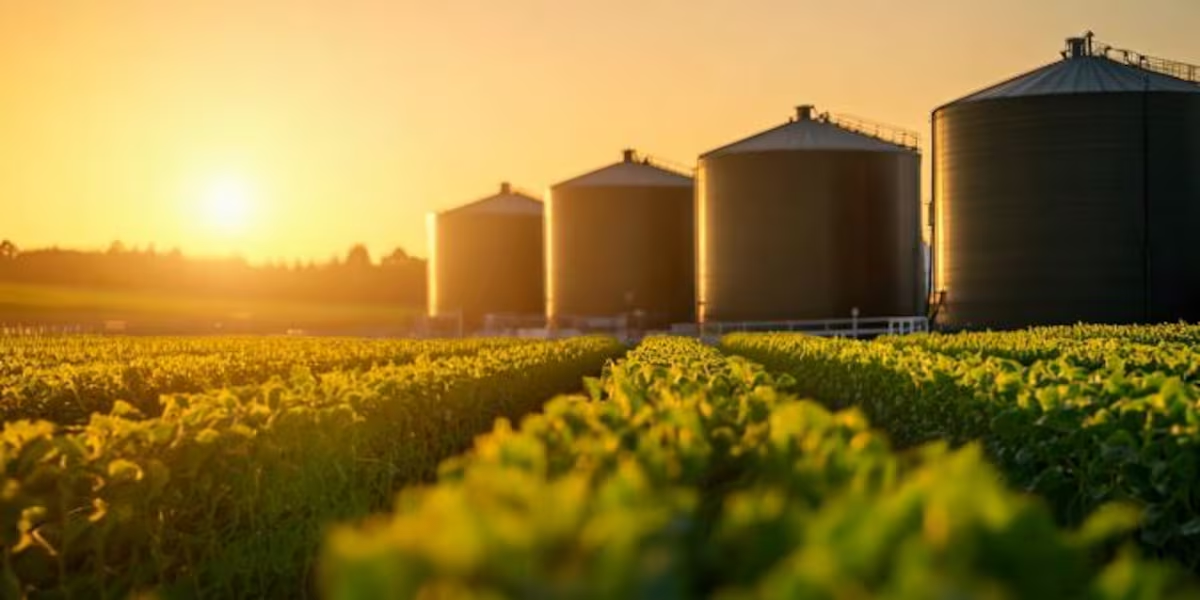
Deinert explains that the soybean harvest has mostly concluded in South Dakota. He says many farmers have stored their soybeans in hopes of securing better prices for them as trade conditions hopefully improve. According to Deinert, some farmers still have an opportunity to profit from their crops. Deinert explained that farmers have had a tumultuous run through the last couple of months.
“A lot of worrying about what to do with my product, you know, we’re looking at in some parts of the state a record crop, so what do I do with that crop, do I sell it now, do I store it?” explained Deinert.
Deinert says he hopes a trade deal restores prior purchase commitments from China, shifting purchases back away from South America, where China turned to for soybeans during the stalemate.
See a spelling or grammatical error in our story? Please click here to report it.
Do you have a photo or video of a breaking news story? Send it to us here with a brief description.
Copyright 2025 KOTA. All rights reserved.
