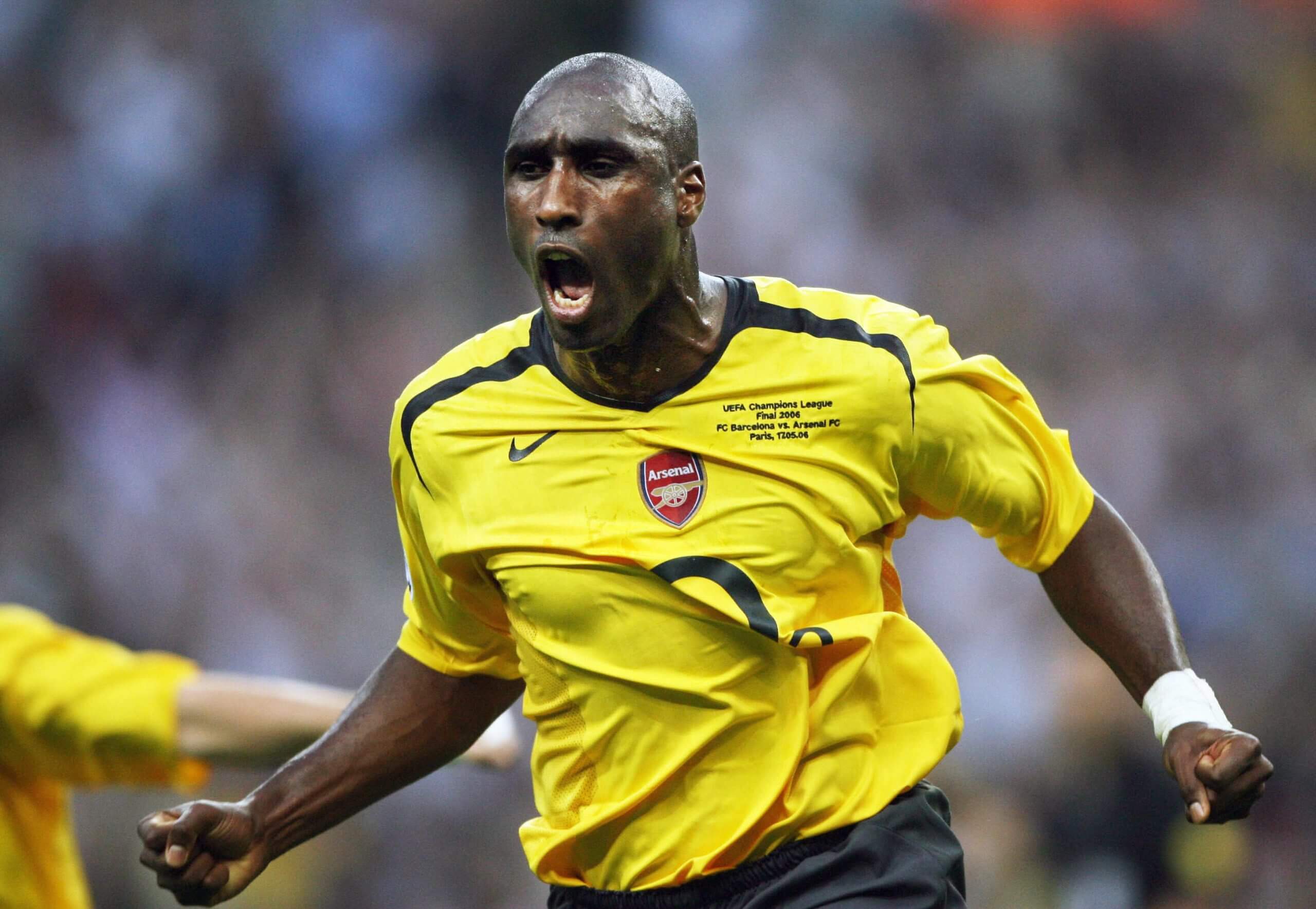
It is 20 years since Sol Campbell headed Arsenal in front in the Champions League final.
“I was like a fairytale,” Campbell tells The Athletic. “I’d been through so much, so many ups and downs. To come to the Champions League final, and score? It was beautiful.”
It was the 37th minute when Campbell headed home a Thierry Henry free kick to put 10-man Arsenal ahead of Barcelona. A stout defensive effort brought Arsenal within touching distance of the trophy, but two Barcelona goals in the last 15 minutes whisked glory away.
“We had the chances to kill them off, and we just couldn’t convert,” says Campbell. “They were there for the taking.”
Two decades on, Arsenal have another chance at Champions League glory. The newly crowned Premier League champions will face Paris Saint-Germain in Budapest on Saturday. Campbell will be there.
In 2006, Campbell knew his opportunity had gone. His contract was due to expire that summer — he had already determined that the final would be his last Arsenal game. The pain of defeat was brutal.
“It’s just f****** s***, isn’t it?” he says ruefully. “But I knew that was going to be the last time I was going to be there — playing in the Champions League, playing in a final, being at that level. I knew then that was my last chance.”
Campbell scored in the 2006 Champions League final defeat to Barcelona (LLUIS GENE/AFP via Getty Images)
Campbell’s distinguished career continued. There followed three years at Portsmouth, an aborted spell at Notts County, a remarkable return to Arsenal and a final year at Newcastle. There were brief management spells at Macclesfield and Southend, the first of which saw him rescue the club from relegation.
Yet he has not held a prominent football role since 2020. His love affair with the game remains complicated.
“I love football,” the 51-year-old says. “But I want to have a better relationship with football.”
Much of Campbell’s frustration stems from the media criticism he faced in his playing days. Campbell’s move from Tottenham to Arsenal made him a lightning rod for it. Outside of the sport, flirtations with acting and politics were ridiculed.
“The media has changed over the decades, but I got the brunt of it,” Campbell says. “You know: Black boy, East London, from one of the roughest parts of the UK — but I like art. I like to play chess. I listen to rap music, but I listen to classical music as well.
“It confuses people. You weren’t allowed to grow in as many ways as you can now.
“I think America kind of showed how you can be an athlete, but you can still do many other things. But in the UK, it was really rigid and stuck, and I think I got the bad end of that.
“I became a caricature. A caricature you can just keep poking. And it doesn’t die, but you can just keep poking, or chip at it, and bleed it, but don’t kill it. I think me and a number of other players had to go through that. And there’s been no apology.
“I moved away from football before it really destroyed me. Now I’m coming back to football in a way that I feel comfortable.”

Campbell’s only goal for England came at the 2002 World Cup (WILLIAM WEST/AFP via Getty Images)
Campbell has recently launched a new documentary series entitled Legends Corner. It is a football-adjacent idea — one in which the tables are turned, and Campbell now asks the questions.
The YouTube format sees Campbell sit down with former on-field rivals such as Christian Vieri, Andy Cole and Dwight Yorke. “I’m producing it,” he explains. “It’s a learning process and about getting it right. I just want to be myself and a different voice out there as well — different angle of football, of life, of culture.”
The show sees Campbell travel to meet old foes and learn about their careers, their struggles, their upbringing — and even some of their favourite foods. “I enjoy finding who they really are, somehow. I like the element of food in there as well, just to relax them as well. It’s almost spiritual — we locked horns for so many years, and now we’re breaking bread and having a conversation about football, about life.”
The series launched with a special episode filmed in February 2026, in which Campbell travelled to New York to join film director and Arsenal fan Spike Lee, as well as the Brooklyn Invincibles supporters group, at a screening of the north London derby.
It’s fitting that the first episode should be filmed in the U.S.: Campbell feels that when he leaves the UK, there is more recognition for his achievements.
“The perception of me is different abroad,” he says. “In this country, people have their thoughts, and you’re never going to change them. I understand that.
“But when I go into mainland Europe or around the world, it’s all about what I’ve done, who I’ve played against, the consistency, the level of football, the personal records I’ve got and which remain unsurpassed. That’s what they look at.”
Campbell is one of only 13 players to have appeared in 500+ Premier League matches. As part of Arsenal’s Invincibles, he also holds the Premier League record for the longest run of unbeaten games. He featured in 56 matches without suffering defeat between November 2002 and October 2004.

Campbell with Thierry Henry after completing the Invincibles season (David Price/Arsenal FC via Getty Images)
One of his greatest achievements was regaining a place at Arsenal. After a disastrous spell at Notts County, then in League Two, Campbell was a free agent. Arsene Wenger offered him an opportunity to train at London Colney — and ended up signing him.
“I had a conversation in his office,” says Campbell. “He said, ‘Sol, you’ve changed me. I thought you were finished’.
“I think in Arsene’s head, once you passed a certain age, you were done. He had this hard line around the age of 31. Look at all the times he made Dennis Bergkamp wait for a new contract. He thought once you left that kind of establishment club, you’re not on the right wavelength anymore.
“I showed him you can’t do everything by figures and numbers. You’ve got to think about the human being and what that human being can offer — not only skill but in the changing rooms and around the training ground. He changed and it was one of the last development pieces for him.”
Despite this reinvention, Campbell does not believe he gets enough credit in England.
“In your own country, you can only go to a certain level,” shrugs Campbell. “It feels like you can’t be king or queen of your own country.”
Campbell is striving for the Legends Corner to be more than your average podcast chat. “I want to have impactful conversations,” he says. “People will slowly see what I’m trying to achieve — and trying to move away from. I want to distinguish myself.”
“It’s a deeper meaning,” Campbell says. “It’ll teach you, it will surprise you, it’ll be thought-provoking. I wanna give something back that nourishes you, not only visually, but your soul and your spirit.
“I’m a singer with a thousand songs that haven’t been sung yet,” Campbell says. “That’s a beautiful thing. I have so many situations that have happened to me. I’ve played against top football players around the world for many, many years. And I think it’s time that my side of the story comes out — with their stories too.”
On Saturday, Campbell will watch on as this generation see if they can go one better than the class of 2006 and lift the Champions League. Campbell is full of admiration for Mikel Arteta’s team.

Campbell with Arteta in April 2023 (Stuart MacFarlane/Arsenal FC via Getty Images)
“They’re one of the best teams in the world now,” Campbell says. “They’ve got over the line. Now it’s about, ‘Can we do it again?’
“That’s the mentality I think they need. It’s on the manager to keep them going, keep them hungry and keep them moving forward and wanting more.”
Naturally, he is a fan of the defensive duo of Gabriel and William Saliba. “They’re incredible,” he says. “They’ve been really, really top class.
“They complement each other. Gabriel is just going for everything all the time, as he should be. Saliba is a little bit more considered — he is more about interceptions and showing the strength, pace and the skill at the right moment.”
How could they improve?
“Sometimes when one’s not there, it drops off a little bit,” Campbell says. “That’s the next level they’ve got to get to — you can’t always play with your chosen mate.
“If he goes missing for a few games, you’ve got to elevate yourself to compensate. You might have someone who’s a bit nervous, young, or new, and you have to work with him — pull him around, and push him, and hold him, and just make sure there’s no drop-off in quality.
“That’s the next level of development for them.”
Campbell believes there could be more to come from Saliba — who, at 25, is the younger of the pair. Arsenal already possess record-breaking proficiency at set pieces, but Campbell thinks Saliba could add to their threat.
“In the opposition box, Saliba could be more aggressive, gamble more,” Campbell says. “If he can have more positivity in the box to say, ‘I’m going to get my head on this, and stick it away’, he’ll score. That’s the only thing he lacks — a few more goals.”
There is little doubt Campbell had the physicality to cope with modern Premier League football. “I was at those levels,” says Campbell. “But by the time they started to do the proper analysis of speed and movement, I was in my thirties. These companies that track stats totally overlook what happened before.

Campbell with Wenger when he returned to Arsenal in 2010 (Adrian Dennis / AFP via Getty Images)
“Now I look at the stats, they’re changing from miles per hour to kilometres per hour. What’re you doing that for? It’s like you don’t want to show how quick someone was.”
Campbell was part of Arsenal’s title-winning team in 2004. He also won the Premier League in his first season with the club two years prior. He knows what this title will have meant to Arteta’s squad.
“It’s the best feeling in the world,” Campbell says. “You’re a champion. You are number one. Not many players get to say: I won my league. So you feel special, you feel honoured, you feel everything you’ve done from eight or nine years old has come together, and you’ll never be forgotten because this is history and it’s forever.
“Nothing’s perfect; no one’s going to have a perfect life. There are always things happening, trying to take you off your path. To have all that going on and concentrate — as a squad, and as a club — and win. That’s special.
“They are special. They’re creating their own legacy. And if they can win in Budapest, it’ll be even greater.”