
China is building dozens of launch pads for nuclear missiles, new satellite images show.
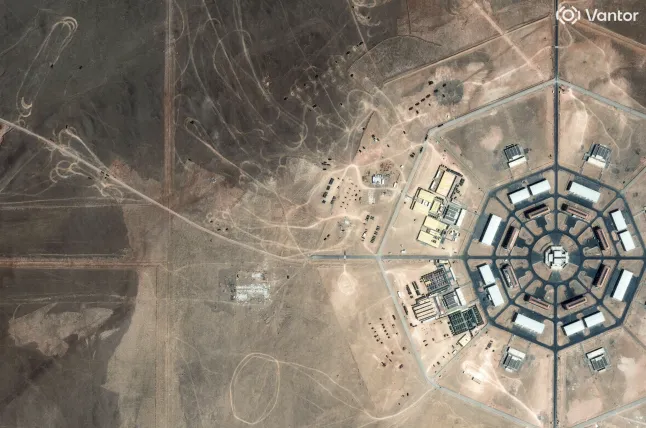
More than 80 pads have already been constructed in the middle of the desert in Xinjiang autonomous province, home to the Uyghur muslim community.
The new infrastructure has been built in the past six years within 150 kilometres of the Hami nuclear silo fields which house China’s longest range missiles, to which they are linked by airfields and railheads.
At the heart of the sprawling network covering thousands of square kilometres are octagon structures which contain housing for personnel and large military vehicles.
Nuclear capable weapons were among military hardware on display during a parade in Beijing last September to mark the 80th anniversary of the end of the Second World War.
Experts believe the pads could be used to deploy mobile air-defense missiles, electronic warfare nodes or even mobile ICBM units.
Sign up for all of the latest stories
Start your day informed with Metro’s News Updates newsletter or get Breaking News alerts the moment it happens.

Alexander Neill, a fellow at Hawaii’s Pacific Forum think tank, said the latest development was a ‘very considerable enhancement and diversification of China’s strategic nuclear deterrent’.
China has a far smaller stockpile than the world’s two largest nuclear powers, Russia and the US, both of which rely on their relative isolation and sheer numbers of silos to act as a deterrent.
The grand scale of China’s military development shows investment in hardened infrastructure designed to protect and enforce the country’s nuclear forces.

According to Pentagon reports, China is expanding its nuclear capability faster than any other nation and, despite a recent slowing in production, is well on track to reach 1,000 warheads by 2030.
It has also been boosting its early warning capability, underpinned by Huoyan-1 satellites, which can detect an incoming ICBM within 90 seconds of its launch and alert a command centre within three minutes, giving time for the country to fire its own weapons before they are hit.
But despite China’s ‘no first use’ policy, diplomats believe it cannot be ruled out that Beijing would use nuclear coercion to deter any possible foreign intervention in Taiwan.
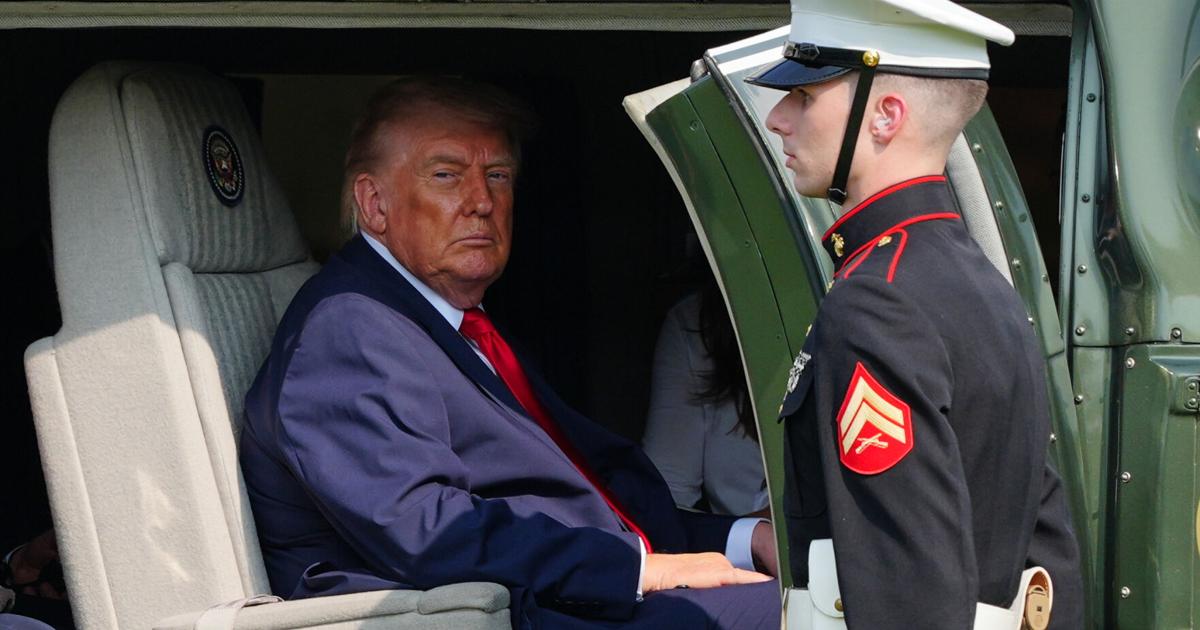
Earlier this month, Donald Trump left the Chinese capital with warnings from president Xi Jinping that disagreements over Taiwan could lead both countries to a ‘dangerous place’.
Hans Kristensen, the Federation of American Scientists’ Nuclear Information Project, said ‘it is hard to rule anything out’ when considering how Beijing could deploy its enlarged military capability.
He added that the development in Xinjiang province was an ‘extraordinary effort’.
‘I’ve never seen anything quite like it’, he said.
Get in touch with our news team by emailing us at webnews@metro.co.uk.
For more stories like this, check our news page.
MORE: China executes man who poisoned billionaire gaming tycoon linked to Netflix show
MORE: More than 80 dead and others missing after Chinese coal mine explodes
MORE: Putin seen walking awkwardly after stepping out of car at China summit