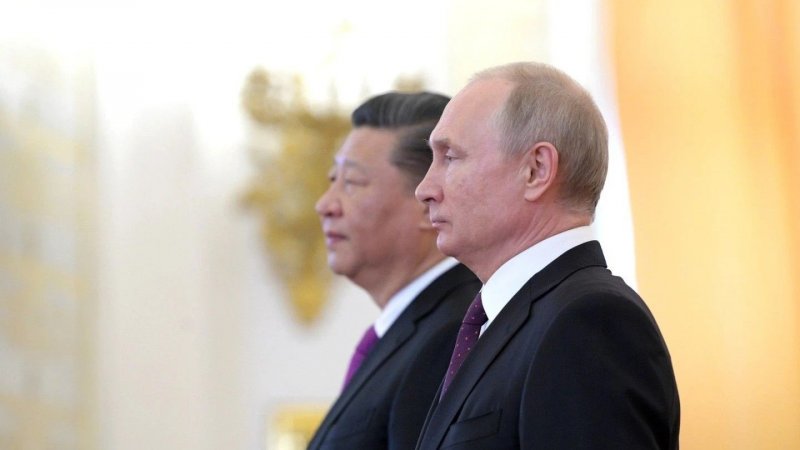
Władimir Putin i Xî Jinping Photo. The Presidential Press and Information Office/Wikimedia Commons/CC4.0
Putin’s participation in the SCO summit in Beijing and his talks with Xi Jinping underscored that Moscow and Beijing are shifting from occasional cooperation to a structured alliance, focused on evading sanctions and building alternative economic pathways.
China’s move to consider granting Russian energy firms like Rosatom access to its domestic capital market marks a symbolic shift. Since 2022, Beijing had tread carefully, wary of secondary sanctions. Now, it appears ready to shoulder the political risk in pursuit of strategic benefits. For Moscow, this offers a crucial lifeline — corporate financing in China for the first time since the war began, easing the strain of Western isolation.
The energy sector shows even bolder steps. Deliveries of Russian oil and LNG, including from sanctioned projects, are reaching Chinese ports. TheArctic Mulan tanker, loaded with gas from Arctic LNG-2, exemplifies how Beijing is willing to absorb the costs of ignoring US restrictions. This is not a tactical choice but a strategic decision to strengthen energy interdependence with Russia.
At the center of this architecture lies the yuan. It is replacing the dollar and euro in Russia’s external trade and emerging as a structural pillar of Moscow’s economic survival. The potential issuance of panda bonds institutionalizes this trend and indicates Beijing’s intent to expand the yuan’s role globally. What once seemed like a tool of convenience is becoming an instrument of long-term economic governance.
Looking ahead, the Sino-Russian partnership appears less about crisis management and more about shaping an alternative order. For China, Russia is a laboratory for testing the resilience of non-Western finance and energy supply chains. For Russia, China is not only a lifeline but also a shield that blunts Western pressure. This dynamic suggests that both sides are investing in more than short-term adaptation — they are consciously constructing a model of multipolarity that could, over time, redefine the economic balance of power.
Source: Defence 24
