Injuries have cost Premier League clubs £1bn over the past five seasons, newly published data from Howden Insurance Brokers shows.
Their annual report, a 286-page document featuring data analysed from third-party companies, found that overall injury frequency in the Premier League dropped by 25 per cent across four seasons, from a peak in 2021-22 (1,289 instances) to 2024-25 (957).
During that time, what Howden calls injury “cost” — defined as the daily base salary for a player multiplied by the number of days they missed through the injury — fluctuated.
That total number rose over four campaigns (they first published a report from the 2020-21 term) to a peak of £365.69m ($490m) in 2023-24, dropping by 21.8 per cent last season to £285.74m.
In total, across the past five campaigns, injury “cost” across Europe’s top-five leagues totalled nearly £3bn (they assume that clubs pay wages in full to injured players), with 40 per cent of that accounted for by Premier League players.
That is a disproportionate amount, considering that only 24 per cent of injuries were in England’s top division, a reflection of the higher wages and revenue within the league. Premier League clubs, on average over five years, paid out slightly over £220,000 in salary to a player while injured.
The most injured teams across the past five Premier League seasons are Manchester United, Chelsea and Newcastle United. In 2023-24, Manchester United had the highest injury “cost” of any top-five league European team in the past five seasons.
Meanwhile, last term specifically, their rivals Manchester City suffered the most in that metric — despite Chelsea, Arsenal, United and Tottenham all having more injuries. City had availability issues with key players, such as Rodri, and thus were hit harder. Arsenal manager Mikel Arteta had to deal with a higher volume of shorter-term problems, including many fringe players.
Andoni Iraola’s Bournemouth had the most severe injuries in 2024-25. Brighton & Hove Albion, who fielded the second-youngest average teams (behind Chelsea), had the most injuries overall.
James Burrows, the head of sport at Howden, says the research “underscores the ever-increasing physical demands on elite players — we’ve seen an evolution in injury count and associated cost, which echoes current debates around enhancing player protection within the game”.
Researchers at Howden acknowledge an “indiscriminate nature” to injury, and consider the reasons for the trends to be multifactorial. It is partially the case that higher-paid players were injured more in 2023-24 than last season.
Other key findings include, concerningly, that injury severity has risen across Europe’s major leagues by 30 per cent since 2020-21. This is a measurement of how long players are out for, so while the frequency of injuries has decreased, when players do have problems, they are more severe — five years ago, players, on average, missed 14 days, up to 22 days last term.
Dr Robin Thorpe, an injury risk expert who previously worked for Manchester United and within the Red Bull Group, says “this rise in severity aligns with reduced recovery windows, cumulative fatigue, and the increasing density and sequencing of elite competition for a selection of teams”.
The emphasis among most head coaches to prefer possession-based play and aggressive, player-to-player pressing is considered a contributing factor by those within the industry.
There are notable trends within the injury data.
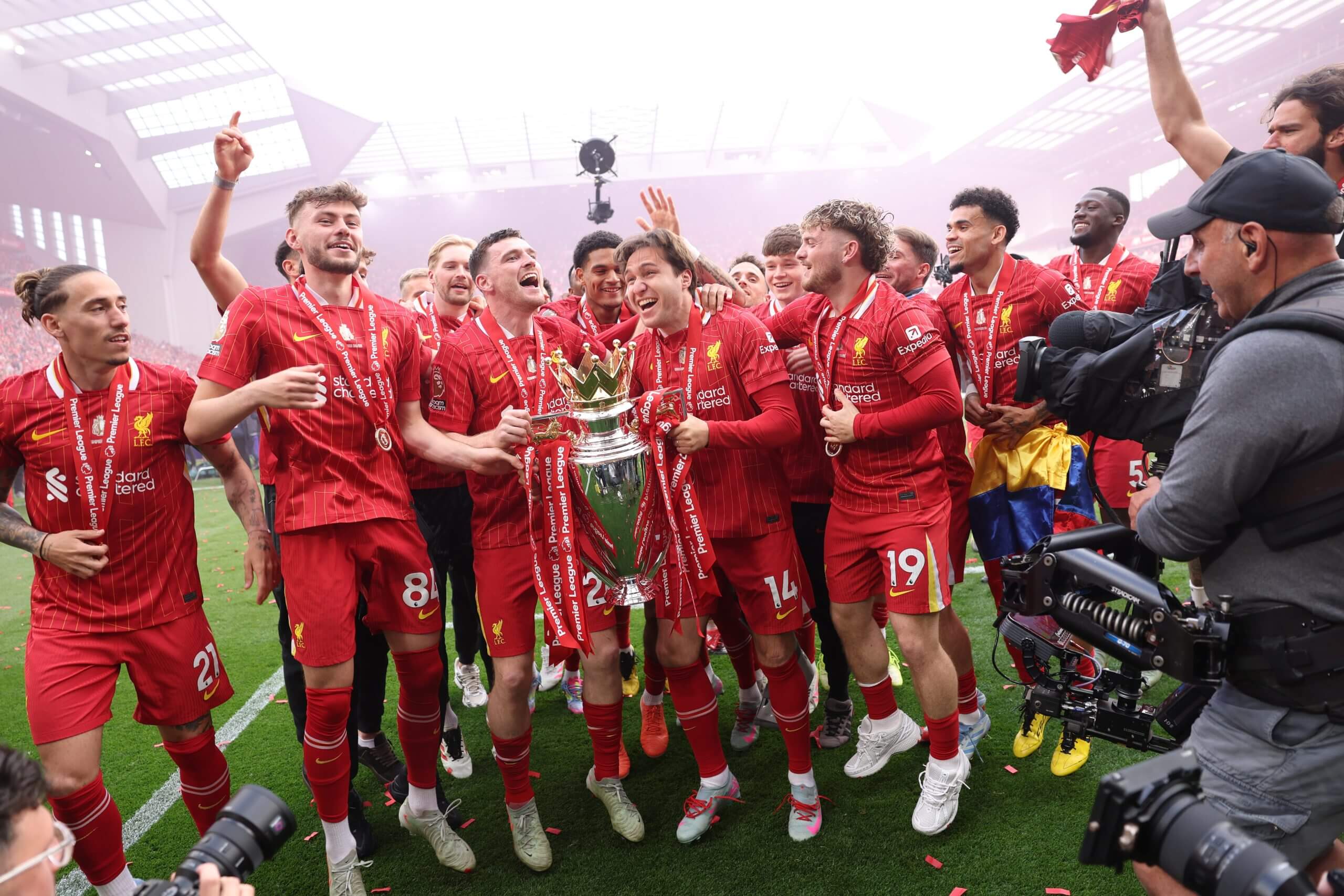
Whichever ‘Big Six’ team has suffered the most injuries has never won the league across the past five campaigns. Liverpool had the best availability last term, as Arsenal’s injury count rose by one-third and they finished 10 points behind.
Under-21s have proven particularly susceptible to injuries. Increased minutes for youngsters has been an upward trend in recent seasons, and they have the greatest injury severity of any age group, indicating the challenges in making the physical jump from academy level.
Dr Thorpe believes this “may point toward a systemic issue within player development pathways”, while those working within academy football are acutely aware of the challenges in bridging the gap, emphasising the importance of loan spells where technically gifted players can develop their physical robustness.
Champions Liverpool had the best availability of the ‘Big Six’ teams last season (Carl Recine/Getty Images)
In fact, Howden found that the most injury-prone were under-21 Premier League forwards, with under-21 Premier League midfielders fourth-highest on that list.
Regardless of age group, forwards were the most susceptible position to injury, with researchers noting an uptick in goalkeeper injury frequency and severity — pointing out the evolutions in the position that demand more ball-playing prowess and sweeper-keeping.
Notably, the data thus far shows a “minimal impact” of the Club World Cup on injury rates. Five of the nine European clubs that competed actually had better player availability from June to October 2025 than the same time period in 2024, even though Chelsea and Paris Saint-Germain have been injury-hit.
Likewise, City went through the competition unscathed, but have since suffered a plethora of injuries.
Researchers are waiting until the tail end of the season to draw further conclusions, noting that the injury “pinch point” typically comes between November and February. This is due to the increased volume of Premier League games throughout winter, and the lack of a break, as is common elsewhere in Europe.
A further caveat to the limited impact of the Club World Cup thus far is that they found a 26 per cent rise in injury “costs” across Europe in 2022-23, a season where there was a winter World Cup in December.
Injury types are changing slightly, too. The number of players with hamstring injuries has yo-yoed in the past four terms, while muscle injuries rose last season. Knee injuries, meanwhile, have dropped considerably.
“The Premier League continues to exhibit the highest burden of muscle and hamstring injuries, consistent with its high-velocity, transition-heavy style of play,” says Dr Thorpe, with match data showing a rising trend of counter-attacks across recent seasons, to the extent that the Premier League has taken the counter-attacking title from the Bundesliga.
The worst month on Howden’s five-year record for injury cost was August 2023, which researchers were slightly surprised by (given the winter scheduling), and felt that this heightened the importance of proper pre-season training and adequate rest windows for players between seasons.
“This is not simply a medical problem,” adds Dr Thorpe. “It reflects the interaction of competition structure, development pathways, tactical evolution, and organisational decision-making.”
