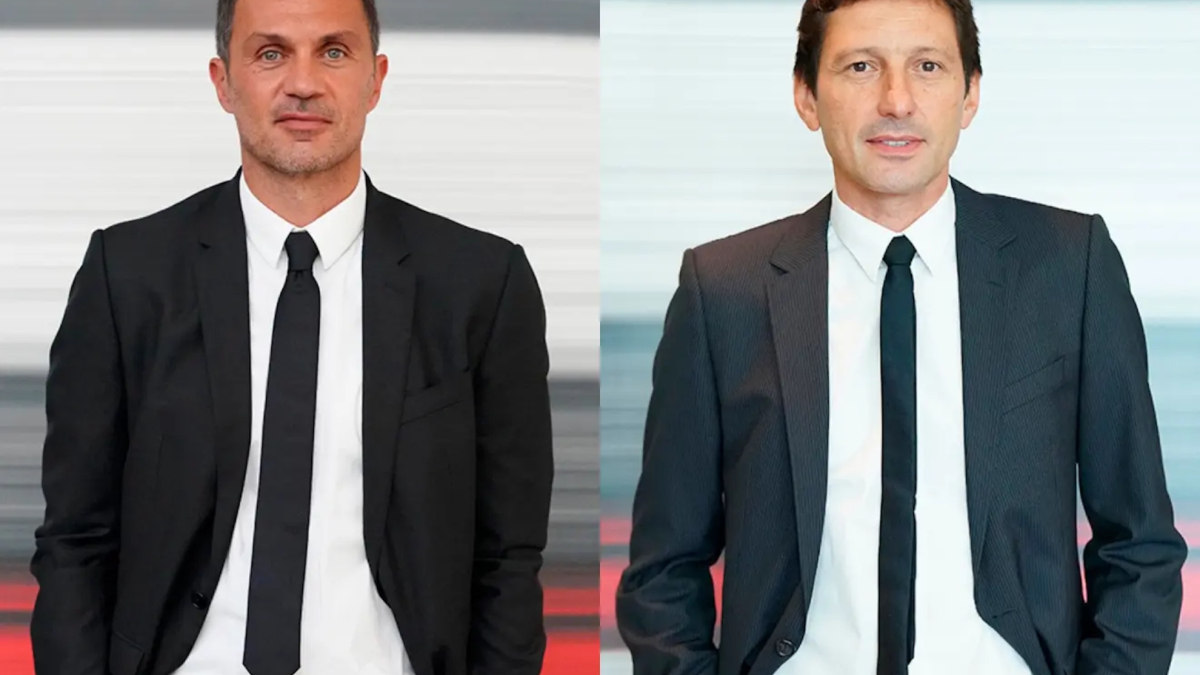
It was supposed to be the dream team. The politician who helped deliver the 2026 Winter Olympics in Milano-Cortina and the former player considered by many to be the face of Italian football.
When, in early July, the new president of the Italian Football Federation (FIGC), Giovanni Malago, announced he had secured Paolo Maldini as his technical director, the duo were swiftly heralded as the best bet to restore the national team, if not to its world-beating competitiveness of old, then to at least a place of dignity and respect.
Italy, four-time winners of the men’s World Cup, were not among the 48 sides competing in the United States, Canada and Mexico this summer after failing to qualify for a third consecutive edition of FIFA’s tournament.
Defeat on penalties to Bosnia and Herzegovina in their play-off bracket’s final in March led to an inquisition. Furious demands for resignations were satisfied as Gabriele Gravina, Gianluigi Buffon and Gennaro Gattuso all fell on their swords. The FIGC was left needing a new president, executive team and coach.
Once again, Italian football cleaned house in a dramatic attempt to rebuild.
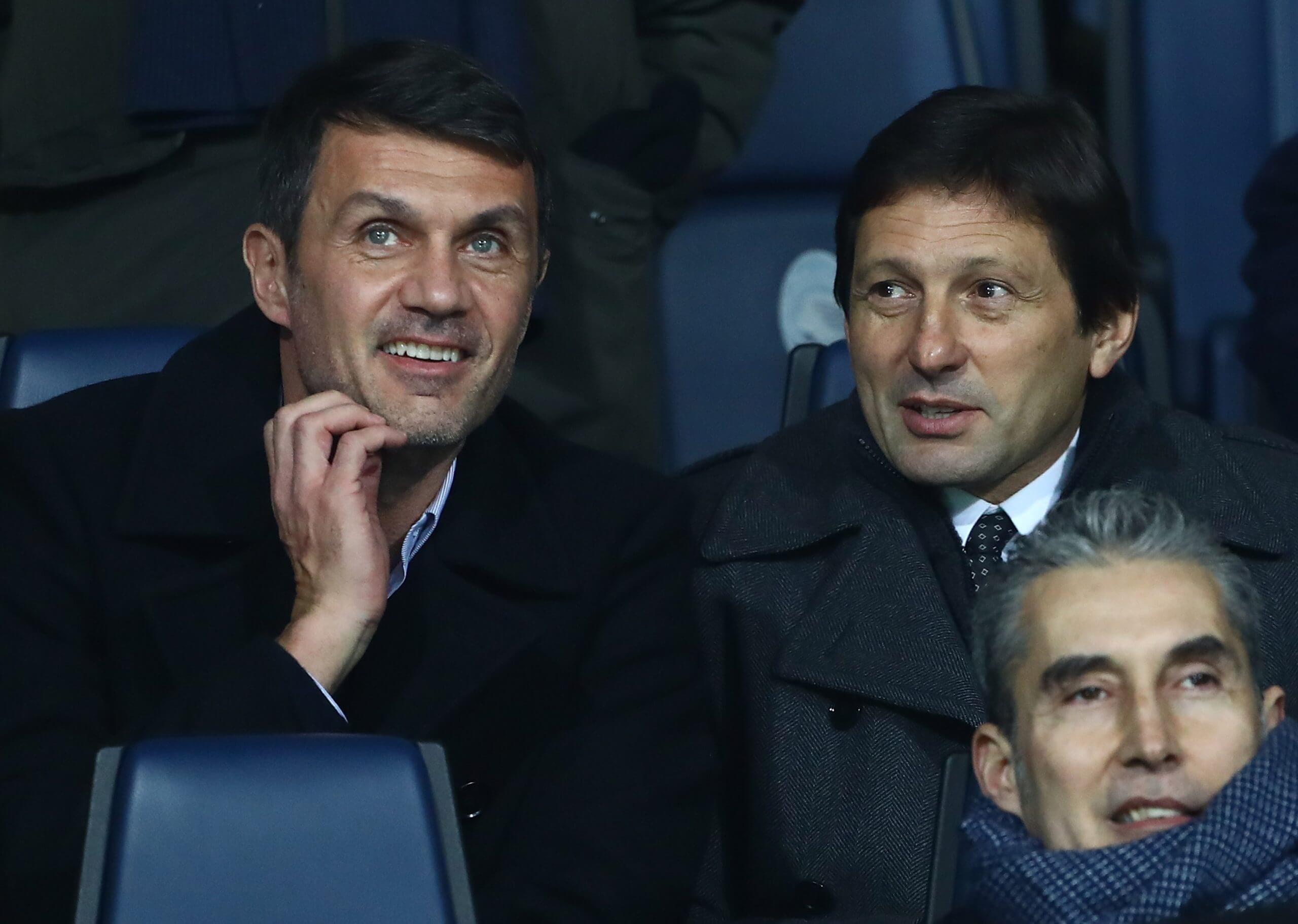
Malago, Maldini and Leonardo, the ex-Brazil international who was his former team-mate at Milan, were presented as the architects of change. “Maldini was always my objective,” Malago said.

Paolo Maldini and Leonardo – architects of change for Italy’s national team (Marco Luzzani/Getty Images)
Let’s just say it has been a chastening fortnight, one in which the Italian national team has suffered a series of defeats without even playing a game.
Expectations were high. Ambitions great. “It’s a call to arms,” Maldini said. “When Italy calls, it’s hard to say, ‘No’.”
Yet Pep Guardiola and Carlo Ancelotti did just that.
“It seemed right to us to start with the best in the world,” Maldini explained of their search for a manager.
Guardiola would have represented an Italy no longer in denial, an acknowledgement they needed to break with tradition. He would have been the first foreign coach to fill the role of Commissario Tecnico since Argentine Helenio Herrera’s job-share with Ferruccio Valcareggi 60 years ago, following Italy’s elimination by North Korea at the 1966 World Cup, a humiliation treated as a national disgrace.
After that dispiriting loss in Bosnia, traditionalists opened up to the radical, counter-cultural Guardiola option. They dared to dream as his time at Manchester City finally, after a decade, came to an end.
Guardiola loves Italy. He played there, for Roma and Brescia, near the end of his career after leaving Barcelona. He speaks Italian. He attended a Brescia game in February and often flies back for reunions with former team-mates including Roberto Baggio. When Jovanotti, the Italian pop star, performed in Barcelona earlier this summer, Guardiola was backstage in a Jovanotti T-shirt.
Maldini, meanwhile, found himself damned if he tried to appoint Guardiola and damned if he didn’t. It was a national imperative to have a go, despite the belief Guardiola desired time away from coaching after stepping down in Manchester just a couple of months ago. The Catalan’s inclination was for a sabbatical, like the one he took between the Barcelona and Bayern Munich jobs in the early 2010s. He’d no doubt seen how refreshed his old foe Jurgen Klopp has looked lately after a couple of years out of the grind, too.
Maldini and Leonardo couldn’t change his mind. It was Mission: Impossible. A mission they would have been criticised for not accepting, just as they would later be for failing to accomplish.

Paolo Maldini and Giovanni Malago could not persuade Pep Guardiola (above) to take up the Italy reins (Maurizio Lagana/Getty Images)
As for Ancelotti, his name was raised not by the media, but by Maldini.
“We can’t comment further on (Guardiola),” he said in a media huddle after the FIGC’s new executive team presented its plans to the Serie A assembly. “You have identified one of the targets. But we have also spoken to Ancelotti.”
This came out of nowhere and led to more questions. Why venture his name unsolicited except to affirm, once again, the FIGC’s unrealistic ambitions? Contrary to Maldini’s stated belief, when Italy called, it seemed easy for candidates to say: ‘No’.
Ancelotti, after all, had extended his contract with Brazil before the World Cup and, when Norway brought an end to their campaign in the round of 16, he reiterated his intention to see that agreement out.
So far, the process of sourcing a new Italy coach has been humbling. Maldini’s aura evidently hasn’t been enough on its own.
The difficulty in luring a big name has not, for now, been a question of money either. “For Pep, the financial aspect is not relevant in any way,” Maldini said as he left Serie A’s headquarters.
How could it be after working for City? “You cannot imagine how much I get paid,” Guardiola memorably said while City were slumping the season before last.
Having worked under Ancelotti at Milan, attention then turned to one of Maldini’s former San Siro and Italy team-mates, Andrea Pirlo. It felt like quite the comedown. Groundhog Day rather than a Brave New World. A prospective repeat of the mistakes made under Gravina when Buffon recommended Gattuso for the job to replace Luciano Spalletti, even though his most recent gig had been with Hajduk Split in Croatia.
A peep at Pirlo’s coaching career did not exactly inspire confidence. It’s been more rag-tag than sprezzatura.
Juventus’ unprecedented nine-year run of winning Serie A ended under Pirlo. He was fired, a little harshly, in May 2021 after one season, having delivered a Coppa Italia to go with a fourth-place finish.
A year on, he took the curious decision to move to newly-promoted Turkish Super Lig side Fatih Karagumruk. Second-division Sampdoria fired him in August 2024 when they still had a Serie A wage bill and it is hard, in meritocratic terms, to justify the job offer Maldini and Leonardo made to him on the basis of his work at current club FC United Dubai of the United Arab Emirates, though he did lead them to top-flight promotion last season.

Andrea Pirlo has endured a chequered career as a coach (Vincent Carchietta/Getty Images)
Wouldn’t it have been better, some argued, to keep faith in Silvio Baldini, the under-21 coach, who took interim charge after Gattuso’s post-Bosnia resignation?
Baldini was especially bold in the friendlies of shame Italy played ahead of the World Cup (1-0 wins against Luxembourg and Greece), picking a squad with an average age of 20 years and six months. Though eccentric — Baldini dedicated his brief two-game tenure to the family dog, Nebbia — the 67-year-old has cultivated, quite organically, a reputation as Italy’s Marcelo Bielsa, having influenced the likes of Tottenham Hotspur head coach Roberto De Zerbi.
His profile, however, was never higher than when, as coach of Catania in 2007, he followed his opposite number, the then Parma boss Domenico Di Carlo, down the sideline and kicked him up the backside. Relative obscurity followed and, whatever success Baldini subsequently earned — such as promotion to Serie B with Pescara in 2024 — came as a kind of anti-establishment figure and diehard football romantic.
Some might say this is exactly what Italy need at the moment (a kick up the backside?). And yet the problem is football is no longer exclusively about football these days.
If things aren’t working on the pitch, federations tend to go after a big name not only for a quick fix but to attract sponsors, for commercial uplift. This would, no doubt, have been an additional benefit of hiring Pirlo if, for instance, Malago and Maldini did not want to be seen rehiring Roberto Mancini and Antonio Conte, who had, of course, managed the national team under past administrations.
Pirlo’s style is, after all, synonymous with Italy. He would have looked great in the FIGC’s standard issue Armani suit.
And yet his commercial appeal has, quite ironically, ended his chances of signing the four-year deal Maldini and Leonardo were prepared to offer.
Pirlo is a global ambassador for Fonbet, Russia’s largest sports betting firm. He visited Moscow last May for ‘Football Day’ at its Luzhniki Stadium, along with Marco Materazzi, a team-mate as Italy won the 2006 World Cup. They were not trailblazers either. Their fellow 2006 hero Francesco Totti also attracted controversy when he flew to the Russian capital in April last year for the RB Awards, as a guest of Bookmaker Rating.
That appearance by Pirlo coincided with Russia launching a hypersonic ballistic missile attack on Kyiv as part of the invasion of Ukraine launched by Vladimir Putin in February 2022. He signed autographs beside Artem Dzyuba, the former Zenit striker and Russia’s captain, who posted on Instagram that he was “proud to be Russian” amid criticism from Ukrainian internationals Vitalii Mykolenko and Andriy Yarmolenko regarding the, up until then, deafening silence from Russian players.
FC United Dubai also happen to be owned by Russian businessman Sergey Lomakin.
Claims that Fonbet, Lomakin and the club are linked have been denied. In a statement to Italian news outlet Gazzetta dello Sport, FC United Dubai said: “Mr Lomakin has no interest in Fonbet. Furthermore, FC United Dubai, the football club managed by Andrea Pirlo, has no connection with Fonbet. There is no link between Mr Lomakin, United FC Dubai and Fonbet.”

Andrea Pirlo during his time coaching Fatih Karagumruk in Turkey (Yasin Akgul/AFP via Getty Images)
Even so, Pirlo’s willingness to work for a betting company, and particularly one based in Putin’s Russia, revealed itself to be toxic.
There is a lot to unpack here from the hypocritical and the ethical to the geopolitical. It was not so long ago, albeit under Malago’s predecessor, that Gravina was voted back in on a reform agenda that included lifting a ban on betting sponsorship and campaigning for a percentage of revenue generated from gambling to be reinvested in the game.
Italy’s dignity decree, which banned front-of-shirt betting sponsors, is a fig leaf anyway. Before games, adverts are run on Sky and DAZN in which Opta-style statistics are read out previewing the featured game. These ‘betting insights’ are considered an informercial rather than a gambling ad. Lazio’s deal with Polymarket, which is unlicensed by Italy’s customs, excises and monopolies agency, is compliant under the same criteria.
You then have other, more recent context to consider. Italy internationals Sandro Tonali and Nicolo Fagioli both served lengthy bans for using illegal betting sites. Part of their suspensions involved undergoing therapy and educating the next generation about the risks posed by gambling. What example would the FIGC be setting by hiring a new coach who is a global ambassador for a legal betting site, but a betting site all the same?
Finally, we come to the war. Italy’s Prime Minister Giorgia Meloni has been a staunch ally of Ukraine, even if her ruling coalition partner and deputy Matteo Salvini has, in the past, been seen in a Putin T-shirt. Accused by politicians including Carlo Calenda, the leader of Azione, a centre-liberalist party, of promoting Russia, Pirlo could not stay silent, particularly when, on Sunday night, he claimed to have learnt “I am no longer a candidate for the national team”.
“Over the last few days, I have followed with great bitterness the debate that has arisen with regard to my name and the possibility of taking on the role of head coach of the Italian national team,” he said on social media.
“Throughout my career — first as a footballer and now as a coach — I have always conducted my work in full compliance with the laws of the countries in which I have worked and the contracts I have signed. The professional arrangement at the centre of the recent controversy stems from my work in the United Arab Emirates and is exclusively commercial and sporting in nature.
“To attribute a political significance to this collaboration is to ascribe to me beliefs that I have never expressed and which do not reflect my views.”
No sooner had the FIGC’s new executive team come together than it looked like falling apart.
As Malago left its Rome office on Monday afternoon, he tried to project calm even amid reports Maldini and Leonardo were considering their own resignations. “I wanted to keep this appointment,” he said. “But now I’ve had 600-to-700 WhatsApp messages while on a 20-to-25-minute call. I’ll get back to everyone as soon as possible. I’m working on it. You’ll know everything soon.”
Scrutiny had not only fallen on Pirlo’s commercial partnership with Fonbet. One of his children, Nicolo, works for the agency YouFirst. One of Maldini’s kids, Christian, collaborated with GR Sports, the agency that looks after his brother, Daniel, who plays for Serie A side Atalanta. This has, in turn, brought back memories of 2016, when the newly-appointed Italy coach Gian Piero Ventura wanted the team’s 2006 World Cup-winning manager Marcello Lippi as a technical director, only for him to withdraw to avoid a potential conflict of interest given Lippi’s son, Davide, was and remains a prominent agent.
In the cases of Pirlo and Maldini, neither of the aforementioned sons is a licensed agent. Nicolo, for instance, describes himself as a sports-marketing consultant on his socials. As such neither, as per Article 16 of the FIGC’s Sports Agents rules on incompatibility and conflict of interest, would have had to leave their roles in the event Pirlo senior secured the Italy job.
More broadly, it is remarkable that a couple of former players, who were both renowned for their vision and reading of the game, did not see this coming.
Only a week ago, Malago said: “It took me two weeks to convince Maldini and Leonardo. Together with them, I drew up a plan that goes beyond the head coach.” In other words, it is supposed to be a far more wide-ranging project than one appointment.
The entire scheme cannot, surely, rest on the success or failure to hire Pirlo. Not when Thiago Motta, who impressed not so long ago at Bologna but has been out of football since being sacked by Juventus in March last year after only nine months, might represent a viable compromise candidate FIGC.
On the one hand, you can sympathise with Maldini and Leonardo for growing exasperated. On the other, if you quit, as they are expected to do, after less than three weeks, why take the job in the first place? For someone so experienced in Italian football, should any of the reaction and backlash of the last 72 hours really come as a surprise?
Having already been sacked by Milan after receiving a new contract and more power from owner Gerry Cardinale on the condition he’d be judged like any other employee at RedBird, Italy always felt like the next landing spot for Maldini. He had met with a Fenerbahce presidential candidate before accepting Malago’s offer. The candidate lost. Now what? Where next?
A fresh start for the national team has been a tremendous false start for all involved.
For now, the new Italy appears like the old Italy. Mired in self-inflicted controversy. Changing to stay the same.