A YEAR AND a half ago, few would have wagered that Pete Hegseth would consolidate power at the Pentagon. Narrowly confirmed by the Senate amid allegations of financial mismanagement in prior jobs and heavy drinking, which Mr Hegseth denied, the former Fox News weekend host and voluble culture warrior appeared badly underqualified and no match for the generals and admirals he would direct. In office, the secretary of war has skirted scandal, be it mishandling classified information or forcing polygraph tests on his underlings. But far from seeing his power wane, Mr Hegseth has firmly taken control of his department and the military’s leadership. A rolling purge of America’s armed forces has cleared out his rivals and those deemed insufficiently loyal.
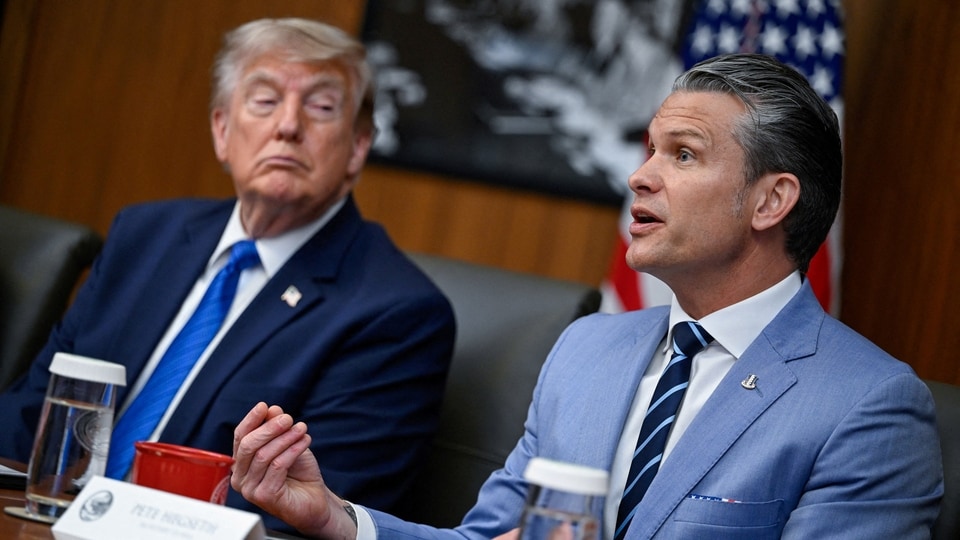
FILE PHOTO: U.S. President Donald Trump listens as Secretary of Defense Pete Hegseth speaks during a cabinet meeting at Camp David in Thurmont, Maryland, U.S., July 31, 2026. REUTERS/Daniel Heuer/File Photo (REUTERS)
Dan Driscoll, the army secretary, is his latest casualty. On August 31st Mr Driscoll tendered his resignation to the president after months of clashes with Mr Hegseth over the ouster of numerous senior army officers and the future of the force. Widely respected by the army’s officer corps, and viewed as a savvy reformer, Mr Driscoll’s departure raises yet more questions about the turmoil roiling the Pentagon and the viability of reforms meant to drive the army’s adaptation to the age of drones.
Mr Hegseth’s purges have been dramatic. Since taking office, he has ousted at least 24 flag or general officers. Many appear to have been dismissed for no reason beyond their race, sex or or associations with officers Mr Hegseth disliked. A former national guardsman who rose to the rank of major, Mr Hegseth has long held a particular grudge against the army, an institution he claims “spit me out”. In April he sacked General Randy George, America’s most senior army officer, and someone with whom Mr Driscoll had forged a close relationship. Chris Donahue, a feted four-star general who headed US Army Europe and Africa, was forced into retirement two months later after Mr Hegseth downgraded his command. As of today—and despite the ongoing war with Iran—the army has no Senate-confirmed chief of staff, secretary or commander of forces in Europe. Mr Driscoll’s deputy is also said to be on the cusp of leaving.
Mr Driscoll fought back as best as he could. “He prevented a number of officers from being fired or blocked,” says a senior congressional aide. However, Mr Hegseth’s recent removal of seven army officers from a list of 18 approved for promotion to two-star general is believed to have been the final straw.
The departure comes at a pivotal time. Mr Driscoll, a former Yale university classmate and confidant of J.D. Vance, the vice-president, is believed to have acted as a check on Mr Hegseth’s more hawkish instincts over Iran. He made a personal appeal to Donald Trump just days before his resignation, reflecting concerns in many parts of the Pentagon about the mounting strain on America’s armed forces from the ongoing war in Iran and Mr Hegseth’s meddling in the ranks.
Personnel churn has also undermined important modernisation efforts overseen by Mr Driscoll. The army secretary has been front and centre on the Pentagon’s drone procurement efforts (so much so that Mr Trump took to calling him “drone guy”). Mr Driscoll visited Ukraine in November of last year; he walked a fine line, telling President Volodymyr Zelensky’s commanders that they were losing the war while initiating a tech partnership with the country’s drone specialists. The adulation Mr Driscoll attracted is thought to have upset Mr Hegseth, who is keen to dispense with initiatives associated with him and his allies. A new army battalion set up this January by General George to master the art of drone warfare, for example, is already being phased out by General Christopher LaNeve, the acting chief of staff of the army who is close to Mr Hegseth.
General LaNeve prefers to talk of a “back-to-basics” approach for the army. While that still includes buying newfangled tech, greater emphasis is being placed on MAGA-ish priorities. General LaNeve has overseen the drawing down of army units from Europe and placed greater focus on the western hemisphere. Mr Driscoll had also fought with General LaNeve over his efforts to rewrite the army’s physical-fitness standards, a long-running fixation of Mr Hegseth’s.
Mr Hegseth is likely to solidify his hold going forward. Sean Parnell, the Pentagon’s boisterous spokesperson, is increasingly being tipped as Mr Driscoll’s replacement. Much like his boss, Mr Parnell seems enamored of the culture wars. He would face a tough confirmation in the Senate, in part because of his limited experience managing a bureaucracy. But he could still take up his duties in an acting capacity. With each passing day, the Pentagon looks more like its boss.