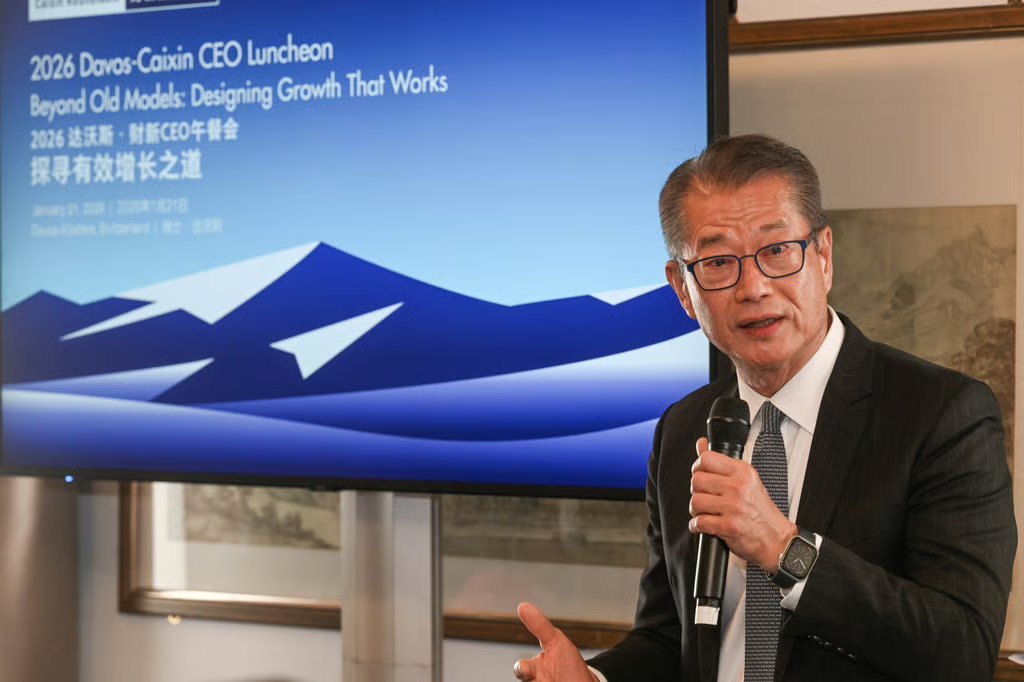
At this time of year, Financial Secretary Paul Chan Mo-po’s top priority is finalising the Hong Kong government’s budget for 2026-27, balancing requests for incentives and welfare against calls for a return to fiscal prudence.
For decades, budget speeches have followed a familiar structure: a review of past performance, near- and medium-term forecasts, support measures for industries and social services, a report on the government’s fiscal position and financial estimates for the coming year. The public typically looks for “sweeteners” – tax rebates or subsidies – and for any fee or duty adjustments to meet policy goals.
This year, however, Chan should enrich that format by explaining the macroeconomic rationale behind Hong Kong’s new industrial-policy direction: large-scale investment in innovation and technology to broaden the economy. Investing in cutting-edge technologies with uncertain returns would have been unthinkable in the British era and was largely avoided in the special administrative region’s early years.
Yet targeted state support for strategic industries has delivered results across Europe and Asia. US-China strategic competition has prompted the US to identify semiconductors, critical minerals and artificial intelligence (AI) as areas for state backing.
Against this backdrop, and after Chief Executive John Lee Ka-chiu’s pledge to personally lead alignment with the nation’s development under the 15th five-year plan, this year’s budget speech should more clearly set out how Hong Kong’s economic direction aligns with global and national trends.
Alongside strengthening Hong Kong’s role as a global financial, trading and shipping hub – areas that have benefited from strong central support – and building its innovation and technology ecosystem, Chan should highlight national priorities that will decisively shape Hong Kong’s economic future.
Visited 2 times, 1 visit(s) today