Quick overview
- NVIDIA’s stock is recovering towards $230, supported by CEO Jensen Huang’s optimistic growth outlook for 2027.
- Huang projects that chip sales will double by 2027, driven by demand from data centers and various markets.
- Concerns about massive infrastructure spending and regulatory scrutiny could challenge the sustainability of NVIDIA’s growth.
- Insider selling and the inability to break above the $236 resistance level add caution to the stock’s current momentum.
NVIDIA’s recovery toward $230 is being supported by Jensen Huang’s ambitious 2027 growth outlook, although elevated expectations, heavy infrastructure spending and increasing regulatory scrutiny could make the next leg of the rally more difficult to sustain.
NVIDIA Stock Powers Toward $230
NVIDIA shares have regained momentum after falling below $210 two weeks ago, with NVDA now approaching $230 and moving back toward its record high above $236.
The recovery has coincided with renewed strength across semiconductor stocks, but attention is increasingly focused on whether NVIDIA can deliver the extraordinary growth investors have come to expect.
With the stock approaching major resistance, any signs of slowing demand or weaker spending could have a larger impact on sentiment.
Huang Projects Chip Sales to Double
CEO Jensen Huang has provided another bullish signal for NVIDIA’s long-term outlook, saying the company expects to sell roughly twice as many chips in 2027 as it does currently.
The projection reflects continued demand from data centers and rising computing requirements across multiple markets. Huang has also argued that demand is coming from a broad customer base rather than a single application.
NVIDIA’s fiscal 2028 revenue outlook has added to the optimism, with the company projecting approximately 70% growth compared with previous analyst expectations of around 44%.
If achieved, such growth would reinforce the argument that NVIDIA’s expansion can extend beyond the current infrastructure cycle. However, increasingly ambitious forecasts also raise the consequences of any disappointment.
Massive Spending Remains a Concern
The biggest question is whether technology companies can maintain their current level of infrastructure spending.
Data centers, advanced processors, networking equipment and electricity infrastructure require enormous capital commitments. While this spending directly supports NVIDIA’s demand, the growing cost of the buildout could eventually encourage companies to become more selective.
Recent discussions among technology executives about slowing the rollout of increasingly advanced models have also raised questions about the sustainability of the current spending cycle.
Even if investment remains strong, investors could become more cautious if infrastructure costs begin rising faster than revenue and profits.
NVIDIA Stock Reverses From $236 Resistance
NVIDIA shares lost momentum early in September after failing to break decisively above the $236 resistance zone, with the rejection sending the stock back below $210 but we have seen a decent rebound recently. Shares have climbed above $229 as investors responded positively to expanding infrastructure partnerships and CEO projections, but let’s see if buyers are able to sustain the rally.
NVIDIA Stock Resumes Uptrend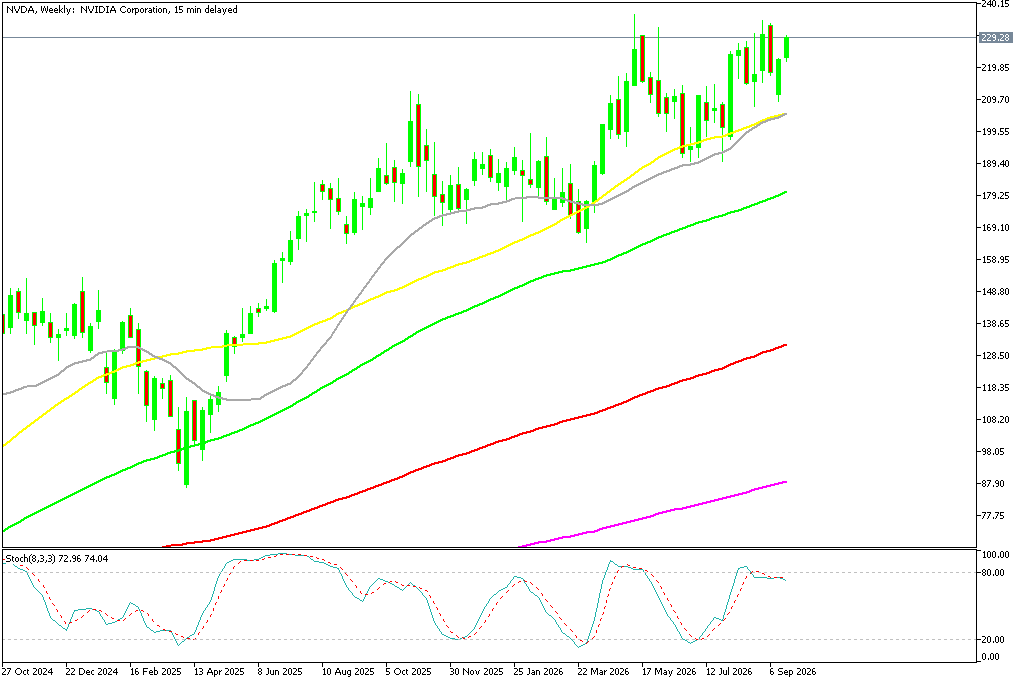
DOJ Scrutiny Adds Another Risk
Regulatory scrutiny represents another potential overhang for NVIDIA.
Bloomberg has reported that the U.S. Department of Justice is examining NVIDIA’s agreement with chip startup Groq, including whether the structure avoided conventional antitrust review.
NVIDIA obtained rights to Groq’s technology while the company remained independent, while Groq CEO Jonathan Ross and COO Sunny Madra subsequently joined NVIDIA.
The investigation may not result in enforcement action, but the scrutiny highlights growing regulatory attention surrounding NVIDIA’s position within the semiconductor industry.
Insider Selling Raises Caution
NVIDIA has also faced significant insider selling since its latest earnings report, with approximately $385 million in reported sales, much of it involving director Mark Stevens.
The transactions were not conducted under a 10b5-1 trading plan, making them discretionary sales. Stevens nevertheless continues to own nearly 29 million shares, meaning the transactions represent only part of his holdings.
Still, insider selling can attract additional attention when a stock is trading close to record levels.
Infrastructure Commitments Keep Growing
NVIDIA’s growth story is increasingly connected to enormous infrastructure projects. Zankore has secured $3.1 billion for an Indonesian project initially targeting 100 megawatts of NVIDIA-powered capacity, with plans potentially expanding toward one gigawatt.
Amazon Web Services is also targeting up to two million NVIDIA GPUs by 2028, while its relationship with Equinix could support additional demand for inference infrastructure.
These commitments highlight the potential scale of NVIDIA’s market opportunity, but they also demonstrate how capital-intensive the current growth cycle has become.
$236 Remains the Key Test
NVIDIA’s move toward $230 keeps the recovery intact and places the $236 record high back in focus.
Huang’s projection of roughly doubling chip sales in 2027 provides a powerful growth narrative, but the stock is increasingly dependent on those expectations being delivered.
For now, investors are balancing strong demand forecasts against enormous infrastructure spending, regulatory scrutiny and insider selling. A sustained move above $236 would keep the record-high breakout in focus, while renewed weakness below $210 could signal that the latest recovery is losing momentum.

Skerdian Meta
Lead Analyst
Skerdian Meta Lead Analyst.
Skerdian is a professional Forex trader and a market analyst. He has been actively engaged in market analysis for the past 11 years. Before becoming our head analyst, Skerdian served as a trader and market analyst in Saxo Bank’s local branch, Aksioner. Skerdian specialized in experimenting with developing models and hands-on trading. Skerdian has a masters degree in finance and investment.
