Published on
July 12, 2026
By: Pritam Nath

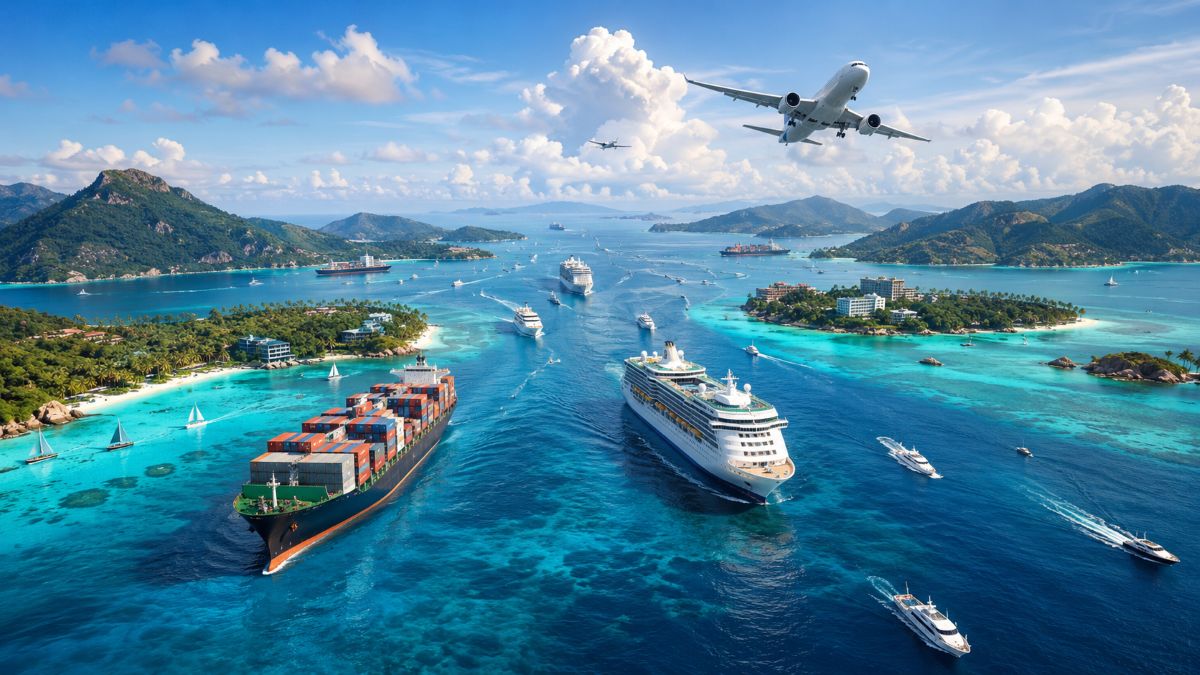
Image generated with Ai
New Zealand has joined Australia, Japan, the Philippines, the United States, Canada, Germany, Italy, Estonia, Latvia, Lithuania, Romania, Slovenia, and the United Kingdom in reaffirming their commitment to a free, open, peaceful, and rules-based Indo-Pacific on the tenth anniversary of the landmark South China Sea Arbitral Tribunal Award. The coordinated statement highlights continued support for international law, particularly the United Nations Convention on the Law of the Sea (UNCLOS), while emphasizing that maritime disputes should be resolved peacefully through legal mechanisms rather than coercion. Although the declaration is centered on diplomacy and maritime governance, it also carries important implications for international travel, tourism, aviation, cruise operations, and global trade that rely heavily on secure and predictable regional waterways.
For the travel industry, geopolitical stability across the Indo-Pacific remains a critical foundation for sustained tourism growth. The South China Sea is one of the world’s busiest maritime corridors, connecting major tourism destinations, international airports, cruise routes, and commercial shipping lanes throughout Southeast Asia and the Pacific. As governments continue investing in tourism infrastructure and cross-border connectivity, maintaining a stable maritime environment supports traveler confidence, airline planning, cruise scheduling, tourism investment, and broader economic resilience. The latest joint statement demonstrates the shared commitment of fourteen countries to preserving an international order that benefits lawful commerce and regional mobility.
New Zealand Reaffirms Commitment to a Rules-Based Indo-Pacific
| Key Information | Details |
|---|---|
| Lead Country | New Zealand |
| Joint Statement Date | 12 July 2026 |
| Occasion | 10th Anniversary of the South China Sea Arbitral Tribunal Award |
| Legal Framework | United Nations Convention on the Law of the Sea (UNCLOS) |
| Primary Focus | Peaceful dispute resolution and maritime stability |
New Zealand joined thirteen partner countries in commemorating the tenth anniversary of the July 12, 2016 Arbitral Tribunal Award concerning the South China Sea. The governments collectively reaffirmed their commitment to maintaining a free, open, peaceful, and rules-based Indo-Pacific anchored in international law.
The statement reiterates that maritime disputes should be resolved peacefully and in accordance with UNCLOS. It also recognizes the 2016 tribunal ruling as a significant legal milestone that remains final and legally binding between the Philippines and China concerning the maritime matters addressed in the arbitration.
Advertisement
Advertisement
For New Zealand, which has consistently supported multilateral cooperation and adherence to international law, the declaration aligns with its long-standing foreign policy principles of promoting regional stability and peaceful dialogue.
The participation of countries from Europe, North America, Oceania, and Asia reflects broad international support for maintaining a stable Indo-Pacific region governed by internationally recognized legal frameworks.
Advertisement
Advertisement
The coordinated declaration demonstrates increasing diplomatic cooperation among countries that share an interest in preserving maritime security, lawful commerce, and freedom of navigation throughout one of the world’s most strategically important waterways.
Countries Supporting the Joint Declaration

Image generated with Ai
The joint declaration brings together 14 countries from the Indo-Pacific, Europe, and North America, reflecting broad international support for a rules-based maritime order, peaceful dispute resolution, and freedom of navigation under the United Nations Convention on the Law of the Sea (UNCLOS). Collectively, these nations represent major diplomatic, economic, maritime, and security stakeholders with shared interests in maintaining stability across one of the world’s busiest trade and travel corridors.
Advertisement
Advertisement
| Country | Region | Role in the Joint Statement | Relevance to Travel & Maritime Connectivity |
|---|---|---|---|
| New Zealand | Oceania | Co-signatory reaffirming support for UNCLOS and peaceful dispute resolution | Supports secure Indo-Pacific sea lanes that facilitate tourism, aviation, and regional trade |
| Australia | Oceania | Advocates for a free, open, and rules-based Indo-Pacific | Major aviation, cruise, and tourism hub linked with Southeast Asia |
| Japan | East Asia | Supports international maritime law and regional stability | Depends heavily on secure shipping routes and international air connectivity |
| Philippines | Southeast Asia | Party to the 2016 Arbitral Tribunal Award | Central tourism destination located along critical South China Sea routes |
| United States | North America | Supports freedom of navigation and international maritime law | Major Pacific aviation and maritime partner connecting Asia and North America |
| Canada | North America | Endorses peaceful dispute resolution under international law | Growing Indo-Pacific engagement supporting tourism and commercial connectivity |
| Germany | Europe | Supports the international rules-based order | Significant investor in global tourism, logistics, and international commerce |
| Italy | Europe | Promotes adherence to international legal frameworks | Strong maritime heritage with extensive global shipping interests |
| Estonia | Europe | Supports collective commitment to international law | Reinforces European support for global maritime security |
| Latvia | Europe | Participates in strengthening rules-based international cooperation | Supports secure international trade and transport corridors |
| Lithuania | Europe | Reaffirms commitment to peaceful maritime governance | Advocates international legal certainty for global commerce |
| Romania | Europe | Supports regional stability and lawful dispute resolution | Important European transport and logistics partner |
| Slovenia | Europe | Endorses international cooperation under UNCLOS | Supports secure international shipping and economic connectivity |
| United Kingdom | Europe | Reaffirms commitment to freedom of navigation and maritime security | Global aviation and maritime center with extensive Indo-Pacific engagement |
Regional Representation
| Region | Participating Countries | Strategic Importance |
|---|---|---|
| Oceania | New Zealand, Australia | Strengthening Indo-Pacific security and regional connectivity |
| Southeast Asia | Philippines | Central stakeholder in the South China Sea and regional tourism |
| East Asia | Japan | Supports maritime stability and international commerce |
| North America | United States, Canada | Reinforces trans-Pacific security, aviation, and trade partnerships |
| Europe | Germany, Italy, Estonia, Latvia, Lithuania, Romania, Slovenia, United Kingdom | Demonstrates broad European support for international law and freedom of navigation |
Joint Declaration at a Glance
| Key Metric | Details |
|---|---|
| Total Participating Countries | 14 |
| Continents Represented | 4 (Asia, Europe, North America, Oceania) |
| Primary Legal Framework | United Nations Convention on the Law of the Sea (UNCLOS) |
| Anniversary Marked | 10th Anniversary of the 12 July 2016 South China Sea Arbitral Tribunal Award |
| Core Objectives | Peaceful dispute resolution, freedom of navigation, maritime security, regional stability, and support for lawful international commerce |
| Travel Industry Relevance | Supports stable sea and air routes, strengthens investor confidence, facilitates cruise tourism, aviation connectivity, and international travel across the Indo-Pacific |
Why the South China Sea Matters for Global Travel
| Travel Sector | Importance |
|---|---|
| Commercial Aviation | Supports international flight connectivity |
| Cruise Tourism | Enables reliable cruise itineraries |
| Maritime Tourism | Strengthens regional visitor movement |
| Hospitality | Encourages tourism investment |
| International Trade | Maintains tourism supply chains |
While the statement focuses on international law, its significance extends well beyond diplomacy.
The South China Sea serves as a critical transportation corridor connecting Northeast Asia, Southeast Asia, Oceania, Europe, and North America. International airlines operate thousands of flights across the region each week, while cruise operators continue expanding itineraries linking destinations across the Philippines, Singapore, Vietnam, Malaysia, Thailand, Indonesia, and neighboring markets.
Hotels, resorts, airports, ports, and tourism businesses also depend on uninterrupted logistics networks that transport food supplies, fuel, construction materials, and consumer goods essential for visitor services.
A stable maritime environment therefore contributes directly to tourism growth and broader economic development.
Advertisement
Advertisement
Commitment to UNCLOS Reinforces International Confidence
| UNCLOS Principle | Travel and Economic Relevance |
|---|---|
| Peaceful dispute resolution | Supports regional stability |
| Freedom of navigation | Protects maritime transportation |
| Freedom of overflight | Supports aviation connectivity |
| International legal certainty | Encourages long-term investment |
The joint statement places considerable emphasis on UNCLOS as the internationally recognized legal framework governing maritime rights and responsibilities.
Participating governments reaffirmed that the Arbitral Tribunal determined there is no legal basis for expansive maritime claims based on so-called historic rights within the South China Sea.
They also emphasized the importance of preserving freedom of navigation, overflight, and other internationally lawful uses of the sea.
These principles are particularly relevant for international airlines, cruise operators, cargo shipping companies, and tourism businesses whose operations depend upon predictable regional conditions.
Maritime Stability Benefits Tourism Growth
The Indo-Pacific continues to experience strong tourism recovery and expanding aviation connectivity.
Governments across Southeast Asia have introduced new international routes, airport expansion projects, cruise terminals, tourism campaigns, and hospitality developments designed to attract increasing numbers of global visitors.
Advertisement
Advertisement
Regional stability remains an important factor supporting these investments.
When transportation networks operate efficiently and maritime conditions remain predictable, airlines can expand services, cruise companies can introduce additional itineraries, and tourism businesses can plan future growth with greater confidence.
Although the joint declaration does not introduce new travel policies, it reinforces the importance of preserving conditions that support sustainable tourism expansion.

Image generated with Ai
Opposition to Coercion and Unilateral Actions
| Joint Position | Intended Outcome |
|---|---|
| Oppose coercion | Preserve regional peace |
| Support peaceful dialogue | Reduce tensions |
| Protect maritime safety | Safeguard lawful operations |
| Encourage legal mechanisms | Strengthen international cooperation |
The participating governments reiterated their strong opposition to destabilizing actions involving force or coercion.
The statement also expressed concern regarding the use of coast guard vessels, military forces, and maritime militia to harass or intimidate lawful maritime and aerial operations.
According to the declaration, such activities can endanger personnel and fishermen while increasing regional security risks.
Advertisement
Advertisement
The governments urged all parties to resolve disputes peacefully through dialogue and lawful international processes.
For the travel industry, reduced geopolitical uncertainty generally contributes to stronger visitor confidence and more predictable transportation planning.
ASEAN Vision Supports Regional Connectivity
The declaration also reaffirmed support for the shared ASEAN vision of the South China Sea as a region characterized by peace, stability, cooperation, lawful commerce, and prosperity.
ASEAN continues promoting regional dialogue while encouraging deeper economic integration among Southeast Asian nations.
As international tourism increasingly focuses on multi-country itineraries, seamless transportation between ASEAN destinations has become an important competitive advantage.
Stable maritime conditions support this objective by strengthening regional connectivity and facilitating international visitor movement.
Advertisement
Advertisement
Economic and Tourism Investment Outlook
| Industry | Long-Term Benefit |
|---|---|
| Airlines | Improved route planning |
| Cruise Industry | Greater operational certainty |
| Hospitality | Stronger investor confidence |
| Tourism Infrastructure | Stable development environment |
| Logistics | Reliable regional supply chains |
International investors frequently evaluate geopolitical conditions before committing to large-scale tourism developments.
Airport expansion, hotel construction, cruise terminal development, convention centers, and tourism infrastructure require long-term confidence in regional stability.
The reaffirmation of internationally recognized legal principles contributes to a more predictable investment environment across the Indo-Pacific.
While diplomatic declarations alone do not determine commercial decisions, they reinforce the broader framework supporting international business confidence.
Looking Ahead
The tenth anniversary of the South China Sea Arbitral Tribunal Award represents more than a legal milestone. It highlights the continuing importance of international cooperation, adherence to UNCLOS, and peaceful dispute resolution in one of the world’s most strategically significant regions.
New Zealand’s participation alongside Australia, Japan, the Philippines, the United States, and other international partners underscores a shared commitment to preserving maritime stability that benefits global commerce, tourism, aviation, and regional economic development.
Advertisement
Advertisement
As international travel continues expanding across the Indo-Pacific, maintaining secure and predictable maritime conditions will remain essential for sustaining tourism growth, strengthening cross-border connectivity, and supporting long-term prosperity throughout the region.
Frequently Asked Questions
1. Why did New Zealand join the joint statement?
New Zealand joined to reaffirm support for international law, peaceful dispute resolution, and a rules-based Indo-Pacific under UNCLOS.
2. What is the significance of the 2016 South China Sea Arbitration Award?
The tribunal ruling clarified maritime entitlements between the Philippines and China under UNCLOS and remains legally binding between the parties on the issues it addressed.
3. Which countries participated in the declaration?
The statement was issued by New Zealand, Australia, Canada, Estonia, Germany, Italy, Japan, Latvia, Lithuania, the Philippines, Romania, Slovenia, the United Kingdom, and the United States.
4. Does this statement affect international travel?
It does not change travel regulations, but it reinforces support for regional stability that benefits tourism and transportation.
5. Why is the South China Sea important for tourism?
It connects major tourism destinations, cruise routes, aviation corridors, and commercial shipping networks across the Indo-Pacific.
Advertisement
Advertisement
6. What role does UNCLOS play?
UNCLOS provides the international legal framework governing maritime rights, navigation, and dispute resolution.
7. How does maritime stability support airlines?
Stable regional conditions help airlines maintain reliable operations, expand routes, and improve long-term planning.
8. Why is ASEAN mentioned in the declaration?
The statement supports ASEAN’s vision of the South China Sea as a region of peace, stability, cooperation, and lawful commerce.
9. Will this declaration change shipping or cruise operations immediately?
No. It is a diplomatic statement reaffirming existing legal principles rather than introducing operational changes.
10. What is the broader significance for the travel industry?
The declaration reinforces international support for regional stability, which underpins tourism investment, aviation connectivity, cruise operations, and sustainable travel growth across the Indo-Pacific.
Advertisement
Advertisement