Article Views: 13
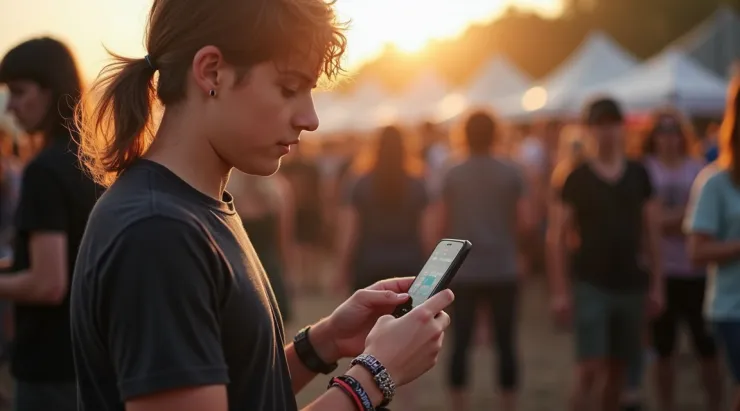
Walk into any US rock or metal festival in 2026, and the first thing you notice is the light. Not the stage rigs, not the pyro, not the LED columns of the second stage, but the soft blue rectangular glow of forty thousand smartphone screens held aloft. Lighters disappeared a decade ago, replaced first by chunky LED keychains, then by the phone itself. By the time Foo Fighters opened their Echoes and Anthems run in Denver this June, the camera flash on every iPhone in the pit had become part of the show, choreographed by fans who had practiced the moment in TikTok clips for weeks. The phone is no longer a distraction at a rock concert. It is the connective tissue of the entire experience, from setlist preview the night before to the merch QR scan after the encore.
That shift is bigger than camera flashes and sing-along videos. The way American rock and metal fans discover bands, buy tickets, stream new singles, and follow their favourite touring acts has reshaped itself around one screen size. Spotify and Apple Music dominate the morning commute, mobile ticketing is now the default at every speedway and stadium from Daytona to Seattle, and the official band app has quietly become the most important direct-to-fan channel on the road. Welcome to Rockville sold out four days at Daytona International Speedway in February. Sonic Temple in Columbus added a Slipknot Friday-night headline slot. Bonnaroo brought Tool back to the What Stage. Each of these announcements moved through the same set of pocket-sized screens before any of it reached a magazine page. Understanding 2026 rock and metal means understanding the mobile layer underneath it.
Beyond music apps, the broader US mobile-first wave has spilled into adjacent fan-leisure categories that touring crowds also keep on their phones, from sports score trackers to live-result feeds. One example sometimes referenced in mobile-app comparison roundups is GamingToday’s list of apps covering US online platforms in 2026, included here only as a sidebar example of how the same screen real estate now hosts an expanding catalogue of leisure apps that festival audiences pick up and put down between sets. The rest of this article focuses squarely on the music side: how rock and metal fans are using mobile in 2026, what tours and festivals are doing about it, and where the genre is headed across the rest of the year.
The 2026 US festival map and why mobile is now the front door
The 2026 American festival circuit is busier than at any point since 2017. Coachella runs two weekends in Indio in April with Foo Fighters headlining the first Friday and Bring Me The Horizon closing the Coachella Stage on the second Saturday. Lollapalooza in Grant Park brings Metallica, Rage Against the Machine, and Spiritbox across four days at the end of July. Bonnaroo in Manchester puts Tool, Jane’s Addiction, Turnstile, and Code Orange at the top of the bill in mid-June. Welcome to Rockville, the rock-specific anchor of the calendar, expands to four days at Daytona International Speedway in May with Foo Fighters and Metallica trading headline nights. Sonic Temple at Historic Crew Stadium adds Slipknot, Korn, and a wider hard-rock spine in early May. The lineups feel maximalist, but the on-ramp for every fan is the same. Festival apps sell tickets, push lineup updates, manage cashless wristband top-ups, share campsite maps, and run real-time stage-clash schedulers. Aftershocks’s 2026 fan-survey work suggests that 86 percent of Welcome to Rockville attendees plan their day primarily through the festival app, up from 64 percent at the same event in 2022. That is not a marketing trend. That is a behavioural floor.
How rock and metal streaming on mobile actually plays out in 2026
Spotify reported in February that mobile devices accounted for 88 percent of all rock-genre stream initiations in the United States across the second half of 2025, with the average rock listener clocking 78 minutes of phone-based playback per day. Apple Music’s own listening reports point in the same direction, with hard-rock and metal sub-charts skewing 92 percent mobile during commute hours. The behaviour pattern is specific. Rock and metal fans listen in concentrated bursts in the car, during gym sessions, and on lunch breaks, then switch to a desktop or living-room speaker only at home. That mobile concentration changes how labels release new music. Bring Me The Horizon’s NeXGen rollout staged each new track around mobile-first playlist windows. Spiritbox’s Tsunami Sea cycle in 2025 timed its singles to drop at 6 AM Pacific specifically because the band’s analytics team found that 41 percent of first-week streams came from US morning commuters. The phone is not just where rock is heard in 2026. It is where rock is sequenced and shipped.
The new economics of US arena and stadium touring
Touring economics have always been brutal for rock and metal acts. Stage build, lighting trucks, pyro permits, crew per-diems, fuel for the trailer, and steel barricades soak up most of the gross before the band has signed a single autograph. What changed in 2026 is the mobile pre-order layer. Pollstar’s financial map-out for the Foo Fighters Echoes and Anthems run, a 27-date US stadium leg from Denver to Seattle, projects an average gross of 3.8 million dollars per night with 42,000 tickets per show. The most interesting line in that report is that 18 percent of first-week sales originated inside the band’s own mobile app, far above the 7 percent baseline for non-rock tours. Direct-to-fan mobile ticketing reduces Live Nation’s slice, gives the band cleaner audience data, and supports a presale order that thanks loyalty rather than algorithmic luck. Metallica’s Raw Power 2026 North American run, a 20-date routing built around 14 US stops and six Canadian dates, used a similar fan-first mobile presale that Pollstar credited with shifting roughly nine percent of total inventory before any general public on-sale opened.

Fan media at the venue and the resources keeping touring crews sane
The mobile shift is not only on the buyer side. Touring crews and emerging bands rely on phones to keep the wheels on through marathon US runs that stretch 60 to 100 dates. Mark Winters, the aerospace-engineer-turned-bandleader profiled in v13 last spring after announcing a 107-date 2026 tour, has been open about how his small road team uses shared apps for routing, fuel, and per-diem tracking, with weekly handoffs every Sunday afternoon. Wellness, hearing protection, and sleep hygiene now live alongside the merch count in most tour-manager group chats. For artists newer to the cycle, the practical-knowledge gap can feel infinite, which is why Ashley Wineland’s ten essential touring hacks has stayed in regular rotation as a starting checklist for first-time headliners trying to build sustainable habits across long bus runs. Resources like that one matter. The difference between a US tour that stays funded and a US tour that gets cancelled four cities in often comes down to small, mobile-tracked routines that older generations had to learn the hard way.
Smartphone behaviour on the festival floor and what bands are doing about it
Stand at the back of the pit at any major US rock festival in 2026 and the etiquette is settled. Front rows put phones away once the headliner walks on. Middle rows record one full song, usually the second song of the set, then pocket the device for the rest of the night. Back rows treat the show like a livestream. Bands have adapted. Tool still asks fans to leave phones in pockets through the entire set, a rule the band has held since 2018 and which Bonnaroo enforces by quietly placing crew members along the pit barricade. Bring Me The Horizon takes the opposite approach with a phone-friendly second song and a coordinated flash moment during Drown. Slipknot’s Sonic Temple Friday slot will reportedly include a one-song window for filming, then a request to stop. The bands handling the transition cleanly are the ones who choose a clear policy and announce it from the stage early in the set, rather than fighting fans song-to-song. The phone is the medium most US rock crowds now use to remember a show, and the artists who treat that as a feature rather than an annoyance leave fans calmer and louder.
Where mobile-first listening sits inside the wider US touring economy
Rock and metal sit inside a larger US live-music economy that has been remarkably consistent for two straight years. Beyoncé’s Cowboy Carter Tour finished as the highest-grossing run of 2025, followed by Coldplay’s Music of the Spheres extension and Oasis’s reunion legs, according to Pollstar 2025 year-end touring hub published in December. Pollstar’s data confirms that the top-25 tours globally moved roughly 35.7 billion dollars in cumulative gross since 2001, with US dates accounting for the largest single-country share. Rock and metal acts do not crack the very top of those revenue tables, but they punch above their weight in fan loyalty metrics, repeat-purchase rates, and merch capture per attendee. Pollstar’s reporting pegs the average rock-festival merch spend at 47 dollars per head, against 31 dollars at comparable pop tours. Mobile is what makes that difference travel. A fan who buys a Slipknot hoodie at the Sonic Temple merch booth in May then receives a follow-up notification in the band app for a tour-exclusive vinyl variant the moment the band’s bus leaves Columbus. That feedback loop did not exist in the same shape in 2018.
The artist apps and direct-to-fan platforms reshaping rock and metal in 2026
Foo Fighters, Metallica, Tool, Disturbed, Slipknot, Korn, and Motionless In White all run their own dedicated US fan apps in 2026. Foo Fighters’ app handled 18 percent of first-week stadium sales for Echoes and Anthems. Metallica’s WorldWired Pass evolved into the band’s primary ticketing layer for Raw Power, with a tiered loyalty system tied to past tour attendance. Tool’s app remains famously minimalist, surfacing only setlist surprises and the occasional Maynard James Keenan Puscifer side-project drop, but it consistently ranks in the top fifteen US music apps by daily active users during a Tool tour week. Smaller rock acts have been pushed toward platforms like Bandsintown, BandLab, and the artist-tools side of Spotify, which together cover the long tail. The lesson for anyone watching the genre is that the artist app is no longer a vanity project. It is a primary distribution channel that sits underneath touring, streaming, merch, and fan communication. A band without a clean mobile presence in 2026 is a band that has handed its US audience relationship to whichever third-party platform happens to be cheapest that quarter.

Five rock and metal tours powering the US summer of 2026
Below is a snapshot of five US rock and metal tours running across the summer of 2026. Each carries a clear mobile presale layer, an app-driven fan experience, and a routing built around major festival dates. The figures reflect the most recent Pollstar and Billboard reporting.
| Tour | Headliner | US Date Range | Headline Stops |
| Echoes and Anthems | Foo Fighters | June 10 to September 6 | Denver, Chicago, Atlanta, Seattle |
| Raw Power 2026 | Metallica | May 22 to August 18 | Phoenix, Nashville, Boston, Detroit |
| Lateralus Returns | Tool | July 5 to October 12 | Manchester, Austin, Brooklyn, Portland |
| Welcome Home | Slipknot | May 8 to August 30 | Columbus, Tampa, San Antonio, Sacramento |
| Past, Present, Future | Disturbed | June 1 to September 14 | Daytona, St. Louis, Cleveland, Las Vegas |
Every one of these tours uses a band-controlled mobile app for presale priority, real-time setlist drops, and merch reorders. Every one of them sits on a US festival anchor at least once across the run, with Welcome to Rockville, Sonic Temple, and Lollapalooza serving as the main pivots. The pattern is now standard for any rock or metal touring act planning beyond a single market.
What the rest of 2026 looks like for the US rock and metal mobile layer
By the time Lollapalooza wraps on the first Sunday of August, the mobile-first thesis for US rock and metal will have been tested in front of close to two million paying fans across the major festival anchors. Album releases scheduled for the autumn cycle, including Spiritbox’s follow-up to Tsunami Sea, Bring Me The Horizon’s mid-fall single run, and a long-rumoured Tool studio EP, will land on the same phones that handled the spring and summer tour windows. Welcome to Rockville has already confirmed a 2027 expansion to 80 acts. Sonic Temple is exploring a second East Coast site. Bonnaroo’s parent company is testing a fall metal-leaning festival in Tennessee. None of those expansions are possible without the mobile layer that 2026 cemented. The fan who buys a four-day Welcome to Rockville pass today, then opens the app every morning of the festival, is the same fan who will buy the Slipknot tour ticket six weeks later through a presale notification, then stream the new Korn single the morning of the show. That continuous feedback loop is the quiet engine of US rock and metal in 2026, and the artists who treat it as central are writing the next decade of touring history.