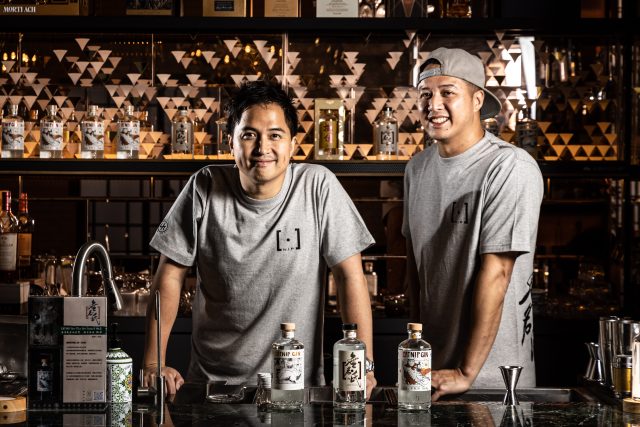
As gin consumption continues to slump around the world, four producers in Hong Kong explain what drives them to keep distilling in one of Asia’s most expensive cities. Joyce Yip reports.
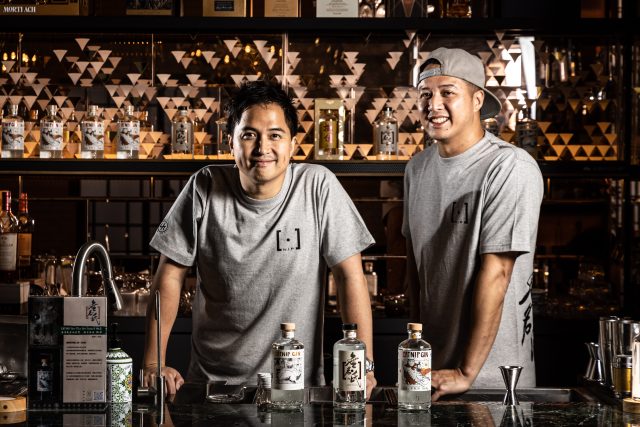
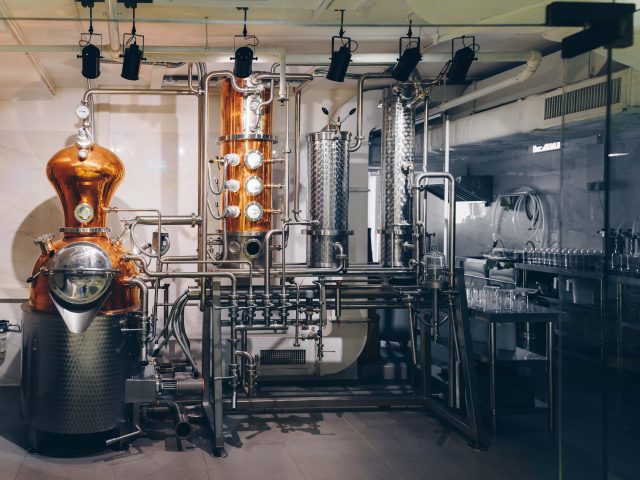
Tucked in a commercial neighbourhood in Hong Kong – one of the most expensive cities in Asia – is N.I.P craft gin’s distillery.
Measuring 2,600sqft, the site demands “around HKD mid-five figures” in rent a month (approximately mid-thousands in GBP), says co-founder Jeremy Li. 2026 rings in its sixth anniversary.
Aside from high rent, N.I.P pays 100% alcohol duties; and while it’s since pocketed a handful of awards and its founding story as a homegrown brand saw resounding success in its home city, Li admits that establishing the same resonance for overseas markets has been a challenge.
“There’s no advantage whether in manpower, rent or tax when it comes to making a gin in Hong Kong; our idea is that if we can do this here, we might be able to survive elsewhere,” says Li. Neither he nor his partner have a background in spirit making.
Why Hong Kong?
Li, who was a brand consultant, is not alone.
Hoping to hop onto the “Ginaissance” train in the 2010s – when gin saw double-digit growth of 35% between 2015 and 2019 – a handful of gin lovers in Hong Kong started making their own, both in the land-strapped city and beyond and with limited experience in distillation. So now faced with a global decline in overall alcohol sales and mere single-digit growth in gin, what is their fuel to keep going?
Nelson Siu launched his Hanabi Gin in 2021 to celebrate the 10th anniversary of his magazine, Wine Luxe, where he is CEO and editor-in-chief. His three editions – each with a production run of 400 – were made in partnership with local Hong Kong distilleries, including N.I.P, and in a distillery in California.
He claims the gold flakes within the liquid and the cat illustrations on the label attract collectors and those looking for a gift; while flavours like marshmallow and Sakura draw in novice drinkers who’d otherwise be intimidated by technical jargon.
“I make gin because I genuinely enjoy the drink; it’s one that I can sip any time in the day,” says Siu.
Looking global
Zachery Chan, co-founder of alcohol merchant HK Liquor Store, debuted his Chill Gin in 2024 to offset slumped retail sales. Available in two flavours that cater to a market demand for premium floral gins, Chill Gin is distributed in Hong Kong, Macau, Singapore and eventually the EU, where its distillery is located.
Unlike N.I.P, Chan isn’t interested in the “made-in-Hong Kong” label but is focused on international brand building so he can eventually “sell the brand to someone else and start another one,” says Chan.
Also looking to a global market is Kit Cheung, seasoned mixologist and co-founder of 2018-born Perfume Trees gin and, as of November 2025, Yuki no Mado, made in his new distillery in Hokkaido, Japan. The former is a top-shelf gin showcased in the bars of JW Marriott Grosvenor House London and The Chancery Rosewood, to name but a few; whereas the latter – which translates to “Snow Beyond the Window” depicting the scenery outside its Japanese distillery – is a simpler, commercial gin designed for everyday drinking and bartending.
Sparking curiosity
While Perfume Trees started with a strong “Hong Kong-made” branding, boasting ingredients like magnolia flower, aged tangerine peel, Chinese angelica and more, Cheung has since shifted the spotlight to its quality and distinct flavours in his storytelling in the West.
“For non-Hong Kongers, our city is but a dot on the map. Sentiments don’t mean much on the global stage: so rather than touting magnolia flower as a Hong Kong ingredient, I want to spark curiosity as to what it tastes like in a gin,” he says, adding that both brands will be limited to one flavour profile for easier marketing.
“Perfume Trees started because we wanted to make a gin that can stand out in, say, a negroni; now, we make gins so our footprint can be seen around the world.”
Related news
‘Just getting started’: How Carlsberg Hong Kong is leading Asia’s alcohol-free market
How Hong Kong brewers are reimagining Bavarian beer
MyiCellar: ‘Lemsecco Spritz is exactly the kind of drink Hong Kong wants next’

