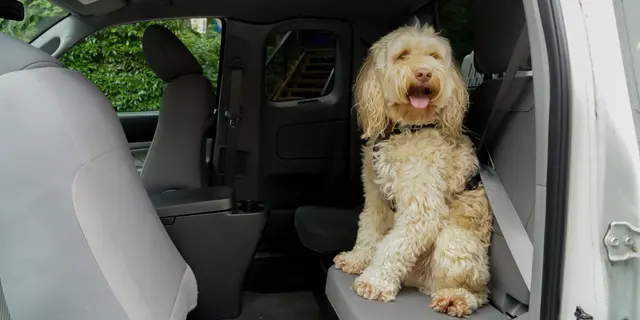
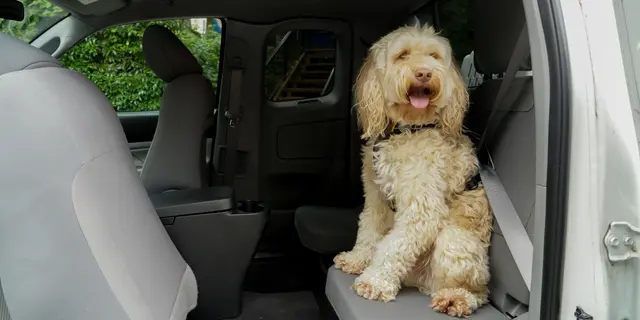
A new survey of British Columbians reveals that while travelling with pets is common, many drivers are putting themselves, their passengers, and their animals at risk by not properly securing their pets in vehicles.
According to an ICBC survey, more than half (57%) of B.C. drivers say they’ve travelled with a pet in the past year. Among those who do, only about one-third (36%) say they always secure their pet, while nearly two-thirds (64%) say they do not always use restraints.
Notably, among drivers who drive with a pet in their vehicle, 12% say their pet rides on a passenger’s lap, while 2% even say their pet sometimes sits on the driver’s lap while driving.
Among drivers who don’t always secure their pets, the most common reasons include:
-
“Trips are usually short” (39%)
-
“Pet is calm or well-trained” (36%)
-
“Pet doesn’t like restraints” (22%)
-
“Haven’t really thought about it” (21%)
-
Others say they don’t believe it’s necessary (18%) or want their pet to be able to stick its head out the window (14%).
The survey also found that among drivers who don’t always secure their pets, approximately one-third (34%) think it is not dangerous to drive with an unrestrained pet.
“For many of us, pets are part of the family, and we want them with us wherever we go,” said Kathleen Nadalin, ICBC road safety manager. “But an unrestrained pet can be a serious distraction and a safety risk in a crash. Taking a few simple steps to secure your pet properly can help protect everyone in the vehicle.”
On the bright side, among drivers who travel with pets, the most reported methods of securing them are secured crates or carriers (33%) and harnesses or seatbelt attachments (16%).
The survey also highlights concerns about pets left in parked vehicles. 57% of British Columbians surveyed say they have seen a pet left unattended in a vehicle in the past year. Additionally, 24% of drivers who travel with pets admit to having left their pet alone in a vehicle in the past year, saying it was only for a short time (77%), temperatures were believed to be safe (70%), and the windows were left open (66%) as the most common reasons.
“Securing your pet while travelling is the first step but taking them with you when you leave your car is just as important,” said Kim Monteith, BC SPCA manager of animal welfare. “We continue to see animals suffer needlessly when they’re left in parked vehicles—even for a few minutes. Temperatures can rise quickly, putting pets at risk of serious distress or death. Please secure your pet when driving and take your furry friend with you when you’re not. Leaving your pet at home is the kindest thing you can do when you can’t control the temperature.”
With the summer driving season in full swing, here are some tips to help keep you and your pet safe:
1. Always secure your pet. An unrestrained animal can become a dangerous projectile in a crash risking injury to themselves and others, and a major distraction for drivers. Use a properly fitted harness with a seatbelt attachment or a secured, hard-sided crate. Look for products that are crash-tested.
2. Keep pets in the back seat or cargo area. Never allow pets to sit on your lap or in the front seat. Airbag deployment can seriously injure animals, and a pet in the driver’s space increases the risk of a collision.
3. Plan ahead to reduce distractions. Bring water, food, and comfort items to keep pets calm during travel. For longer trips, plan regular breaks so both drivers and pets can rest.
4. Keep heads—and paws—inside the vehicle. Letting pets stick their heads out the window can lead to eye injuries or debris strikes. Open windows can also increase the risk of pets falling or jumping out.
5. Transport pets safely in trucks. It’s illegal and unsafe to have an unsecured animal in the back of a pickup truck. If you must transport a pet this way, use a properly secured crate positioned in the centre of the truck bed.
6. Never leave a pet unattended in a vehicle. Temperatures inside a parked car can rise rapidly, even on mild days. Cracked windows or shade do not prevent dangerous heat buildup. If you can’t bring your pet with you, leave them at home.
Visit the BC SPCA’s website or icbc.com for more safety tips.
*Survey conducted by ICBC from May 25 to May 27 among a representative sample of 800 online adult British Columbians who are members of the Angus Reid Forum. Of the 800 respondents, 404 had driven with a pet in their vehicle and qualified to answer the full pet safety portion of the survey. The survey was conducted in English. For comparison purposes only, a probability sample of this size would carry a margin of error of +/-3.46 percentage points, 19 times out of 20.