At least seven major coffee and roasting companies are joining forces with space company Airbus to launch what they describe as a comprehensive, openly accessible map of global coffee production.
The project, called the Coffee Canopy Partnership, comes as the deadline for the European deforestation-free supply chain law (EUDR), heads toward enforcement for large companies on Dec. 30, 2026.
The law is designed to keep products derived from seven covered commodities, including coffee, off the EU market unless companies can show they were not produced on land deforested after Dec. 31, 2020.
The partnership is being led by JDE Peet’s — now part of Keurig Dr Pepper — with participation from Louis Dreyfus Company, Sucden, Neumann Kaffee Gruppe, Touton, Sucafina and Tchibo. According to an announcement today, it is aimed at identifying coffee-related deforestation risk while also reducing the chances that shade-grown or agroforestry coffee farms are wrongly flagged as forest under EUDR.
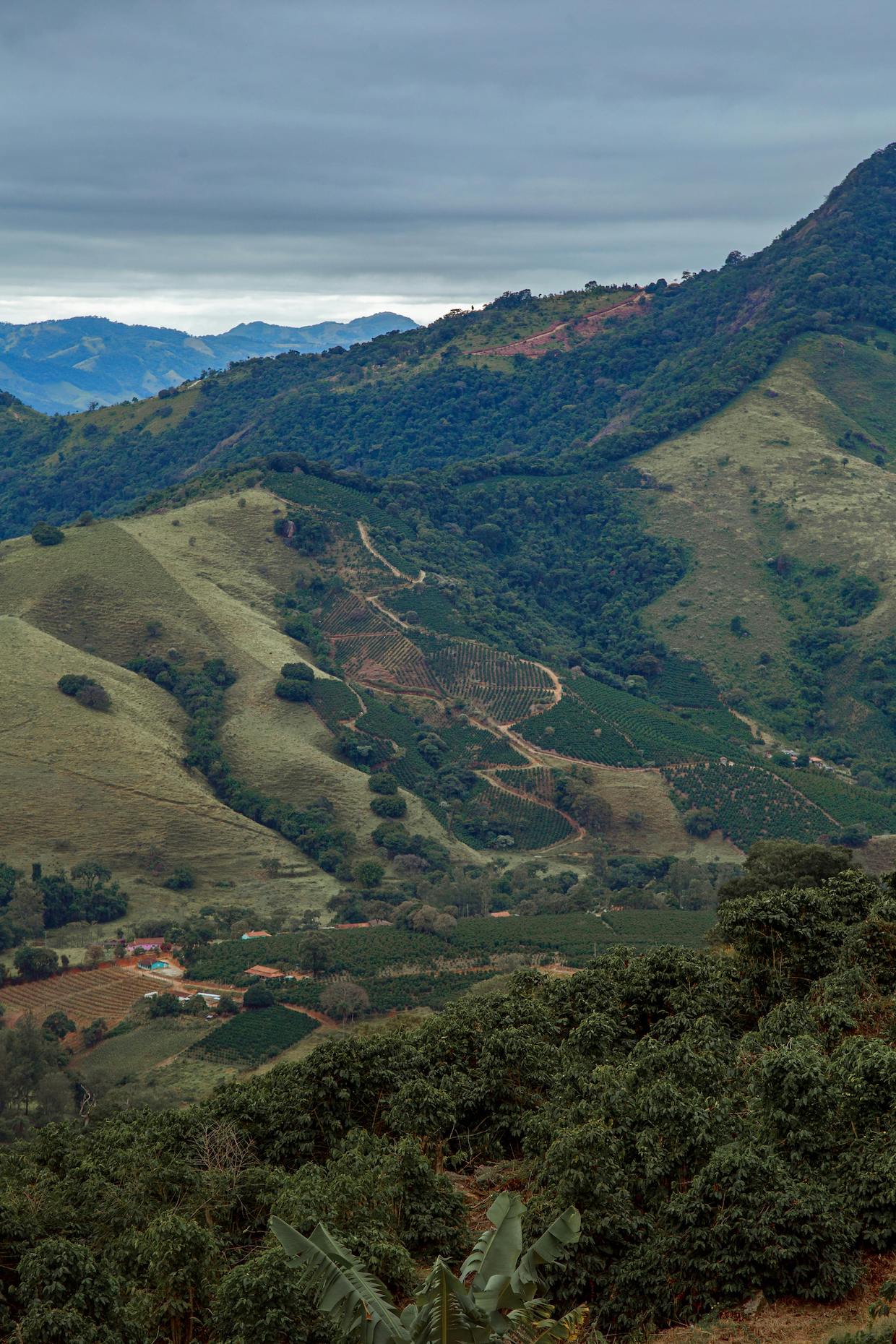
The project’s first phase in East Africa — covering about 1.2 million square kilometers of coffee lands in Ethiopia, Tanzania, Kenya, Uganda, Burundi and Rwanda — is backed by the UK Foreign, Commonwealth & Development Office and endorsed by the U.N. Food and Agriculture Organization (FAO).
“The Partnership is designed to move beyond fragmented, company-led deforestation initiatives by fostering collaboration at a landscape scale – supporting efforts to map and safeguard coffee-growing regions, not just individual supply chains,” JDE Peet’s VP of Engagement Laurent Sagarra said in today’s announcement.
The initiative uses Airbus’s Pléiades and Pléiades Neo satellite imagery at up to 30-centimeter resolution, combined with AI analysis and on-the-ground verification, to produce two core datasets. The first is a 2020-2021 baseline map, designed to match the cutoff date of new deforestation under EUDR. The second is a 2024-2025 updated map to identify where forest change has occurred since 2020.
The announcement repeatedly emphasizes the stakes for smallholder farmers, who many researchers and development groups have said face market-exclusion risks due to a lack of financial or technical capacity for EUDR compliance. It also echoes a broader concern that shade-grown and agroforestry coffee farms can be misclassified as forest, further complicating smallholder compliance.
“The Coffee Canopy Project will give the coffee industry something it has been sorely lacking: a single source of truth on where deforestation risk is real,” Justin Archer, head of sustainability at Sucafina, said in the announcement. “It is also a rare example of the kind of pre-competitive collaboration coffee sustainability needs more of — pooling knowledge so we can stop duplicating efforts and direct collective resources where they matter most for farmers and the long-term integrity of the supply chain.”
Comments? Questions? News to share? Contact DCN’s editors here. For all the latest coffee industry news, subscribe to the DCN newsletter.
Nick Brown
Nick Brown is the editor of Daily Coffee News by Roast Magazine.