By 2026 Maine Policy Institute Public Policy Intern Andrew Cook
Maine’s new statewide ban on student use of cellphones in school is based on reasonable concerns: Cell phones and other electronic devices can be distracting in class, and teachers should not have to compete with group chats, games, or social media while trying to teach. Schools should be allowed to keep phones out of classrooms, and local school boards should be allowed to adopt rules when their communities want them.
But Maine’s new “bell-to-bell” mandate goes well beyond the common-sense goal of keeping students focused.
Beginning August 1, every public school in Maine must adopt a policy prohibiting students from using cell phones, smartwatches, and other personal electronic devices with internet or cellular capabilities from the start of the school day until dismissal. The law is not limited to classroom instruction; it applies during time between classes, lunch, study halls, and other moments when students are not being taught, or when a cell phone is not guaranteed to distract others from learning.
The law does contain necessary exceptions for students with individualized education programs (IEPs), Section 504 accommodations, individualized health plans, and translation needs. Schools may also authorize additional exceptions in emergencies. But for ordinary students, the state has decided that a phone cannot be used at any time during the school day.
Maine Should Trust Local Schools

Maine has a long tradition of local decision-making. Before this mandate, public school districts decided their own cell phone policies. Some school districts chose strict phone restrictions. Others allowed students to use phones during lunch or between classes.
The state has now taken away that central policy decision. Local boards can still decide how to store phones, how to discipline violations, and how to write the details of their policies. But the core question of whether a full bell-to-bell ban is right for a particular community has been stripped from local control.
Statewide policies might make sense when students’ basic rights or safety are at stake. But the difference between allowing a student to check a phone during lunch and requiring that phone to stay locked away is not a question that needs a one-size-fits-all answer from the Maine state government.
Results Will Take Time

It is hard to tell what results the cell phone ban will actually produce. So far, national studies have not shown that school cell phone bans improve standardized test scores or attendance. The National Bureau of Economic Research published a study that demonstrates the effects of cell phone bans in school, stating that, “For academic achievement, average effects on test scores are consistently close to zero. High schools see modest positive effects, particularly in math, while middle schools see small negative effects. We find little evidence of effects on school attendance, self-reported classroom attention, or perceived online bullying.” That’s not to say a cell phone ban cannot eventually lead to better scores or student performance; after all, cell phone ban policies are still recent. It could take a full cycle of students who have never used phones in school to see large-scale improvements in test scores. Right now, it’s too early to tell.
However, prior to the statewide cell phone ban, Bangor Public School District had a classroom ban on cell phones requiring students to lock up their phones before class. Educators from Bangor said they have seen increased engagement in class and better performance among students. While some anecdotal evidence provided that classroom bans are improving performance, it is unclear if a “bell-to-bell” ban is any more effective than a classroom cell phone ban.
The Enforcement Problem Will Be Greater Than Supporters Admit
Supporters describe this policy as a way to let teachers teach rather than police phones. That goal is understandable. But a bell-to-bell ban may move the policing from classrooms to hallways, cafeterias, offices, disciplinary meetings, and eventually the restrooms.
Faculty will have to collect phones, store them, and return them. They will also have to decide what happens when a student claims they need access to their phone to call their parents after a device is confiscated. Finally, they will have to deal with arguments over whether a smartwatch counts, whether a device was in use, or whether a particular situation qualifies as an emergency.
Strict rules that students broadly dislike will also invite incessant boundary testing. Hundreds of students walking the halls with their phones will raise the question of how a school enforces a policy, or whether it becomes selectively enforced.
Inevitably, when class gets out, hundreds of students will take to the hall to walk to their next class. How will schools enforce a phone ban while students are walking in herds? Will teachers be forced to pick up the slack?
Students Should Not Lose Freedom When the Bell Rings
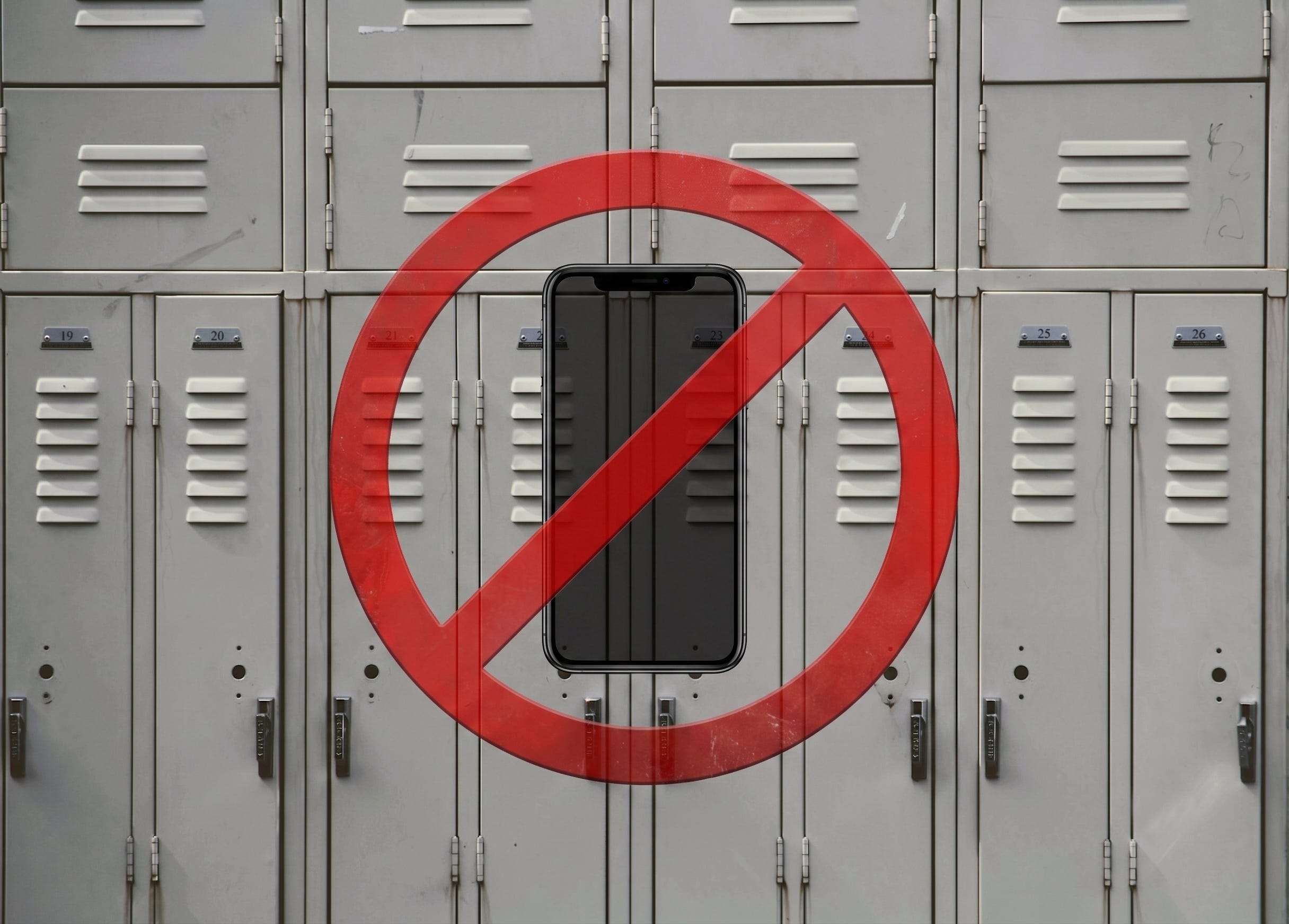
Students should retain a reasonable amount of personal freedom during non-instructional parts of the school day.
There is an obvious difference between scrolling social media during math class and checking a phone during lunch. Putting a blanket ban on all cell phone use during the day greatly hinders personal freedom. Students use their phones to coordinate rides, communicate changes in work schedules, check in with family, respond to parents, talk with siblings, and handle normal parts of modern life. A student whose parent needs to communicate about a doctor’s appointment, a late pickup, a family emergency, or a change in plans should not have to rely on a school office as the only point of contact.
This is especially hard to justify for older students. A high school senior may have a job, a car, younger siblings, family obligations, or a parent who depends on them for communication. These students are close to becoming adults, if not already adults. Schools should help those students become responsible, not teach that life’s problems are solved by blanket prohibitions by the government. In reality, such prohibitions create more problems than they solve.
Better Policy is Available
Maine does not need to choose between unlimited phone use and an all-day statewide ban. The better approach would be simple: let local districts decide, or limit the prohibition to personal phone use during direct instruction.
A district that wants a full bell-to-bell policy should be able to adopt one. A district that wants phones away in class but available during lunch should be able to make that choice as well. Voters and student representatives to the school board can hold their own school board members accountable district by district if they believe the policy is too strict or too loose.
Maine’s bell-to-bell ban may be well-intentioned, but good intentions don’t always make for good policy. The policy takes a legitimate concern about classroom distraction and turns it into an unnecessary statewide restriction on student freedom and local control.
Keeping phones out of classrooms is good and reasonable policy, but the state’s bell-to-bell ban is trademark government overreach. Limiting the ban to instruction time and ceding power to local control is a better, more measured approach. The state should adopt this policy instead.