
Analysis
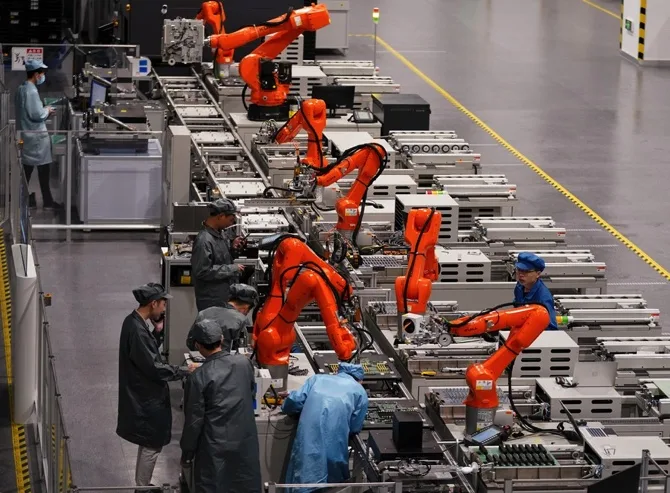
China’s industrial profits surged 15.5% in the first quarter of 2026, the strongest growth in nearly a decade despite Middle East-driven oil price spikes, according to national data. AI and high-tech sectors fueled the boom, highlighting the Greater Bay Area’s manufacturing strength even as consumer demand softened at home.
Price trends stabilizeIn the first quarter of 2026, consumer prices rose 0.9% year on year, up 0.4 percentage points from Q4 2025. Food, tobacco, alcohol and dining increased 0.5%, while clothing rose 1.8% and housing dipped 0.2%. Daily-use items increased 2.3%, while transport and communication fell 1.1%. Education, culture and recreation rose 1.0%. Food prices were mixed: pork dropped 11.3% and grains 0.3%, while fresh fruits rose 4.3% and vegetables 7.6%. Core CPI, excluding food and energy, increased 1.2%. In March, CPI rose 1.0% year on year but fell 0.7% month on month. |
The surge underscores the resilience of China’s manufacturing powerhouse, particularly in the Greater Bay Area, where clusters of electronics giants such as Huawei suppliers and Foxconn plants mirror national gains and cement the region’s 12% share of the nation’s gross domestic product.
National Bureau of Statistics (NBS) data showed profits for industrial firms – those with annual revenue of at least RMB 20 million – climbed 15.5% year on year in the January–March period. That marked the best quarterly performance since 2017, excluding the pandemic rebound in 2021, and outpaced revenue growth of 5%.
March alone delivered a 15.8% increase, accelerating from 15.2% in the first two months, when profits totaled RMB 1.025 trillion, according to the NBS.
Industrial value added for these enterprises rose 6.1%, contributing nearly 40% to overall GDP growth. The total value added of industrial enterprises above designated size also exceeded Q4 2025 by 1.1 percentage points.
Industrial production accelerates
Within the sector, manufacturing grew 6.4%. Utilities (electricity, heat, gas and water) increased 4.3%. Equipment manufacturing jumped 8.9%, while high-tech manufacturing surged 12.5%, outpacing overall industry by 2.8 and 6.4 percentage points, respectively.
Equipment manufacturing led profits, rising 21% and accounting for 33.7% of total industrial profits, up 1.7 percentage points from a year earlier. It contributed 6.8% to overall growth.
By ownership, value added rose across the board: state-owned enterprises (+4.8% year on year), shareholding enterprises (+6.6%), foreign-invested enterprises, including those from Hong Kong, Macau and Taiwan (+3.9%), and private enterprises (+6.1%).
The broader economy expanded 5% year on year in constant prices, reaching RMB 33.42 trillion. Quarter on quarter, GDP grew 1.3%. By sector, primary industry added RMB 1.2 trillion (+3.8% YoY), secondary industry RMB 11.6 trillion (+4.9% YoY), and tertiary industry RMB 20.6 trillion (+5.2% YoY).
AI and semiconductors drove the expansion. High-tech manufacturing profits rose 47.4%, contributing 7.9 percentage points. Optical fiber production surged 336.8%, optoelectronics 43%, and display devices 36.3%. Intelligent drones grew 53.8%, while smart consumer equipment rose 67.3%.
Product highlights included 3D printing devices (+54%), lithium-ion batteries (+40.8%), and industrial robots (+33.2%) year on year.
Green sectors also advanced. Environmental monitoring profits doubled, while lithium-ion battery profits rose 25%. Raw materials profits gained 77.9%, with non-ferrous metals up 116.7% on demand from aerospace, new energy and next-generation IT.
Accompanying the results, NBS statistician Yu Weining said authorities had stepped up macroeconomic support through more proactive policies to stabilize growth, helping the industrial sector recover steadily and improve corporate profitability.

The NBS cautioned that external uncertainties and domestic supply–demand imbalances persist. Policymakers, guided by Central Economic Work Conference principles, pledged further support for innovation, emerging industries and “AI plus” initiatives.
Yu added that efforts should continue to implement these guiding principles to promote both quality growth and stable expansion in the industrial economy.
In the Greater Bay Area, Shenzhen-listed Shannon Semiconductor (300475.SZ) reported a 79-fold surge in first-quarter net profit on strong electronics demand. The company’s attributable net profit reached RMB 1.33 billion in Q1 2026.
Agricultural output stable
In March, value added rose year on year in 30 of 41 major industries. In the first quarter, the value added of agriculture (crop farming) increased 3.7% year on year.
According to the national planting intention survey, the intended sown area for grain remained generally stable, with rice acreage holding steady.
Livestock output reached 26.62 million tons in Q1, up 4.8% year on year. Pork rose 4.2%, poultry gained 9.3%, while beef fell 1.4% and mutton declined 2.0%. Milk production grew 3.4%, while egg output fell 3.1%. By Nadia Shaw