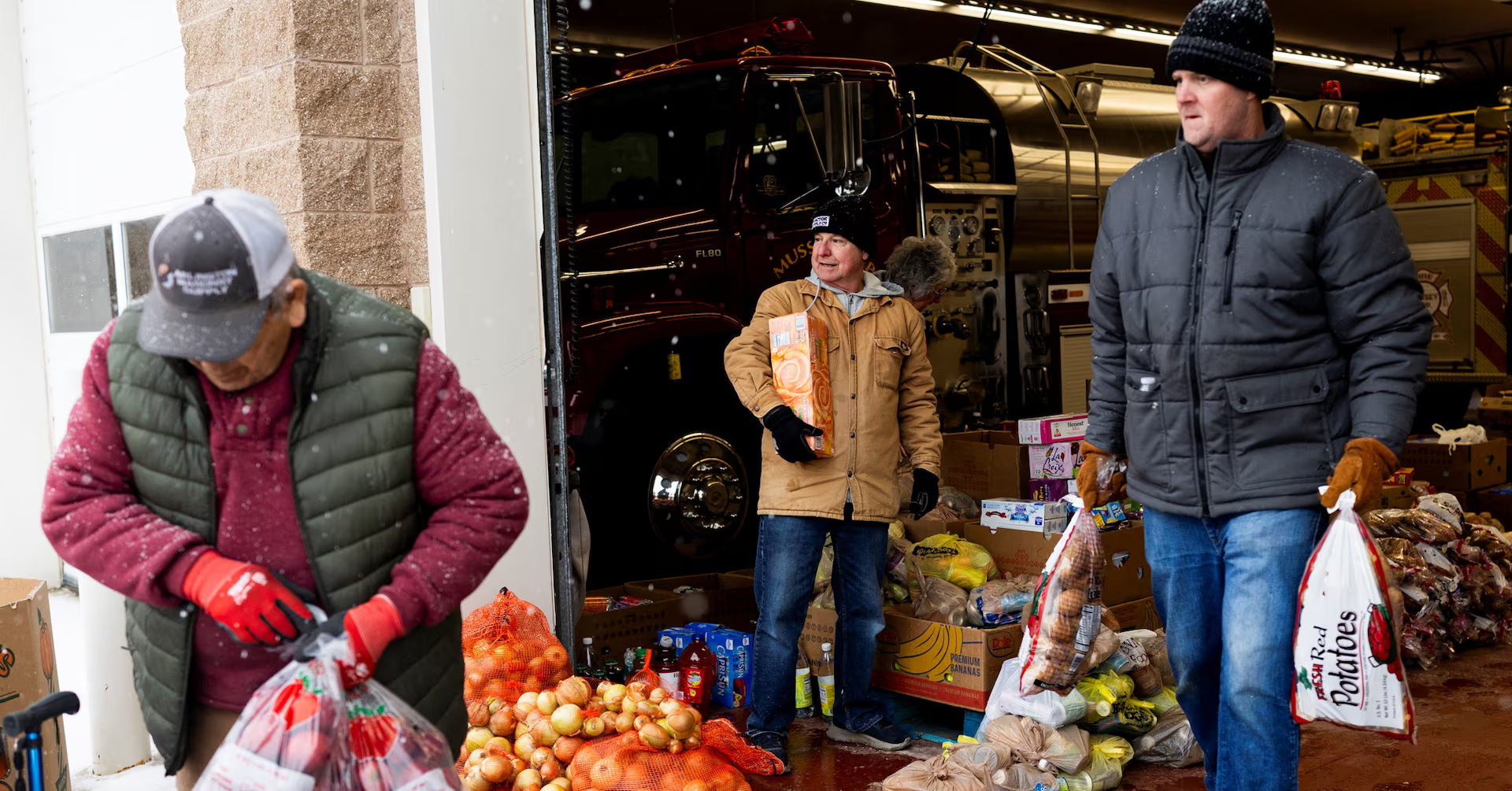
CAPAC, Michigan, Dec 21 (Reuters) – On a recent snowy morning in a Trump-loving part of rural Michigan, three dozen cars idled outside a firehouse-turned-food pantry. Inside, volunteers packaged lettuce, apples and other household staples that have surged or stayed high in price this year.
Sign up here.
While Ludwig blames the high cost of living on Democratic former President Joe Biden, the Republican-leaning independent said the party could lose her vote in next November’s congressional elections if Trump does not move faster to fulfill his 2024 campaign promise.
“I’m not just gonna follow along somebody like a sheep,” she said of her current backing of Trump. “I will follow you until I know it’s not OK to.”
Ludwig was among 19 Trump voters Reuters interviewed in Capac and other parts of St. Clair County, which has grown steadily more Republican in recent years, backing Trump by 66.5% of the vote in 2024.
REPUBLICANS STILL BLAME BIDEN FOR FINANCIAL HARDSHIP
St. Clair runs along Michigan’s eastern edge on the Canadian border, linking the blue-collar river city of Port Huron with a patchwork of farms and small towns connected by two-lane highways. The county’s population of 160,000 is predominantly white. Auto suppliers and other manufacturers anchor parts of the local economy, but limited access to high-paying jobs means many residents feel left behind economically.
Inflation has cooled this year in the Detroit metropolitan statistical area, which includes St. Clair County. In August — the latest month with available data — the region’s all-items price index rose just 0.7% annually, according to the Bureau of Labor Statistics, as an 8.3% drop in gasoline prices offset a 9.4% surge in fruit and vegetable costs.

Four told Reuters that if inflation and other economic conditions did not improve by next November, they could see themselves giving Democrats a serious look. A dozen said they would still vote Republican, and three said they were unsure or did not share their voting plans.
Bob Benjamin, a retired auto worker, said he came to the food pantry to pick up groceries for his adult grandchildren, who are struggling to keep up with the cost of food, rent, healthcare and car insurance. While he voted for Trump in 2024, Benjamin said he would consider voting Democrat next year depending on economic conditions.
“I would probably vote the way the conditions are going. If he’s doing good, if you can see it coming out of a hole, then I give it two more years,” he said. “But if it’s starting to go back down again, well maybe we need a little change.”
White House spokesman Kush Desai said the administration was working hard to address the “generational economic crisis” caused by Biden, who he accused of dismissing or ignoring inflation. “The reality is that Democrats still have no actual solutions for everyday Americans,” Desai said in a statement.
DEMOCRATS LAUNCH ‘PRICE HIKE MIKE’ CAMPAIGN
Still, most of the 19 interviewees were unaware of Trump’s comments on affordability, although only a few agreed with his assertion that the economy is booming and inflation is under control.
“I think he’s doing an amazing job as far as the economy goes,” said Kerry Ange, a county commissioner in St. Clair.
Darryl Kalich, an out-of-work field service technician whose red truck displays a Semper Fi sticker honoring his military service as a Marine, said he regretted his vote for Trump last year. Kalich said he was upset by Trump’s focus on foreign policy, citing the president’s threats against Venezuela and recent bailout of Argentina.
Kalich, who says leaders of both parties are equally detached from the problems facing everyday Americans, is unsure how he will vote.
Michigan Democrats are already working to tie Republican Senate candidate Mike Rogers squarely to Trump on inflation, branding him “Price Hike Mike” in press releases and across social media.
Mallory McMorrow, who is running in a four-way Democratic primary to replace retiring Senator Gary Peters, said that if she wins the party’s nomination she will make criticism of Rogers on high prices a focal point of her campaign.
“The opportunity in the general (election) is to, frankly, pair Mike Rogers with Donald Trump: wealthy guys who don’t know what groceries are, who don’t understand the real challenges that people face in cost of living,” she told Reuters.
Rogers, who has reported assets between $6.7 million and $13.5 million, rejected this criticism in an interview, saying his working-class background attuned him to the needs of everyday Michiganders.
He predicted Trump’s tariffs would bring back high-paying manufacturing jobs and boost wages above the rate of inflation.
INTENSE POLITICAL TRIBALISM SPLITS VIEWS ON TRUMP POLICIES
Approval on cost of living was significantly lower among Democrats, at 5%, and stood at 16% among independents, a crucial group for both parties in competitive races.
The stark divide reflects political tribalism: an in-group loyalty long present in U.S. politics but which has intensified in the age of Trump.
“You don’t want to believe that your party, which you value and which is important to you, is doing the wrong thing,” said Christopher Federico, a professor of political science and psychology at the University of Minnesota.
In Port Huron, freighters move steadily along the St. Clair River, highlighting the area’s industrial and economic significance, even as downtown retailers lament a drop in business from Canadian tourists who are staying away amid trade tensions and Trump’s threat to make their country the 51st state.

“We didn’t get here overnight, and so we just have to have some grace,” Buterakos said. “He’s been in office for a minute now, I would really like to see him speed it up.”
reporting by Nathan Layne and Aleksandra Michalska in Michigan; additional reporting by Dan Burns in New York and Jason Lange in Washington; editing by Ross Colvin and Claudia Parsons
Our Standards: The Thomson Reuters Trust Principles.