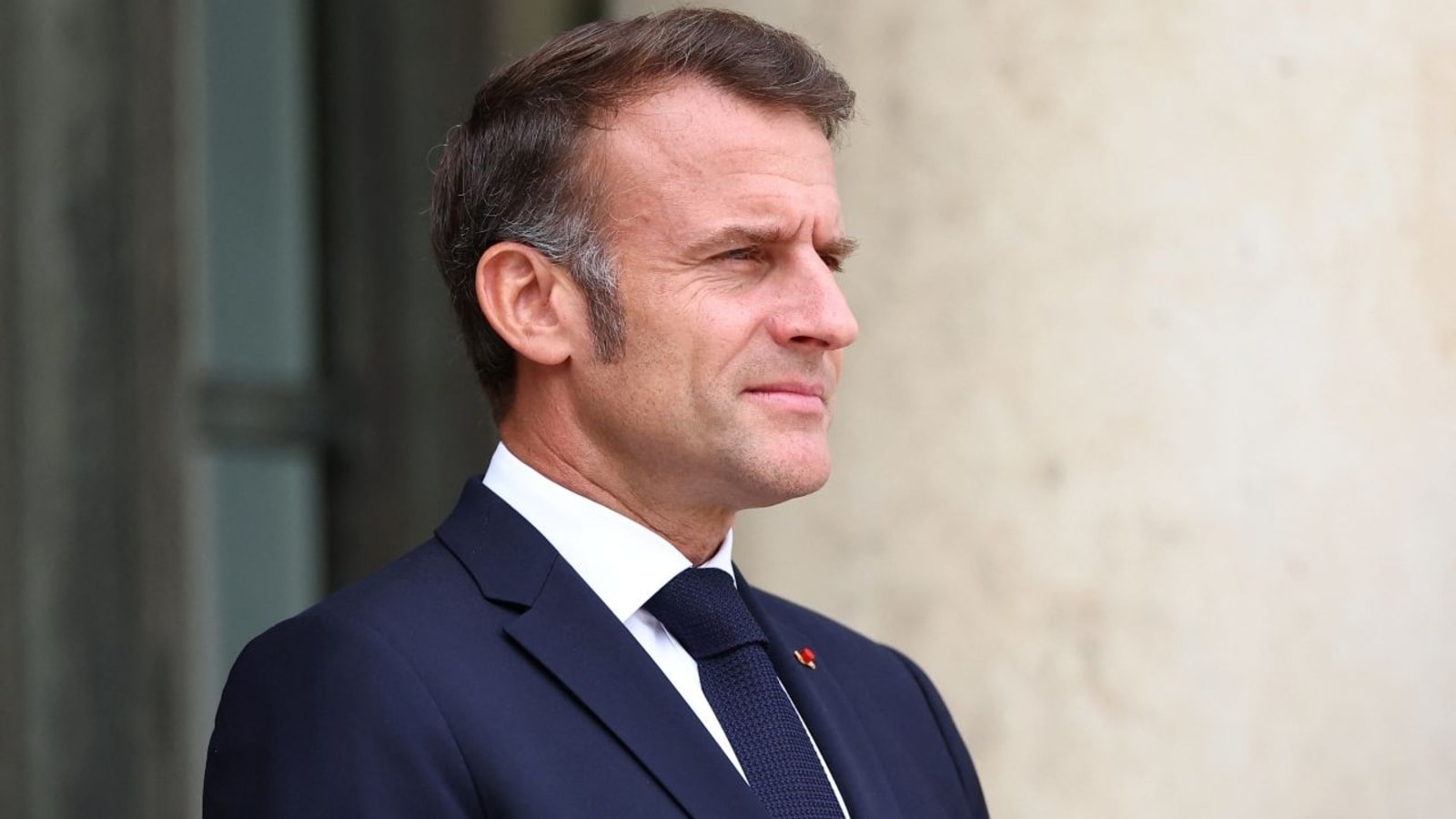
PARIS—French President Emmanuel Macron’s decision to recognize a Palestinian state has sparked a backlash from the Israeli government, galvanizing hard-liners and drawing an accusation from Prime Minister Benjamin Netanyahu that he is stirring up antisemitism.
Macron’s decision shook up the status quo among Western powers, which for decades dangled recognition as a means to bring Israel and the Palestinians to the negotiating table for a two-state solution. Australia and Canada have said they are ready to follow in France’s footsteps, while the U.K. has said it would do so if Israel doesn’t agree to a cease-fire in Gaza.
Israeli hard-liners quickly hit back. The government on Wednesday approved a controversial new settlement that could effectively divide the West Bank in half. Far-right Finance Minister Bezalel Smotrich cast the decision as a response to the moves by France and other Western powers to recognize Palestinian statehood.
“Every settlement, every neighborhood, every housing unit is another nail in the coffin of this dangerous idea,” Smotrich said.
Netanyahu said recognition would reward Hamas for the attack of Oct. 7, 2023. He accused the Australian prime minister last week of betraying Israel. His strongest words, however, were directed at Macron, saying his position encouraged antisemitic violence in France.
“Your call for a Palestinian state pours fuel on this antisemitic fire,” Netanyahu said in a letter to Macron. “It is not diplomacy, it is appeasement.”
Macron’s office responded that the accusation was “abject.”
Israeli Finance Minister Bezalel Smotrich displays a map near a settlement in the occupied West Bank.
The fight sparked by recognition is a watershed moment in relations between Israel and France, which is home to one of the world’s biggest Jewish communities and has long been a key ally of Israel. France’s relations with Israel and Jewish groups across the West are deteriorating. Israeli media report that the government is considering closing the French consulate in Jerusalem. A spokesman for Netanyahu didn’t respond to a request for comment.
The Anti-Defamation League, the American Jewish Committee and other groups in the U.S. refused to meet with the French foreign minister, who sought to explain Macron’s decision.
Macron and Western leaders say recognition of a state governed by the Palestinian Authority will isolate Hamas and pressure it to disarm. They are counting on a new pledge from Arab nations, made at a peace conference last month held by France and Saudi Arabia, to oppose any role for the militant group in a new state. Those nations include Qatar, which long hosted Hamas’s leadership.
“We must guarantee the disarmament of Hamas, secure and reconstruct Gaza,” Macron said. “Finally, we must establish the state of Palestine.”
The Israeli settlement of Shilo in the occupied West Bank.
Macron’s government has taken a hard line against those who profess support for Hamas or the Oct. 7 attack, but authorities have struggled to tamp down a surge in antisemitic incidents over the past two years. On Thursday, authorities detained the manager of an amusement park in the south of France who denied entrance to 150 students visiting from Israel. Prosecutors this weekend charged him with discrimination based on national origin.
Such incidents combined with growing distrust of Macron are spurring many French Jews to consider leaving the country, said Anthony Reisberg, an attorney with the advocacy group French Jewish Youth.
“There’s not a single Jewish French person around me who isn’t wondering where to go in the next few years,” he said.
The clash over Palestinian statehood has created a dilemma for many in the community, pitting their president against the leader of a nation that they regard as a homeland and safe haven from rising antisemitism.
“French Jews are in a very, very uncomfortable situation. They feel that they’re being squeezed between their very strong two identities,” said Simone Rodan-Benzaquen, the Paris-based managing director of American Jewish Committee Europe.
France was one of the earliest suppliers of weapons to Israel after its establishment in 1948. In a top-secret agreement, France helped build the Israeli nuclear reactor at Dimona, now believed to be the main site of Israel’s undeclared nuclear-weapons program.
The Dimona nuclear plant in Israel’s Negev Desert.
But in the years after the Oct. 7 attack, Macron sought to rein in Israel’s military because of the growing humanitarian crisis in Gaza. France angered the Israeli government by deciding to restrict the weapons that Israeli arms manufacturers could display at a major trade show outside Paris. Then in October 2024, Macron said governments should halt arms exports to Israel, drawing a rebuke from Netanyahu.
“I spoke with President Macron and I was extremely disappointed,” Netanyahu said on French television. “He supported us at the beginning of the war, but little by little, I saw that he was changing his position and taking positions against our common interests, the interests of free societies.”
Given the Israeli government’s staunch opposition, many are skeptical that Macron’s diplomacy will yield anything concrete for the Palestinian cause beyond the symbolism of statehood.
The French leader is betting that recognition will bolster the Palestinian Authority, the governing body in the West Bank, mobilizing international support to help it reform and govern a viable state.
Western powers, however, have tried that for years, and the authority remains hamstrung by corruption and misgovernance, officials say. Israel accuses the authority of rewarding terrorism by paying a monthly stipend to families of people who spend time in Israeli jails.
Recognition could even reduce the incentive for reform, said Dennis Ross, a longtime U.S. Middle East negotiator.
“Palestinian statehood is an easy symbol,” Ross said. “It perpetuates for Palestinians what has unfortunately always been the case: that they’ll settle for symbolism over substance on the one hand, and yet at the same time they expect if they just hold out they’ll be granted a state and never have to take any of the steps that would be required to earn it.”
Write to Matthew Dalton at Matthew.Dalton@wsj.com and Stacy Meichtry at Stacy.Meichtry@wsj.com


