
Most people think of blockchain as just Bitcoin and such. In reality, it is a powerful technology for many purposes — and China is way ahead of the United States in adopting it.
That’s the topic of the late Wednesday afternoon session, November 19, at COSM 2025: China is Winning the Blockchain Derby: Can the United States Catch Up?
The speaker is Jinyoung Englund – Chief Strategy Officer for China and Emerging Tech at the US Department of Defense. Philosopher of technology George Gilder will offer a Response to her 4:15 talk.
For now, here’s a quick primer (or refresher) on blockchain and China:
How does blockchain differ from other digital tech?
From Investopedia:
Blockchain is a decentralized digital database or ledger that securely stores records across a network of computers in a way that is transparent, immutable, and resistant to tampering. Each “block” contains data, and the blocks are linked in a chronological “chain.”
Data entered in a blockchain cannot be altered without alerting/disrupting the entire network. Thus, accuracy and trust are thought to be needed only at the entry point, not throughout the system at all times. That’s why blockchain was favored for electronic currency.
How else can blockchain be used?
 Image Credit: touseef –
 It could smooth out global industry and trade. At Center for Strategic and International Studies (CSIS), Anoosh Kumar wrote last May,
… its value extends to any environment where multiple actors must coordinate across fragmented systems. Consider the journey of a smartphone component sourced in Taiwan, assembled in Vietnam, and shipped to the United States. It passes through numerous hands: component suppliers, assembly factories, shipping firms, customs agents, and distributors, each using disparate and often incompatible systems. Verifying delivery or processing payment can involve weeks of delays and disputes. By providing a trusted digital record visible in near real-time to all authorized parties, a shared blockchain could replace these disparate systems. As each step is completed and logged on to the shared ledger, verification can happen almost instantly, slashing transaction times from weeks to hours and cutting operational costs by up to 80%.
China’s Blockchain Playbook: Infrastructure, Influence, and the New Digital Order, May 5, 2025
And that’s where China’s interests start to come in.
Blockchain could give China world economic dominance
The top spot is currently held by the United States. But, as Kumar explains,
Blockchain offers a fundamentally new way to operate online: guaranteeing trust, exchanging value, and coordinating complex systems without relying on traditional central platforms. Yet while the West continues to debate how to regulate this technology, China is already strategically building with it. In 2019, President Xi Jinping delivered a speech urging the nation to “seize the opportunities” presented by the technology. He framed blockchain as crucial for the “next round of technological innovation and industrial transformation,” declaring China’s intent to become a global “rule-maker.” This positions blockchain as a key front in China’s broader quest to shape global technology governance…
What makes the BSN especially significant is not just the scale, but its stated ambition. Its leaders describe it as generational infrastructure. He Yifan, CEO of Red Date Technology, predicts that within decades, all information systems will rely on blockchain transmission. Tan Min, the project’s Secretary General, described the goal more explicitly: building an internet backbone where “China controls the right to internet access.” New Digital Order
That’s right. If China wins this one, the internet will no longer be a free country.
An internet strictly controlled by China
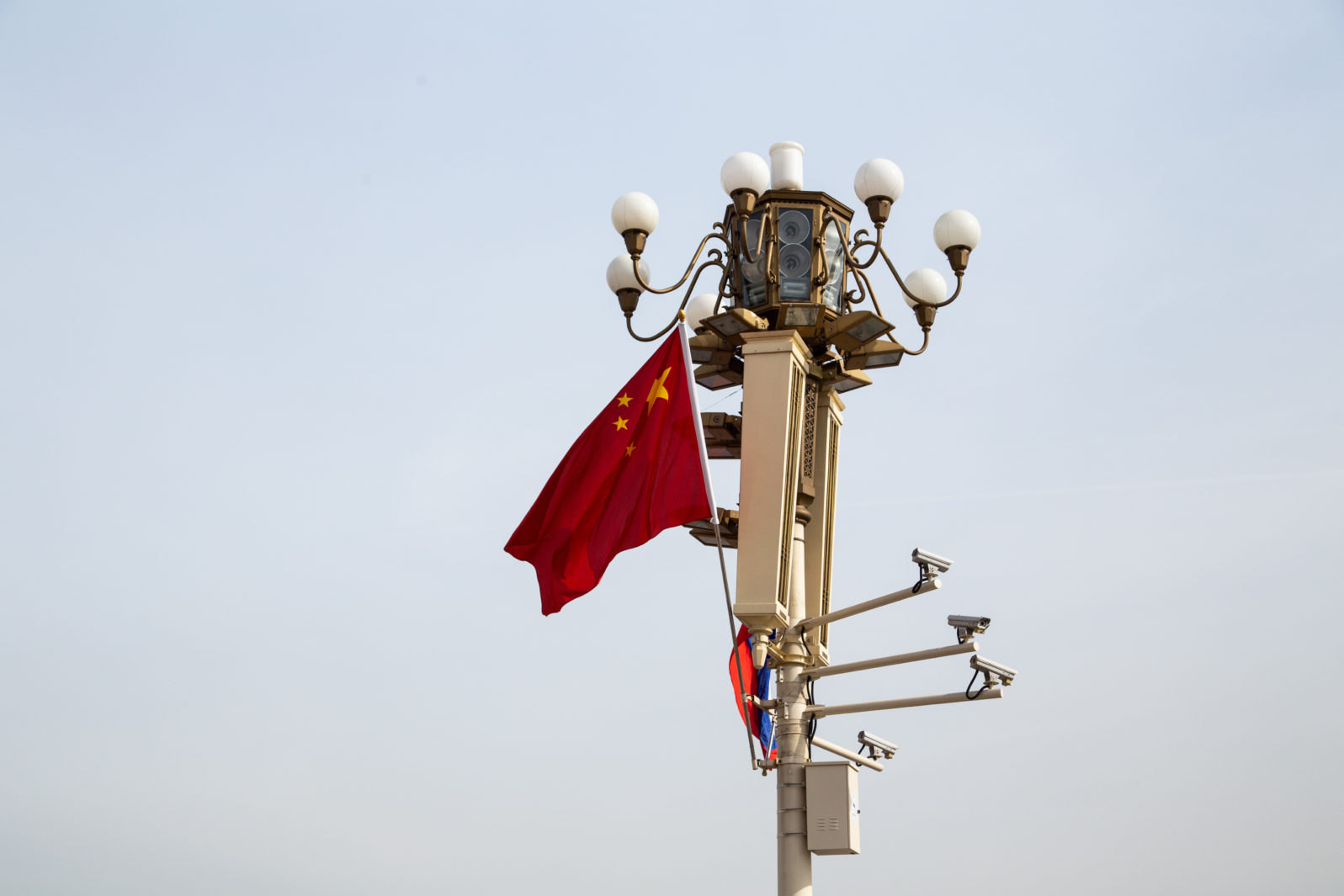 Image Credit: Peter Spicer –
 Kumar again:
Crucially, the BSN embodies China’s divergent approach from Western permissionless ideals like decentralization and anonymity. It exports “blockchain with Chinese characteristics,” a permissioned system with known validators and state-aligned governance that enforces strict controls. These include mandatory real-identity registration, adherence to state content and security standards, and technical powers for transaction rollback or shutdown. Such state-enabling features fundamentally contradict Western blockchain values like immutability and censorship-resistance, reflecting China’s strategy of harnessing the technology’s advantages while embedding centralized control. New Digital Order
But wait, you may ask: Didn’t China ban cryptocurrencies as of 2025? Yes. To reaffirm “its commitment to centralizing financial control and promoting the use of its state-backed digital currency, the yuan,” China has banned private ownership (Coinpedia). It’s all State Street now.
Nations can sign in but they can’t sign out
Kumar also notes that nations that rely on China’s communications technology will discover that the system is compatible only with that technology. That makes the goal of total surveillance easier. But, in fairness, many of China’s client states welcome that opportunity:
China actively promotes its model of internet governance, including censorship and surveillance capabilities, finding receptive audiences among many of its Belt and Road partners. Beijing has hosted training sessions on these systems for foreign officials from countries including Morocco, Egypt, and Libya, often followed by the adoption of repressive cybersecurity laws that mirror China’s. Adopting Chinese-built infrastructure like the BSN could subtly facilitate similar state control mechanisms over digital spaces. New Digital Order
China’s end goal, he says, is to operate “a powerful form of strategic influence independent of the dollar’s current global reign.” It can embed chokepoints in the system, where a free(r) market once reigned.
In his view, a counterstrategy is urgently needed.
If your business or non-profit would be affected by China’s control of the internet — and you would like some input into a counterstrategy — sign up here to interact with DoD Chief Strategy Officer Englund (Wednesday, November 19).
