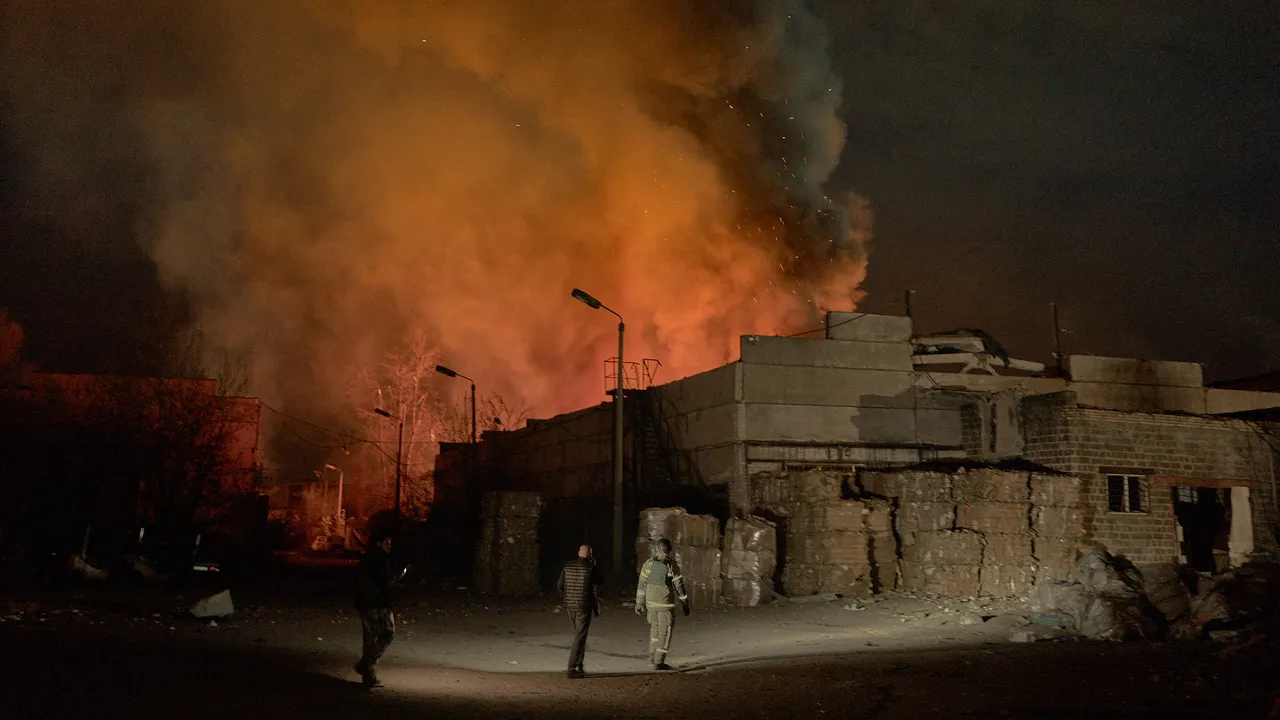
The spillovers from American wars have long triggered global instability. The first Gulf War, in 1991, doubled oil prices and sparked inflation. The wars in Iraq and Afghanistan also disrupted oil markets, added trillions of dollars to the U.S. national debt, and caused regional insecurity, including contributing to the rise of the Islamic State and other extremist networks. But none of these conflicts affected so many corners of the world as swiftly as the Iran war. Its impact is “the greatest threat to global energy security in history,” Fatih Birol, the head of the International Energy Agency (I.E.A.), said in a recent report. “Compared to these other wars, the world is way more interconnected than it was at that point,” De Croo said. “You have way more trade flows, and you have way more financial flows.” And, unlike some previous conflicts, there have been few effective measures to stabilize the global economy. When Russia’s invasion of Ukraine in 2022 hobbled wheat and fertilizer supply chains, global food prices soared, exacerbating hunger crises in fragile countries such as Somalia. But the U.N.-brokered Black Sea Grain Initiative opened a maritime humanitarian corridor to allow exports, and other nations increased their own production to steady food prices. “We easily found a solution to get the grain out of Ukraine,” De Croo told me. “Here, it’s not so much the food itself; it’s the ingredients to create the food. And, in Ukraine, you could solve the problem by getting the ships out.”
The war in Ukraine is increasingly connected to the Middle East conflict. Before the U.S. and Israel attacked Iran in February, the Kremlin was under heavy pressure. The Russian economy was in a recession, with around one-per-cent growth last year, down from 4.9 per cent in 2024, in part because of Western sanctions. Oil revenues were at their lowest since the start of the Ukraine war. Then Iran retaliated by attacking oil and energy facilities in the Gulf and shutting down the Strait of Hormuz, through which over a fifth of the world’s oil and liquefied natural gas flows. Oil prices skyrocketed. So, in March, the Trump Administration issued a waiver that lifted restrictions on the purchase of some sanctioned Russian oil for thirty days. On April 17th, it renewed the waiver. Two weeks ago, the I.E.A. reported that Russia’s oil revenues soared to nineteen billion dollars in March, from $9.7 billion in February. And the International Monetary Fund raised its forecast for Russia’s economic growth this year from 0.8 per cent to 1.1 per cent. “So the immediate economic benefit was lower supply stress,” Tatiana Mitrova, a global fellow at Columbia University’s Center on Global Energy Policy, said last week. “The strategic cost was giving Moscow more cash, resilience, and room to continue its war and foreign-policy agenda.”
As Russia benefits from the Trump Administration’s policies, its agenda now includes supporting Iran. Moscow has reportedly provided Tehran with intelligence and targeting information to attack U.S. military positions, warships, and aircraft. Russian President Vladimir Putin is also providing Iran with diplomatic backing in the U.N. Security Council. Moscow has been unable to defeat a much smaller Ukraine on the battlefield, and stretched itself so thin in the process that it has failed to protect allies such as the ousted Venezuelan dictator Nicolás Maduro and Syria’s Bashar al-Assad. By backing Iran, the Kremlin is trying to resurrect its geopolitical standing and show “that Russia is still a power to be reckoned with,” Hanna Notte, director of the Eurasia Nonproliferation Program at the James Martin Center for Nonproliferation Studies, in California, told me. “There’s a more diffused benefit for Russia from the Iran war,” she added, which is that the conflict “exposes a certain U.S. weakness, a certain U.S. impotence,” that the “U.S. military action is not going according to plan.” Russian propaganda, she said, is “tapping into this notion that the Trump Administration bit off more than it can chew with Iran,” a narrative that is “welcome from a Russian perspective.”
The Kremlin is also exploiting frictions between the United States and Europe over the latter’s reservations about the Iran war. Trump has denounced NATO allies for denying or limiting the use of their military bases in the U.S. campaign against Iran and for not sending warships to help open the Strait of Hormuz. He has accused them of turning their backs on the United States, declaring on Truth Social that “NATO WASN’T THERE WHEN WE NEEDED THEM, AND THEY WON’T BE THERE IF WE NEED THEM AGAIN.” Moscow has described the tensions as signs of a frail American-led international system and a weak Europe. And it has sought to sow more division. The Russian special Presidential envoy Kirill Dmitriev wrote in a post on X that “UK and EU warmongers are showing how deeply anti-Trump they really are. They tried to hide it for a long time, but now everyone can see it.” The Trump Administration has so far not called out Moscow for backing Iran. In fact, the U.S. Secretary of State, Marco Rubio, has said that Russia was not “impeding or affecting” U.S. operations in the Middle East.” European officials have publicly disagreed. “These wars are very much interlinked,” Kaja Kallas, the European Union’s foreign-affairs chief, said. “If America wants the war in the Middle East to stop, Iran to stop attacking them, they should also put the pressure on Russia, so they are not able to help them.”