
-
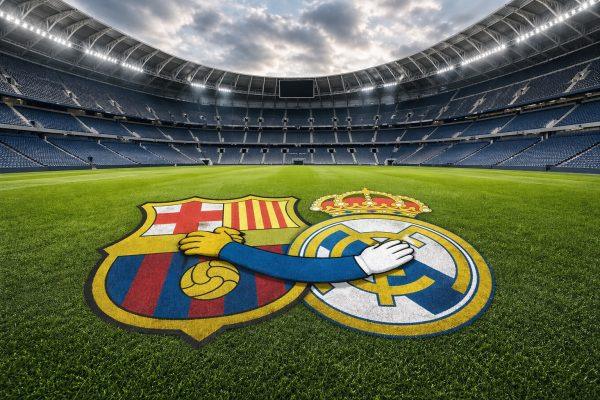
After their painful Champions League eliminations, both Spanish giants are licking their wounds and are forced to deeply rethink their sporting projects before the summer.
-
While Barcelona and Real Madrid focus on closing out the LaLiga season, both teams show structural cracks that demand immediate solutions for their respective squads.
-
The summer looms as a period of drastic changes, from the need for a solid center-back in Barcelona to the urgency in Madrid to define a new technical project following the possible departure of Arbeloa.
The European hangover leaves a desolate landscape for the two titans of Spanish football. Eliminated from the Champions League at a crucial stage, both Barcelona and Real Madrid must now look inward. Although the race for LaLiga resumes this week, the real championship will take place in the front offices over the coming months. Far from being rivals celebrating each other’s failure, today they act as mirrors of the same necessity: regenerating to compete for continental glory once again.
Barcelona’s dilemma: Between style and pragmatism
Hansi Flick’s team lives a paradox; they are a squad prodigious in developing young talent but extremely vulnerable against top European systems. Flick’s 4-2-3-1 system requires brilliant and constant high pressing, something that Robert Lewandowski, at nearly 38 years old, can no longer guarantee. The bet on the Polish striker seems to have reached a point of no return. If Barcelona wants to compete in Europe, they need a forward who combines goal-scoring ability with a physical defensive pressure that currently does not exist.
Loading video…
Loading Video
Furthermore, the Azulgrana urgency is defensive; the lack of a fast, aggressive, left-footed center-back is a historical deficiency that cost the team avoidable goals. To finance this reinforcement, the club must be brave. The departure of assets like Frenkie de Jong could be the key to balancing the books under strict Financial Fair Play rules and completing a squad that, while talented with Pedri and Yamal, remains incomplete for the highest level of competition.
Real Madrid: The challenge of an end-of-cycle
The crisis at the Santiago Bernabéu runs even deeper and is more complex. Beyond tactics, a feeling of an “end of an era” floods the corridors of the club. Madrid is going through an institutional decline marked by the lack of a clear sporting director and management that seems to have lost its aura of invulnerability. The departure of generational pillars like Kroos, Modric, and Nacho, added to the uncertainty regarding Arbeloa’s future on the bench, paints a scenario of total instability.
Real Madrid does not just need signings; they need a comprehensive vision. The tactical coexistence between Vinícius Júnior and Kylian Mbappé remains an unsolved puzzle and the squad shows clear signs of physical and mental exhaustion. The next summer must be an exercise in humility for the board, recognizing that reconstruction cannot rely solely on star names, but on a renewed sporting structure that, regardless of whether Pochettino or Mourinho arrives, brings a sense of coherence and discipline that has been noticeably absent this season.
The mirror of necessity
For Barcelona, relaxation poses a real danger. With a nine-point lead in LaLiga, it is easy to fall into complacency, believing the margin for error is greater than it actually is. However, the reality dictates that both need the other to be strong. The competitiveness that historically defines both clubs is what allows them to raise the bar.
This summer is not just about transfers; it is about existential decisions. If Barcelona and Real Madrid do not take advantage of this period to fix their structural deficiencies, the abyss separating them from the giants of the Premier League and the rest of Europe will continue to widen. The crisis is shared and redemption, inevitably, must begin at home.