“I’m hearing the government might delay the consultation,” read a message I received on Tuesday afternoon.
There was no question what consultation my friend was referring to. When Prime Minister Mark Carney announced a discussion paper on potential changes to the federal Impact Assessment Act in May, she and I had exchanged increasingly despairing messages as we read through the document, comparing notes on the bad, the worse, and the ugly of the proposed changes.
Like many in the environmental community, I first felt compelled to do the work I do out of a deep love for the natural world. Beyond the emotional connection many of us feel to birds, animals, plants, bodies of water, and ecosystems, we all rely on a healthy environment for our own well-being.
Governments implemented environmental protections in the first place to ensure that whoever you are, wherever you live, you have clean water, air that is good to breathe, and land that is safe from hazardous chemicals and waste. Left to their own devices, companies up to the 1960s and 70s were free to wreak havoc, creating horrific outcomes for both people and planet.
Though Canada’s environmental protection regime is far from perfect, companies and bad faith actors can no longer damage our ecosystems with as much impunity.
The government’s proposed changes would do away with many of those protections in the name of economic growth. They still might. But the fact is, thanks to swift and loud mobilization from thousands of people these past few weeks, on Thursday the government backed down on ramming through terrible legislation before the end of this Parliamentary session.
While the legislation is only delayed, not defeated, the government’s backpedalling is an enormous victory which deserves to be highlighted and celebrated.
Since arriving in office in March, 2025, PM Carney has seen very little organized resistance to his agenda. He has faced weakened opposition parties and avoided media scrutiny as much as possible. By many accounts, he governs his own caucus fairly despotically, going so far as refusing to respond to his own Liberal MPs raising concerns about the MOU with Alberta.
Nobody expected that Carney would listen to environmental and climate groups, or to Indigenous leadership, as everyone mobilized against the regulatory rollbacks. Yet thanks to organizing and relationship-building, we pulled off what even a few days ago would have been considered impossible.
Try as he might, Carney and his cabinet could not ignore the waves of concerned, betrayed, and angry people who spoke up against gutting Canada’s environmental protections.
Thousands of us took the time to send a strong, unified message to the government.
We organized and attended public town halls.
We picked up our pens and our phones to let our MPs know what we thought.
Op-ed after op-ed decried the potential changes.
Organizations hastily changed their lobby plans to advocate against the proposed rollbacks.
And academics worked with current and former parliamentarians to find creative ways to get their message across through formal channels.
Oftentimes, there is a somewhat artificial distinction between climate and nature organizations, not to mention Indigenous leadership. But these past few weeks have felt different.
It’s as if we’re seeing the forest for the trees, instead of picking each other apart based on minute strategic disagreements.
On Friday afternoon, I ran into an acquaintance from a conservation organization on Wellington Street, right in front of the Prime Minister’s office. Smiling, we exchanged congratulatory words about the good news—a respite from the past few weeks of devastating political blows. Where months ago the two of us didn’t know one another, today we are on the way to becoming friends due to our shared advocacy efforts.
These intangibles—friendships, camaraderie, relationships—are just as important to advancing a healthy environment as an understanding of the natural world and the technical solutions we need to protect it.
We can no longer afford to be divided. Those of us who feel very real pain when imagining the loss of a cherished species, be they animal or vegetal, or who bear concern for our neighbours and loved ones’ air, water, and soil quality, must band together and grow trust for one another.
I recently spoke to veteran Political journalist Paul Wells about his informative and highly entertaining account of Stephen Harper’s years in power, The Longer I’m Prime Minister. One of the elements I found most interesting in the book was that Wells, despite publishing the edition I read in 2013, correctly identified that Justin Trudeau would become a threat to Harper’s seemingly iron grip on power. Wells told me that following Harper’s defeat, former staff shared that though the former PM publicly refused to acknowledge it, as soon as Trudeau became leader he became singularly obsessed with him.
I don’t believe Carney is singularly obsessed with environmental NGOs or biologists. But it goes to show that you never really know what is going on in the room where it happens—and, sometimes, David does win against Goliath. Together, we must build the courage not to back down from what we know is right, even in the face of a seemingly enormous power imbalance.
Despite Carney flying high in public opinion (a Léger poll released this week shows his governing Liberals at more than 50% support across the country), he and the people around him understood that pushing through legislation which dismantles the very foundations of Canada’s environmental and nature protections might be too much of a political risk.
As the Liberals try to win back vacant seats in the fall’s byelections, they will need to demonstrate progress on issues people care about. This is proof for those of us who sometimes despair about the state of climate and environmental affairs in this country that there is still hope. We can do big things when we put our minds to it and stand together.
And there is so much yet to be done.
The fight is far from over: this particular consultation has only been extended to the middle of the summer, when many of us are taking much-needed vacations. If we hope to avoid these devastating rollbacks, we will need to continue pushing on all of our allies in and outside of government. If we win, things won’t end there: we will only have avoided terrible legislation, not implemented any net new policies that we and our environment desperately need.
But there’s every reason to hope that the relationships we’ve built on the way there will serve as the basis for generative policy conversations in the weeks and months ahead. If the past month is any guide, we will only unite and grow in power with one another, in solidarity with the natural world around us.
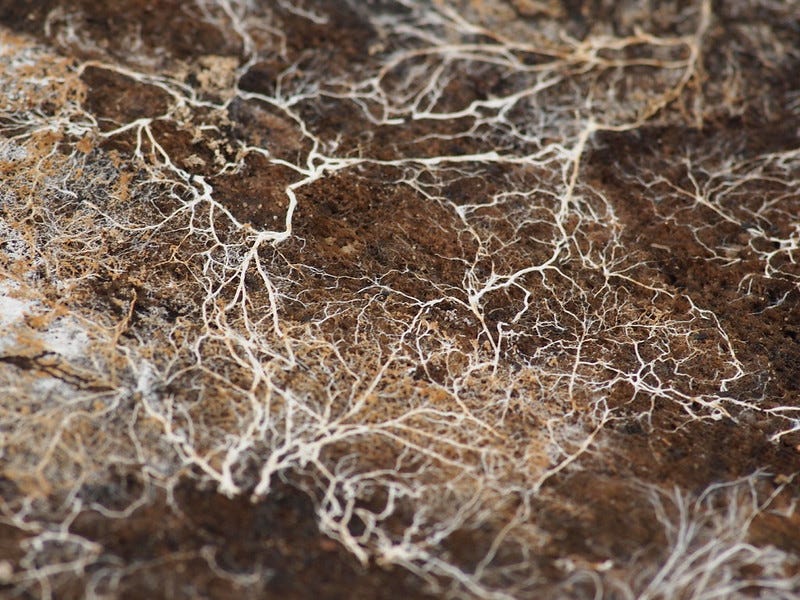
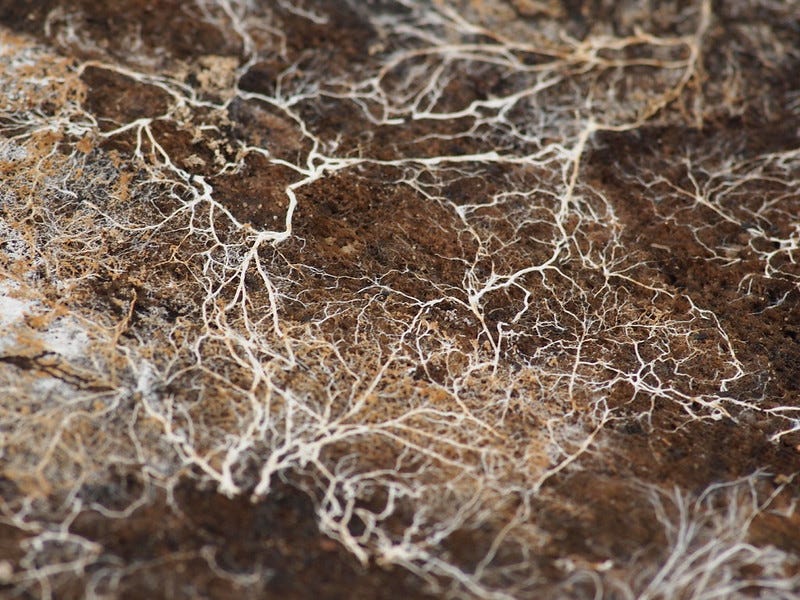
I’ll end on a reflection from author and activist Rebecca Solnit. In her essay Hope in the Dark, she explains that although they seem to come from nowhere, the mushrooms we see on the forest floor after a rain are actually supported by thousands of tiny mycelium filaments which are connected with one another within the soil. They lie in wait for the right conditions to flourish and emerge, oftentimes spectacularly.
Here’s to all of those who raised their voices for the voiceless these past few weeks. May we strive to build those networks, so we can emerge in full force the next time we need to advocate together.

Hundreds of Rural Albertans Line Up to Battle Data Centre Goliath
Port Alberni Partnership Helps Former B.C. Forestry Town Switch to Housing Construction
2/3 of Albertans Say ‘YIMBY’ to More Renewables in Their Communities
Calgary Coalition Aims to Clear Path for Balcony Solar Adoption in Canada
Expert Warns of ‘Rubber Stamp’ Approvals as Ontario Expands Nuclear Spending
Groups Call on Ottawa to Reverse Course on Environmental Policy
O’Leary’s AI Data Centre Projects Face Backlash On Both Sides of The Border
Newfoundland and Labrador Offering Millions for Exploration to Open New Oil Frontiers
Q&A: With National Electricity Strategy, It’s Time for Investors to Step Up and Listen Up

One day of extreme heat tied to 3,400 excess deaths in India, nearly 30,000 over five days: Study (Hindustan Times)
Megacity Heatwaves Are Now a Fatal Nightmare (Bloomberg)
Why Wildfire Experts Are So Worried About This Year’s Fire Season (Inside Climate News)
Emaciated grey whales washing up on B.C. beaches ‘canary in coal mine,’ researcher warns (Canadian Broadcasting Corporation)
Why U.S. Green Investors Are Backing Republican Candidates (New York Times)
Seven states sue U.S. for paying $1B to make TotalÉnergies exit wind power (Financial Times)
Supersized data centres are coming to Canada. One province is at the epicentre (Canadian Broadcasting Corporation)
UK Reform voters choose solar farms over fracking pads (Energy & Climate Intelligence Unit)
Danish shipyard still servicing LNG tankers for Russia trade (Financial Times)
Ottawa’s transit failure wasn’t an accident (The Hill Times)
Agricultural subsidies can be repurposed for a just and sustainable rural transition (Climate Home News)
U.S. Navy to test 100,000-ton aircraft carrier as floating nuclear power station (Interesting Engineering)