Hong Kong has long thrived as an international financial and commercial hub. Its unique position — “backed by the motherland, connected to the world” — made it the natural gateway for Chinese mainland firms “going global” and for foreign investors entering the mainland. But rivals such as Singapore, Shanghai and Shenzhen are sharpening their investment promotion strategies. If Hong Kong wants to stay ahead, it must overhaul its fragmented system.
 Today, investment promotion is scattered across a maze of agencies — the Trade Development Council (TDC), InvestHK, the Office for Attracting Strategic Enterprises (OASES), Hong Kong Economic and Trade Offices (HKETOs) operating overseas and on the mainland, the Hong Kong General Chamber of Commerce (HKGCC), Hong Kong Science and Technology Parks (HKSTP), StartmeupHK, and the Hong Kong Exchanges and Clearing Ltd (HKEX). Each has strengths, but they operate in silos under different policy bureaus or as independent bodies.
The result? Overlapping resources, inconsistent messaging, and a diluted brand. Investors face a confusing landscape, with no single entry point. Promotional campaigns sometimes clash, and Hong Kong’s global image suffers from multiple slogans and narratives. In a world where clarity and speed matter, this fragmentation is a liability.
The TDC focuses on trade promotion and exhibitions. HKETOs represent Hong Kong overseas, maintaining ties with governments and business communities. InvestHK provides onestop services for foreign investors, while OASES targets strategic enterprises with policy incentives. The HKGCC reflects private sector needs, HKSTP drives innovation and startups, and HKEX anchors the city’s financial markets. Mainland offices under the Constitutional and Mainland Affairs Bureau promote Hong Kong policies and support Hong Kong businesses in Beijing, Shanghai, Guangzhou, Chengdu and other cities.
Individually, these institutions are effective. Collectively, they lack coordination. Investors must navigate multiple doors, with no guarantee of consistency in policy or messaging.
The problems are clear. Resources are duplicated as agencies run parallel events overseas and on the mainland. Messaging is scattered, investors have to piece together information from different sources. Policy incentives are not always aligned, creating confusion. Branding is fractured, with Hong Kong lacking a single, powerful identity. And coordination is ad hoc, often relying on temporary task forces or crossdepartmental meetings, which lack transparency and continuity.
This is not just inefficient — it undermines Hong Kong’s competitiveness at a time when rivals are presenting unified, coherent strategies to the world.
The solution is structural reform. Hong Kong should establish a Hong Kong Investment Promotion Office, directly under the financial secretary, consolidating InvestHK, OASES and StartmeupHK into one command center. This would streamline resources and deliver onestop services to investors.
Alongside this, a Hong Kong Investment Promotion Coordination Committee should be created, chaired by the financial secretary and including all major stakeholders: the TDC, the HKETO, HKEX, the Hong Kong Monetary Authority, HKSTP, the HKGCC, and other mainland offices. A dedicated secretariat would ensure daily coordination, data integration and crossagency communication.
Hong Kong must move from fragmentation to unity, from ad hoc coordination to institutionalized leadership. In doing so, the city will not only defend its position in an increasingly competitive global environment but also unlock its full potential as China’s premier global business gateway
Equally vital is a unified brand identity. A single slogan — such as “Hong Kong: Global Business Gateway” — would reinforce the city’s role as both China’s portal and the world’s bridge. Shared budgets, a centralized database, and overseas and mainland “Hong Kong Investment Promotion Centers” would provide consistent messaging in key markets from London to Shanghai. Transparency must be built in, with annual reports to the Legislative Council and clear performance indicators.
A common budget pool would prevent duplication and allow for strategic investment in priority markets. A unified database would give investors onestop access to trade, investment, innovation and policy information. Branding would be sharpened with a single slogan and consistent messaging across all platforms.
Hong Kong should also expand its reach by establishing Hong Kong investment promotion centers in global hubs such as London, New York, Singapore and Silicon Valley, while strengthening its presence in Beijing, Shanghai, Guangzhou and Chengdu. Each center should be led by a director appointed by the coordination committee, ensuring consistency and accountability.
Institutional reform must be matched by transparency. The coordination committee should submit annual reports to the LegCo, detailing investment promotion outcomes. Independent audits would ensure resources are used effectively. Performance indicators — such as foreign investment inflows, startup landings, and promotional events — would provide measurable benchmarks.
This would not only reassure investors but also build public confidence that Hong Kong’s investment promotion is strategic, efficient and accountable.
The benefits of such reforms are obvious. Investors would enjoy streamlined services and greater confidence. Hong Kong’s image would be sharpened, projecting coherence and authority. Highvalue enterprises and startups would be more easily attracted, boosting innovation and competitiveness. The inclusion of HKEX and HKMA would highlight the depth and stability of Hong Kong’s financial markets, while mainland offices would ensure alignment with national strategies and avoid the “twotrack disconnect” problem of inconsistent messaging.
Hong Kong’s investment promotion resources are vast but scattered. Without structural reform, efficiency will remain constrained and opportunities lost. By embracing institutionalized coordination and unified branding, Hong Kong can transform its fragmented system into a comprehensive, strategic framework.
Hong Kong must move from fragmentation to unity, from ad hoc coordination to institutionalized leadership. In doing so, the city will not only defend its position in an increasingly competitive global environment but also unlock its full potential as China’s premier global business gateway.
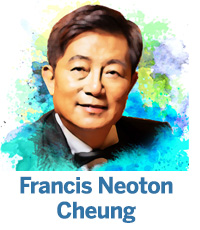
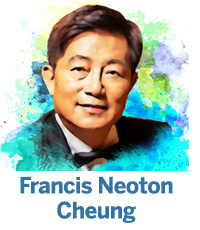
The author is chairman of Doctoral Exchange, a Hong Kong-based think tank.
The views do not necessarily reflect those of China Daily.