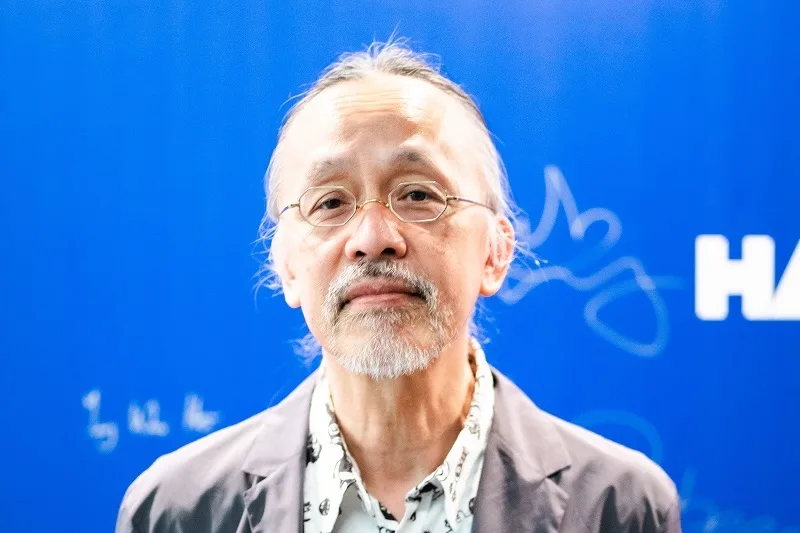
As one of Asia’s oldest project markets, entering its 24th edition this year, Hong Kong Asia Film Financing Forum (HAF) has a whole lot of history, but isn’t afraid to keep innovating. After introducing an animation section last year, due to a huge increase in submissions of animation projects, HAF is introducing a dedicated genre section this year.
The genre selection of six projects ranges from crime thriller The Power Plant from Turkey’s Tayfun Pirselimoglu to Lam Li Shuen’s mythological body horror Strange Root, set in 11th-century Singapore, and Park Kiyong’s Korea-Mongolian co-production Searchers: Blood In The Grass, an action drama that delves into international fentanyl trafficking (see full line-up here).
More from Deadline
HAF attempted to embrace genre projects back in 2024 through a joint venture with CAA China – the HKIFF Industry-CAA China Genre Initiative – which was only held for one edition as the initiative lost its backing. However, HKIFF Industry, the industry arm of Hong Kong International Film Festival (HKIFF), which organises HAF and several other initiatives, decided it was important to revive it – especially at a time when the boundaries between arthouse and genre are blurring.
“It’s increasingly considered as a ’strategic necessity’ to integrate a genre-specific section for a project market to remain vibrant,” says HKIFF Industry director Jacob Wong. “The section will be attractive to private investors for the genre’s profit potential, and for filmmakers, there’s the challenge of experimenting with ‘hybrid forms’ and ‘elevated genre’.”
HAF’s animation section got off to a strong start last year with projects including Chinese director Xu Zao’s Light Pillar, which premiered at this year’s Berlinale in the Perspectives section, and Toe Yuen’s A Mighty Adventure, which won a Golden Horse Award for Best Sounds Effects last year. This year’s selection of seven projects includes two in post-production which will also be presented in WIP Open Pitch: The Excreman – On The Road, a poop-related parable from Brian Tse, best known as the creator of Hong Kong’s McDull franchise, and Zsazsa Zaturnnah, based on an LGBTQ superheroine comic, from the Philippines’ Avid Liongoren.
The Philippines’ burgeoning animation scene will also be represented at HAF by Sentinel from Carl Joseph E. Papa, whose credits include political dramas The Missing, which won Best Animated Film at the Asia Pacific Screen Awards, and 58th, which recently screened at International Film Festival Rotterdam.
Wong says that a convergence of factors is driving the animation boom across Asia – including box office hits, most notably China’s Ne Zha 2 last year; the impact of AI reducing costs and speeding up workflow, as well as “adult audiences waking up to the fact that animated films are not just children’s cartoons”. He adds that two HAF selections are animation projects squarely aimed at adult audiences – Roxanne, a stop-motion monster film produced by Light Pillar producer Lu Xiaowei, and Fishball from Korea’s Jhun Yong-Duk, the story of a ruthless general reborn as a sardine.

Meanwhile, HAF’s long-running In Development Section has selected 17 projects, including four from Hong Kong – three of which are being steered by producers who have been consistently helping to nurture new Hong Kong talent: Sasha Chuk’s cross-border drama 131, produced by Stanley Kwan; Cheung Wai-yu’s comedy drama Mama Mia Let Me Go!, produced by Peter Yam; and Guo Yu-tian’s Forgetting She Is She, produced by Chan Hing-kai. The fourth Hong Kong project, Vincci Cheuk’s 38.83, is a co-production with Japan that has been supported by the Hong Kong-Europe-Asian Film Collaboration Funding Scheme (HKEAS).
“Hong Kong’s ‘localist renaissance’ is still very much active among young filmmakers who are unwilling and, for budgetary reasons, unable to engage in overtly commercial projects,” says Wong. He observes that Sasha Chuk, who debuted with award-winning drama Fly Me To The Moon in 2023, already has a couple of projects in the pre-production stages, in addition to her HAF development title.
Several indie filmmakers from mainland China also have projects in HAF’s In Development section, including Xu Jianming with Have A Good Trip, which weaves together seven absurdist tales, and Xiao Baer’s A Drop In The Sea, about a Chinese woman who travels to Algeria for her brother’s Muslim funeral. Chinese indie projects have also been selected across HAF’s works-in-progress, genre and animation sections.
Wong says that mainland Chinese filmmakers account for the largest number of HAF project submissions, but that overall, the number of Chinese indie films completing production appeared to shrink last year. “Money is tight across the spectrum, and in China where there isn’t a subsidy system, one can imagine how hard it is to finance an independent film,” Wong says. “But people who really want to make the movies they want to make, always seem to manage. Considering how difficult things are, there is still much creative impulse.”
Elsewhere in HAF’s In Development line-up are several more absurdist stories – including Sanju Surendran’s Malayalam-language Fishers Of Men, about an Indian vegetarian banker who becomes obsessed with fish – and other projects dealing with death and bereavement including Funeral Flowers, the feature debut of the Philippines’ Liza Diño and Ice Seguerra, and Japanese filmmaker Fujita Naoya’s The Funeral March, about a woman who steals her mother’s corpse to fulfil a burial promise.
HAF’s Works-in-Progress selection of 12 projects features many top actors – Hong Kong’s Nick Cheung Ka-fai in Norris Wong’s Good Trip; Indonesia’s Christine Hakim in Eddie Cahyono’s My Mother and another pair of Indonesian stars, Reza Rahadian and Dian Sastrowardoyo, in Yosep Anggi Noen’s The Sea Speaks His Name. Two Indonesian projects have also been selected through a returning partnership with Jakarta Film Week and JAFF Market – Loeloe Hendra Komara’s A Life Full Of Holes and Najam Yardo’s PingPong – underscoring the vibrancy of that particular market.

A further two projects have also been selected through a partnership with Film Frontier and the Japan Creator Support Fund, an initiative under the Japan Arts Council: stop-motion animation Hidari, directed by Kawamura Masashi and Ogawa Iku, and Kusano Natsuka’s Unknown Face.
HAF has also announced a slew of new awards for this year’s edition, which will hand out 24 cash and in-kind prizes worth a combined $360,000. New sponsors include Thailand’s Kantana Holdings and China’s Phenom Films, along with skincare brand Cetaphil, which is supporting the HAF Goes to Cannes programme.
HAF Goes to Cannes, through which five HAF projects are selected to take part in Cannes industry activities, is one of several programmes organised by HKIFF Industry in addition to the annual Hong Kong projects market. Other initiatives include HAF Film Lab, a training program for Chinese-language filmmakers; HKIFF Collection, which gives selected projects advice on festival and international distribution strategy; and the Asian Short Film Fund, through which three projects are receiving mentorship and funding of $35,000.
The idea is that all these programmes together provide a roadmap for emerging filmmakers, from short films to features and taking into account international distribution and market activities.
This year’s HAF is taking place March 17-19, alongside Filmart (March 17-20), at the Hong Kong Convention & Exhibition Centre.
Best of Deadline
Sign up for Deadline’s Newsletter. For the latest news, follow us on Facebook, Twitter, and Instagram.

