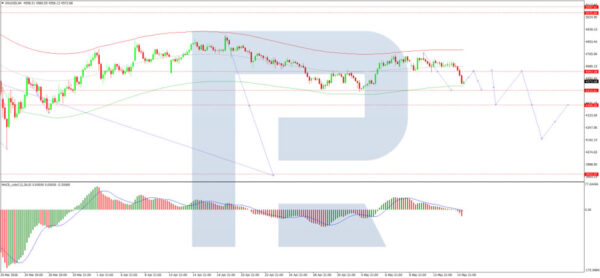
Gold continued its decline on Friday, falling to 4,619 USD per ounce. The week is set to close with losses of around 1%, as mounting US inflation puts pressure on the market. Rising prices reinforce expectations that the Federal Reserve may maintain elevated rates for longer or even resume rate hikes.
Data released this week showed that US manufacturing inflation rose at its fastest pace since 2022 in April, while consumer prices recorded the most significant increase since 2023.
The primary driver of inflationary pressure remains the ongoing conflict in the Middle East and disruptions to supplies through the Strait of Hormuz, which continue to influence global energy markets.
In this context, the market has largely ruled out a Fed rate cut for 2026. Some investors are even pricing in the possibility of a further rate hike by December.
Investor attention was also drawn to the meeting between US President Donald Trump and Chinese President Xi Jinping, during which ensuring open navigation through the Strait of Hormuz to support global energy trade was a key topic.
Separately, the market is keeping an eye on India, where authorities have further tightened regulations on gold imports as part of measures to support the rupee.
Technical Analysis
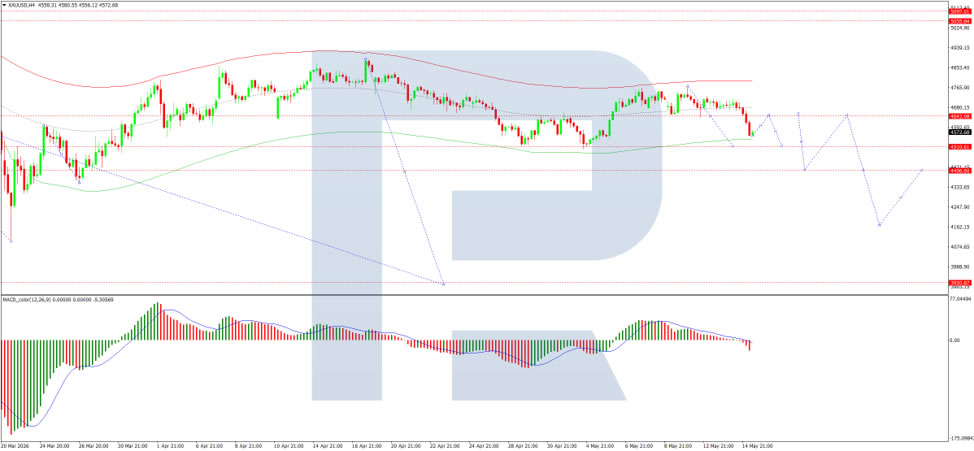
On the H4 XAU/USD chart, gold has broken below 4,639 USD and is moving lower towards 4,550 USD. A corrective rebound to 4,630 USD (testing from below) is possible, followed by a further decline towards 4,500 USD. The MACD indicator confirms the current bearish momentum, with its signal line below the centre line and pointing firmly downwards.
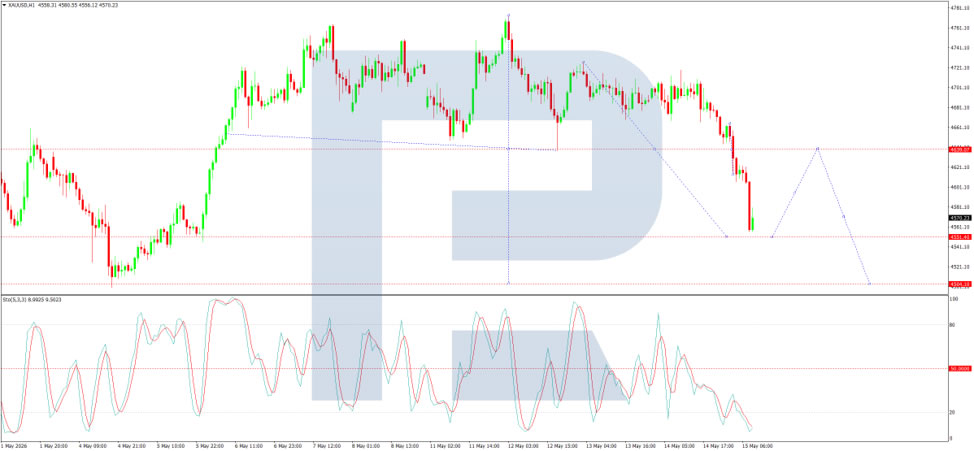
On the H1 chart, gold has broken below the 4,639 USD level and continues to move lower towards 4,555 USD. A rebound towards 4,639 USD may follow before a further decline towards 4,550 USD. The Stochastic oscillator supports this scenario, with its signal line below 20 and pointing firmly downwards, indicating continued downside pressure.
Conclusion
Gold remains under pressure as US inflation data strengthens the case for sustained or higher interest rates. Short-term technical indicators suggest further downside potential, although temporary corrections may occur. Geopolitical developments and policy decisions in major economies will continue to dictate market sentiment.
