The world players’ union FIFPRO has condemned Gianni Infantino’s “abuse of presidential power” and called for change at the top of FIFA following his botched World Cup stake sale plans.
On Wednesday night, Infantino was given the “full support” of FIFA’s management board in a statement despite being forced to abandon his plan to sell stakes in a company to run the World Cup to private investors.
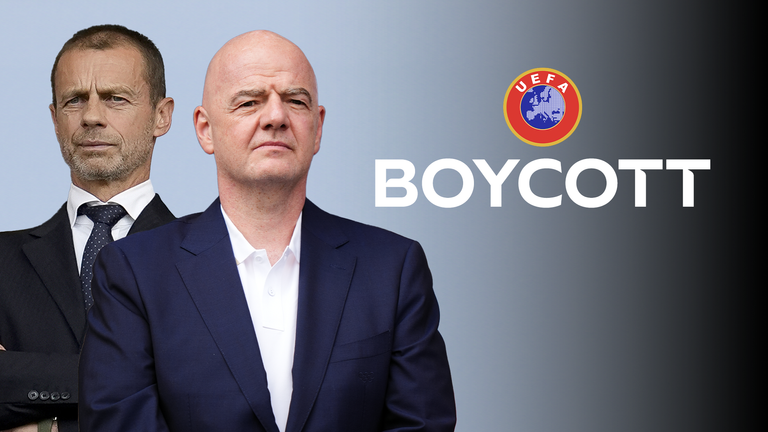
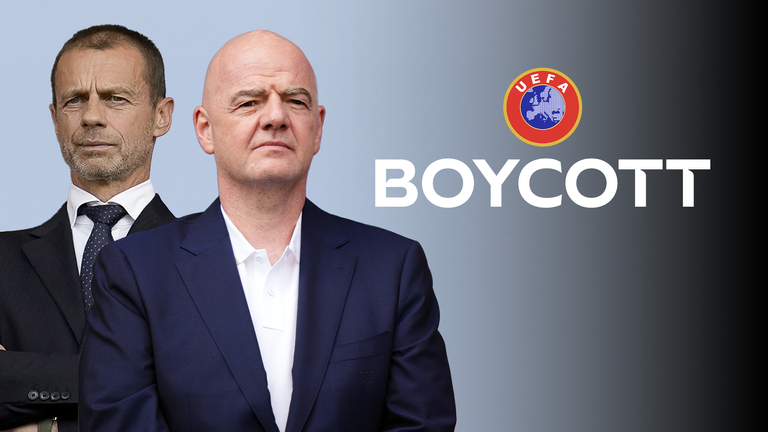
UEFA had initially threatened to boycott FIFA tournaments while the plans were in place and on Thursday reiterated that stance – while doubling down on their demands for Infantino to go.
The Football Association has also formally announced its intention to withdraw support for Infantino’s re-election as president, with a vote currently scheduled for March 2027.
In a strongly-worded statement, FIFPRO added to growing opposition to the president’s position slamming the “cover-up” surrounding the situation, and said it had noted FIFA’s statement “with deep concern”, while also hitting out at the governing body for enabling the plans to be hatched at all.
The world players’ union also:
- Said FIFA could not “restore confidence“ in Infantino’s position because it had “dismantled the conditions upon which confidence depends.“
- Demanded “legally-binding engagement” with professional football stakeholders over issues including the international match calendar and expansion of FIFA competitions, plus voting rights on the FIFA council.
- Requested governance and structural reforms to “prohibit any individual, ever again, to drive unilateral decisions through the game.”
FIFPRO further addressed threats issued by FIFA over future “attacks on its integrity” by adding: “Any attempt to portray legitimate, good-faith scrutiny as disloyalty will only deepen the concern this episode has caused”.
Also on Thursday, the Football Association formally announced its intention to withdraw support for Infantino’s re-election as president, with a vote currently scheduled for March 2027.
UEFA was the first continental body to speak out against Infantino’s plans and was the only one to threaten a total boycott of FIFA competitions – and in their first public comments since they were withdrawn, said there had been insufficient change to reverse their stance with Infantino remaining in post.
A statement read: “UEFA’s associations were very clear about the conditions attached to the non-participation in FIFA competitions.
“First, the proposals to sell off the major competitions had to be withdrawn, and secondly, assurances have to be made that such attempts to disfigure the game in this way will never be made again.
“These conditions have not been met. In addition, UEFA made it abundantly clear in its statement on Saturday that it has lost confidence in Gianni Infantino’s presidency. That position holds.
“Yesterday’s [Wednesday] announcement that some people employed by the FIFA President (and whose careers depend on his favour) agree with him changes nothing.”
The first test of UEFA’s boycott will come at next month’s FIFA U20 Women’s World Cup, in which England will compete after naming their final training squad on Wednesday.
For the senior national teams, the boycott’s next major test will come in October, when England, Scotland, Wales, Northern Ireland and the Republic of Ireland are scheduled to take part in the play-offs for qualification to the 2027 FIFA Women’s World Cup.
Why Infantino is still in power
Infantino has shaken off calls to resign – for now – with the backing of the governing body’s leaders, though he apologised for “mistakes” in his botched attempts to sell off a stake in the World Cup.
In a statement released after seven hours of crisis talks in Morocco on Wednesday, FIFA said its management board had reaffirmed their “full support” for Infantino – including secretary general Mattias Grafstrom, only days after he had labelled the World Cup plans “a sad and reproachable series of events”. The pair were later seen laughing together watching a Women’s AFCON game in Rabat.
Infantino had faced mounting calls to resign following the leak of previously undiscussed proposals, after it was revealed national associations had not been consulted and had been given a deadline barely a month away in mid-September and the promise of a £30.1m incentive to back them.
In a letter seen by Sky News sent to national associations and signed by Infantino and Grafstrom, the pair wrote that they “sincerely apologised for the errors” in the plans which were eventually withdrawn on August 1 following days of criticism from across world football.
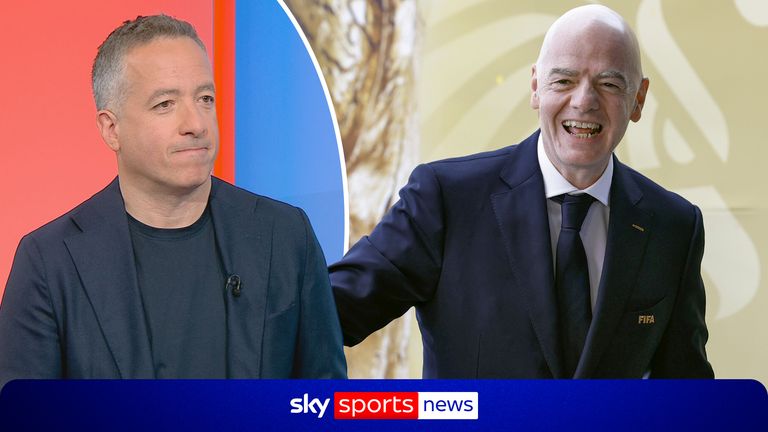
Kaveh Solhekol discusses why Gianni Infantino could still be under threat from UEFA after surviving a FIFA crisis meeting on his future
A second statement released publicly through FIFA.com hit back at those critics, threatening that FIFA would “no longer tolerate any attacks on its integrity, good governance and due process and will take all necessary measures to protect and safeguard its name and reputation”.
FIFA said it had “not been the intention… for member associations to feel excluded from the process” and admitted they should have been “handled differently” while further acknowledging “errors were also made after the proposal was leaked to media.”
The governing body also promised a review would be conducted into the fiasco and a report into its findings presented at the next FIFA Council, comprising 37 national representatives from around world football.
Infantino and FIFA’s reputation had taken increasing hits from inside and outside of its own walls over the plans with Arsene Wenger, its chief of global football development, distancing himself publicly while Infantino’s personal senior advisor Carlos Cordeiro quit his role on July 31, labelling them a “bad deal” and “irresponsible”.
FIFPRO statement in full
FIFA Forward Enterprise (FFE) is gone. The abuse of power that produced it is not. Governance reforms, not a cover-up, are urgently needed.
The withdrawal of FFE was inevitable. But withdrawing the proposal does not erase what it revealed.
A plan capable of permanently altering the ownership and governance of the FIFA World Cup, and commercialising the competitions built by generations of players, was conceived in secrecy, negotiated behind closed doors and brought to the brink of agreement before the FIFA Council, the member associations, players and football’s recognised stakeholders even knew it existed.
That is not merely a governance failure. It is a profound abuse of presidential power.
We have noted FIFA’s internal update from its meeting in Rabat, Morocco with deep concern. Rather than confronting what happened, it reaffirms support for the organisation’s leadership while reducing a fundamental governance and constitutional failure to a matter of “processes and communications” to be “improved”.
Most telling is FIFA’s own insistence that, despite the “mistakes” it admits, everything was done “in full compliance with the FIFA regulatory framework”. If true, that is not a defence. It is an indictment of FIFA’s current governance framework. A framework that allows a project of this magnitude to be developed behind closed doors and hidden from those it affects until it leaks, is a framework that must be reformed, not defended.
We also note FIFA’s warning that it “will no longer tolerate any attacks on its integrity”. Let us be clear: scrutiny of football’s governance is not an attack. It is the duty of everyone who sustains the game. Any attempt to portray legitimate, good-faith scrutiny as disloyalty will only deepen the concern this episode has caused. And an internal review that reports only to the very Council that was bypassed is no answer at all. Players, their representatives and the professional football stakeholders must be part of it.
No institution can restore confidence in a presidency that has itself dismantled the conditions upon which confidence depends. Trust cannot simply be demanded. Authority cannot merely be asserted. Legitimacy cannot be proclaimed. Each must be earned. Each can be lost.
The memorandum of understanding signed only weeks ago represented a genuine step forward. The FFE episode has demonstrated that, on its own, it is not sufficient to protect players or the game from unilateral exercises of power.
Regardless of how the present crisis is resolved, football now requires structural safeguards to ensure these events can never be repeated. At a minimum, FIFPRO believes this must include:
- Embedding the Global Social Dialogue Platform as a real, permanent and structural part of FIFA’s governance, not a mechanism to be bypassed at will.
- Legally binding engagement with professional football’s stakeholders on decisions of major consequence, including the international match calendar, competition expansion and other matters that fundamentally affect the professional game.
- Voting rights for professional football’s stakeholders on the FIFA Council, together with a clear and formally recognised role for FIFPRO as the global representative of professional footballers.
- Governance and structural reforms that make it impossible for any individual, ever again, to drive unilateral decisions through the game.
FIFPRO has today written to the FIFA administration setting out these demands. The letter explains why this episode represents far more than an isolated governance failure. It concerns the exercise of the highest role and office in world football and the manner in which its authority has been used. The letter has been signed jointly by the FIFPRO President and the Presidents of all FIFPRO regional divisions: FIFPRO Africa, FIFPRO Asia/Oceania, FIFPRO Europe, FIFPRO South America and FIFPRO Central & North America.
The withdrawal of FFE prevented an irreversible decision. It did not restore the confidence that made such a proposal possible in the first place. That confidence has now been fundamentally broken. It cannot be rebuilt through carefully drafted statements, internal reviews or promises to improve processes. Nor can it be restored simply by announcing governance and structural reforms that should always have existed.
These reforms are now indispensable. But they are the responsibility of the future, not an absolution of the past.
The players did not create this crisis. They will insist that football emerges from it with stronger institutions, stronger safeguards and leadership worthy of the trust the game demands.
Timeline: How FIFA’s World Cup private investment plan imploded
July 28: FIFA announces its “FIFA forward Enterprise” investment plan, proposing to spin off the commercial rights to competitions, including the World Cup, into a new company.
July 28: UEFA launches a fierce public attack, accusing FIFA of rushing through a transformative proposal with little consultation.
July 30: UEFA’s 55 member associations vote to boycott World Cup if plans go ahead.
July 31: Infantino’s adviser Carlos Cordeiro resigns amidst the controversy.
July 31: UK Prime Minister Andy Burnham says Infantino is the “wrong man” to lead FIFA.
August 1: FIFA abandons the investment plan after only a few days of intense opposition. Infantino withdraws the proposal before it reaches a formal vote.
August 1: UEFA releases a statement in which it says it has lost confidence in Infantino’s leadership of FIFA.
August 1: Spanish league boss Javier Tebas says Infantino “must not continue at the helm of FIFA”.
August 3: Wales becomes the first Football Association to officially withdraw support for Infantino’s re-election as FIFA president.
August 3: UEFA reportedly threatens legal action and instructs lawyers to preserve FIFA documents and communications relating to the proposal.
August 3: English Football Association set to write to Infantino withdrawing its previous support.
August 5: Luis Figo became the first legendary former player to call for Infantino’s resignation.
August 5: Crisis meeting held in Morocco and FIFA reaffirms “full support” for Infantino.
August 6: UEFA confirm their boycott still stands with Infantino remaining in position.
August 6: FIFPRO slams “abuse of presidential power” behind Infantino’s plans and demands structural and governance reform at FIFA.
August 6: The Football Association formally withdraws its support for Infantino’s re-election hopes in March 2027.