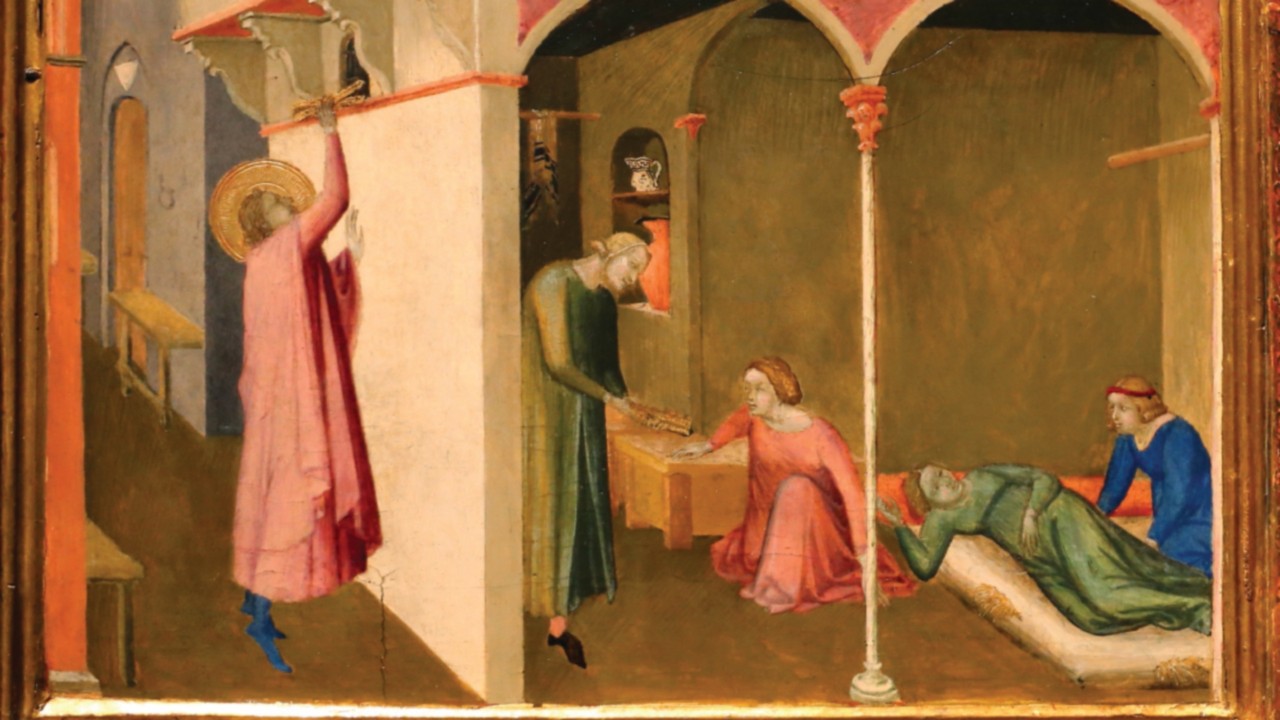
According to tradition, St Nicholas of Bari helped three young women escape a fate of prostitution by giving them three bags of money to provide a dowry so that they could marry. Yes, the dowry, the age-old custom that for centuries imprisoned the future of entire generations of poor girls. And even in Italy, until 1975, that is, until the family law was reformed, it represented a legal obligation for girls who wanted to marry and were required to “pay” to the husband’s family, or bring into the new couple, a suitable quantity of goods.
A vision of the family, and above all of womanhood, which is far removed from the Christian one, which instead, still today, just as in the time of St Nicholas, offers many young women the possibility of freely deciding their own future.
This happens, for example, in China (where, especially in rural areas, the tradition of the dowry for women who want to marry continues to weigh heavily on many families), thanks to two young Catholics who chose to say “yes” by renouncing this financial contribution. This happened in Taiyuan, in Shanxi province, and the gesture of the young couple deeply impressed the bishop, Msgr. Paul Meng Ningyou, who celebrated their marriage, praising the courage of the newlyweds.
During his homily, the bishop recalled that marriage, according to the Christian vision, is a mutual and gratuitous gift, founded on welcome and care. An almost revolutionary vision in a context of strong tradition, and one that the Chinese Church has long been promoting socially, even by organizing marriage preparation courses open to non-believers.
by Sabina Fadel
Deputy Editor, “Messaggero di sant’Antonio”
