Student guide to affordable, healthy meals
Between tuition, textbooks and late-night study sessions, eating healthy in college can feel impossible, especially when your meal plan runs out, but with the right strategies, eating well on a budget can be easy.
Nutrients
To start, it helps to understand the six essential nutrients that the body requires to function properly: carbohydrates, protein, fats, vitamins, minerals and water. Contrary to popular belief, these nutrients can be found in affordable food items. Carbohydrates can come from rice, bread, pasta and fruits. Protein is present in chicken, eggs and beans while fats are in things like olive oil, nuts and salmon.


Food sits on a counter at the Pollock Commons Buffet on Thursday, Nov. 16, 2023 in University Park, Pa.
Minerals like potassium, calcium and iron can be found in meat, bananas and milk. These help with bone strength and nerve function to keep that brain sharp for that 8 a.m class you’re half asleep for.
Water is arguably one of the most important nutrients, as it supports digestion, hydration and blood circulation. An easy way to save money on water is to buy water in bulk or purchase a reusable water bottle. Places like Sam’s Club, located a few minutes off-campus, sell packs of 40 bottles for roughly 4 dollars, which is cheaper than consistently buying individual bottles.
If you decide to buy a reusable water bottle — a much cheaper and sustainable option — there are water-filling stations in almost every building and on every floor on campus. For a more elevated taste, most dining commons offer a Bevi — a water cooler that produces still, sparkling or flavored water that’s always filtered.
Groceries
Students at Penn State have access to a wide range of grocery stores near campus. Wegmans, Giant, Trader Joe’s, Aldi and Walmart are all located in State College. Each store offers different price points that accommodate student budgets.
Wegmans and Giant provide online tips and articles about eating healthy on a budget, while Aldi and Walmart are the most affordable stores for produce and pantry staples.
McLanahan’s Market, located on East College Avenue, is convenient for quick items when students don’t want to travel far.


Food lines the aisle in McLanahan’s Downtown Market on Thursday, Nov. 20 2025 in State College, Pa.
Many stores also offer digital coupons in their apps, so checking them before shopping can save you several dollars.. Buying groceries from a variety of these stores helps you get the best deals and freshest ingredients.
One of the most filling and cost-effective meals for students is soup. Many recipes start with inexpensive ramen packs, which can be elevated by adding budget-friendly protein like chicken or shrimp. Although shrimp may seem expensive, Wegmans sells a 16-ounce bag for $12.99, making it affordable when spread across several meals.
Adding bok choy or an egg can boost nutrients without increasing the cost. Broth is also inexpensive and can be made at home by boiling chicken for around 30 minutes.
Budget
Another way to stay on top of your money is to create a monthly grocery budget. A commonly used structure is the 50/30/20 rule: 50% of income goes toward living essentials, 30% goes toward wants, and 20% goes toward savings or debt repayment.
From the 50% category, students can subtract the cost of bulk items or subscription orders, divide what remains by the number of weeks in the month, and then subtract weekly staples such as milk or eggs. The remaining amount is the weekly meal budget.
Shopping smart means understanding the benefits of buying in bulk. Sam’s Club offers an annual $50 membership — they are currently having a holiday offer that lowers the cost to $25 — which provides exclusive discounted prices on large-quantity items like rice, snacks, frozen foods and bottled water.
Though the upfront fee may seem high, the savings over the year can be significant, especially for students who cook often. A Sam’s Club membership also includes access to discounted gas, which can help cut costs even further.
Special Diets
Students following special diets still have plenty of low-cost options. Chicken, vegetables, rice, quinoa and other naturally gluten-free grains are cheap and easy to cook. Spices from places like T.J. Maxx or HomeGoods are only a few dollars and last a long time.
Students managing diabetes or practicing a low-carb diet can meal-prep on a budget too. Low-carb meals are usually high in fiber and help keep you full longer. Egg-based dishes are some of the cheapest options: egg bites with cottage cheese, onions, peppers and chives take about twenty minutes to make, cost around a dollar per serving and provide eight meals at once.

Drinks for sale sit in a cooler in McLanahan’s Downtown Market on Thursday, Nov. 20 2025 in State College, Pa.
Making big batches of meals and freezing leftovers also helps reduce waste, save money and save time during busy weeks. Cheap pantry staples like rice, crackers and dried fruit are also key to staying full on a budget.
Regardless of your financial situation, these tips and tricks can help you make the most of your time and money while keeping your health in check.
MORE NEWS CONTENT
Penn State budget-friendly apartments for students
With many Penn State students in the midst of the housing search for next year, apartments under $800 are becoming some of the most highly sought-after options in State College.
Despite rising demand, a handful of complexes still offer competitive rates alongside amenities like furnished units, study spaces and easy access to campus.
Meridian on College Avenue
The Meridian is located across from campus, within walking distance of Beaver Stadium and the Bryce Jordan Center.
A two-bedroom apartment can range anywhere from $695- $1,020 with unique features such as an ATM, 24-hour study lounge with free wifi, private tanning salon and fully equipped modern kitchen. There are also furnished units available.
University Terrace
University Terrace is located just around the corner from Beaver Stadium and within walking distance of downtown State College.
The community offers three-bedroom, two-bath apartments starting at $412 per person, with furnished and unfurnished options available.
Residents can enjoy convenient amenities such as a summer swimming pool, volleyball court, and spacious floor plans, while some utilities include hot water, trash and snow removal.
Alight
Located close to campus, Alight has a 4 bedroom, 2 bath option for students at a starting price point of $599.
Each of the units come furnished, giving residents the conveniences of moving in with ease.
The community is pet-friendly, includes passes for six CATA bus routes for quick transportation and offers on-site management to support residents throughout the 2026-2027 year.
Tremont Student Living
This off-campus apartment is just an 8-minute drive from state college and offers a variety of community amenities including tennis, basketball and volleyball courts, providing the perfect balance of social engagement and support.
The apartment features four bedrooms and two bathrooms options, with an 11-month lease starting at $705 per person.
Residents can also enjoy convenient amenities such as Wi-Fi and an in-unit washer and dryer.

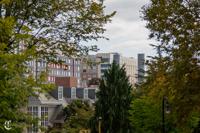
High-rise apartment complexes sit in downtown State College on Wednesday, Sept. 10, 2025 in University Park, Pa.
State College Collective on Farmstead
These townhomes offer distinct apartment styles, each with 3 bedrooms and 3.5 bathrooms, available either furnished or unfurnished. Unfurnished units start at $730–$750, while furnished options range from $735–$770.
Unique features include a breakfast bar, CATA bus pass, full-size dishwasher and on-site maintenance — combining convenience and comfort for residents.
The Bryn
Located just minutes from Penn State, these student apartments offer updated 2-4 bedroom units with 2 bathrooms including private bedrooms and fully equipped kitchens.
Rent ranges from $755 to $979 per person and includes amenities such as Wi-Fi, a CATA bus pass, a pool, fitness center, clubhouse, basketball and volleyball courts as well as business areas.
The Bryn provides students with a home away from home while keeping campus just a short ride away.
Parkway Plaza
Parkway Plaza is a budget-friendly option for students seeking affordability within a short distance from campus.
The complex offers studio, one, two and three-bedroom layouts, with several three-bedroom units priced between $695 and $699 per person and two-bedroom options available at $799 per person.
Parkway Plaza’s biggest advantage is its all-inclusive rate. Utilities such as gas, heat, air conditioning, trash removal and high-speed internet are all covered in the monthly rent. Furnished units are also available for students seeking a move-in-ready option.
West Beaver Apartments
Located at 440 W Beaver Avenue, just a short drive from downtown State College and only 6 minutes from Penn State University, West Beaver Apartments offers a quiet community with three units across two stories.
The apartments feature two and three-bedroom layouts with rents starting around $695, and residents can enjoy nearby parks and shopping centers.
While the property maintains its charm, it provides convenient access to modern amenities, making it a practical and comfortable option for students.
MORE NEWS CONTENT

‘I’m already paying a lot’ | International students face unique challenges in search for housing
For international students, the decision to remain on campus or live off comes with unique hurdles, and many lack the guidance needed to navigate the housing process. With tuition amounting to over $70k a year them, the decision is shaped largely by finances and limited resources.
Prithvi Saha, a third-year studying environmental systems engineering, said his main concern when looking for housing is always the financial component, which is why he decided to become a resident assistant (RA) on campus.
“I decided to become an RA because living on campus was too far or too expensive,” Saha, an international student from India, said.
He said he didn’t receive direction from the university that helped him understand which housing options fit his financial situation. As an RA, Saha said he’s saving a significant amount of money and receiving amenities he doubts he would have access to off campus.
Shervin Rahimi decided to go a different route with housing.
High-rise apartment complexes sit in downtown State College on Wednesday, Sept. 10, 2025 in University Park, Pa.
“The first thing is you gotta see the cost of the housing, of course, the best place is downtown but at that point if you consider paying three years of rent (living) downtown, you might as well buy a house,” Rahimi, a second-year student studying finance, said.
Rahimi, an international student from Italy, said that he researched his housing options on his own before coming to the conclusion that off-campus living was the best choice for him.
“Given the fact that… I barely have a Social Security number and my parents are stuck in Italy, there’s no point in me buying a house in the U.S. right now so I might as well rent downtown,” Rahimi said.
He said he found the search for housing “tricky” as he was late on deciding, but said the university provides enough guidance for international students.
For Vajra Narasimhan finances were the number one factor she considered when searching for housing.
“I’m already paying a lot as an international student,” Narasimhan, a third-year studying environmental systems engineering, said. “My tuition is more than everyone else’s so I don’t wanna spend more money on just my living conditions.”
Narasimhan, an international student from India, decided to live off campus in an apartment downtown because it was “cheaper after doing the math.”
“I had more privacy. I didn’t wanna have a roommate and I didn’t wanna share a room,” Narasimhan said.

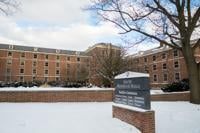
McElwain Hall in the South Residence Halls on Tuesday, Jan. 25, 2022 in University Park, Pa.
She said she made the decision last-minute as well, and wasn’t fully aware of the timeline that she had to follow.
“I’m really bad at research and I’m not someone who likes to plan a lot,” Narasimhan said. “I left it till the very last minute and then I just did what my other friend did.”
After not knowing who to consult with, Narasimhan said she had no choice but to choose from the few options left. She said there isn’t much guidance for international students regarding housing.
“The on-campus experience is very much so much more expensive than it has to be, like the way they charge $500 for just staying there for breaks is … so unnecessary,” Narasimhan said.
She’s had to remain on campus during many breaks, and said the cost outweighs any amenities she’s received from the university.
“If you live on campus, you would have to take on meal plan, I don’t like that,” Narasimhan said. “It’s like they’re always looking for ways to get more money from us.”
MORE NEWS CONTENT

‘We’re grateful that we can be there for them’ | Local food pantries report rising food insecurity
In October, food insecurity spiked in Pennsylvania after Supplemental Nutrition Assistance Program (SNAP) benefits were cut during the government shutdown. The cut directly affected around 2 million Pennsylvanians relying on SNAP benefits.
7.6% Centre County households are on SNAP, as of 2023 data. While full SNAP benefits have been restored, food insecurity continues to strain low-income families in the area.
Housing Transitions, located at 217 E Nittany Ave., services around 10-15 households per month, though Shannon Newby said demand is slightly increasing.
“People that we haven’t typically served from more outlying communities are making their way into our food pantry,” Newby, Housing Transitions’s program manager, said.
With Thanksgiving just having passed and a slew of winter holidays around the corner, Newby said people have been calling for larger meals.
Anyone seeking help can call 9 a.m. to 9 p.m., callers simply share their household size, complete a short demographic survey and staff will pack food for them to take home.
She said Housing Transitions has been doing pop-up food pantries in front of their house to make room for an increase in donations.
“People are concerned about the food insecurity of the population we serve,” Newby said. “(The donations are) more than we could store here.”
State College Food Bank, located at 169 Gerald St., is a nonprofit that supplies free food and essential items to Centre County residents in need.

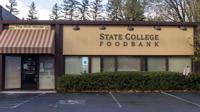
The State College Food Bank sits on Gerald Street on Tuesday, Nov. 17, 2020 in State College, Pa.
Allayn Beck said October, November and December are always the organization’s busiest months, but this year there was a quicker increase in community needs.
“The minute they announced that SNAP stuff, it was like holiday right up against holiday,” Beck, the food bank’s executive director, said. “It just had a bigger, earlier impact.”
Beck said food is a “basic human right,” and programs like Centre Helps, a crisis center in State College, and the food bank have a larger impact on community members’ lives than the general public may realize or understand.
“Spreading awareness that the problem is still here is helpful,” Beck said. “The SNAP (cuts) brought awareness to what’s going on, but just because people have SNAP doesn’t mean hunger went away. It’s still there, and it’s still prevalent.”
Beck said community response has matched demand from those seeking help, and if the community continues with its support they “will be set for the rest of the year.”
The food bank doesn’t have income restrictions; community members just have to be Centre County residents with a referral, which they can receive through Centre Helps.
Denise McCann said Centre Helps saw a “huge” increase in requests for food bank referrals, following halted SNAP benefits.

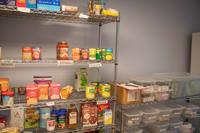
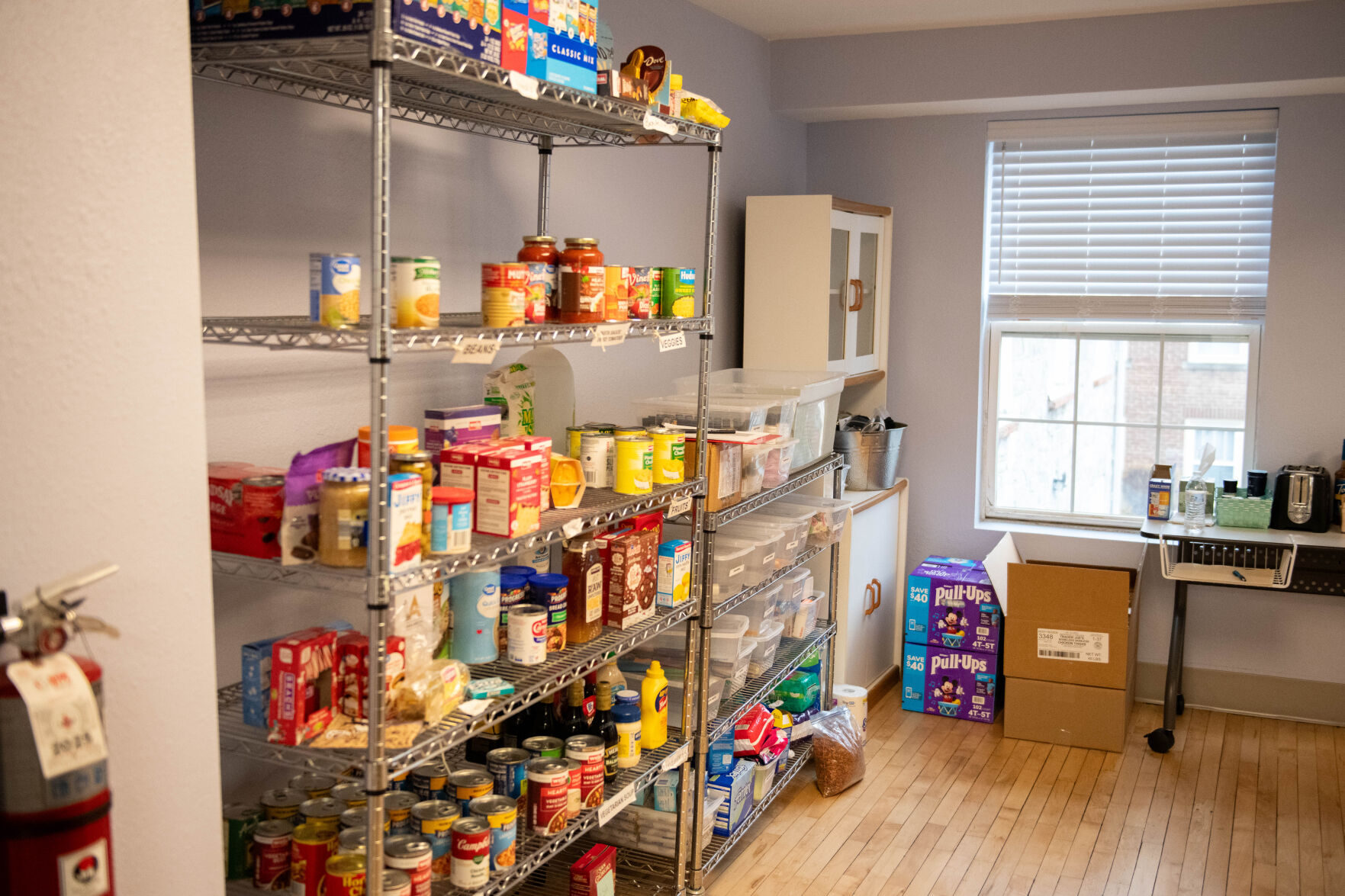
Food items sit on shelves in the Centre Helps building on Thursday, Nov. 20, 2025 in State College, Pa.
McCann, Centre Helps executive director, said the group’s staff members have been able to manage and keep up with the demand, especially with a growing response in aid from the community.
“We did see a lot more community groups doing food drives and donating that food to us,” McCann said. “Food is something that people kind of really respond to … They don’t want to think about someone being hungry, especially a child.”
Alongside food bank referrals, Centre Helps has a 24/7 emergency food pantry. McCann said the pantry is intended for one-time use as a way to close the gap between the period of time community members wait to connect with the food bank, which she said does a “really good job” supporting Centre County.
Those looking to donate to Centre Helps emergency food pantry can simply call Centre Helps to make arrangements, or show up with their donations at Centre Helps office, located at 406 S Pugh St.
Once community members have their referral processed, they are then eligible to use the State College Food Bank every 30 days.
Beck said the reason the food bank runs as a referral program is to ensure those seeking food assistance have resources they need for other areas as well. CentreHelps functions as a resource for housing insecurity, providing assistance to those facing eviction or who are behind on rent.
The hope, according to Beck, is that people are being helped in all possible ways, especially since there isn’t one specific demographic seeking out the food bank’s assistance, but rather a “wide variety of people and situations.”
“We’re serving seniors, we’re serving babies,” Beck said. “Everyone is struggling and everyone is just needing help. We’re grateful that we can be there for them.”
MORE NEWS CONTENT
‘We wanted to be downtown’ | How students share the factors behind their off-campus housing choices
As the spring semester approaches, many students are looking to finalize housing arrangements for the next academic year, weighing a variety of factors along the way.
Estella McNae said “price and location” were the most important factors she and her roommates considered when searching for apartments.
McNae, a third-year studying digital and print journalism, said she toured several potential apartments hoping to find one both close to campus and within her price range, before settling on The Canyon Apartments.
Finding affordable places can be daunting, as two-bedroom apartments in State College boast an average, individual rent of $1,471 a month, and four bedroom apartments average $1,343 a month, according to rentometer. In addition to the cost of rent, the majority of leases are for 12-month time periods, meaning students will have to pay over the summer as well if they’re unable to sublet the space.
McNae said pricing varies per location and the housing options closer to campus are not the cheapest.

The sun shines behind the RISE apartment complex on the corner of East College Avenue and High Street on Sunday, April 4, 2021, in University Park, Pa.
“I think it was just all the amenities that the Rise has. That’s really what makes it go up in price, because (The Canyon is) closer to campus than The Met or The Oliv, but they’re paying a lot more than we are because they have pools and the gyms,” McNae said.
McNae and her roommates wanted to live close to campus because they didn’t want to rely on buses or cars, and wanted to be able to get to places quickly and easily.
Ethan Conti also wanted to stay close to campus this year, and kept that in mind as he and his roommate searched for a new apartment. They ultimately decided to move into The Standard.
“We knew we wanted to move and knew that we wanted to be downtown, but I think we still wanted to have some of the benefits of high rises,” Conti, a fourth-year studying health policy and administration, said. “Then I kind of stumbled upon this one, offering a lot of the same stuff, but cheaper.”
He and his roommate decided they were paying too much at their former apartment at the Maxxen, and that’s what prompted the search for a new apartment, according to Conti.
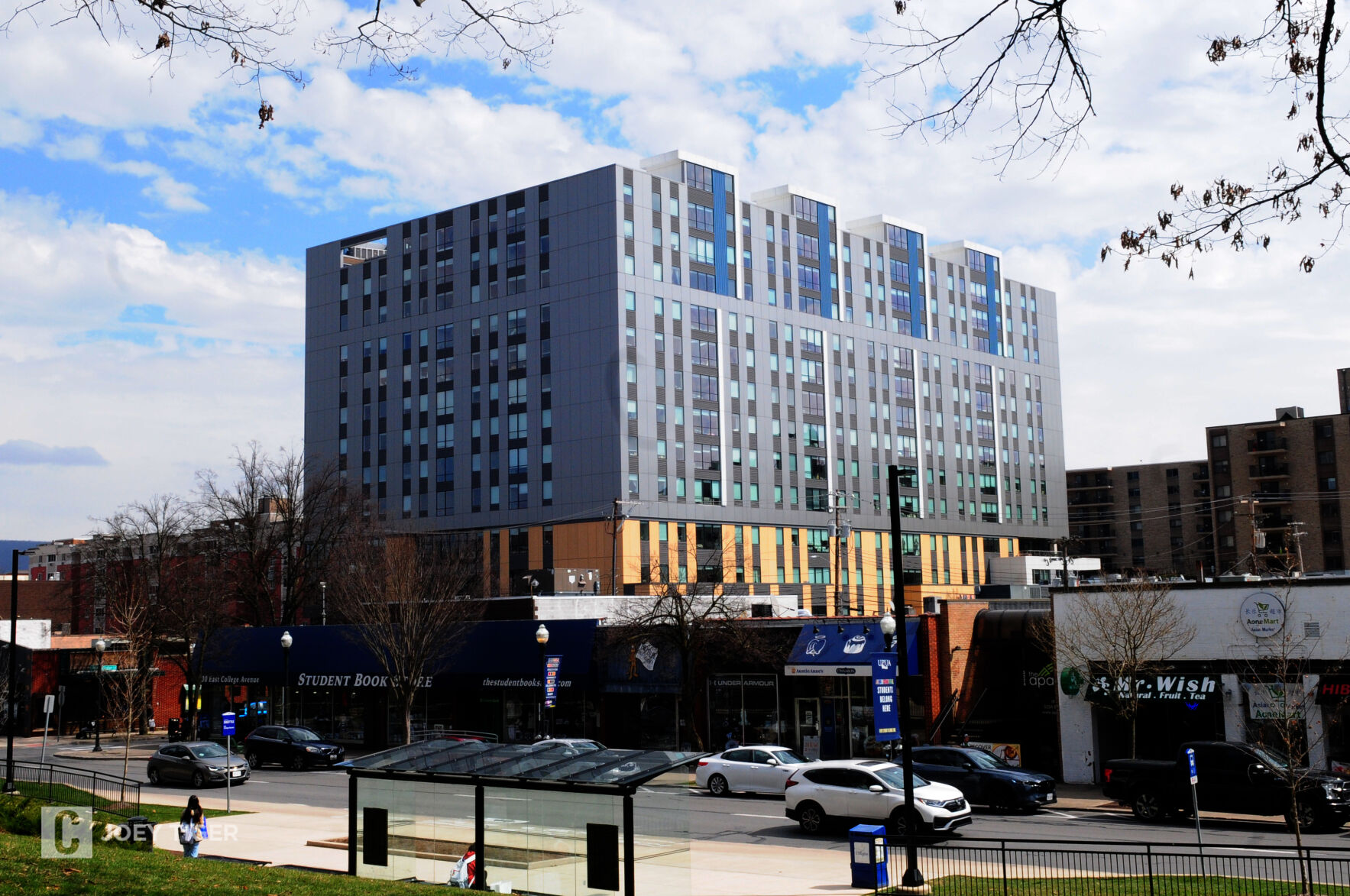
The Maxxen Apartment complex located downtown on Saturday, March 27, 2024, in State College, Pa.
Apartments and houses are not the only options for some students moving off campus, as many members of fraternities are able to live in the organization’s houses during the school year.
Avery Possessky said he enjoys living in Alpha Kappa Lambda’s (AKL) fraternity house because he’s able to live with a group of people he knows well.
“You’re pretty much very good friends with everyone in the building,” Possessky, a second-year studying electrical engineering, said. “I feel like the environment in a frat house is much more friendly, and it’s just a lot more fun to be in rather than in an apartment building.”
While not all students are able to live in fraternity houses, those that are able to can take advantage of a variety of benefits.
Possessky described his house as a “smaller house,” but said it included a kitchen, a room for each member, a common area, showers and bathrooms. He said members who have been in the fraternity longer can even get larger rooms with private bathrooms.
Just like any option, fraternity houses can have their downsides, and Possessky said distractions are the biggest problem at his house.
“It’s a bit more of a test on me to be able to be more responsible and actually do my work before I go down and hang out with everybody,” Possessky said. “So, that’s something that has been teaching me a lot of time management this past semester.”
Austin Weitzel, who also lives in the AKL house, said he was considering a variety of housing options for this school year.
“It was either here or living on campus again at apartments,” Weitzel, a second-year studying mechanical engineering, said. “I was either thinking about getting an apartment on campus with friends, or (since) I rushed with a handful of friends, I just decided to live here since they all decided to live here.”
Weitzel also said that his rent is lower at his fraternity house than his on-campus housing options. He said that after taking things like groceries and utilities into account, his fraternity house is cheaper than a lot of on and off-campus housing options alike.
The “brotherhood” aspects of living in a fraternity house can provide a closer community than living in an apartment building, according to Weitzel.
“When you start living here, you kind of are friends with everybody already and know everybody,” Weitzel said.
MORE NEWS CONTENT
‘Better to have extra money than not enough’ | Students discuss navigating off-campus living finances
Off-campus housing often comes with its fair share of challenges, with managing finances one of the hardest to navigate. With or without parental help many students find themselves having to practice the art of budgeting.
Catherine Lim picked Park Hill for her new, off-campus home because of its customer service and attentive staff.
“My parents help me pay for rent, and I cover groceries through my part-time job,” Lim, a third-year studying marketing, said.
Lim works in the Huck Life Sciences Building as an IT support specialist. She said based on her paychecks ranging from $100-150, she will spend fifty dollars per week on groceries and “eat out” once or twice per week.
Lim said apartment living gives her the opportunity to be more independent.
“You had people making food for you in the dining halls, so living alone I really enjoy,” she said. “And I like setting budgets for myself and managing my own finances, which will help me a lot in the future.”
With the dorms, Lim said she had to budget her meal plan more and figure out where to eat, but with living in an apartment, she has to pre-plan what to buy to cook specific dishes and plan out her budget for the week.
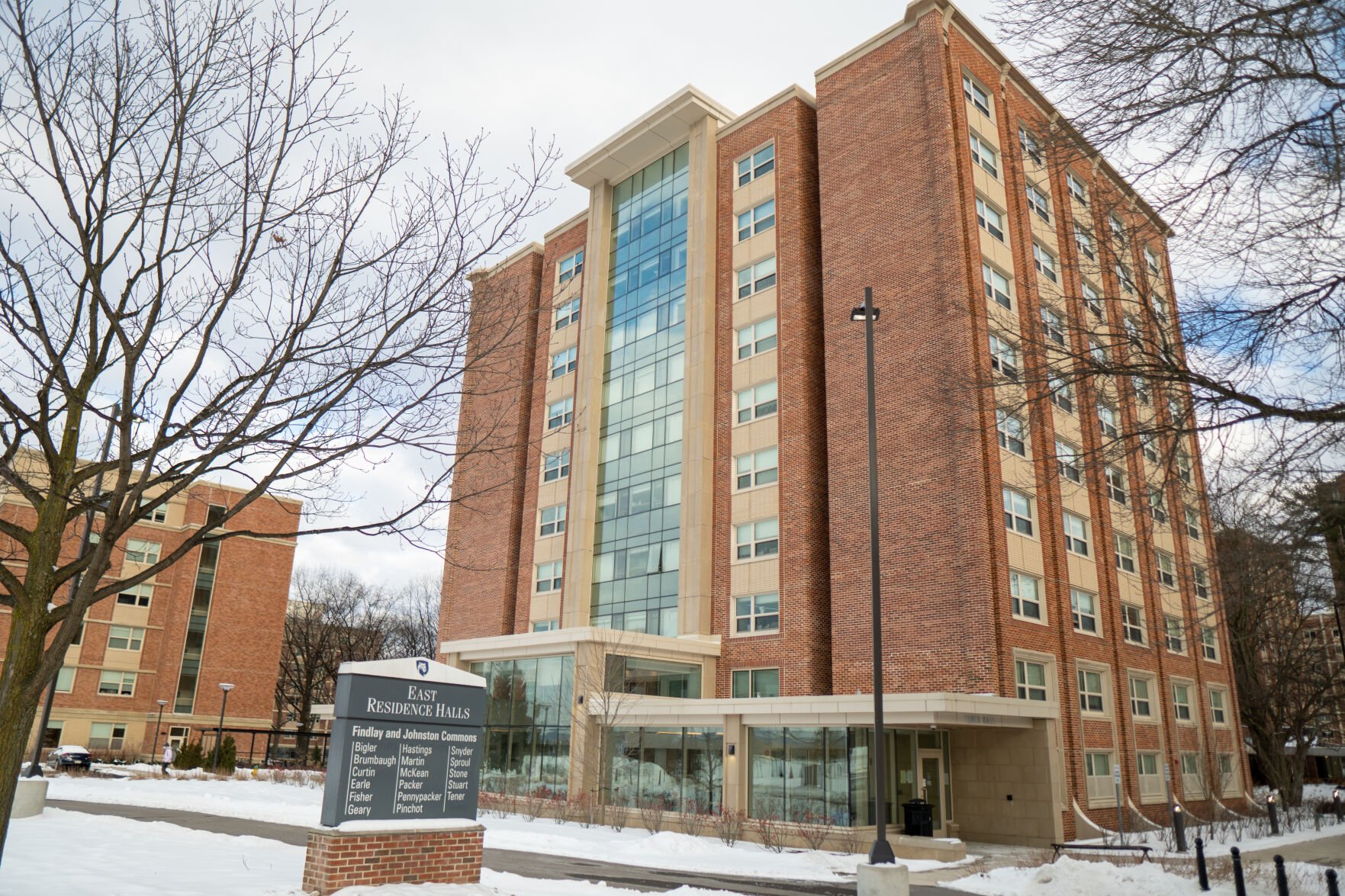
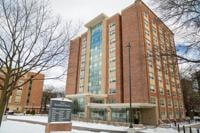
Tener Hall in the East Residence Halls on Tuesday, Jan. 25, 2022 in University Park, Pa.
“I wish I would have known how to make some more simple recipes in the case that I’m more crunched on time, like a very test-heavy week,” Lim said. “There’s been a few weeks where I was very busy and just didn’t have time to cook a lot, so I find myself eating out more, but I wish I knew more convenient recipes to make, especially for college and being on a budget.”
Julie Hubbard is one of many students who sacrifice convenient locations for cheaper rent.
Hubbard, a fourth-year studying rehabilitation and human services, chose to reside at the Brexx since it was “really affordable,” and after living in the dorms for two years, she was ready to have her own space.
“At the time we had a shuttle that could take us to and from places at nighttime, so that was really nice. Unfortunately, this year, they got rid of it,” Hubbard said.
There were also things Hubbard didn’t anticipate, like the slow buses during the winter months, and last year when she didn’t have a car she’d have to take the bus or a “pricey” Uber to class.
For Hubbard’s rent, she and her mother split it mostly halfway.
“She’s a single parent and she’s not working as much — she’s about to retire,” Hubbard said. “When it comes to the finances and all that, when she retires, it’s definitely gonna be harder, but since I have my brother … he can step in and help pay for some of the things that I need.”
One of the downsides of paying rent is having to pay during the summer months when she’s not in town, Hubbard said. However, she said paying is worth it for the extra space, and for her personally, it allowed her to cook to her heart’s content.
“On Sundays, I make up all my meals, and I have to budget what I want to meal prep for next week because … when I had a meal plan, I never really liked what they were serving, so then I always doordashed,” Hubbard said. “So now I manage, (by saying), ‘Ok I actually like this for a couple days,’ and if I don’t, then what can I do to make meals that can last me so I don’t have to spend the money on food.”
For Amy Krakowski location was the deciding factor and so she tried to find housing downtown. She wanted to find a place that would provide her with a private bedroom, convenient location and parking. However, none of those options were in her budget.

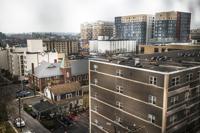
Apartment buildings sit downtown on Thursday, Nov. 20, 2025 in State College, Pa.
“The whole apartment shopping process in State College is terrible,” Krakowski, a third-year studying communication sciences and disorders, said. “Everything is rushed, overpriced and some companies don’t even let you tour the buildings. The earlier you can start the process, the better.”
Krakowski said she’s found ways to save money through cooperation.
“I try to meal prep as well with my roommates so that we can save money and time by working together,” Krakowski said.
Before, however, Krakowski would push off grocery shopping and DoorDash food instead.
“I ended up realizing that this was way more expensive than going grocery shopping and decided that meal planning and talking dinners through with roommates was a much better option.”
Krakowski said prior to supporting herself and buying her own food, she never paid attention to the price tags. Now, she’s conscious of prices, is more proactive about looking for sales, buys in bulk and considers whether or not she really needs an item before purchasing..
“The most important thing is to figure out what is most important to you personally, not your roommate or friends,” Krakowski said. “You have to be comfortable with the decision and that means financially too. It’s better to have extra money than not enough.”
MORE NEWS CONTENT

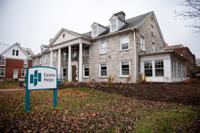
‘The hardest thing is walking through the door’ | Community groups work to ease barriers to food, housing support
Local support organizations say the biggest challenge around food and housing insecurity in State College isn’t just the need — it’s that many people don’t seek help at all.
Whether due to stigma or complicated eligibility requirements, residents and students often go without support even when it’s available.
“They don’t want to seem like they’re lacking or they’re poor,” Centre Helps Executive Director Denise McCann said.
Penn State Student Affairs’ 2022 Food and Housing Needs Survey found that about 15% of students struggled to secure enough food and 13% had trouble finding adequate housing. More than one in eight said these challenges impacted their academics, and over a quarter reported losing weight due to food insecurity.
Food items sit on shelves in the Centre Helps building on Thursday, Nov. 20, 2025 in State College, Pa.
“When you’re hungry or cold or tired, it just makes everything else worse,” McCann said. “It makes it more difficult to cope.”
Allayn Beck, the State College Food Bank executive director, said it’s important to create spaces that are welcoming and provide a sense of dignity and control to those seeking help.
“We work really hard to make sure the hardest thing people need to do is walk through our doors and then, once they’re here, they feel safe and welcoming and okay,” Beck said.
She said the staff works closely with their volunteers to make sure the food bank creates a welcoming and accepting place free of judgment.
“We’re also set up like a grocery store, so they’re leaving with food that they know they will use and it’s not creating waste, it’s not creating more of a burden and they have more control over what’s happening,” Beck said.
Jennifer Pencek, Centre Safe’s executive director, said food and housing insecurity makes it harder for survivors of domestic and sexual violence to leave their situation.
“Housing can be incredibly expensive in our area, really in the whole region, so imagine what it feels like if suddenly you’re going from a two-income household down to a one-income household,” Pencek said. “Would you suddenly be able to afford that home on your own or be able to afford a different apartment or house? For a lot of folks, the answer is no, so they have to figure out, ‘Okay, well, what does that mean for me and where can I go?’”

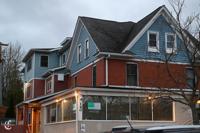
Centre Safe sits on West Nittany Avenue on Tuesday, April 15, 2025 in State College, Pa.
Morgan Wasikonis, executive director for Housing Transitions, said food and housing insecurities can have a lasting impact on a person’s development, especially at a young age.
“When people don’t know where they’re going to sleep each night, it’s really a trauma-inducing situation for them,” Wasikonis said. “We also know that, for young people and children, it actually affects their typical development and can really create changes that can actually put them at risk for housing insecurity and food insecurity as they grow up.”
Wasikonis said she found it important to work with families experiencing food and housing insecurities in order to minimize the long-term impacts upon children and allow them to “break the cycle.”
She said certain demographics, such as Penn State students, aren’t able to easily access off-campus food and housing resources on their own due to not meeting certain requirements that would allow aid to be given regularly.
“Because a lot of our money comes from the federal government, we have to follow guidelines, and generally speaking, homeless response funds do not apply to undergraduate students,” Wasikonis said. “There is a huge assumption that is made that students have a home somewhere. That, if they lose their home or their housing here at college, that they have someplace else to go so they aren’t really considered to be homeless, so to speak.”
Leanne Lenz, associate director for Student Care & Advocacy, said some on-campus resources such as the Lion’s Pantry may not be available during academic breaks due to not having sufficient staff to run them.

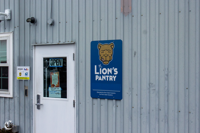
A sign hangs outside the Lion’s Pantry on Wednesday, Nov. 19, 2025 in University Park, Pa.
“A lot of things shut down on campus, so if they’re sticking around here, that could be a challenge,” Lenz said. “There’s a lot of resources that are supported by students, like the Lion’s Pantry, so when the students aren’t here, the pantry can’t really operate either.”
Lenz said it was important for organizations such as Student Care & Advocacy and Counseling & Psychological Services to maintain relationships within the State College community so students are still able to access these resources.
“There’s a lot of different community resources that we connect with, and it’s not always an appropriate referral for every single student, but most of the community resources are open to supporting students who meet a criteria or have a higher need that Penn State can’t fulfill,” Lenz said.
Chrissie Ebeck, assistant director for Off-Campus Student Support, said creating relationships and communicating with community resources allows for students, especially those living off-campus, to receive what they need to best ensure their basic needs are met.
“The last thing I want to do is make a referral for a student that really doesn’t fit their needs and without understanding what our local resources can provide,” Ebeck said. “If I’m making the right connections from the beginning because I understand what our resources are able to provide to our students, it’s just overall a better process for everyone, and it’s providing the student with the best support that we can possibly give them.”
MORE NEWS CONTENT
How to make your meal plan last the entire semester
Managing a meal plan for the entire semester can be challenging for many students, as sometimes the available funds aren’t enough to fulfill their daily cravings.
Here are a number of ways to make sure you spend your meal plan the ‘right way’ to avoid running out of funds before the semester ends.
Choose your meal plan level wisely
The first thing students should do is purchase the meal plan that is the most suitable for them. If they think they are going to want to treat themselves to snacks and treats during the day then, students might want to purchase a bigger meal plan.
A level one meal plan is set to get students around seven to nine meals a week while a level three plan can get them between 14-16 meals. Level two meal plans are right in the middle and what students tend to most often go for as it gives 11-13 meals per week.
Budgeting
The biggest hack to making sure your meal plan lasts the semester is to budget. Students can calculate the days in the semester and divide that by 3 meals, thus showing them how much they can spend on each meal. To find daily spending, divide the meal plan by the number of days in the semester and that will show how much can be spent a day.
For instances where money is left over from a missed meal the day before, students can go to the dining hall markets and get a treat, or instead of having dining hall food you can order from on campus installments such as Grillers in East Halls or Asia Kitchen in Pollock Halls.


Students arrive for dinner at Redifer Commons on Wednesday, Oct. 12, 2022 in University Park, Pa. Redifer is one of five dining halls on campus.
Utilizing the Dining Hall
The dining hall is often the cheapest option for a meal and a good go- to option for breakfast, lunch and dinner. There’s always a salad bar and oftentimes soup. At dinner there will be a selection of meat, vegetables, pasta and more. The menu changes every night so meals don’t feel repetitive.
However, many students don’t utilize the abundance of food. The dining hall has an array of fruits, jams and sauces for students to take. If you’re having a meal in the dining hall, then you could grab fruit which you could eat as a snack the next day or get a to-go box to have leftovers for your next meal.
Understanding pricing
A big thing that tends to use up a meal plan is the campus markets, small convenience stores located at every commons area, that sell items like ice cream, sushi, candy, snacks and more.
The market is the only place that opens early and closes late, so when everything else is closed and students want a midnight snack, they tend to spend their meal plan there.
However, the market up-charges their items, so they can cost 1-2 dollars more than they would at a regular supermarket. Limiting the trips taken to the market every week can really help save money on your meal plan.
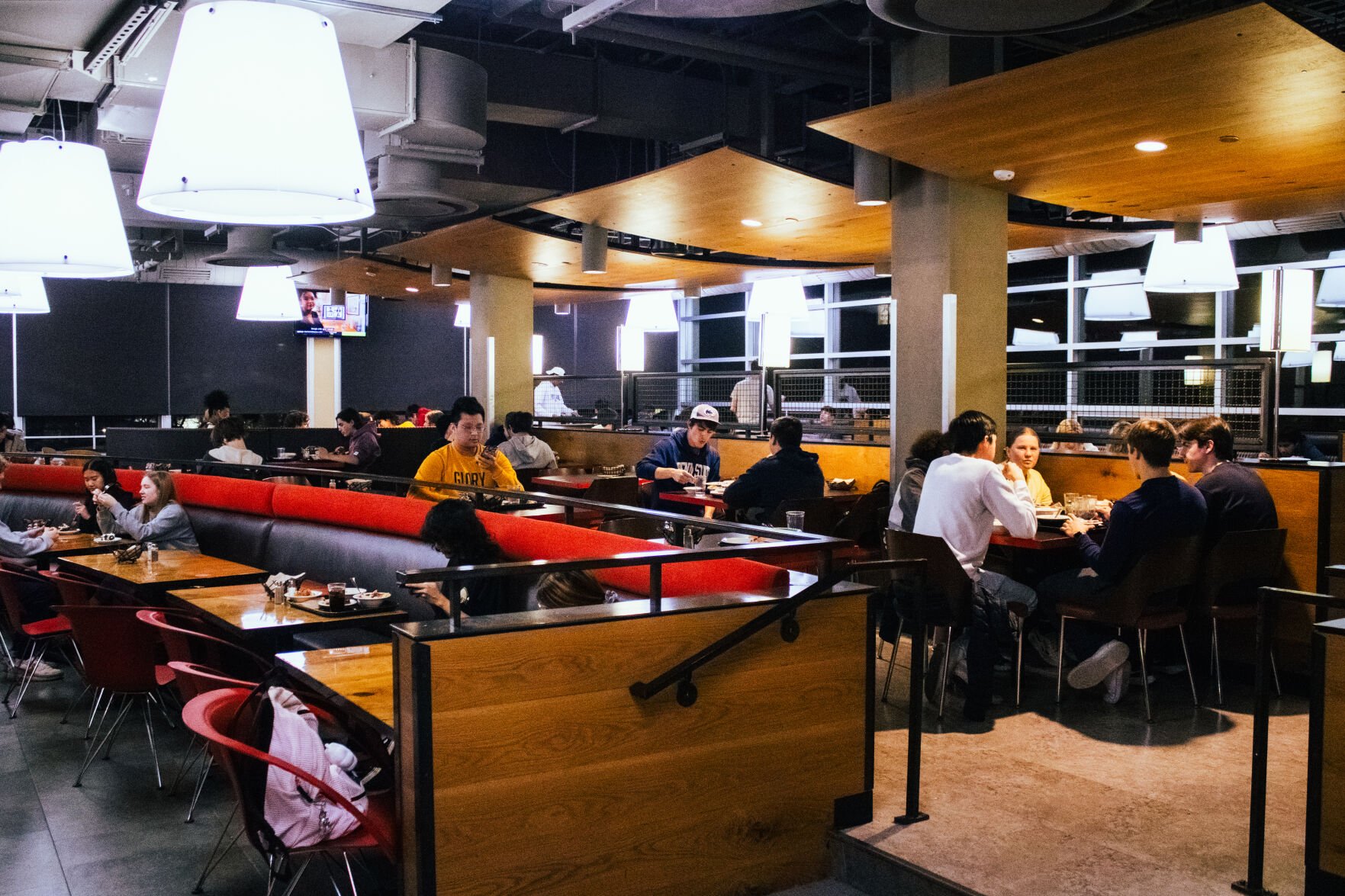

Students eat dinner at the Pollock Commons Buffet on Thursday, Nov. 16, 2023 in University Park, Pa.
Students can also spend their meal plan on chain restaurants located at places like the HUB-Robeson Center. These meals are not discounted like the meals students get at the commons and cost as much as they would cost at the restaurant itself.
The HUB is a busy place and it’s convenient for students to stop by in the middle of classes and grab a meal, but it’s not so convenient for their meal plan. To stretch your dining dollars, students should limit their daily visits to once a week, or as a special meal.
Other strategies
Another way to save up your meal plan is to buy easy microwaveable meals to make for a quick lunch or for dinner a few times a week. If there are any food items students want to keep in their dorm, they should try to go off campus to buy them. Places like McLanahan’s accept LionCash, a type of payment that students can add their own money to and get discounts on campus from.
It can be very hard as a college student to juggle your cravings with the meal plan, but it’s important that you budget and get an understanding of how much you should spend every day and what you spend the meal plan on. Utilize everything as much as you can and limit the times you eat at chain restaurants on campus or at the market in your commons area.
MORE NEWS CONTENT
Factors students should consider when exploring off-campus housing
The lengthy process of finding off-campus housing is often one of the hardest in a student’s college career. With numerous factors to consider, students should avoid making rash decisions.
Securing off-campus housing takes time, preparation and research; without guidance this process can feel tiresome and even impossible.
Here are some key factors students should consider when deciding where to live.
Leasing
There are several leasing terms and options available and navigating them is often tedious. Students should first decide their budget as this will help narrow their choices, which makes the decision making process feel more manageable.
The most common lease term is a 12-month fixed lease, which means students are committing to the property for a full year. For some students this is advantageous as it means summer housing. However, for those planning to return home or intern outside of State College it comes with challenges such as having to arrange a sublease ( finding a student to rent the property) or paying rent for an unused property.
Some student housing offers 9 or 10 month leasing options, but they aren’t widely available.

The Standard at State College apartment building sits on West College Avenue on Wednesday, Nov. 19, 2025 in downtown State College, Pa.
The next factor to consider is the lease’s liability structure, which typically takes the form of a joint or individual.
Joint leases are the most common, and are when all the roommates sign the same lease form and are collectively responsible for paying the rent in full, including damages.
An individual, or by-the-bedroom lease is less common. In this case each roommate signs a separate lease and is only responsible for covering their individual rent portion as well as any damages they may cause.
Students should also consider having someone such as a parent or guardian co-sign the lease along with them to be a financial guarantor. This step is typically required by most State College landlords, as college students are often viewed as less financially reliable.
Proximity and transportation
Proximity to campus is a make-or-break factor for most students when living off-campus. Living closer to campus reduces commute time and increases convenience, but it also increases rent.
Before committing to a lease, it’s important for students to consider how they will get to campus and other locations they frequent. The most common forms of transportation for college students are public transit, walking and a personal vehicle.

Apartment buildings line East Beaver Avenue on Wednesday, Nov. 19, 2025 in downtown State College, Pa.
If you have your own vehicle, it’s important to find out if it’s allowed at your apartment complex and what the parking cost may be. Furthermore, students may need to purchase a commuter student parking permit which is an additional cost. Some students find it more cost-effective to use public transit or walk instead of having a car.
Many of those students utilize the free Centre Area Transportation Authority (CATA) buses that travel throughout downtown and on- campus. This option allows them to save money on gas, auto-repairs and parking fees. However, for students who live further off-campus some bus routes come at a cost.
Co-living factors
Finding roommates is one of the challenging aspects when it comes to securing off-campus housing. Whether you decide to live with friends, acquaintances or complete strangers, it’s difficult to arrange a comfortable living situation.
Most students decide to live with friends given the existing bond. However, conflicts may arise despite the friendship due to differences in lifestyle habits, finances, cleanliness and class schedules. It’s important to establish expectations, clear ground rules, request open and honest communication and discuss potential issues before signing a lease with friends.
Students should strive to follow the same approach if they decide to live with strangers.

The Maxxen apartment building sits on Hiester Street on Wednesday, Nov. 19, 2025 in downtown State College, Pa.
Budgeting
Budgeting for groceries and other necessities is something that usually slips the minds of college students. Students should ensure they secure a job, save enough money to purchase food and other necessities or have outside financial support.
It’s also worthwhile exploring options such as the commuter meal plan and being aware of local food pantries. Students should create a plan in advance to track and manage their finances while balancing academic responsibilities when looking into off-campus housing.
MORE NEWS CONTENT