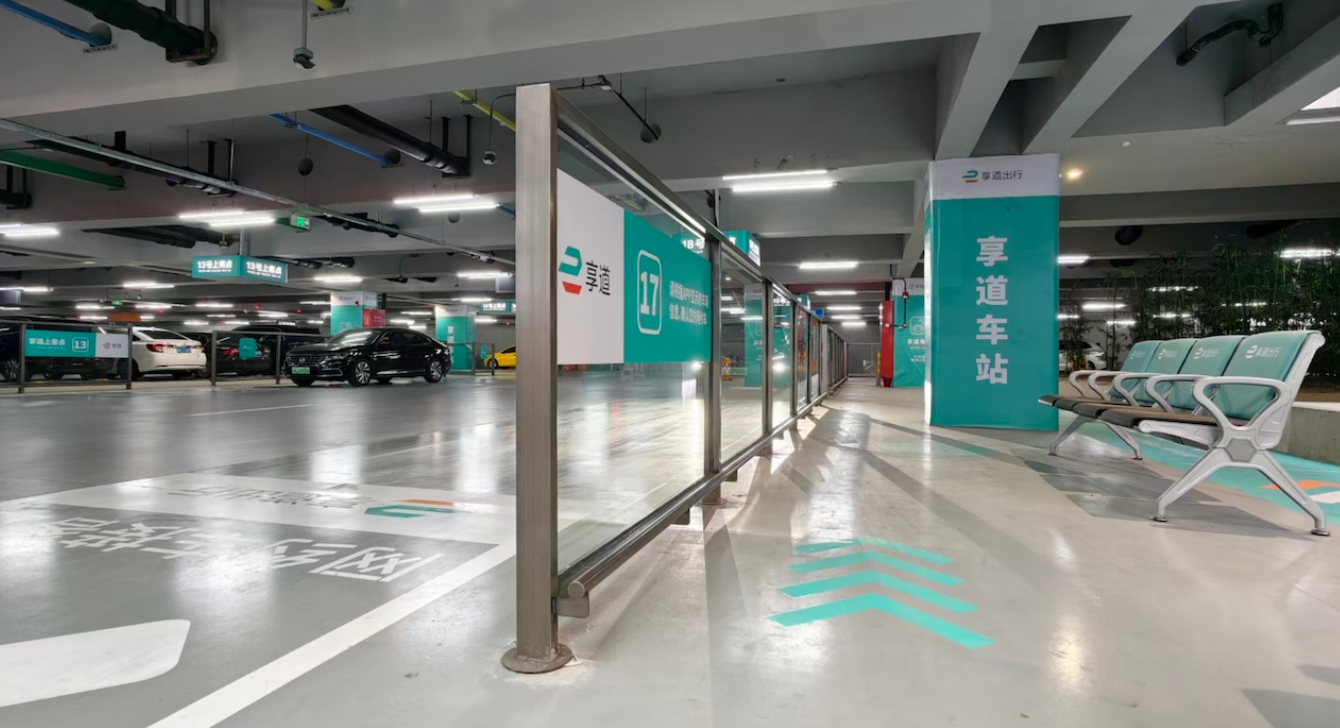
Gasgoo Munich- SAIC Motor’s mobility arm, EnjoyGo Technology Limited, has filed for a listing on the Hong Kong Stock Exchange, kicking off its second IPO attempt.
Six months after its first attempt, the company is returning to the capital markets with updated operational data and a fresh business roadmap. Its goal: leverage capital to break through the fierce competition in a saturated ride-hailing market.
Second HKEX Bid After Earlier Setback
This isn’t EnjoyGo Technology’s first run at the Hong Kong exchange. The company initially filed its prospectus in October 2025, but that application lapsed the following April due to listing rules, putting the first attempt on hold.
In retrospect, persistent losses, structural flaws in its business model, and intensifying industry competition were the main hurdles that stalled its debut.
Founded in 2018, the company operates across ride-hailing, vehicle leasing, sales, and autonomous driving services, aiming to build a comprehensive mobility ecosystem. Leveraging SAIC’s local resources, it has made a mark in Shanghai, ranking third by transaction volume with an 11% market share. Nationwide, however, it held the sixth spot in 2025 with just a 1.8% share — a significant gap behind the market leaders.
On the financial front, revenue is climbing, yet the company remains in the red. From 2023 through 2025, revenue rose from 5.718 billion yuan to 6.395 billion and then 6.774 billion. Over the same period, net losses narrowed from 640 million yuan to 407 million and 246 million, respectively — totaling nearly 1.3 billion yuan over three years.

Image Source: EnjoyGo Technology
Notably, the losses are narrowing year by year, signaling a turn toward profitability. Overall gross margins improved from 6.6% in 2023 to 11% in 2025, with the core ride-hailing business reaching 11.8%. Operational quality, it seems, is on the mend.
Ride-hailing remains the dominant revenue driver, generating 5.345 billion yuan last year — or 78.9% of the total. Vehicle leasing and used car sales contributed 17.1% and 3.6%, respectively, highlighting a relatively undiversified business mix.
Industry analysts note that China’s ride-hailing market has moved past its wild expansion phase and is now fully entrenched in a battle for existing market share. Squeezed by driver subsidies, vehicle depreciation, and platform commissions, most players are struggling to turn a profit — and EnjoyGo Technology is no exception.
Even more critical than the losses is the company’s heavy reliance on external aggregators for orders. Prospectus data shows that platforms like Amap and Didi accounted for between 91.8% and 98.5% of total transaction volume from 2023 to 2025, leaving its own channels with less than 2%.
Over three years, EnjoyGo Technology paid out over 1.3 billion yuan in commissions to these aggregators — 556 million yuan in 2025 alone. This dependence on external channels not only eats into profits but also strips the platform of control over user operations and pricing, severely undermining its operational independence.
After six months of adjustments, the company is returning with improved financials. Narrowing losses and expanding margins are clear positives, and with new initiatives like robotaxi services now taking shape, EnjoyGo Technology appears better prepared for this round than the last.
Capital Influx Could Break the Development Deadlock
EnjoyGo Technology’s persistent focus on a Hong Kong listing reflects a dual strategy: addressing immediate development needs while laying the groundwork for long-term growth. A successful debut would deliver several tangible benefits.
First, it would replenish operating capital and ease cash flow pressure. Both ride-hailing and autonomous driving are capital-intensive arenas, requiring constant funding for fleet maintenance, regulatory compliance, R&D, and market expansion. Proceeds from an IPO would alleviate financial strain, stabilize current operations, and fuel investment in Level 4 and Level 5 autonomous services to build a second growth curve.
Second, it would help clarify equity structures and related-party transactions, modernizing corporate governance. SAIC Motor, the parent company, holds a controlling 75.37% stake directly and indirectly. It is also a key supplier, with procurement between the two sides hovering around 300 million yuan annually over the past three years — a significant volume of related-party dealings.
A Hong Kong listing would impose strict disclosure requirements, forcing greater transparency in business operations. This would not only standardize collaboration with the parent but also unlock the platform’s potential for independent operation, reducing its reliance on SAIC.

Image Source: EnjoyGo Technology
Third, it would leverage the capital markets to elevate its brand and competitive edge. With peers like Dida Chuxing, Cao Cao Mobility, and Ruqi Travel already listed in Hong Kong, capitalization has become a clear trend in the sector. A successful listing would enhance EnjoyGo Technology’s brand influence and credibility, helping it attract drivers, users, and partners. It would also enable equity incentives to retain the core team and secure its footing in a fiercely competitive industry.
Finally, it would amplify the differentiated advantages of an automaker-backed platform and clarify its value proposition in smart mobility. Access to SAIC’s complete automotive supply chain is the key differentiator that sets EnjoyGo Technology apart from pure-play mobility platforms.
Post-listing, the platform could better integrate upstream and downstream businesses — from vehicle manufacturing to leasing and after-sales maintenance — deepening the synergy between “automotive and mobility.” Moreover, Hong Kong’s market is more receptive to tech and innovative business models, making it an ideal venue to highlight the value of its robotaxi operations and complete the transition from a traditional ride-hailing platform to a smart mobility service provider.
EnjoyGo Technology’s two attempts to go public reflect the broader struggle of automaker-backed mobility platforms amid industry upheaval. Growth in China’s ride-hailing market has peaked, and as waves of new energy and autonomous technology accelerate, the space for smaller players is rapidly shrinking.
Objectively, EnjoyGo Technology still faces significant hurdles: long-term losses remain unturned, structural reliance on external channels persists, and the commercialization of new businesses will take time. Yet, the narrowing losses and improving profitability — combined with the empowerment of SAIC’s full supply chain — provide a foundation for a breakout.
If it succeeds in landing on the Hong Kong exchange, the influx of capital will help EnjoyGo Technology shore up its weaknesses and double down on its strengths. That means gradually reducing dependence on aggregators to unlock the value of its own user base, while accelerating the rollout of autonomous driving services to build a truly competitive edge.
All Rights Reserved. Do not reproduce, copy and use the editorial content without permission. Contact us: autonews@gasgoo.com