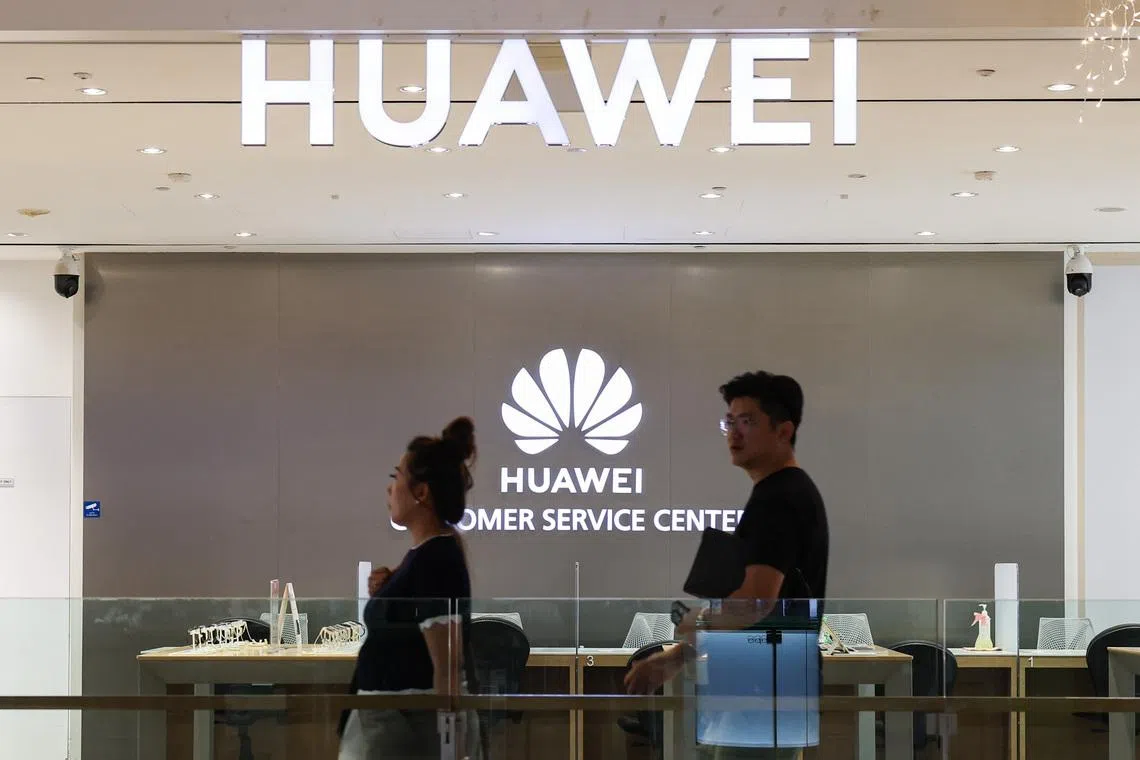
SINGAPORE/SHENZHEN – On a weekday afternoon in April, PhD students at Nanyang Technological University (NTU) were bundled onto buses and ferried to a Huawei research centre in Buona Vista for technical talks, chats with engineers, and what the company called informal networking.
A few kilometres away, at the National University of Singapore (NUS), Huawei was running an online career talk – conducted in Mandarin – pitching roles in AI algorithms, large language models and cybersecurity.
The message was clear enough: China’s tech industry is recruiting and Singapore is a prime hunting ground.
Chinese technology companies are intensifying efforts to recruit AI graduates from Singapore’s two flagship universities, offering sharply higher pay packages to entice them to work in China.
Average annual compensation for outstanding master’s- and PhD-level hires has risen to around 1.5 million yuan (S$282,500), up from about a million yuan a year ago, according to Ms Yuan Yijia, founder of Dada Consultants, a Singapore-based AI recruitment agency. Most of those being hired are Chinese citizens.
The strongest candidates, judged on the quality of their research papers and citation scores, can command at least double that.
Mr Jason Yang, a headhunter based in China who recruits AI talent for tech giants Alibaba and ByteDance, confirmed that top PhD candidates can receive total annual compensation of between three million and five million yuan. “Salaries are rising because companies are vying to snatch the top graduates,” he said.
Annual packages for Singapore-based roles for holders of PhDs in artificial intelligence can range from $200,000 to $350,000 – in line with the China-based offers – and potentially higher if stock options are included. However, such top-end positions are rare compared with those based in China, according to Ms Yuan.
Singapore’s autonomous universities enrolled an average of about 6,000 PhD students per year in science, technology, engineering and mathematics courses over the past decade, with around two-thirds being non-resident international students, according to data from the Ministry of Education. It did not provide a breakdown of the students’ countries of origin.
An estimated 50 per cent of the international student population in Singapore’s universities come from China, according to a report from Beijing-based education consultancy Sunrise International.
China’s recruitment drive reflects a stark talent shortage in its all-important AI industry. The country faces an estimated shortfall of around four million AI professionals by 2030, according to consultancy McKinsey. Elite, doctorate-level talent are rarer still.
That gap has sharpened the industry’s appetite for recruitment in Singapore, where NTU tops ShanghaiRanking’s global AI table and NUS places among the world’s top three in data science and AI in the QS ranking of university subjects.
China-based ShanghaiRanking and Britain-based Quacquarelli Symonds, which publishes the QS World University Rankings, both provide ratings of global universities.
Firms from large-model start-ups such as Shanghai-based MiniMax, to tech behemoths including Alibaba and ByteDance, “now consider Singapore’s university campuses as first-tier recruiting targets for overseas AI talent”, said Ms Yuan, comparable to leading American universities.
Huawei, widely seen as China’s domestic alternative to Nvidia for AI computing hardware, said it “plans to increase its campus recruitment in Singapore this year”, though it declined to disclose specific hiring targets.
“In the AI era, what we need most is the capacity for innovation to challenge conventions, explore unknowns and generate fresh solutions,” a Huawei spokesman said. “Singapore’s talent, known for their adaptability, bilingual capabilities and global outlook, naturally possess this innovative mindset, making them invaluable to our future workforce.”
The universities themselves see the interest as mutually beneficial. NUS actively courts international employers from China, India and ASEAN, viewing Chinese placements as offering graduates “early-career exposure to large-scale production systems, faster iteration cycles and product-led engineering cultures”, according to a university spokesperson.
Such experience, NUS notes, builds cross-cultural capabilities and improves its graduates’ prospects for future regional leadership roles.
NTU reports that hiring interest from Chinese companies has “remained consistent over the past five years”, with most undergraduates hired full time likely filling technology and AI roles.

Chinese technology companies are intensifying efforts to recruit AI graduates from Singapore’s two flagship universities, offering sharply higher pay packages to entice them to work in China.
ST PHOTO: BRIAN TEO
The interest is not just from China, as NTU also works with major US firms including Meta, Microsoft and Google to connect its PhD students with internships.
What companies prize most, both universities emphasise, are interdisciplinary graduates who blend real-world knowledge with technical expertise – particularly those trained to apply AI across industries such as healthcare and finance.
Language and cultural fit matter, too. Chinese firms recruiting in Singapore are scouting for “mostly ethnic Chinese, not necessarily just Chinese nationals”, although the latter form the bulk of hirees, Mr Yang noted. This is as teams need to coordinate with headquarters in China, he said.
The timing suits Beijing. For decades, American universities and Silicon Valley beckoned the world’s best technology minds. That gravitational pull is weakening as rising costs, stricter visa regulations and policy uncertainty have made the United States less appealing, argues IMD, a Lausanne-based business school.
China, meanwhile, has made technological self-reliance powered by AI a central pillar of its five-year plan for 2026-30, signalling that resources and ambition are unlikely to flag.
One China-born PhD student at NTU’s College of Computing and Data Science, who asked not to be named in order to keep his career options private, said most of his peers were leaning towards returning as salary offers climb.
“There’s a perception that AI developments in China are becoming much stronger,” he said. His own ambition is to join a Chinese tech company rather than stay in academia, on the pragmatic grounds that “infrastructure and computing resources are still very much concentrated in companies instead of schools”.
The flow home is accelerating. Chinese fresh graduates returning from abroad to seek domestic jobs rose 12 per cent in 2025 from the previous year – an eight-year high, according to Zhaopin, a recruitment portal. Among returnees, interest in AI engineering roles surged 37 per cent, while software development applications climbed 31 per cent.
China’s wooing of overseas talent may yet encounter self-imposed limits. On April 27, Beijing ordered the unwinding of Meta’s acquisition of Manus, a Chinese-founded AI start-up that had relocated its headquarters to Singapore before the deal was struck.
The episode rattled observers, who noted that such heavy-handed intervention could prompt ambitious Chinese AI founders to incorporate overseas from the outset, so as to avoid future entanglements with their own government.
But Manus, which sought to cut ties with China and then sell to a US company, could be something of an outlier. Its experience will not deter Chinese tech firms from setting up offices in Singapore, some analysts argue. Mr Yang said he believed Beijing would not restrict Chinese companies from opening overseas research and development centres while keeping their main entity in China. The NTU PhD student, however, said the Manus affair had made the AI industry feel “overly politicised”, though most of his peers would still consider returning to China.
Not everyone is being recruited to head home. Chinese tech companies are also expanding their Singapore-based AI teams, particularly for products aimed at global markets, said Ms Yuan.
Mr Yang noted that these Singapore-based offices also help firms to attract candidates who may not be keen to move to China.
On the same afternoon that Huawei was bussing NTU students to its research centre, Chinese online travel giant Trip.com was running a pop-up career fair on the NTU campus in Boon Lay, where it highlighted roles for AI engineers and data analysts, and promoted its AI-assisted travel booking services. Students queued for foldable umbrellas and soft toys.
The fair is one of six university drives it plans to roll out in Singapore in 2026.
“AI proficiency has become an increasingly important evaluation criterion across many of our roles,” said Mr Edmund Ong, general manager of Trip.com Singapore, adding that the company is primarily recruiting for roles based here.
“With our international headquarters based here, our focus is on building strong local teams to support our operations and growth globally.”